Nha Trang (냐짱 / 芽庄 / ニャチャン) gets most of the food attention for its seafood, but the city's dessert culture is quietly impressive — a mix of old-school street stalls, festival sweets, and cafe counters doing interesting things with local ingredients.
Stop 1 — Che on Nguyen Thien Thuat
Start on Nguyen Thien Thuat street, a few blocks back from the beachfront, where a cluster of open-front stalls sells "che" — Vietnamese sweet soup — from late morning until well after dark. The format is familiar if you've eaten che in Hanoi or Saigon: glass bowls filled with a base liquid, then loaded with toppings chosen from the trays in front of you.
In Nha Trang the version to order is che bap, made from young corn kernels simmered in coconut milk with a little sugar and a pinch of salt. It sounds simple and it is, but the balance matters — good che bap is barely sweet, with the corn doing most of the work. A bowl runs 15,000–20,000 VND. If the stall has che dau do (red bean) or che troi nuoc (glutinous rice dumplings in ginger broth), order a second bowl. You're eating, not sampling.
Stop 2 — Banh Can and Sweet Savory Snacks Near Dam Market
Dam Market (Cho Dam), right in the city center, is the practical heart of Nha Trang's food commerce. The outer stalls and nearby laneways spill over with traditional cakes and snack vendors catering to locals rather than tourists.
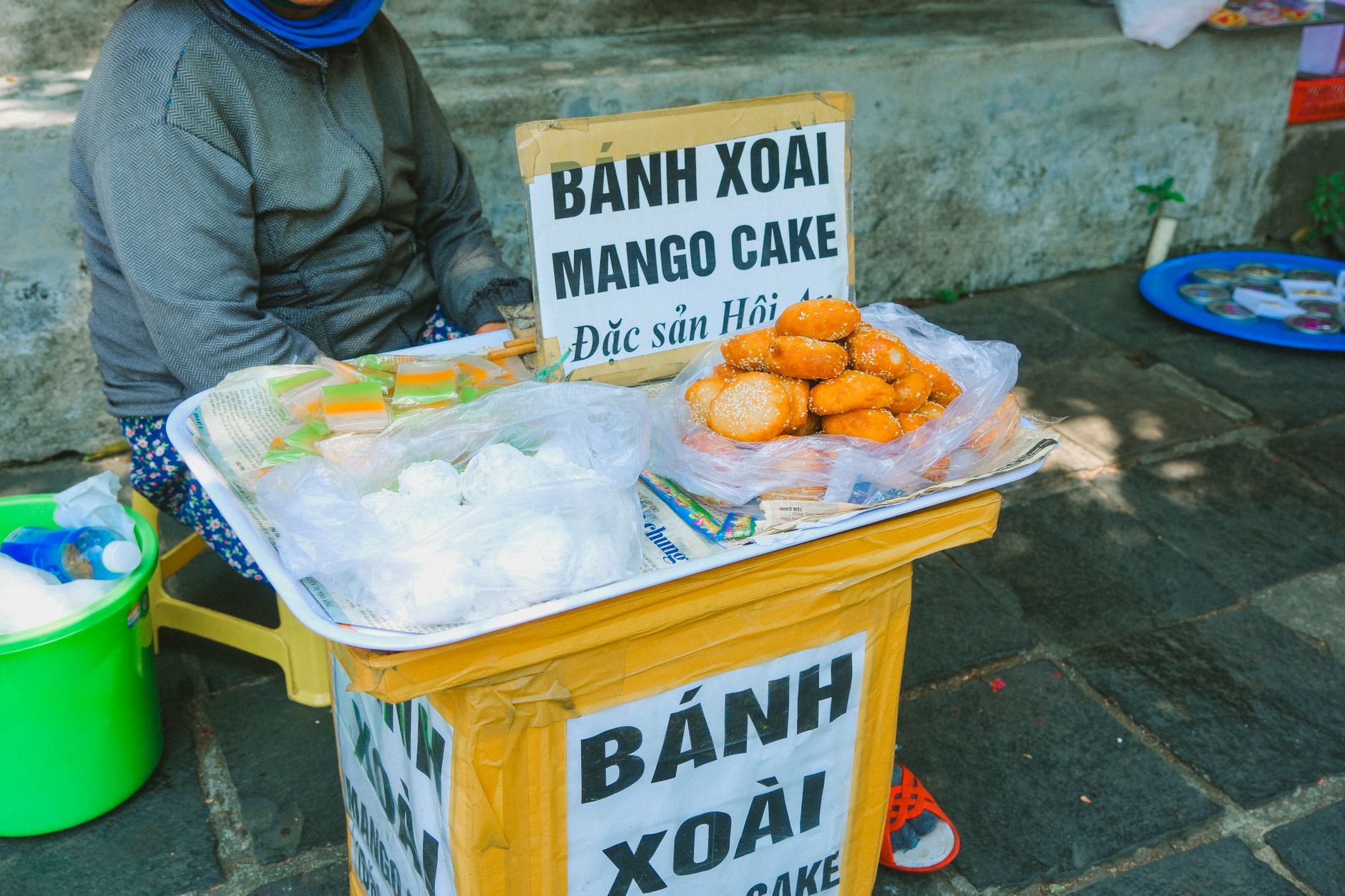
Look for banh it la gai — small sticky rice cakes wrapped in banana leaf and made with la gai (ramie leaf), which dyes the dough a deep green-black. The filling is usually sweetened mung bean paste or shredded coconut. They're sold by the piece for around 5,000–8,000 VND and they travel well if you want to eat them later. A few stalls nearby will also have banh cay (fried sesame-coated rice cakes) and occasionally nem chua if you want something salty to cut the sweetness.
Stop 3 — Mooncakes at Thanh Long Bakery
Mooncakes aren't only a Mid-Autumn Festival thing in Nha Trang — a handful of bakeries keep them in stock for much of the year because the tourist traffic creates enough demand. Thanh Long Bakery on Hoang Hoa Tham street is the local name worth knowing. The baked mooncakes here use a thin golden crust and fillings that lean traditional: lotus seed paste with salted egg yolk, mixed nuts and winter melon, and occasionally a pandan-coconut variant. Prices range from 35,000 to 80,000 VND per piece depending on size and filling.
If you visit in the weeks before the Mid-Autumn Festival (usually August–September by the solar calendar), the bakery expands its range considerably and the whole street takes on a different energy. Worth timing a trip around if you're flexible.
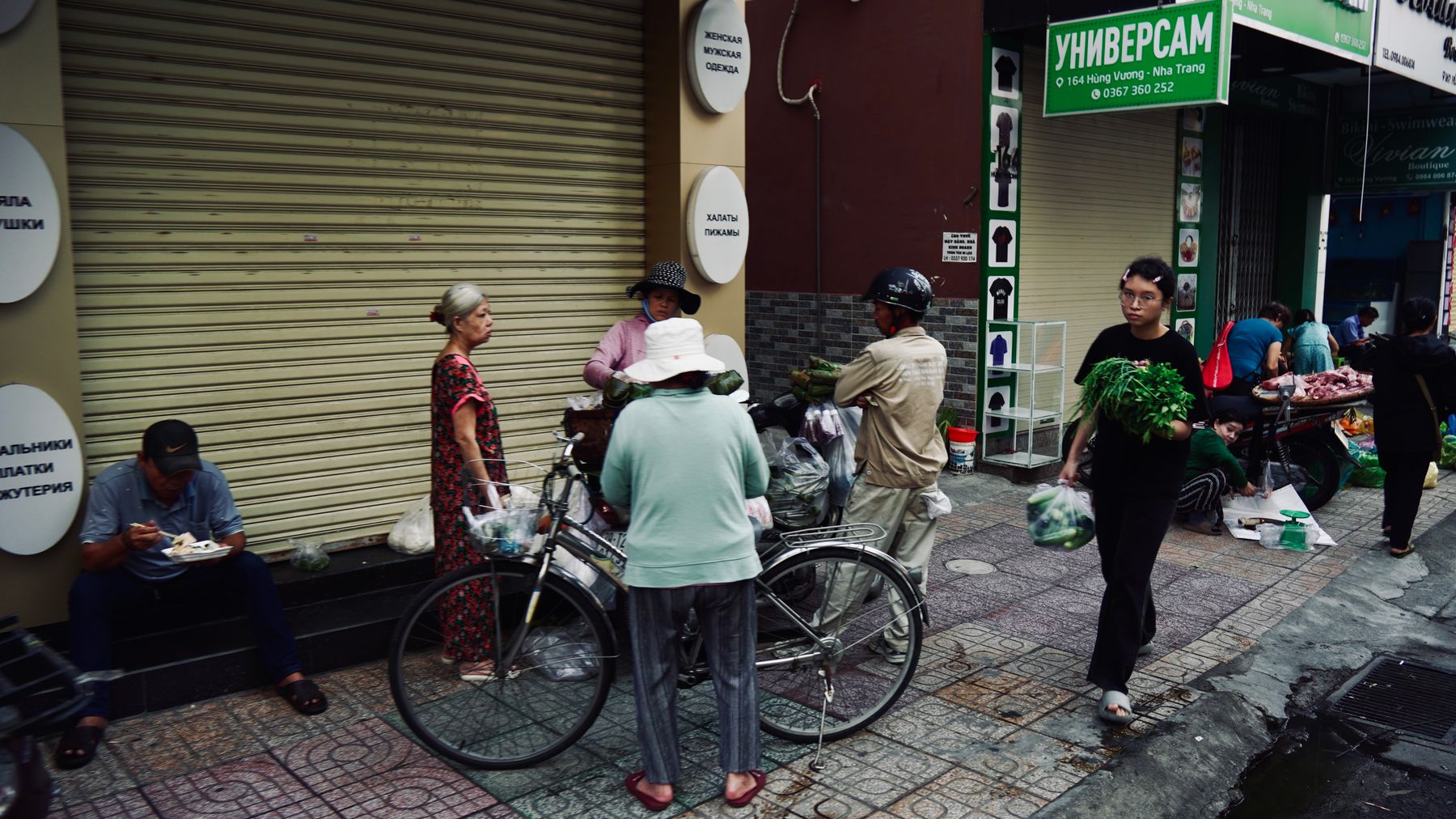
Photo by Tuan Vy on Pexels
Stop 4 — Kem (Ice Cream) at Kem Trang Tien–Style Stalls Near Tran Phu
The beachfront boulevard Tran Phu has no shortage of ice cream, but most of it is generic soft-serve aimed at sunburned tourists. Go instead to the cluster of independent kem stalls two or three blocks inland, where vendors sell scooped ice cream in flavors tied to local produce: soursop (mang cau), coconut, durian, and a version made with local green rice. Prices are 10,000–20,000 VND per scoop.
The coconut ice cream served inside a small coconut shell — kem dua — is the one to get. It's not a Nha Trang invention, but the vendors here source coconuts from the nearby Khanh Hoa province groves and the freshness shows. Eat it before the shell starts to warm up.
Stop 5 — Modern Dessert Cafes on Biet Thu Street
Biet Thu street, running parallel to the beach, has evolved into Nha Trang's most concentrated stretch of cafes and restaurants catering to younger Vietnamese travelers and a growing domestic tourism crowd. Several spots here have moved beyond standard che and fruit smoothies into composed dessert plates worth sitting down for.
The format at these cafes typically involves a base of shaved ice or pandan jelly, topped with combinations of coconut cream, fresh fruit (jackfruit, mango, longan depending on season), crushed peanuts, and house-made toppings. It's closer to a Thai-style bingsu than traditional Vietnamese che, but the flavors stay local. Expect to pay 45,000–70,000 VND for a full dessert at a table.
If the cafe has banh flan (Vietnamese caramel custard, sometimes called "creme caramel" on menus) listed as a daily special, order it. The Nha Trang versions tend to be denser and less sweet than the Saigon (사이공 / 西贡 / サイゴン) style, with a darker caramel that borders on slightly bitter — better, in this writer's opinion.

Photo by Jimmy Liao on Pexels
How to Do This Route
The five stops are spread across a walkable 2–3 km corridor in central Nha Trang. Start at Nguyen Thien Thuat mid-morning when the che stalls are freshest, move through Dam Market before noon, then take a break during the midday heat before hitting Thanh Long Bakery and the kem stalls in the afternoon. End at Biet Thu street in the early evening when the cafes fill up and the temperature drops enough to sit outside.
None of these stops require a reservation or a guide. Most vendors speak enough transactional English for ordering, and pointing at what the person next to you is eating works fine everywhere.
Practical Notes
Cash is expected at every stall and most small cafes — carry small bills (5,000 and 10,000 VND notes). The Dam Market area is busiest before noon; arrive later and some stalls will have sold out of the better traditional cakes. Seasonal availability affects several stops: mooncake variety peaks around the Mid-Autumn Festival, and tropical fruit toppings shift with the season.
Last updated · May 26, 2026 · independently researched, never sponsored.