Two hours by road from Hanoi, Ninh Binh (닌빈 / 宁平 / ニンビン) is usually sold as a scenery trip — the karst peaks, the river boats, the paddy fields. That framing undersells it. The food here is genuinely distinct, rooted in what the land actually produces: goats that graze on rocky hillsides, scorched rice scraped from the bottom of the pot, and a style of "pho" that doesn't try to compete with Hanoi's version because it doesn't need to. A weekend is enough to eat well, move slowly, and get back to the city without the Sunday-night regret of having rushed.
Getting There
The fastest option is a Hanoi (하노이 / 河内 / ハノイ) to Ninh Binh bus from My Dinh or Giap Bat station — journey time around 2 hours, tickets roughly 80,000–120,000 VND depending on the service. If you're a group of three or four, a hired car works out similarly priced and drops you exactly where you need to be. Trains also run the route, stopping at Ninh Binh station, which puts you about 2 km from the main guesthouse strip on Luong Van Tuy. Rent a motorbike on arrival (around 100,000–150,000 VND per day) — it's the only sane way to navigate the countryside between sites and restaurants.
Day 1 — De Nui and the Old Town Circuit
Lunch: Mountain Goat Every Which Way
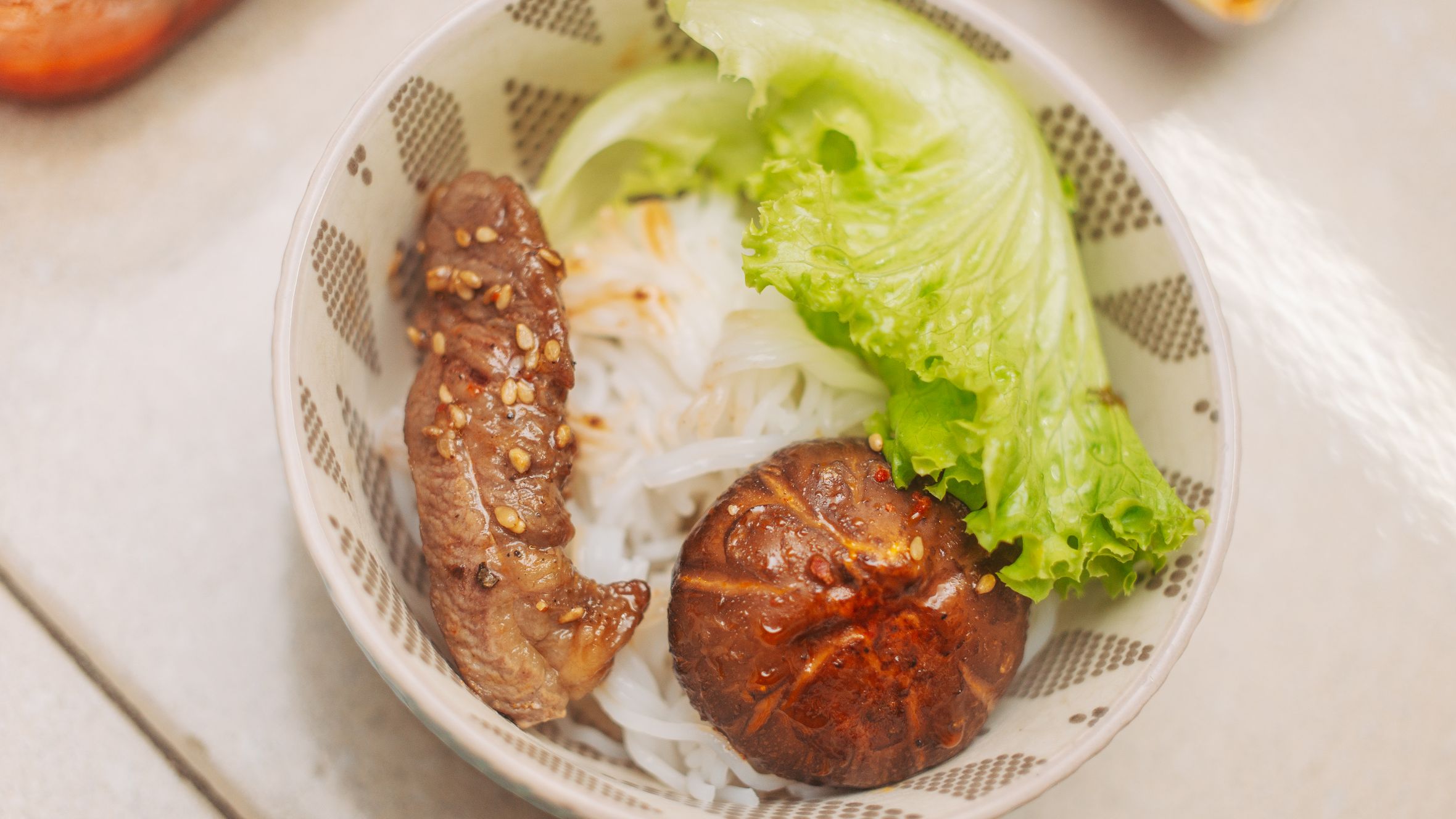
"De nui" — Ninh Binh mountain goat — is the dish that separates people who've actually been here from people who just saw photos of Tam Coc. The goats forage on limestone hillsides, which gives the meat a leanness and a mild gaminess that farm-raised goat doesn't have. You'll find it served three or four ways at the same table: thinly sliced and grilled over charcoal ("de nuong"), steamed with lemongrass ("de hap"), stir-fried with ginger ("de xao gung"), and occasionally braised with galangal. The standard setup is a sharing spread for two, costing around 250,000–350,000 VND total.
The main cluster of de nui restaurants sits along the road toward Hoa Lu, about 4 km northwest of Ninh Binh town. Don't overthink the choice — most are good, portions are generous, and the quality difference between the tourist-facing places and the ones with plastic stools is smaller than you'd expect. Order a cold "bia hoi" or a local Truc Bach and eat slowly.
Afternoon: Hoa Lu and the Valley Roads
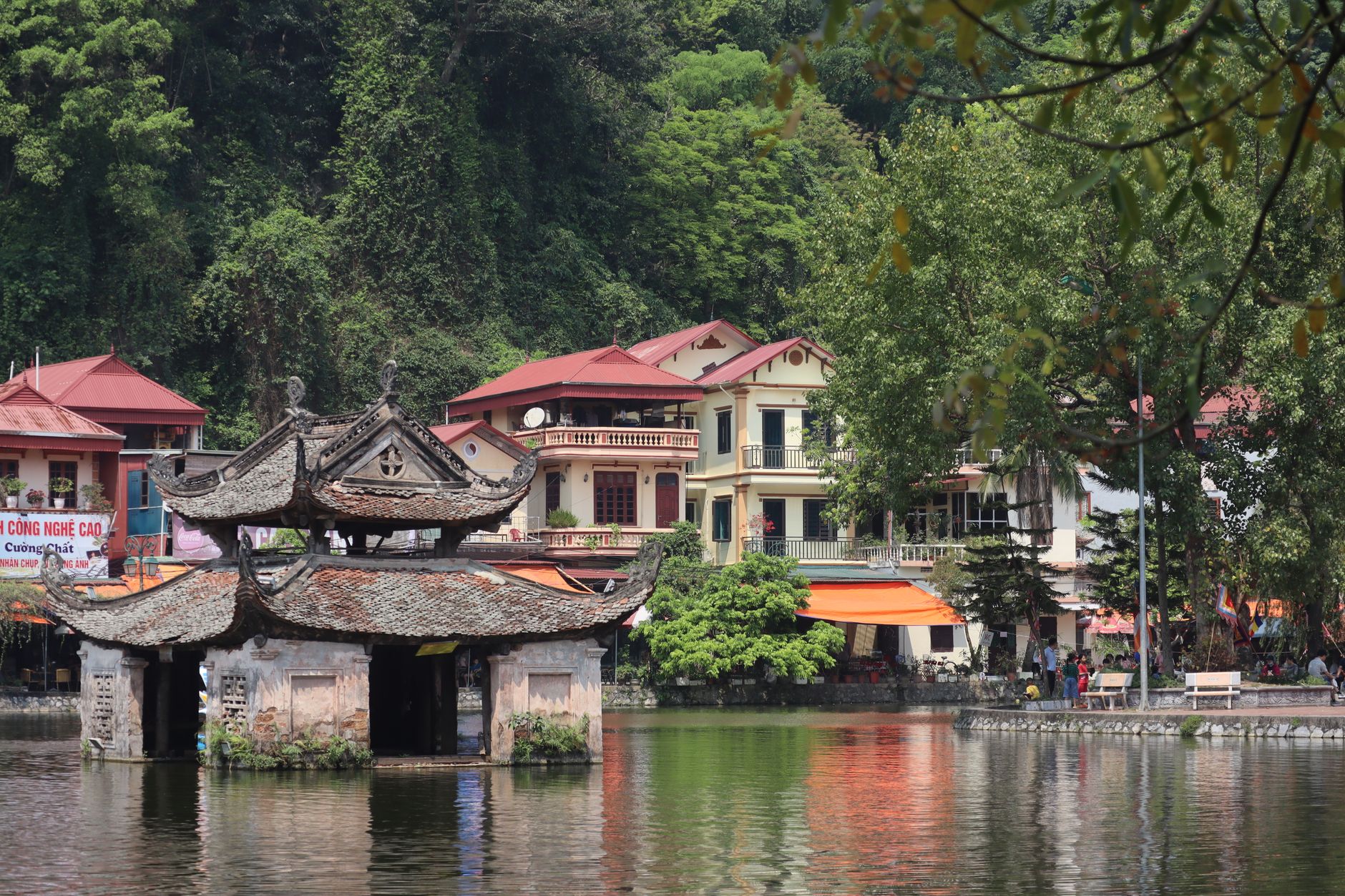
After lunch, ride out to Hoa Lu — the ancient capital site, about 12 km from town. The temple complex is compact enough to walk in 45 minutes, and the surrounding valley roads are genuinely pleasant on a motorbike. This isn't a detour from the food focus; it's what earns dinner.
Dinner: Com Chay at the Source
"Com chay" — literally "burnt rice" — is Ninh Binh's most famous export, though most people in Hanoi have eaten a pale version of it without knowing it. Here, it's made properly: thick discs of scorched rice crust, deep-fried until they puff and blister, then served with a dipping sauce of slow-braised pork, dried shrimp, and mushroom. The texture contrast — the shatter of the crust against the savory slick of the topping — is the whole point.
The best-known com chay strip is on Hoang Hoa Tham street in Ninh Binh town. Prices are reasonable: a full com chay set for two runs 150,000–200,000 VND. Order extra sauce — restaurants are stingy with the first pour. Some spots also do a lighter vegetarian version with tofu and wild mushrooms, which holds up surprisingly well.

Photo by Ahmad Taba on Pexels
Day 2 — Morning Pho, Rice Fields, and the Road Back
Breakfast: Mountain Pho
Ninh Binh's local pho is a quieter beast than the Hanoi version. The broth is lighter, sometimes slightly sweet from the local water and shorter cooking times, and the noodles tend to be thicker. You won't find the same depth of star anise and charred ginger that defines a Hanoi bowl, but that's not what it's going for. It's morning food — clean, warm, uncomplicated.
Street pho stalls open early, around 6–7am, near the central market on Tran Hung Dao. A bowl is 35,000–50,000 VND. Eat it with the provided herbs and chili rather than loading it with sauces; the broth is delicate enough that it rewards restraint.
Mid-Morning: Trang An or Tam Coc — Pick One
You don't need to do both. Trang An is the larger UNESCO-listed boat circuit, about 7 km from town — longer, more varied, better if you want a couple of hours on the water. Tam Coc is shorter and more heavily trafficked with day-trippers from Hanoi. Either works as a digestive walk between meals. Boat tickets at Trang An are around 250,000 VND per person; at Tam Coc, 150,000 VND.
Lunch Before Departure: Bun Cha Ninh Binh Style
Before heading back, find a bowl of local "bun cha" — it exists here in a slightly different form than the Hanoi version, with smaller patties, a sweeter dipping broth, and more fresh herbs on the side. It's not the same dish, exactly, but it's worth comparing. Roadside stalls near the bus pick-up points typically serve it from around 11am.

Photo by Quang Nguyen Vinh on Pexels
Practical Notes
Book accommodation in Ninh Binh town rather than the resort strip near Tam Coc if you want easy access to local eating — guesthouses on Luong Van Tuy run 250,000–450,000 VND per night for a clean double. Budget around 500,000–700,000 VND per person per day for food, transport, and site entry fees, and you'll eat very well without trying.
Last updated · May 29, 2026 · independently researched, never sponsored.