Vietnam Wayfarer
🍜Food & Drink🗺️Destinations🧭Itineraries✈️Travel Tips
Newsletter
Home/Destinations
Destinations

Perfume Pagoda Day Trip from Hanoi: Boat, Hike, and Festival Season

A half or full-day pilgrimage from Hanoi to the Perfume Pagoda involves a scenic boat ride through limestone karst, a trek or cable car ascent, and crowds during Tet season. Here's what to expect and how to plan.

May 15, 2026·6 min read
#Hanoi#Perfume Pagoda#Day Trip#Pilgrimage#Boat Ride#Temples#Vietnam Travel
Explore the serene waters of Ninh Bình with lush karst landscapes and traditional architecture.
Photo by Bid on Pexels

What Is Perfume Pagoda?

Perfume Pagoda—or Chua Huong in Vietnamese—is a sprawling complex of Buddhist temples built into a limestone mountain about 60 km southwest of Hanoi in Ha Tay Province. The main temple sits inside a cave halfway up the hillside. It's one of the most visited pilgrimage sites in northern Vietnam (베트남 / 越南 / ベトナム), especially during Tet (lunar new year) and the spring festival season from January to March, when tens of thousands of locals make the journey.

The journey involves three distinct segments: a minibus ride from Hanoi (하노이 / 河内 / ハノイ), a boat trip through flooded rice paddies and limestone peaks, and then either a hike or cable car up to the complex. It's less about one dramatic building and more about the whole experience—the landscape, the pilgrimage culture, the energy of other visitors.

Getting There from Hanoi

There's no direct public bus, so most visitors either book a tour or hire a driver. Tour operators in the Old Quarter offer half-day (around 100,000–150,000 VND / $4–6 USD per person) and full-day packages (180,000–250,000 VND / $7–10 USD) that include transport, boat fare, and a guide. Quality varies; check recent reviews on Google Maps or TripAdvisor.

If you prefer flexibility, hire a private driver from Hanoi for the day (roughly 800,000–1,200,000 VND / $32–48 USD for a full vehicle) and navigate the boat dock yourself. The site has signage in English, but a guide helps explain the religious significance and temple names.

The minibus drops you at Duc village, where the boat dock is. From here, the real adventure begins.

The Boat Ride

This is the highlight. A long wooden boat—typically seating 8–12 tourists—poles through a flooded rice paddy landscape for about 2 km. In winter and early spring (December to March), water levels are lower and the paddies more exposed; in summer, you're essentially floating through a liquid green sea.

The boatman (almost always an older man in a conical "non la" hat) propels the flat-bottomed vessel with a long bamboo pole, navigating narrow channels between limestone karst formations. It's slow, quiet, and atmospheric—especially on weekday mornings or late afternoons when fewer crowds are about. Peak Tet (뗏 (베트남 설날) / 越南春节 / テト (ベトナム旧正月)) season (late January to early February) brings wall-to-wall boats and little solitude.

The boat ride takes 30–45 minutes depending on water levels and crowds. Bring a light jacket or rain poncho; spray isn't heavy, but you're on the water for a while. The ride costs roughly 50,000–70,000 VND ($2–3 USD) per person; this is sometimes bundled into tour prices.

Hike or Cable Car?

Once you reach the dock at the base of the mountain, you have two choices:

The Hike (Stairs & Trail)

A steep set of stone stairs and narrow footpaths climbs roughly 150 m (500 ft) through dense vegetation to the first temple, Thien Chu Pagoda. From there, another scramble leads to the cave entrance where the main Huong Tich Pagoda sits. Total ascent is moderate—not a technical climb, but steep and tiring, especially in humid weather. The entire hike (up and down) takes 45–60 minutes for an average pace.

Wear sturdy shoes with good grip; the steps are worn and wet, especially after rain. Many older Vietnamese pilgrims do this hike as part of their spiritual practice, even in their 70s and 80s, so it's doable for most fitness levels, but don't underestimate it.

The Cable Car

A cable car (installed around 2013) runs from the base directly to a station near the upper temples, cutting the hike to about 10–15 minutes. Cost is roughly 80,000 VND ($3 USD) one-way or 120,000 VND ($5 USD) round-trip. It's convenient for children, older visitors, or anyone short on time. The cable car runs during daylight hours (roughly 7 AM–5 PM).

Most visitors do the hike up and cable car down to save energy, or vice versa. Some skip the cable car entirely to preserve the pilgrimage spirit.

Traditional pagoda surrounded by lush greenery on a clear day in Đà Lạt, Vietnam.

Photo by Cá Bảo on Pexels

The Temple Complex

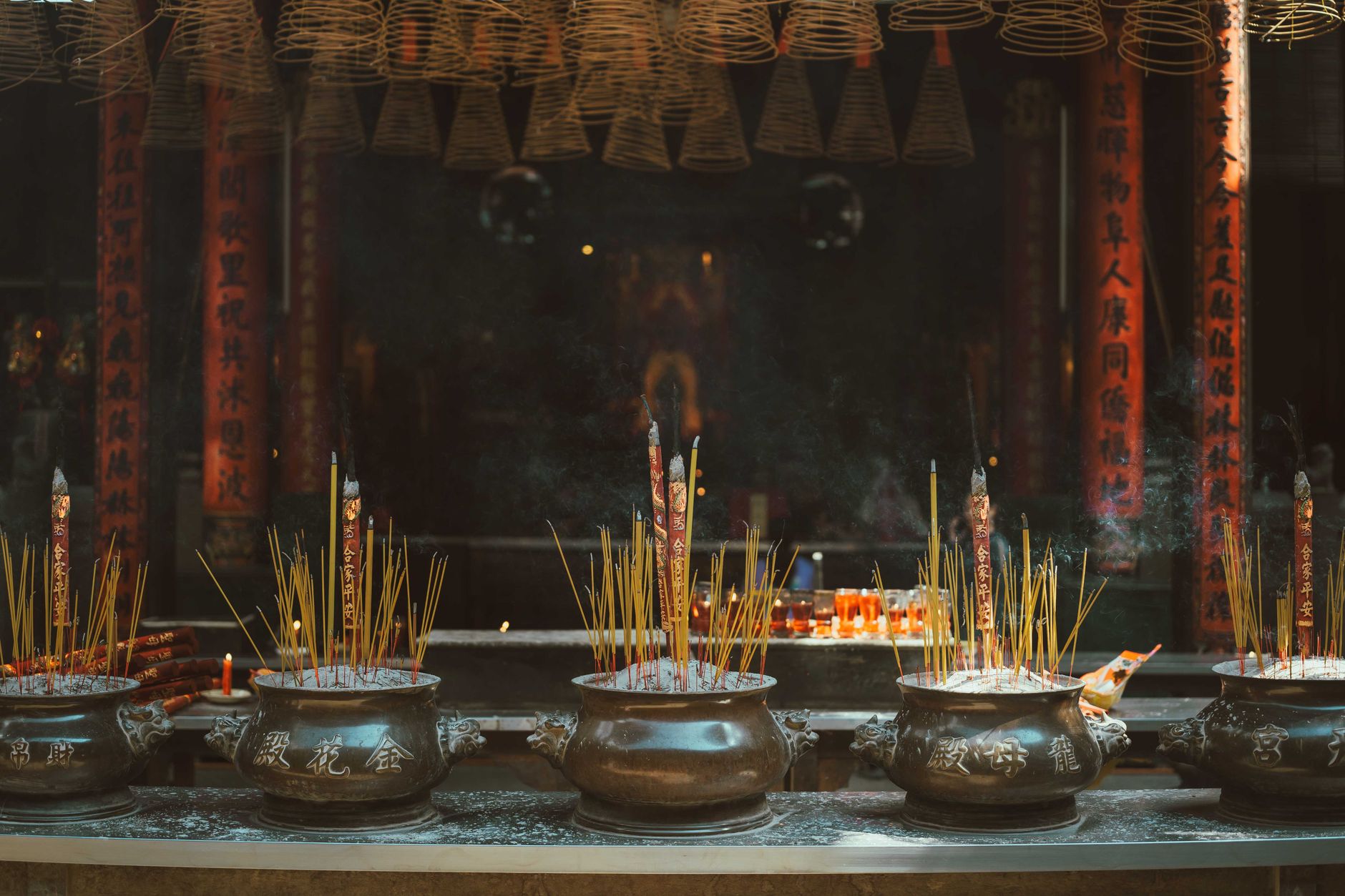
The main structure, Huong Tich Pagoda, is tucked inside a natural cave and dates back to the 15th century (though it has been rebuilt many times). The air inside is cool and thick with incense smoke. Pilgrims light candles and sticks of incense, bow, and leave offerings of fruit or flowers.

There are also smaller temples scattered across the hillside—Thien Chu Pagoda, Giai Oan Pagoda, and others. Each has a slightly different spiritual function in the pilgrimage cycle. You don't need religious knowledge to visit; just respect the customs: remove your shoes in certain areas, don't touch statues or offerings, and dress modestly (covered shoulders and knees).

The whole temple complex can be explored in 45 minutes to 1.5 hours, depending on how many shrines you stop at and whether you chat with monks or other pilgrims.

Festival Season: January–March

Tet (lunar new year, typically late January to early February) brings the heaviest crowds. The site receives up to 500,000 visitors during the 30-day festival period. If you go then, expect packed boats, long queues at the cable car, and crowded temples. The energy is buzzing—thousands of incense sticks burning, drums, chanting—but it's not a quiet pilgrimage experience.

February and March are quieter alternatives that still fall within the spring pilgrimage season. Weekdays (Monday–Friday) are much less crowded than weekends.

If you want solitude, go in September–November or April–August, when fewer tourists and pilgrims visit.

What to Wear and Bring

  • Footwear: Sturdy, slip-resistant shoes. The stairs are steep and slick.
  • Clothing: Long pants or a long skirt; a shirt that covers your shoulders. Many temples request modest dress, and you'll be more comfortable on a long hike.
  • Layers: Mornings are cool, midday can be warm. Bring a light fleece or windbreaker.
  • Sun protection: Hat, sunscreen, sunglasses.
  • Rain gear: A packable poncho or rain jacket, especially in winter or if rain is forecast.
  • Water: Bring a 500 mL bottle; refill stations are at the dock and near the upper temples.
  • Snacks: Energy bars or fruit for the hike.
  • Camera: The boat ride and views from the hillside are photogenic.

Scenic cable car journey with blue skies and clouds in Tay Ninh, Vietnam.

Photo by Tường Chopper on Pexels

Cost Breakdown

Half-day tour (Hanoi pickup to temples and back, 5–6 hours total):

  • Tour cost: 100,000–150,000 VND ($4–6 USD) per person.
  • Boat: included or 50,000–70,000 VND ($2–3 USD) if booked separately.
  • Cable car (optional): 80,000–120,000 VND ($3–5 USD).
  • Total per person: 250,000–350,000 VND ($10–14 USD).

Full-day trip (8–10 hours, includes slower exploration and lunch near the dock):

  • Tour cost: 180,000–250,000 VND ($7–10 USD) per person (lunch sometimes included).
  • Boat, cable car, and entry fees: similar to above.
  • Total per person: 350,000–500,000 VND ($14–20 USD).

Private driver (entire vehicle for the day): 800,000–1,200,000 VND ($32–48 USD), best split among 4–5 people.

Half-Day vs. Full-Day

Half-day is popular for travelers on a tight schedule. You leave Hanoi around 7–8 AM, return by 1–3 PM. Enough time for a boat ride, a quick hike or cable car, and a brief temple visit. Feels a bit rushed, but doable.

Full-day allows a slower pace: you can linger in the temples, explore more of the complex, have a proper lunch (noodles, grilled fish, or rice at a dock restaurant for 80,000–120,000 VND / $3–5 USD), and not feel pressured. Recommended if it's your first time.

Practical Notes

Book tours the night before through your hotel or a tour operator in the Old Quarter. Independent visits require your own transport; a driver with basic English typically costs less than a guided tour and offers more flexibility. Tet season (late January–early February) is peak; if you dislike crowds, go February–March or avoid January entirely. Wear long, modest clothing and sturdy shoes. The site is no longer quiet or remote—it's a major pilgrimage destination—so adjust expectations accordingly.

You might also like
Lively street corner in Hanoi featuring traditional architecture and a passing rickshaw
Destinations

Hanoi Old Quarter Walking Guide: 36 Streets, Street Food & Craft Alleys

May 15, 2026 · 6 min
Silhouettes enjoy a tranquil morning at Hoàn Kiếm Lake in Hanoi, Vietnam.
Destinations

Hoan Kiem Lake: History, Temples, and the Best Time to Walk

May 15, 2026 · 4 min

Going to Vietnam? Eat and travel smarter.

Monthly: new dishes, off-the-beaten-path destinations, and itineraries — straight to your inbox. No spam. Unsubscribe anytime.

Join 0 expats. (We just launched.)

More from Hanoi

Other articles covering this city.

A vibrant aerial view of Ho Chi Minh City featuring the iconic 'Welcome to Vietnam' sign among buildings.
Itineraries

7 Days in Vietnam: A Yoga and Meditation Itinerary

A week-long route through Vietnam's quietest corners: Sapa's mountain silence, a meditation center in the Mekong, and coastal stillness in Da Lat. Real costs, transport, and retreat recommendations.

May 15, 2026·5 min read
Lively street corner in Hanoi featuring traditional architecture and a passing rickshaw
Itineraries

7 Days in Vietnam: A Solo Backpacker Itinerary

A tested week-long route through Hanoi, Ha Long Bay, and Saigon with budget lodging, street food, and overland transport. Real costs and booking tips included.

May 15, 2026·6 min read
Aerial view of a winding mountain road in Ha Giang, Vietnam, showcasing stunning landscapes.
Itineraries

10 Days on the Northern Frontier Loop: Hanoi to Ha Giang and Back

A tested itinerary covering Hanoi, Mai Chau, Sapa, Ha Giang, and back—with transport, guesthouses, food costs, and what actually works on the ground.

May 15, 2026·6 min read

More from Northern Vietnam

Other articles covering the same region.

Vietnamese flag waving atop a monument tower under a clear blue sky on Ly Son Island.
Destinations

Lung Cu Flag Tower: Vietnam's Northernmost Point

The drive to Lung Cu Flag Tower takes you to Vietnam's northernmost point at 1,500 metres. It's a half-day trip from Dong Van with a steep climb, mountain views, and nearby Hmong villages.

May 15, 2026·4 min read
A woman wearing a traditional Vietnamese dress stands in a serene temple garden holding flowers.
Destinations

Hoa Lu Ancient Capital: Vietnam's First Kingdom and How to Visit from Ninh Binh

Hoa Lu was the seat of Vietnam's first independent dynasties in the 10th century. Two surviving temples anchor a quiet bike ride through rice fields just outside Ninh Binh.

May 15, 2026·5 min read
Tantalizing pho bowl filled with fresh herbs, tender beef slices, and vibrant chilies on a bamboo mat.
Food & Drink

Best Pho Chua in Ha Giang: Where Locals Send You

Ha Giang's take on sour pho is sharper, tangier, and less known than the southern version. Here's where locals actually eat it.

May 15, 2026·3 min read

More in Destinations

More articles from the same category.

View all in Destinations →
A lone explorer illuminates a vast, mysterious cave in Son La, Vietnam with a torch, showcasing nature's hidden wonders.
Destinations

Son Doong Cave: Inside the $3,000 Oxalis Expedition

Son Doong is the world's largest cave by volume—and the only way in is a 4-day permit-exclusive tour with Oxalis. Here's what you actually get, who should go, and what cheaper caves offer instead.

May 15, 2026·5 min read
Tourists enjoy a scenic boat ride in Phong Nha Ke Bang National Park, showcasing vibrant landscapes.
Destinations

Phong Nha Cave: Boat Tours, Dry Caves, and How to Choose

Phong Nha-Ke Bang has two main cave experiences: the iconic river boat through Phong Nha Cave itself, and the dry trek into Tien Son. Here's how to pick, what to expect, and when to go.

May 15, 2026·4 min read
Couple releases lanterns in Hoi An, Vietnam, at night along the river.
Destinations

Hoi An Lantern Festival: Full Moon Nights and How to Plan Around Them

The Hoi An Lantern Festival happens on the 14th lunar day each month. Electricity shuts off, lanterns float on the Thu Bon River, and crowds triple. Here's how to time your visit and actually enjoy it.

May 15, 2026·4 min read
A woman in traditional Vietnamese attire stands by the Hoi An Japanese Bridge.
Destinations

Japanese Bridge in Hoi An: What to Know Before You Visit

The 400-year-old Japanese Bridge is Hoi An's most iconic landmark. Here's how to see it properly—and avoid the crowds.

May 15, 2026·4 min read
Ground level of fresh delicate magnolia flowers scattered on ground near ancient Pagoda of the Celestial Lady located in Hue city in Vietnam
Destinations

Thien Mu Pagoda in Hue: Seven Stories Above the Perfume River

Hue's most recognizable landmark rises 21 metres above the Perfume River. This is the story behind the tower, how to get there, and when to visit without the tour groups.

May 15, 2026·4 min read
Serene sunset view over Lạng Sơn's majestic mountains reflecting in a tranquil lake.
Destinations

What to Eat in Bac Kan: Regional Dishes and Where to Find Them

Bac Kan's food scene centers on grilled fish, sticky rice, and forest herbs. This guide shows where locals eat and what's worth your money.

May 15, 2026·5 min read
View all in Destinations →
💎 Hidden gems

Lesser-known articles tourists usually miss

  • 🧭
    itineraries

    4 Days in Northern Vietnam: Hanoi to Sapa to Ha Giang by Bus and Train

  • ✈️
    tips

    Getting from Hanoi to Ha Long Bay: Cruise Shuttle, Bus & Limousine Options

  • 🍜
    food

    Banh Duc: Vietnam's Underrated Rice-Flour Cake

← Older
Hanoi Old Quarter Walking Guide: 36 Streets, Street Food & Craft Alleys
Newer →
Hoa Lu Ancient Capital: Vietnam's First Kingdom and How to Visit from Ninh Binh

Comments

Loading…

Leave a comment

Email used for Gravatar avatar + reply notification. Never shown publicly.

Popular this week

  1. 1
    Itineraries
    2 Weeks in Vietnam: The Perfect First-Timer's Itinerary
    Apr 21, 2026 · 16 min
  2. 2
    Food & Drink
    Pho in Hanoi: The 7 Bowls That Are Actually Worth Lining Up For
    Apr 25, 2026 · 11 min
  3. 3
    Destinations
    The Ha Giang Loop: A Complete 4-Day Motorbike Adventure Guide
    Apr 29, 2026 · 14 min
  4. 4
    Destinations
    Son Doong Cave: Inside the $3,000 Oxalis Expedition
    May 15, 2026 · 5 min
  5. 5
    Destinations
    Phong Nha Cave: Boat Tours, Dry Caves, and How to Choose
    May 15, 2026 · 4 min
Get the monthly digest

New dishes, destinations, and itineraries — once a month.

Subscribe →
Vietnam Wayfarer

Insider guides to Vietnam — food, travel, and regional specialties most foreigners never find. Independent, no sponsored content without disclosure.

Topics

  • Food & Drink
  • Destinations
  • Itineraries
  • Travel Tips

Resources

  • About
  • Newsletter
  • Contact
  • Affiliate Disclosure
  • Disclaimer
  • Terms
  • Privacy
  • Search

Get the Newsletter

Monthly: dishes, destinations, itineraries — straight to your inbox.

© 2026 Vietnam Wayfarer. All rights reserved.

We use minimal analytics + ads (no personal tracking). See our privacy policy.