Hanoi has a habit of producing dishes so specific to one neighborhood that replicating them anywhere else feels slightly pointless. "Pho cuon" — rolled pho — is one of those dishes. It was born on a single street near Truc Bach lake, and even today the best versions haven't strayed far from where they started.
What Pho Cuon Actually Is
Forget everything the name implies about pho as a soup. Pho cuon shares only the rice sheet with its more famous cousin. The sheet — fresh, soft, about the width of a hand — is laid flat, filled with a quick stir-fry of thinly sliced beef, bean sprouts, and a heavy handful of fresh herbs (usually Thai basil and mint), then rolled into a tight cylinder roughly the size of a thick cigar. No broth. No noodles in the bowl sense. You eat it cold or at room temperature, dipping each roll into "nuoc cham", the sweet-sour-salty fish sauce mixture that shows up across Vietnamese cuisine.
The texture is what makes it work: the silky sheet against the slightly charred beef and the crunch of raw bean sprouts. It's light, fast to eat, and genuinely refreshing in a way that a bowl of pho on a 35-degree Hanoi (하노이 / 河内 / ハノイ) afternoon is not.
Where It Comes From
Pho (쌀국수 / 越南河粉 / フォー) cuon's origin story is unusually traceable. It developed in the cluster of small restaurants along Nguyen Khac Hieu street, which runs along the southern edge of Truc Bach lake in Ba Dinh district. The area is sometimes called "Pho Cuon Street" by locals, and it earns the name — on a busy evening the pavement fills with low plastic stools and the smell of beef fat hitting a hot wok.
The dish emerged sometime in the 1990s, reportedly as a variation offered by vendors who already sold pho noodles and had the fresh rice sheets on hand. Whether the invention was deliberate or accidental is disputed depending on which restaurant owner you ask, but the geography isn't: this stretch of lakeside Hanoi is where it happened.
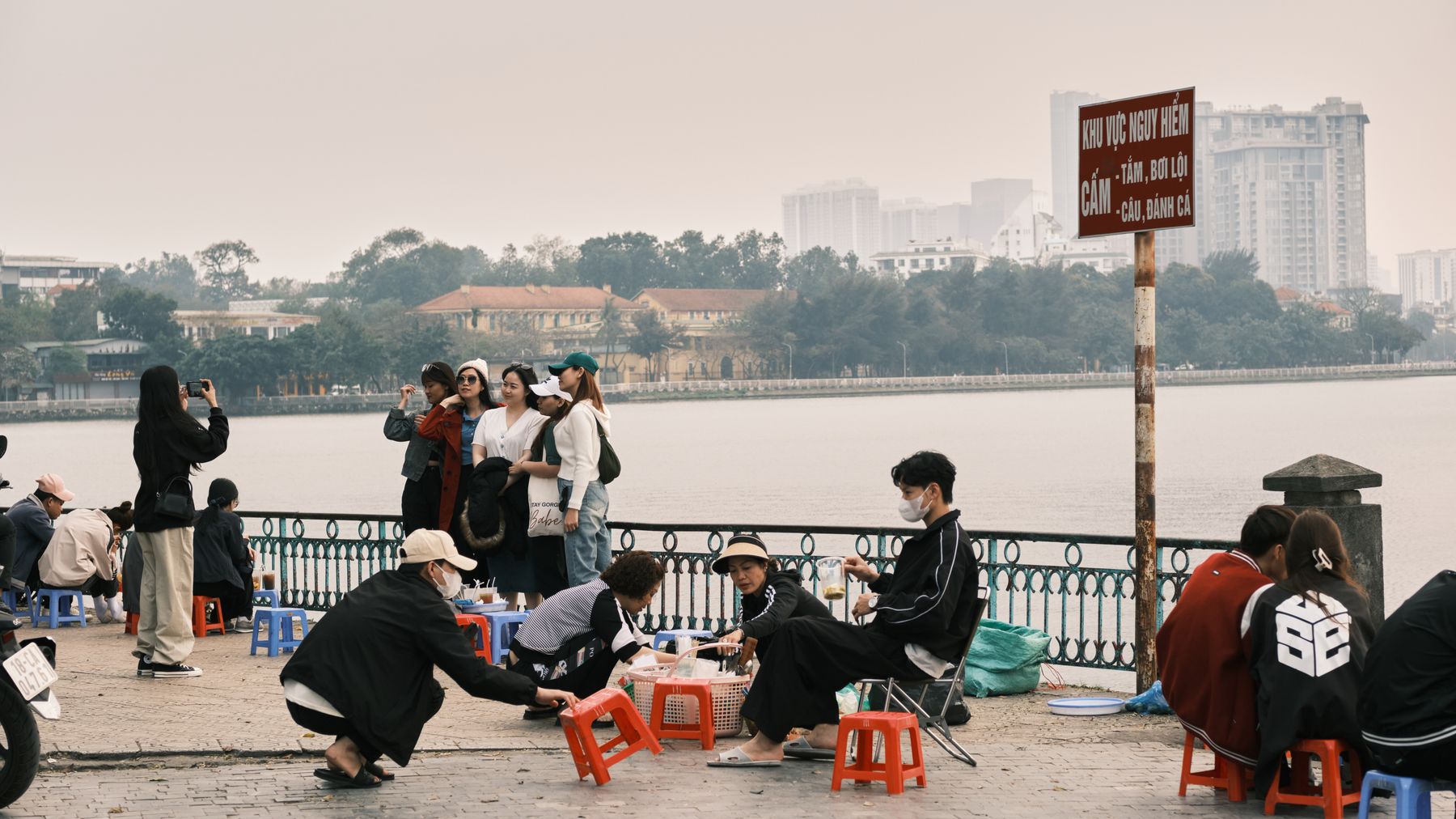
Photo by Thuan Pham on Pexels
Where to Eat It
Pho Cuon Hung Ben at 25 Nguyen Khac Hieu is the name most locals point to first. It's been there long enough that the menu is essentially a single page: pho cuon, "pho chien phong" (puffed fried pho squares — worth ordering alongside), and drinks. A plate of eight rolls runs around 60,000–70,000 VND. Seating spills onto the pavement. Opens around 10am, closes when the sheets run out — usually by 9pm.
A few doors down, Pho Cuon 31 (31 Nguyen Khac Hieu) is slightly more organized, with slightly higher prices (75,000 VND a plate) and longer evening hours. The beef here is marinated a touch more aggressively with garlic and fish sauce before it hits the wok, which some people prefer.
If you want to try a version further from the lake, Quan An Ngon on Phan Boi Chau pulls it off competently for visitors who are already in the Old Quarter — but it lacks the immediacy of eating it where it was invented.
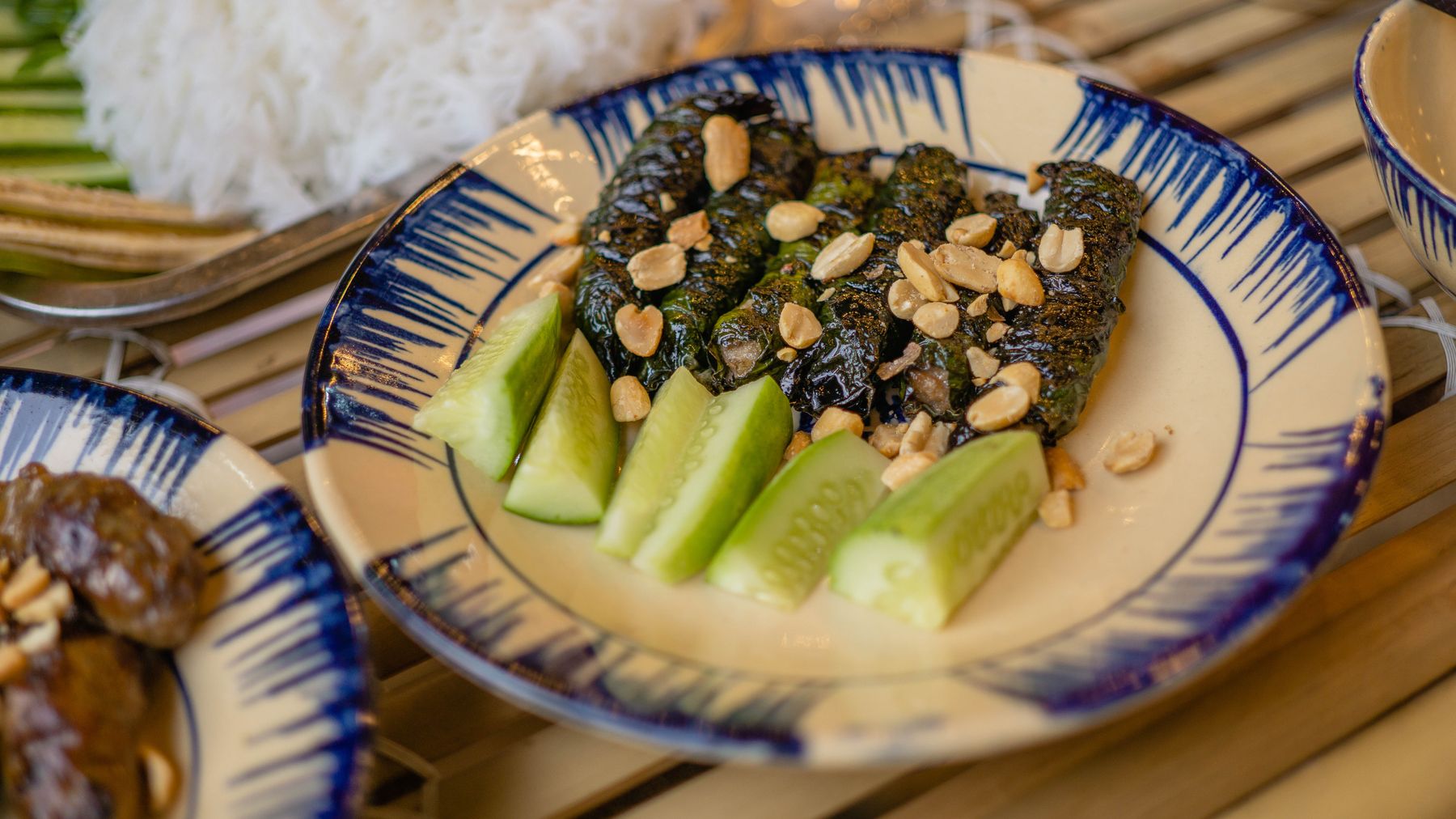
Photo by FOX ^.ᆽ.^= ∫ on Pexels
How the Rest of Vietnam Handles It (Or Doesn't)
This is where the comparison gets simple: they mostly don't. Pho cuon is a Hanoi dish with almost no meaningful footprint outside the north. In Saigon, you can find it occasionally in northern-style restaurants in Phu Nhuan or Binh Thanh district — usually on menus alongside bun cha and other Hanoi exports — but it reads as a specialty import rather than a living local tradition.
In Hue and Da Nang, it's essentially absent. Central Vietnam has its own rolled-rice-sheet traditions — the steamed "banh cuon" fills a similar textural niche — but pho cuon specifically never migrated south with any momentum.
The reason is probably structural. Pho cuon depends on fresh pho sheets made and used the same day, ideally within hours. It doesn't travel well and doesn't hold well. The supply chain that makes it work in Hanoi — rice noodle producers distributed across Ba Dinh and Tay Ho every morning — simply doesn't exist at scale in other cities. So the dish stayed where the infrastructure was.
A Few Practical Notes
Nguyen Khac Hieu street is about 2.5 km from the Hoan Kiem Lake area — a 10-minute ride by xe om or Grab, or a 30-minute walk through the Old Quarter if the weather cooperates. Go for an early dinner (5–7pm) before the best sheets sell out. Pair the rolls with bia hoi from a stall at the lake corner if you want the full lakeside experience. Budget 80,000–120,000 VND per person including drinks.
Last updated · May 29, 2026 · independently researched, never sponsored.