"Bun cha" — charcoal-grilled pork patties and fatty belly slices served in a warm, sweet-sour dipping broth alongside a plate of cold "bun" (rice vermicelli) and fresh herbs — is one of the most democratic dishes in Hanoi. You can eat it for 30,000 VND squatting on a footpath, or pay ten times that at a tourist-facing restaurant with air-conditioning and a cocktail menu. The pork and the broth are the same idea at every tier. What changes is the coal smoke, the char, and the care.
The 30,000–45,000 VND Tier: Neighbourhood Staples
This is the category most Hanoians actually eat in. Look for a woman with a charcoal grill parked outside a narrow shop house, usually open 11:00–13:30 and sometimes again 17:00–19:00 before the coals die.
The formula: you get a ceramic bowl of warm broth with two or three patties and a few strips of grilled belly, a basket of bun, a plate of rau song (lettuce, perilla, bean sprouts), and a side dish of nem chua or cha gio if you ask. Everything lands on the table in under two minutes.
Bun Cha (분짜 / 烤肉米粉 / ブンチャー) 34 Hang Than (34 Hang Than, Ba Dinh) is a reliable example — small, cash only, no English menu, 35,000 VND a portion. The patties are mixed with shallot and fish sauce and grilled over real charcoal; you can smell the smoke from half a block away. Broth is lighter and less sweet than the tourist versions. Go before 13:00 or it runs out.
Bun Cha Dac Kim (1 Hang Manh, Hoan Kiem) is slightly more famous and sits closer to the Old Quarter, which means it gets a tourist spillover crowd but prices have held around 40,000–50,000 VND. The pork quality is consistent. It can feel rushed at peak hours.
At this tier, do not expect menus, receipts, or Wi-Fi. Expect good smoke, fast service, and no reason to linger once you have finished.
The 60,000–90,000 VND Tier: The In-Between
A step up in comfort — proper tables, sometimes a fan — but not necessarily better pork. A lot of places in this bracket are trading on location (tourist streets in Hoan Kiem) rather than technique. The broth tends to be sweeter and blander, calibrated for visitors who find the sharper, more acidic neighbourhood version too intense.
The honest advice: if you are going to skip the cheapest tier, skip this middle band too and go straight to the top end. You are paying for the chair, not the char.

Photo by Nimit N on Pexels
The 200,000–350,000 VND Tier: Bun Cha Huong Lien and Its Peers
In 2016, Barack Obama and Anthony Bourdain sat in Bun Cha Huong Lien (24 Le Van Huu, Hai Ba Trung) for an episode of Parts Unknown and ate bun cha with Hanoi bia hoi. That moment turned a decent neighbourhood restaurant into a pilgrimage site. The "Obama combo" — bun cha, nem ran, and a bottle of Hanoi beer — now runs around 250,000 VND and comes with a laminated photo of the two men at the table.
Is it worth it? The bun cha itself is solid: well-seasoned patties, good char, broth that is properly balanced. But you are also paying for the story. The room is crowded, the staff are accustomed to foreign visitors, and the vibe is more canteen-tourism than local lunch. Go once if you want the reference point. Do not go expecting to discover something the neighbourhood spots are hiding.
A better use of the same budget: Bun Cha Hang Quat (74 Hang Quat, Hoan Kiem), which charges around 80,000–100,000 VND, keeps a cleaner grill, and uses a slightly more complex marinade with a touch of galangal. Less famous, more repeatable.
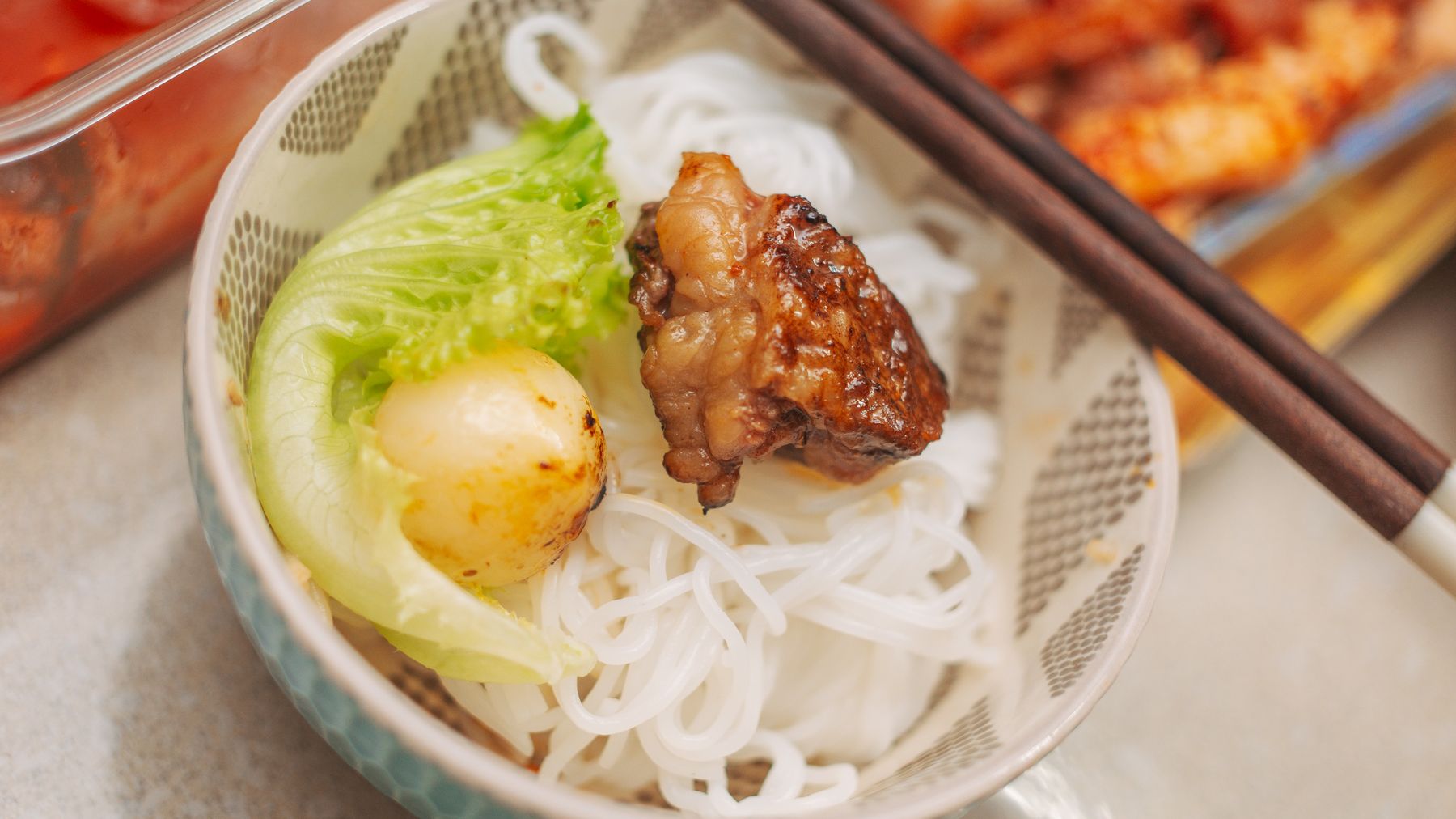
Photo by FOX ^.ᆽ.^= ∫ on Pexels
What the Price Actually Buys
Across every tier, the non-negotiable variables are the same: how hot the coals are when the meat goes on, how long it rests, and the fish-sauce-to-sugar-to-vinegar ratio in the broth. A 35,000 VND spot with a skilled grandmother at the grill will beat a 300,000 VND tourist restaurant with a gas burner every time.
The things price does buy: seating comfort, English-language menus, the ability to pay by card, and — at the very top end — a curated herb plate with more variety than the usual rau muong and rau kinh gioi.
If you are eating one bun cha in Hanoi (하노이 / 河内 / ハノイ), go cheap, go at lunch, go where you can see the smoke. If you want to compare, hit Hang Than in the morning and Huong Lien in the afternoon. The gap between them is instructive.
Practical Notes
Most bun cha shops in Hanoi are lunch-only or lunch-and-early-dinner — arrive before 13:00 for the best selection. Portions are generally individual (one bowl of broth per person); you can order extra patties (them cha) for 10,000–20,000 VND. Wash it all down with ca phe sua da from the nearest street cart and you have covered the essential Hanoi midday.
Last updated · Jun 4, 2026 · independently researched, never sponsored.