"Banh khot" — the small, crispy coconut-rice cups topped with a whole shrimp and steamed mung bean — originated in Vung Tau province, where they're eaten at every hour of the day. Saigon adopted them enthusiastically, but the quality split is real: tourist-facing spots serve soft, pale versions that taste like nothing much, while the good stalls produce something genuinely different — a lacquered, almost crunchy exterior from properly seasoned cast-iron molds, a coconut-rich interior, and a shrimp that's been cooked exactly right, not gray and rubbery. Here's where to find the latter.
What Makes a Good Banh Khot
The batter ratio is everything. Authentic banh khot uses a mix of rice flour, tapioca starch, coconut milk, and turmeric — turmeric for color and a faint earthiness, not just yellow food dye. The molds need to be properly seasoned iron pans (a special cast pan with shallow round wells, not a modern non-stick substitute), and the batter has to be thin enough that the edges frill and crisp before the center sets. Each cake is finished with a whole shrimp — ideally fresh from southern coastal waters — and sometimes a small smear of mung bean paste.
You eat them wrapped in mustard greens, perilla, and lettuce, dipped in "nuoc cham" thinned with a little coconut water or pineapple juice. That wrap matters. Places that serve banh khot without a proper herb plate are already cutting corners.
Where to Go
Banh Khot Co Ba Vung Tau — District 3
This is the one that gets recommended most often by people who've eaten their way through the city and still come back. The name telegraphs the origin story: the owner's family is from Vung Tau (붕따우 / 头顿 / ブンタウ). The molds here are the real black cast-iron type, and the coconut milk is noticeably present — not a suggestion, an actual flavor. A plate of 10 pieces runs around 65,000–75,000 VND. The herb plate comes loaded: raw mustard greens, perilla, banana flower, and cucumber.
Address: 11 Dinh Cong Trang, Ward 13, District 3
Hours: 7am–8:30pm daily
Banh Khot 46 — Phu Nhuan District
A smaller, no-sign operation in Phu Nhuan that's been running out of the same ground-floor shophouse for over a decade. The owner keeps hours roughly 3pm–9pm, which tells you the regulars are coming after work, not for lunch tourism. The shrimp are small but fresh and sit high enough above the batter that they don't steam — they get a light sear from the lid. Portions are honest: 10 pieces for 60,000 VND, 15 pieces for 85,000 VND.
Address: 46 Nguyen Trong Tuyen, Phu Nhuan District
Hours: Approx 3pm–9pm (closes when sold out)
Quan Banh Khot O May — Go Vap District
Go Vap is where a lot of Saigon (사이공 / 西贡 / サイゴン)'s working-class eating happens, and this place fits the neighborhood. The banh khot here are slightly smaller than Vung Tau standard but the turmeric batter is properly fragrant and the edges crisp up correctly. They also do a version with dried shrimp mixed into the batter — not a shortcut, just a different regional style worth trying. Full plate with drinks comes to about 80,000 VND per person. Gets busy after 5pm on weekdays.
Address: 284 Nguyen Van Nghi, Go Vap District
Hours: 10am–9pm daily
Banh Khot Goc Vu Sua — Binh Thanh District
Named after the milk fruit tree that used to shade the original stall. The current setup is a small indoor room off the main street, loud fans, plastic stools. What's good here: the nuoc cham is house-made with fresh pineapple juice and has more complexity than the sugar-water versions you get at tourist spots. What to know: the mung bean layer is thicker than most, which some people love and some find heavy. Prices are fair at 55,000–65,000 VND per plate of 10.
Address: 39 Nguyen Xien, Binh Thanh District
Hours: 11am–8pm, closed Mondays
Banh Khot Vung Tau 1985 — District 1
Yes, District 1, which should make you skeptical — and partially, it's warranted. The location means higher rent and a menu that caters partly to tourists. But the cooking itself hasn't drifted. The owner trained in Vung Tau and the molds are right. The herb plate is genuine. The shrimp are good. The banh khot costs more here — about 90,000–110,000 VND for a set — but it's the most accessible option if you're staying in the center city and don't want to go hunting across districts. Just avoid the weekend dinner rush when the tables fill with group tours and the kitchen slows down.
Address: 8 Dinh Tien Hoang, Ben Nghe Ward, District 1
Hours: 9am–9:30pm daily

Photo by Quang Nguyen Vinh on Pexels
Skip This One
The banh khot stalls in the Ben Thanh Market periphery — the cluster along Phan Boi Chau and the market's southwest exit — are uniformly aimed at first-time visitors. The batter is pre-mixed and kept warm too long, the shrimp are frozen and small in a bad way, and the herb plates arrive wilted. Prices are often 120,000 VND or more for a plate that costs 60,000 VND three kilometers north. It's not a scam, just a bad-value tourist tax.
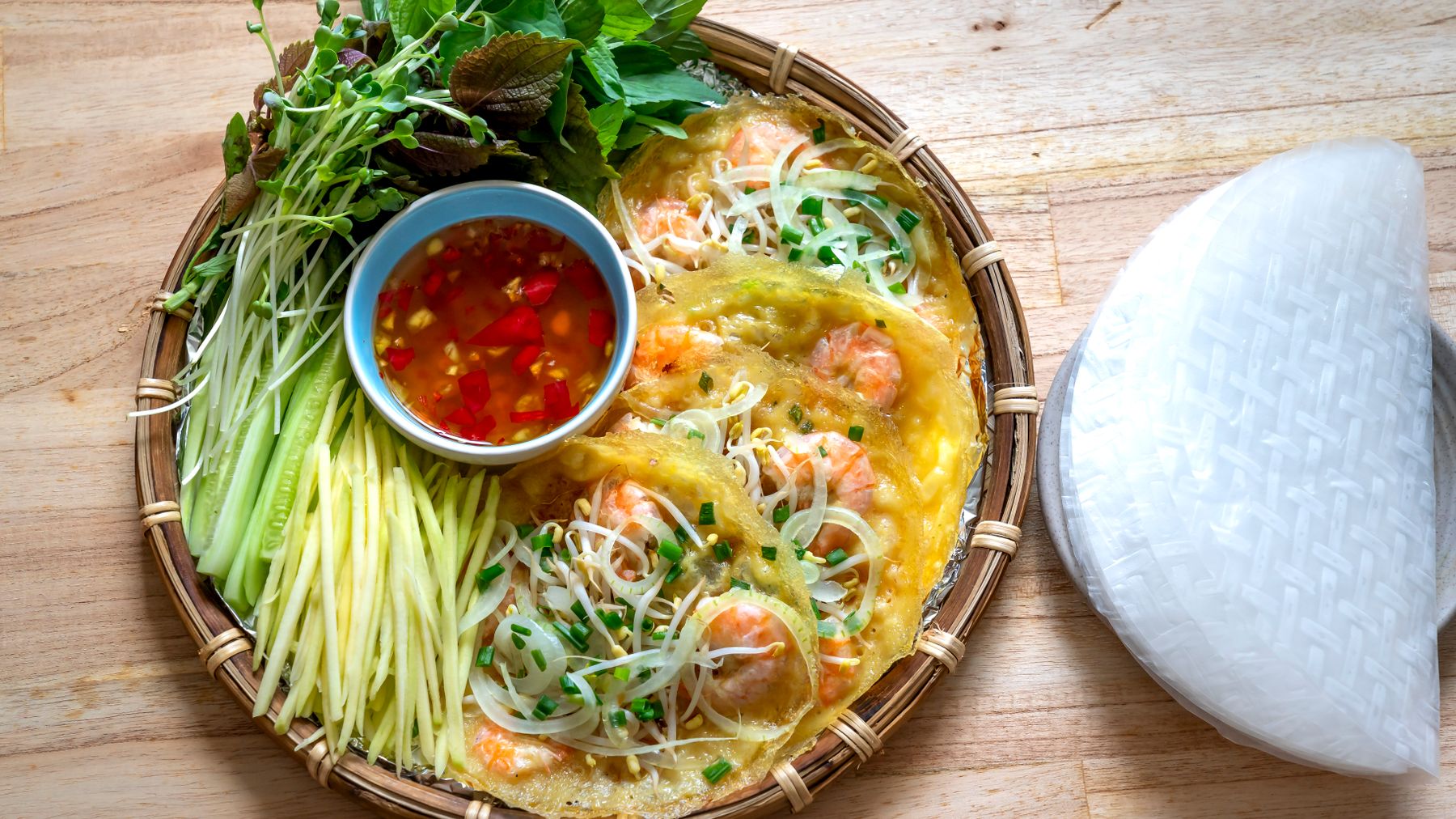
Photo by Quang Nguyen Vinh on Pexels
What It Costs Overall
Expect 55,000–90,000 VND per plate at a neighborhood stall, 90,000–120,000 VND at central-district locations. A full meal for two — two plates of banh khot, drinks, and whatever extra herbs you order — sits comfortably around 200,000–250,000 VND outside the tourist zone.
Practical Notes
Banh khot is almost always a late-morning to evening dish — don't expect to find these stalls open at 7am except at Co Ba Vung Tau in District 3. If you're planning a broader southern food day, banh khot pairs naturally with a stop for "banh xeo" or a bowl of "hu tieu" earlier in the morning. Vung Tau itself — about 120km southeast of Saigon — is worth the trip if you want to understand the dish in its original context, though the Saigon versions are close enough that it's not a required pilgrimage.
Last updated · May 26, 2026 · independently researched, never sponsored.