Hanoi has strong opinions about breakfast, and "banh cuon" — thin steamed rice-flour crepes filled with seasoned minced pork and wood-ear mushroom — is near the top of the hierarchy. The dish is deceptively simple to look at and surprisingly hard to make well. Where you eat it shapes the experience as much as the food itself.
What You're Actually Eating
A proper bowl of banh cuon (반꾸온 / 蒸米卷 / バインクオン) arrives as a loose pile of translucent rolled crepes, soft enough to cut with a spoon, sitting in a shallow pool of nuoc cham spiked with a few drops of ca cuong (water bug essence, increasingly rare but still used at serious spots). On top: fried shallots, a few slices of cha lua (Vietnamese pork sausage), and sometimes a handful of bean sprouts. The crepes themselves should be almost paper-thin — any thickness means the batter ratio or the cooking time is off.
The cook makes them to order by ladling a thin wash of rice-flour batter onto a cloth stretched tight over a pot of simmering water, covering it for about forty seconds, then lifting the cooked sheet off with a flat bamboo stick and rolling it around a pinch of filling. Watching this done fast, by someone who has done it ten thousand times, is most of the reason to eat at a sidewalk stall.
The Sidewalk Version
Sidewalk banh cuon in Hanoi (하노이 / 河内 / ハノイ) is a morning-only affair. Stalls appear around 6 a.m. and most are packed up by 10 or 10:30. The format is: plastic stools, a folding table at knee height, and the steamer right in front of you.
Banh Cuon Ba Hanh, on Ngo Huyen near the south end of Hoan Kiem Lake, is one of the more consistent spots in the Old Quarter area. A bowl runs 30,000–35,000 VND. The cook here works alone, keeps the cloth tight, and doesn't rush — the crepes come out even. Arrive before 8 a.m. if you want a seat without circling.
What the sidewalk gets right: immediacy and transparency. You see every step. The nuoc cham is mixed fresh, the shallots are fried in a small wok off to the side, and the whole thing takes about ninety seconds from order to bowl. The trade-off is comfort — you're perched low, possibly in direct sun, with motorbikes threading past your elbow.
Prices at most Old Quarter sidewalk spots land between 25,000 and 40,000 VND depending on whether you add extra cha lua.
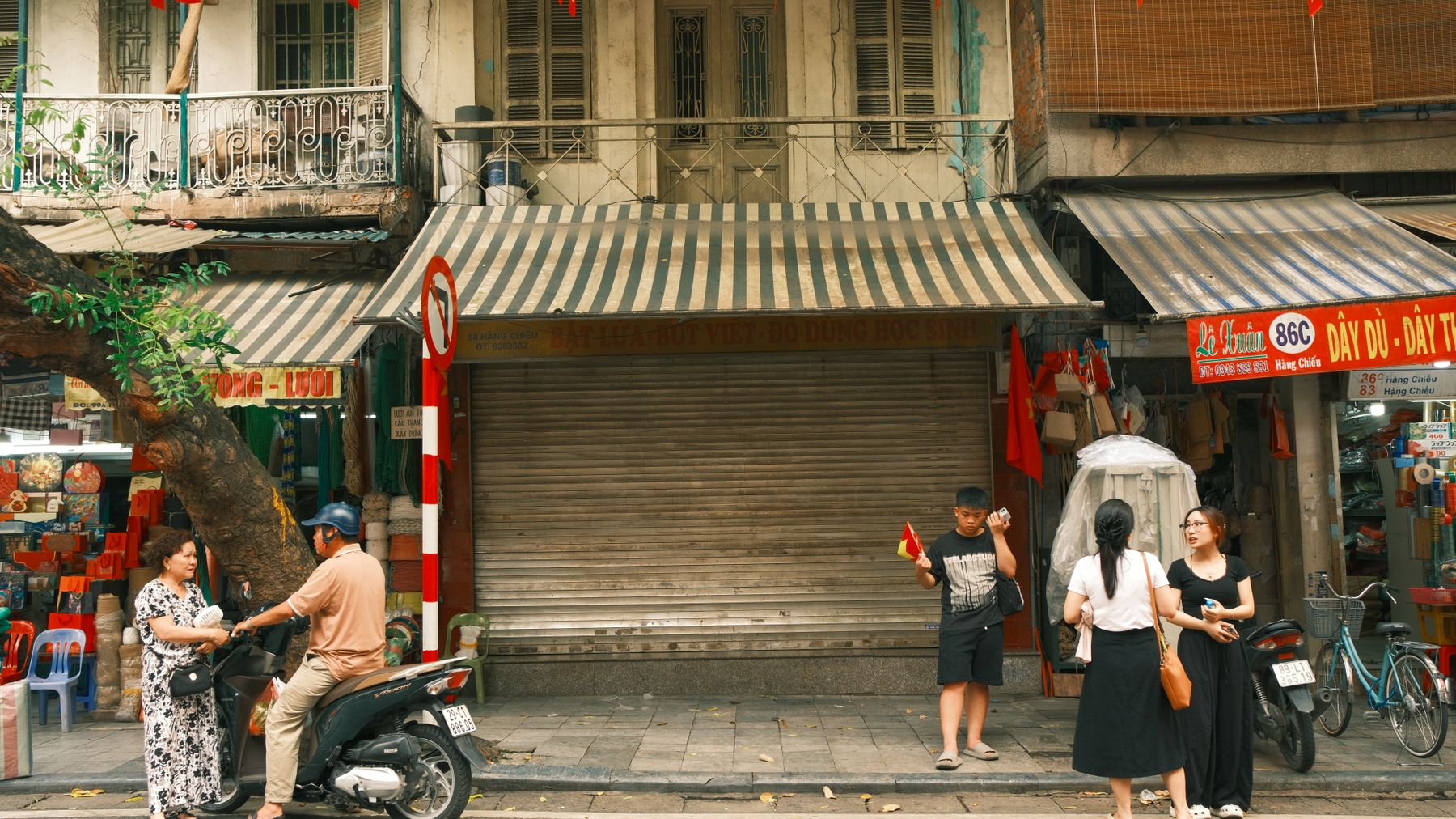
Photo by Thuan Pham on Pexels
The Sit-Down Version
Sit-down banh cuon restaurants have been around long enough to become institutions. The most referenced in Hanoi is Banh Cuon Gia Truyen Thanh Van at 14 Hang Ga, which has been in the same family for decades. It opens at 6 a.m. and closes when the day's batter runs out — usually by noon, sometimes earlier on weekends. A serving costs around 40,000–50,000 VND.
The room is narrow and tiled, with wooden stools and shared tables. It fills up fast. What you get over the sidewalk version: a slightly more controlled environment, better lighting if you want to photograph it, and a nuoc cham formula that has been calibrated over years. The ca cuong is genuine here, added from a small bottle at the table — a faint, almost mentholated aroma that lifts the whole bowl. Many sidewalk spots skip it entirely or use imitation essence.
A second serious option is Banh Cuon Ba Xuan near Hang Bo, slightly less crowded than Thanh Van but equally consistent. Same price range, opens at 6:30 a.m.
What Actually Differs
The honest answer is that a skilled sidewalk cook makes crepes just as good as any sit-down restaurant. The real differences are:
- Ca cuong: More likely to be genuine at established indoor spots.
- Cha lua quality: Sit-down places tend to source better pork sausage, sliced thicker.
- Ambience: Sidewalk is the raw version of the city at breakfast; sit-down is slightly removed from it.
- Hours: Both are gone by noon. Neither is a lunch option.
If you're in Hanoi for a week, do both. The sidewalk version on day one to understand the mechanics, then Hang Ga or Hang Bo later in the trip when you can taste the difference in the nuoc cham.
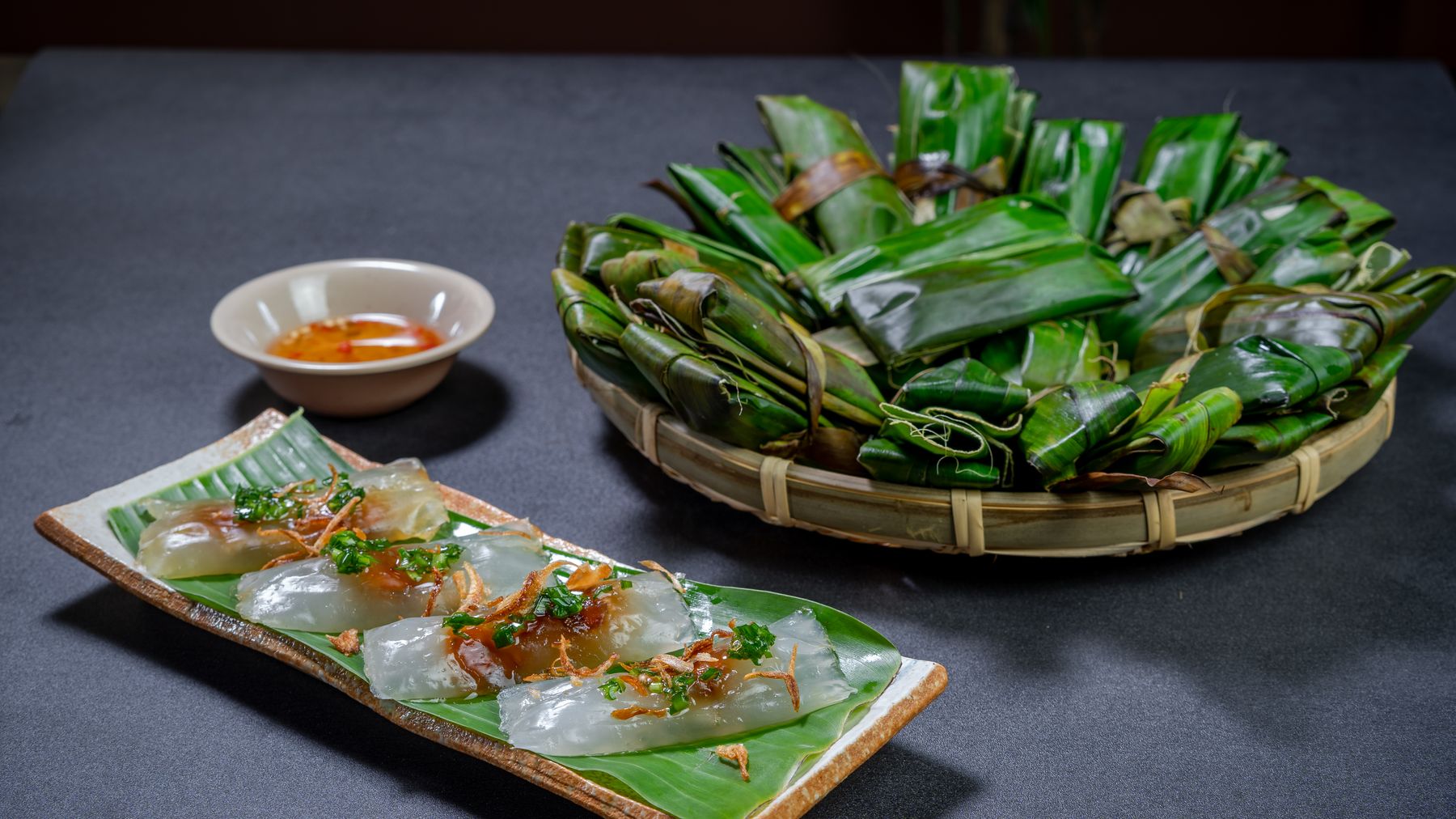
Photo by Hải Nguyễn on Pexels
One Thing to Know Before You Go
Banh cuon is not the same as "banh uot", though the two are often confused. Banh uot uses a similar batter but the sheets aren't rolled — they're served flat, often with grilled pork. If you sit down and get flat sheets instead of rolls, you've ordered or been served something adjacent but different. Worth knowing before you assume the cook made a mistake.
Practical Notes
Both formats are morning-only — plan your visit between 6:30 and 9 a.m. to have the best selection. Cash only at nearly every stall and restaurant listed here; 50,000 VND is enough for a bowl and an iced tea. If you're staying in the Old Quarter, most of these spots are within a ten-minute walk.
Last updated · May 26, 2026 · independently researched, never sponsored.