Chau Doc doesn't get the same attention as Can Tho when people talk about Mekong Delta (메콩 델타 / 湄公河三角洲 / メコンデルタ) markets, but it probably should. This border town in An Giang province sits where Khmer, Cham, and Vietnamese communities have been trading, cooking, and eating alongside each other for centuries. The markets here reflect exactly that — messy, layered, and genuinely interesting.
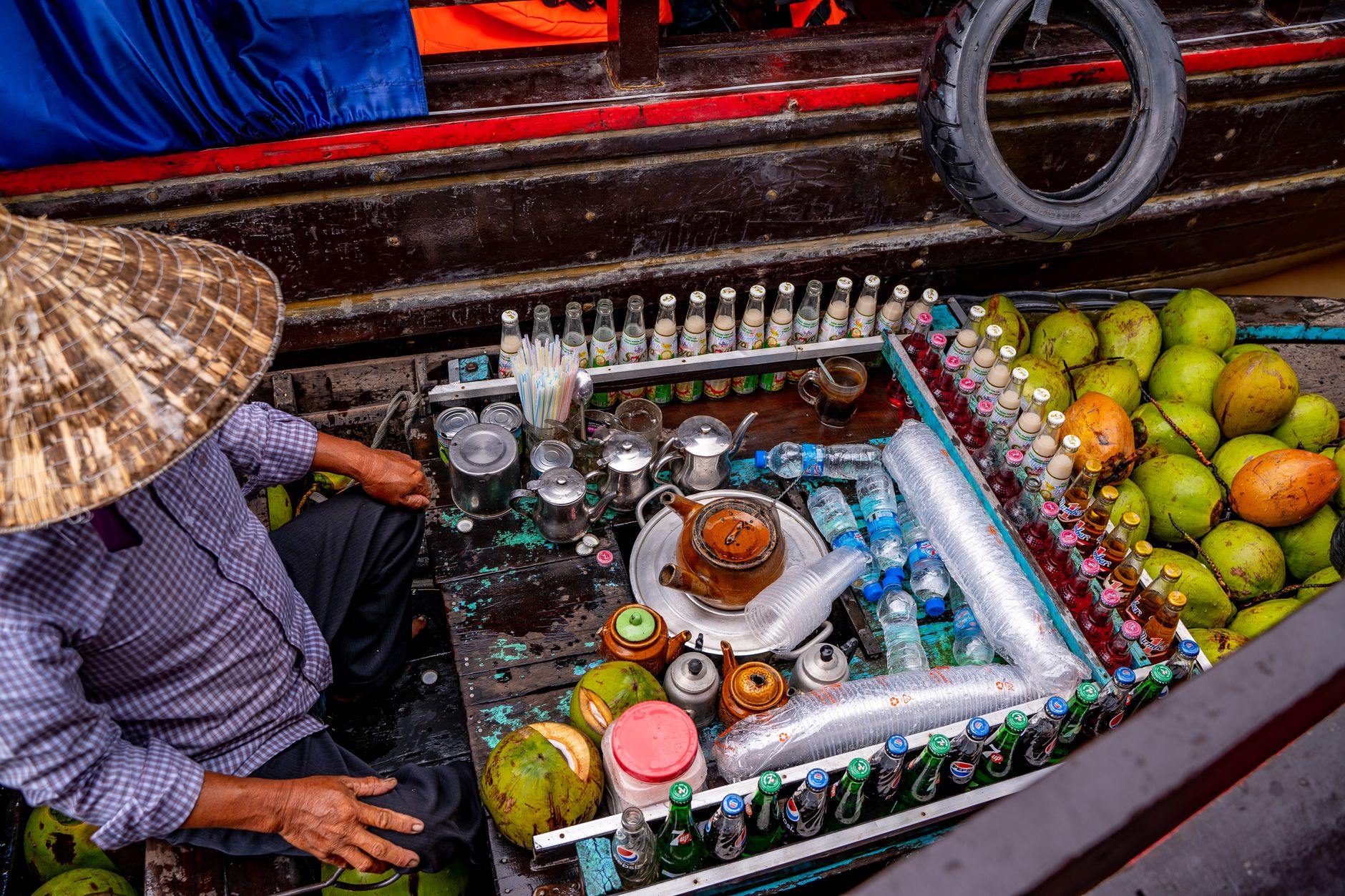
The Floating Market at Dawn
Chau Doc's floating market runs on the Hau River, roughly 2 km from the town center. Get there between 5:30 and 7:00 a.m. — by 8:00 a.m. much of the action has moved on. You can hire a small boat from the riverside for around 100,000–150,000 VND for a 30–45 minute circuit, though prices fluctuate depending on season and your negotiation.
Unlike the larger floating markets in Can Tho (껀터 / 芹苴 / カントー), this one is primarily a wholesale operation. Vendors load up on catfish, snakehead fish, mudfish, and produce directly from boats tied together mid-river. It's not performative tourism — most of the people out there are working. That's what makes it worth waking up for.
What you'll see traded most heavily reflects the regional obsession with fish. Chau Doc is the unofficial capital of "mam" (fermented fish paste) in Vietnam, and a lot of what moves through this market ends up in one of the many processing facilities nearby. Look for the darker, heavily salted fish being offloaded in bulk — that's destined for the fermentation jars.
Mam: The Flavor That Defines This Town
"Mam" here isn't a condiment — it's a culinary identity. Chau Doc produces several varieties: mam ca loc (fermented snakehead), mam ca linh (a small seasonal river fish), and mam ca tre (fermented catfish), among others. The smell hits you before you even find the source. Factories along Nguyen Van Thoai Street and around the ferry port operate almost continuously during peak season, packing jars for distribution across the Mekong Delta and up to Saigon.
If you want to buy, the market stalls sell jars ranging from 50,000 to 200,000 VND depending on fish type and quality. Vacuum-sealed versions travel better if you're taking them home. The good stuff — deep reddish-brown, firm-textured, made with ca linh caught during the flood season between August and November — is noticeably different from the commercial versions you find in supermarkets.
Mam also ends up in the bowl. "Bun mam", the fermented fish noodle soup, is the dish that defines southern Vietnam's appetite for funky, complex broth. Chau Doc versions tend to be richer and less sweetened than Saigon adaptations. Look for it at small shops around the central market area — a bowl runs 35,000–55,000 VND and usually comes loaded with eggplant, morning glory, bean sprouts, and your choice of protein.

Photo by Tuan Vy on Pexels
Khmer and Cham Influences on the Plate
The Khmer community around Chau Doc (concentrated especially toward the Cambodian border and around Nui Sam mountain) contributes a distinct flavor profile — heavier use of lemongrass, galangal, and dried spices, and a preference for grilled and braised preparations over broth-heavy dishes.
The Cham Muslim community, centered across the river in Chau Phong commune, adds another layer. Their food is halal, built around beef, goat, and chicken rather than pork, and uses spice blends that carry traces of South Asian and Middle Eastern trade-route influence. "Bo la lot" (beef wrapped in betel leaf) appears frequently, as does a Cham-style rice dish cooked with turmeric and coconut milk that doesn't really have an equivalent elsewhere in the Delta.
Crossing by ferry to Chau Phong takes about 10 minutes and costs a few thousand dong. The small food stalls near the ferry landing on that side serve lunch until around 1:30 p.m. — worth the trip specifically for the Cham beef dishes.

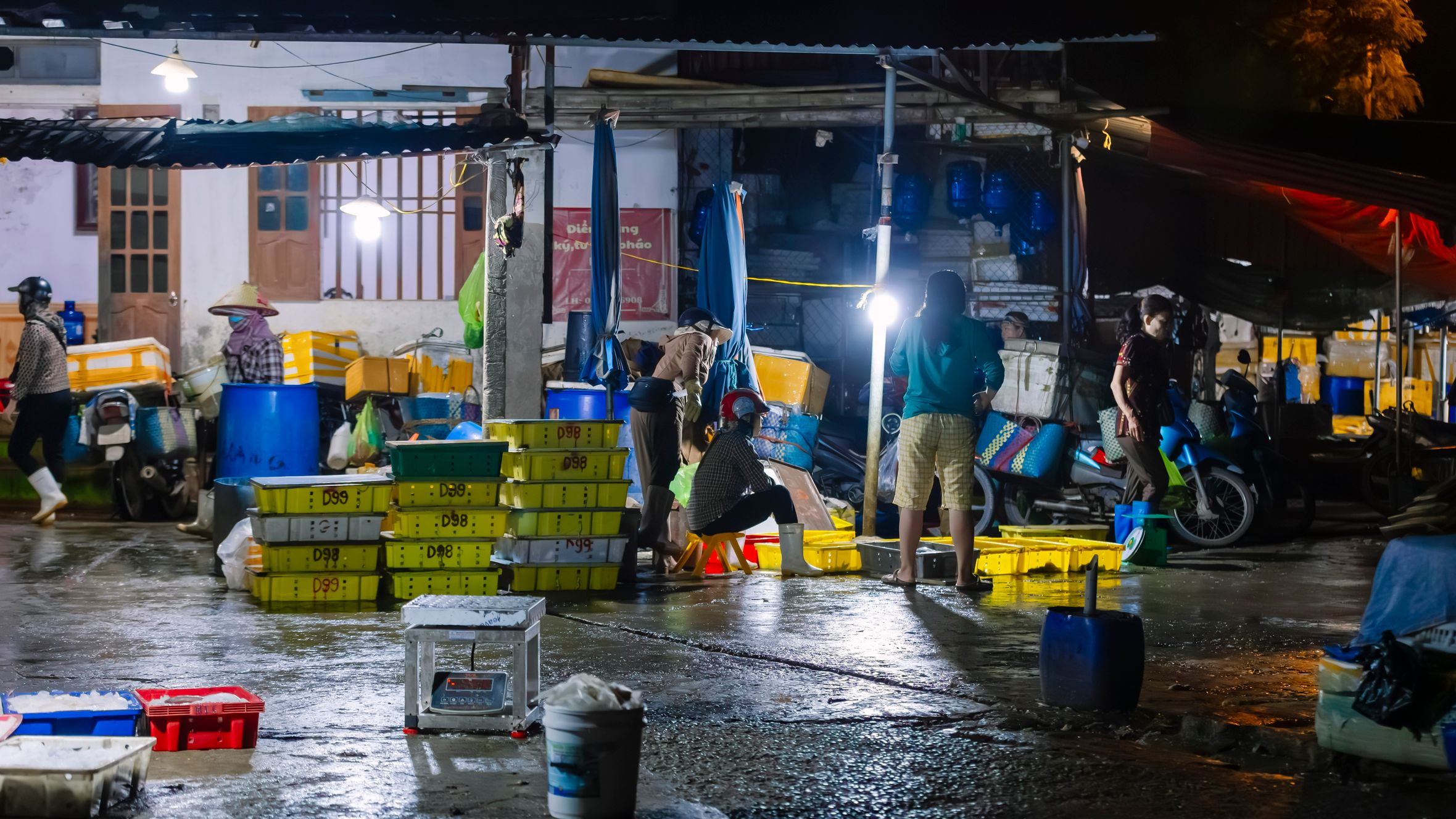
Photo by Vietnam Tri Duong Photographer on Pexels
The Night Market
Chau Doc's night market sets up along Le Loi and Bach Dang streets from roughly 5:30 p.m. onward. It's a compact, neighborhood-scale affair — not the sprawling tourist markets you'd find in Hoi An. Which is actually the point. Most people eating here are locals.
The stalls worth circling back to:
- Banh xeo (sizzling rice crepes): The Delta version uses a thinner batter and cooks faster than the Hue or Central versions. Served with a pile of fresh herbs and a bowl of thinned fish-sauce dipping liquid. Around 20,000–30,000 VND per piece.
- Goi cuon (fresh spring rolls): Made to order, tight rolls of pork, shrimp, herbs, and rice paper. Dipping sauce here often has a slightly fermented depth from local mam additions — a small regional variation most visitors miss.
- Che stalls: Khmer-influenced sweet soups with coconut milk, taro, and palm sugar appear alongside standard Vietnamese "che" variations. Around 15,000–25,000 VND a cup.
- Grilled skewers: Beef, pork, and offal over charcoal, eaten standing up. The mam-marinated versions have a pungency that's either immediately appealing or takes one bite to convert you.
The market thins out by 9:30–10:00 p.m. Arrive hungry and early.
Practical Notes
Chau Doc is about 245 km from Saigon by road — a 5–6 hour bus ride, or faster by speedboat if you're connecting from Can Tho (roughly 2.5 hours, around 200,000–250,000 VND). Accommodation is cheap and plentiful near the riverside. The floating market and night market are best treated as a two-day stop, not a day trip — one market is at dawn, the other at dusk, and rushing between them means missing the slower, stranger food finds in between.
Last updated · May 29, 2026 · independently researched, never sponsored.