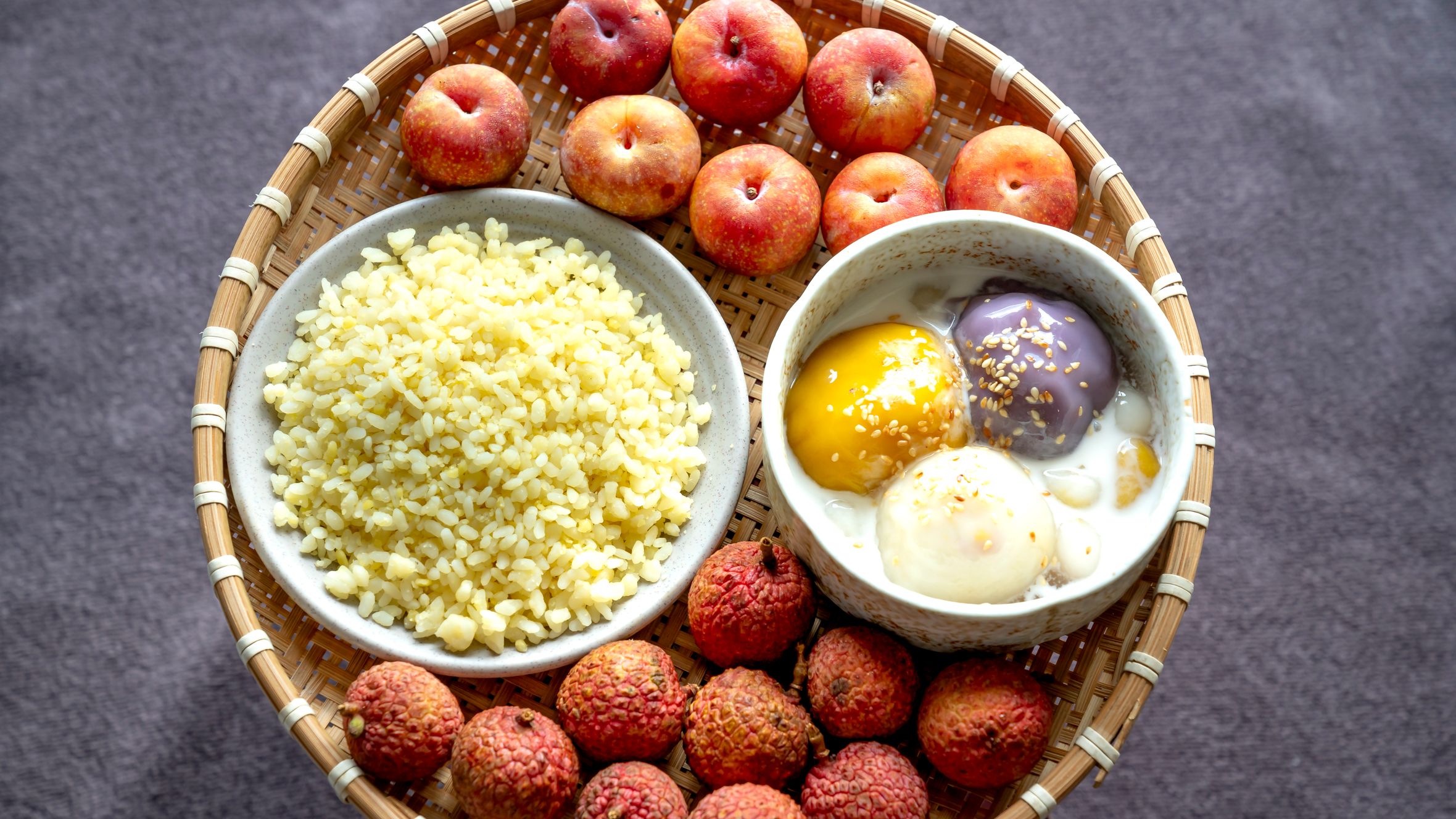
Cold yogurt topped with fermented black glutinous rice sounds like it shouldn't work, but "sua chua nep cam" is one of those combinations that makes complete sense once you've had it. It's cheap, it's everywhere in Hanoi, and it lands somewhere between snack and light dessert — the kind of thing you eat standing at a cart on a warm afternoon.
What It Actually Is
Break down the name and you have: sua chua (yogurt) and nep cam (black glutinous rice, sometimes called purple sticky rice). The yogurt is the Vietnamese-style variety — set firm, noticeably tangier than what you'd find in a Western supermarket, and usually made from sweetened condensed milk in the base. It's served in a small glass or plastic cup, cold, with a generous spoonful of fermented nep cam ladled on top.
The rice itself is the interesting part. "Nep cam" has been soaked, cooked, and then left to ferment lightly — typically with a small amount of men com ruou (rice wine yeast). The result is a sticky, slightly boozy, faintly sweet rice with a deep purple-black color that bleeds into the yogurt and turns the whole thing a murky violet. There's a mild tartness from the fermentation that plays against the creaminess of the yogurt in a way that just works.
It's served cold, sometimes over crushed ice in summer, which makes it one of the better things to eat when Hanoi (하노이 / 河内 / ハノイ) hits 37°C in July.
Where to Find It in Hanoi
This is overwhelmingly a northern dish. You'll spot it in Saigon occasionally — usually at northern-style dessert stalls — but sua chua nep cam belongs to Hanoi the same way "bun cha" does.
In the Old Quarter, street carts selling it are concentrated around Hang Be Market and along Ta Hien Street. A portion runs 15,000–25,000 VND depending on whether you're at a cart or a sit-down dessert shop. Some vendors add extra toppings — dried coconut, crushed peanuts, a drizzle of honey — and charge 30,000–35,000 VND for the upgraded version.
For a more established version, the dessert shops along Hang Dieu Street and near Dong Xuan Market carry it consistently. These spots tend to make their yogurt in-house and ferment the rice themselves rather than buying it pre-made, which is noticeable in the texture and flavor depth. Dong Xuan Market's surrounding streets are good hunting ground if you want to try multiple vendors in one walk.
If you're staying near Hoan Kiem Lake, the cart vendors on the western side of the lake, particularly toward Hang Gai, almost always carry sua chua nep cam alongside the usual tray of mixed yogurt options.

Photo by Nimit N on Pexels
The Health-Food Angle
Northern Vietnamese vendors and older locals talk about nep cam in the same way people elsewhere talk about superfoods — and for once, the reputation isn't entirely overblown. Black glutinous rice is high in anthocyanins (the same antioxidant compound that gives blueberries their color), and the fermentation process produces B vitamins and probiotic-adjacent compounds. Vietnamese home cooks have long used nep cam in postpartum recovery dishes and general tonic cooking.
The yogurt component adds its own case: Vietnamese-style sua chua is made with live cultures, similar to any plain fermented yogurt. The combination of fermented rice and fermented dairy gives the snack a legitimate gut-health argument, even if most people eating it from a plastic cup on Ta Hien Street are thinking about the taste, not the microbiome benefits.
That said, the condensed milk in the yogurt base means it's not exactly low-sugar. This is street food, not a supplement.
Making It at Home
Sua chua nep cam has become popular enough that several Hanoi home cooks post recipes on Vietnamese YouTube and TikTok, and the components are straightforward to source if you're in Vietnam (베트남 / 越南 / ベトナム).
The yogurt base is made by combining sweetened condensed milk with boiling water, cooling the mixture to roughly 40°C, adding a spoonful of plain live-culture yogurt as starter, and leaving it in a warm spot (or a turned-off oven) for 6–8 hours. It sets firmer than you might expect.
The nep cam requires more lead time. The rice is soaked overnight, steamed, cooled to room temperature, then mixed with a small amount of rice wine yeast (men com) — around 1–2g per 500g of rice — wrapped loosely in banana leaf or cling film, and left to ferment for 24–48 hours at room temperature. The timing matters: under-fermented and the rice is just sticky, over-fermented and it becomes alcoholic and sour in an unpleasant way. The sweet spot is when the rice smells faintly winey and the purple-black color has deepened.
Assemble cold: yogurt cup from the fridge, a spoonful of nep cam on top, eat immediately.
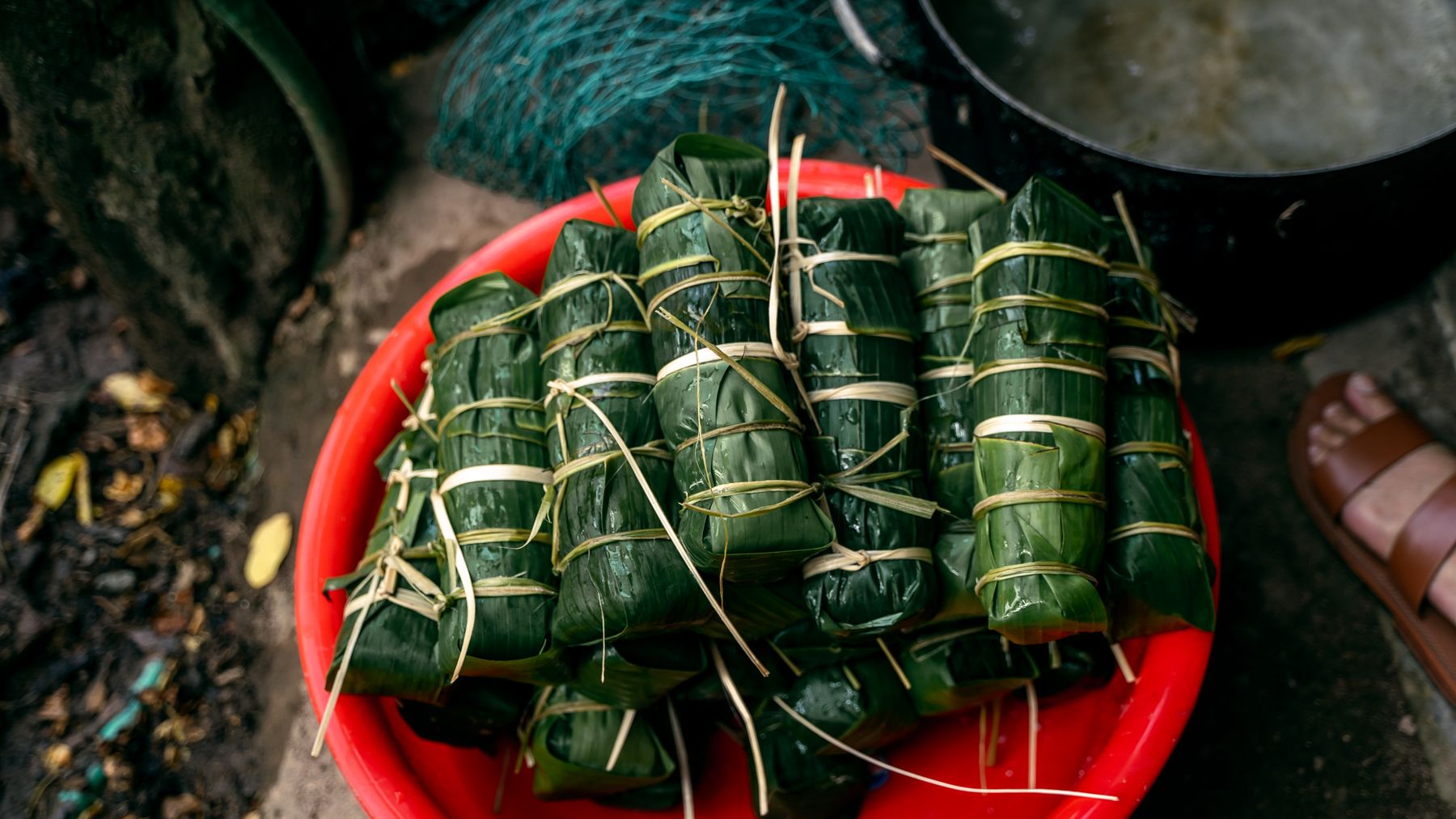
Photo by Vietnam Tri Duong Photographer on Pexels
A Few Things Worth Knowing
Nep cam has a very mild alcohol content from the fermentation — negligible for adults but something to be aware of if you're feeding it to small children. Vietnamese vendors don't typically flag this.
The dish is almost always eaten cold, which means it's a warm-weather staple. In winter Hanoi, some vendors shift to serving the yogurt at room temperature or slightly warmed, which changes the texture considerably. Most people prefer the cold version.
It's also genuinely filling for its size — the glutinous rice is dense and sticky, and a small cup plus a generous spoonful of nep cam sits in your stomach longer than you'd expect from a 20,000 VND snack.
Practical Notes
Sua chua nep cam is a cash-only, street-level transaction essentially everywhere you'll find it. Budget 20,000–35,000 VND per serving. If you want to try making the nep cam yourself, look for dried black glutinous rice at Dong Xuan Market or any dry-goods shop in the Old Quarter — it's sold by the kilogram and costs around 40,000–60,000 VND per 500g.
Last updated · May 26, 2026 · independently researched, never sponsored.