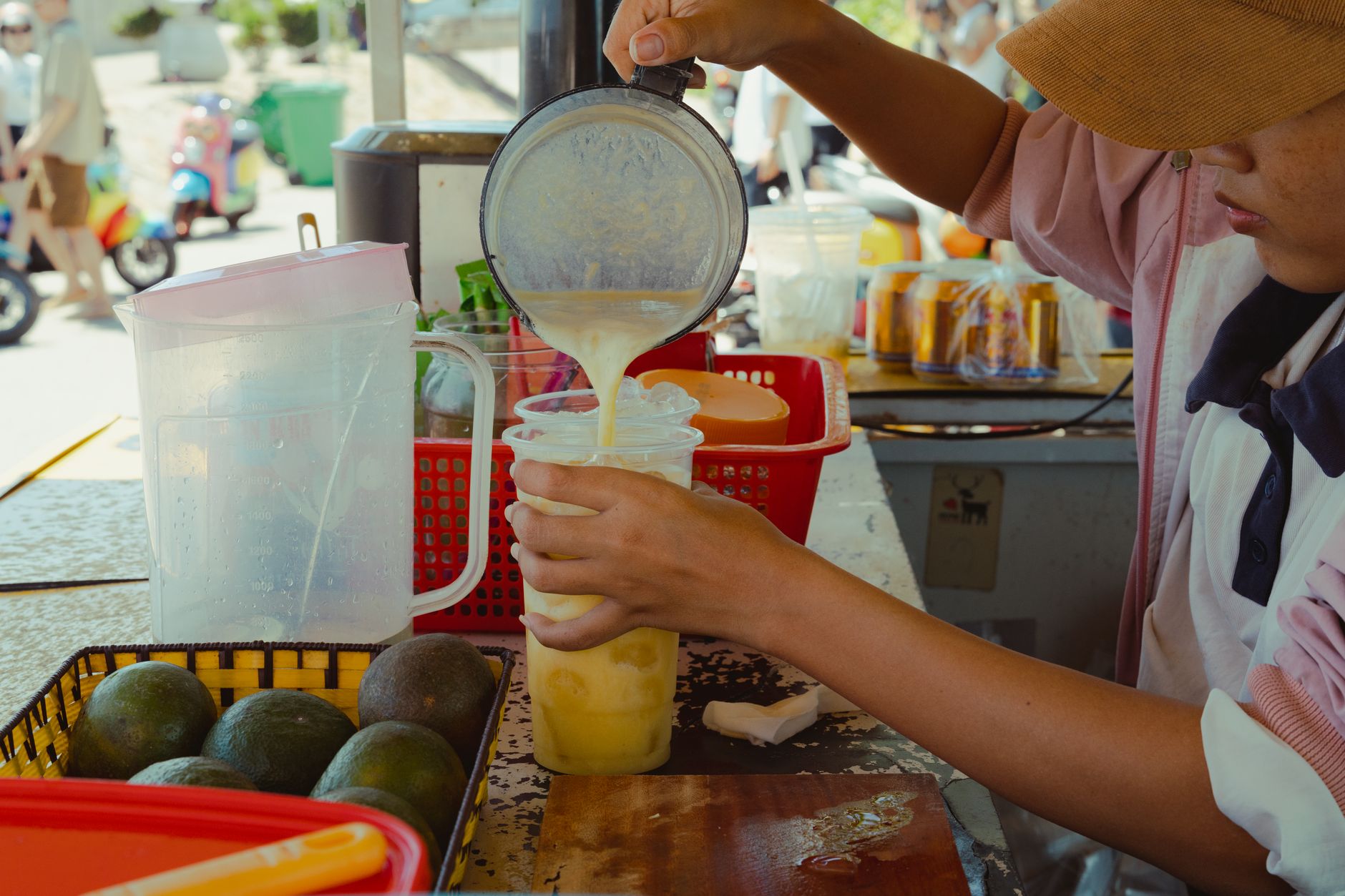
Thai Binh doesn't appear on most itineraries, and the locals seem fine with that. About 110 km southeast of Hanoi, this flat, canal-laced province is one of Vietnam (베트남 / 越南 / ベトナム)'s most productive rice belts — and its food reflects that identity completely. No showboating, no fusion. Just generations of farmers eating well on what the paddies and rivers provide.
The Grain Comes First
Rice in Thai Binh isn't background starch — it's the whole point. The province grows several heritage varieties, including the fragrant "gao tam xoan" (a slim, aromatic grain harvested once a year in the autumn), which locals prize for plain steamed rice the way Hanoi (하노이 / 河内 / ハノイ) people prize a good bowl of pho. If you're staying in a guesthouse run by a local family, ask if they have tam xoan in season. It needs nothing more than a smear of salt and a piece of braised pork to be memorable.
That philosophy — restraint over complexity — runs through almost everything cooked here.
Banh Cay: The Snack Thai Binh Claimed
"Banh cay" is Thai Binh's most recognizable export, though most of Vietnam has never heard of it. The name translates loosely as "tree cake," which sounds odd until you see one: a short, knobbly cylinder of deep-fried dough that does look vaguely like a stubby branch. The dough is made from glutinous rice flour mixed with sesame seeds and a small amount of sugar, then fried slowly in lard until the outside shatters and the inside stays chewy.
The taste sits somewhere between a sesame rice cracker and a youtiao (Chinese fried dough stick) — but denser, less oily, and with a faint sweetness that doesn't tip into dessert territory. They're sold by weight at market stalls and bakeries across Thai Binh city, particularly around Cho Thai Binh (Thai Binh Market). Expect to pay around 60,000–80,000 VND per half-kilogram. They keep for several days in a dry container, which is why people buy them by the bag to bring back to Hanoi.
The best ones come from small family operations that still fry in lard rather than vegetable oil. The difference is noticeable: cleaner finish, better crunch.
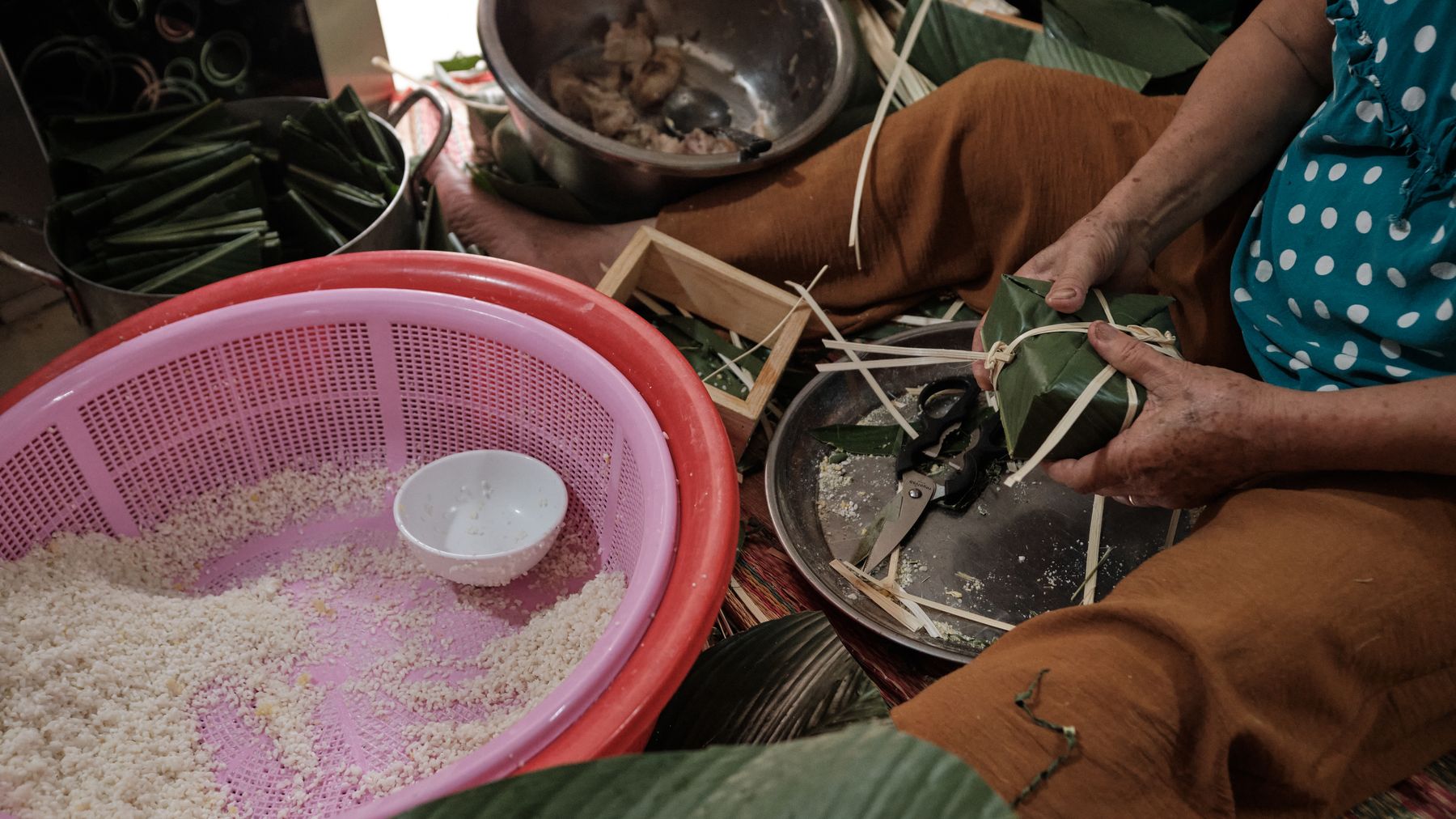
Photo by Nguyen Truong Khang on Pexels
Banh Giay: Simplicity That Requires Skill
"Banh giay" exists across northern Vietnam — you'll find versions in Hanoi, in Sapa, at Hung Kings Festival offerings — but the Thai Binh interpretation is worth understanding on its own terms. Here it's made from pounded glutinous rice (the pounding is the whole craft: some families still use a stone mortar worked by two people), formed into thick white discs, and eaten with cha lua (Vietnamese pork roll) or nem chua, the fermented pork that has its own dedicated following in this part of the north.
The texture is the thing. Done well, Thai Binh banh giay is smooth without being gluey, with enough structural integrity to pick up without it sagging. The rice flavor is clean and faintly sweet. Done badly — as happens with factory-pressed versions sold in Hanoi convenience stores — it's just a rubbery disc. Finding a good one here means going to a morning market before 8 a.m., when vendors have just finished the day's batch.
Pairs naturally with ca phe sua da if you want to eat like a local at 7 in the morning.
River Food: Com Hen and Freshwater Fish
The Red River and its tributaries do serious work in Thai Binh cooking. Freshwater fish — ca ro (perch), ca chep (carp), ca loc (snakehead) — appear braised with galangal and turmeric, or simply grilled over charcoal and served with rice paper and garden herbs. The preparation is lean: fish, heat, aromatics. Nothing that obscures the flavor of something caught that morning.
"Com hen" — baby clam rice — isn't native to Thai Binh the way it is to Hue, but the delta's river clams have their own version here: smaller, cooked quickly with lemongrass and chili, served over plain rice with a broth poured tableside. It's a light, briny lunch that costs about 30,000–40,000 VND at a local quan com (rice shop) and takes about ten minutes to eat. That's the tempo of the food here.

Photo by Bid on Pexels
Eating in Thai Binh City
Thai Binh city itself is a market town more than a tourist hub. The covered Cho Thai Binh runs most of the morning and is the best single place to orient yourself — dried banh cay, fresh banh giay, pickled vegetables, grilled skewers of pork and offal, and at least a dozen women with portable stoves making "bun rieu" (crab and tomato noodle soup) to order. Get there before 9 a.m.
For a sit-down meal, the streets around Ho Xuan Huong Lake in the city center have a cluster of com binh dan (home-style rice shops) that serve rotating daily menus: whatever's in season, whatever came from the river that morning, a few braised dishes, a soup. Budget 50,000–70,000 VND for a full plate with rice.
If you're coming from Hanoi for the day, the drive takes around two hours by car or about 2.5 hours by local bus from My Dinh station. There's no compelling reason to stay overnight unless you want to catch an early market — but a half-day focused entirely on eating is a reasonable way to spend a Saturday.
Practical Notes
Thai Binh has limited tourist infrastructure, so don't arrive expecting English menus or guesthouses with booking.com listings. Cash only at most food stalls; bring small bills. The best food is almost always in the morning — most market vendors are packing up by 10 a.m.
Last updated · May 29, 2026 · independently researched, never sponsored.