What it is
Hai Dang Vung Tau — the Vung Tau Lighthouse — is a white-painted colonial-era lighthouse perched on top of Nui Nho (Small Mountain), at the southern tip of the Vung Tau peninsula. Built by the French in 1862 and rebuilt in 1911, it's one of the oldest functioning lighthouses in Vietnam (베트남 / 越南 / ベトナム). The tower stands about 18 meters tall, but because it sits at roughly 170 meters elevation on the hilltop, its light carries far out to sea.
Vung Tau (붕따우 / 头顿 / ブンタウ) itself is now administratively part of Ho Chi Minh City following the 2025 merger, but geographically it's still the same coastal town about 95 km southeast of central Saigon. For travelers, nothing has changed on the ground — you're still heading to the same peninsula, the same beach town, the same lighthouse.
Why travelers go
The lighthouse is one of those places where the payoff is the walk, not just the destination. The hike up Nui Nho passes through thick coastal scrub, old military bunkers, and a couple of crumbling French-era structures half-swallowed by banyan roots. At the top, you get a full panorama — the city's Back Beach curving north, container ships anchoring offshore, and on clear days, the faint outline of Con Dao far to the southeast.
It's not a major tourist attraction in the theme-park sense. There are no ticket booths, no souvenir shops at the summit. That's the appeal. It's a genuine piece of Vung Tau's layered history — French colonial infrastructure, wartime observation point, working navigation aid — sitting quietly above a town most Saigon residents treat as their weekend beach escape.
Best time to visit
November through April is the dry season along this stretch of coast. Mornings are clearest, and if you start the walk up by 6:30 AM, you'll beat both the heat and the handful of other visitors. The wet season (May to October) brings afternoon downpours, but the trail is paved and manageable — just watch your footing on the steeper sections.
Weekdays are noticeably quieter. Vung Tau floods with Saigon day-trippers on weekends, and while most of them stay on the beaches, you'll share the trail with more people on Saturdays and Sundays.

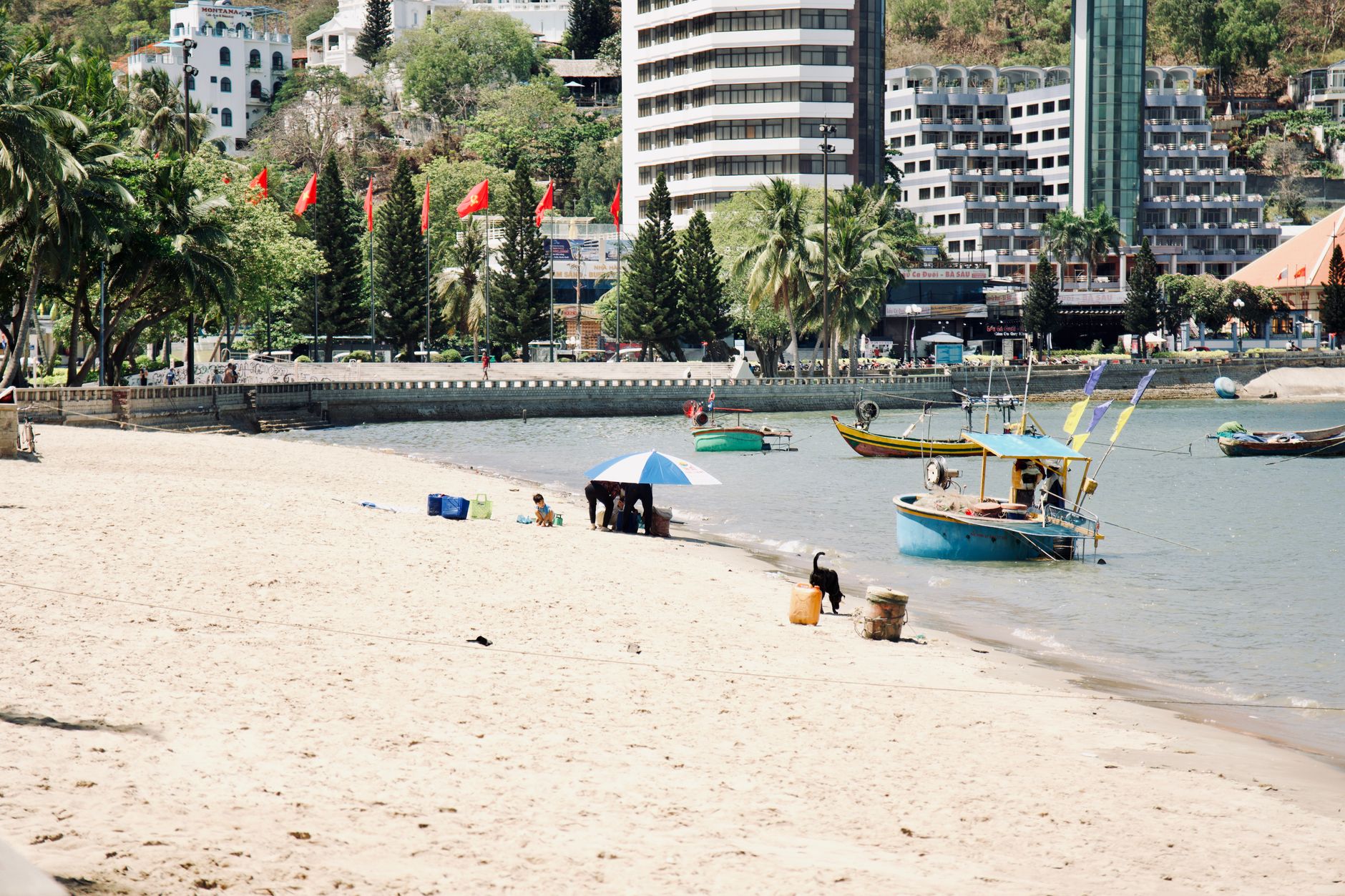
Photo by Costa Karabelas on Pexels
How to get there from Saigon
The fastest option is the hydrofoil from Bach Dang Wharf (District 1, Saigon) to Vung Tau. Greenlines operates the route; tickets run about 250,000–350,000 VND one way, and the crossing takes around 90 minutes. Boats leave several times daily, with the first departure usually around 8:00 AM.
Alternatively, buses from Mien Dong bus station cost 80,000–120,000 VND and take two to two and a half hours depending on traffic. Phuong Trang (FUTA) and Kumho Samco are the reliable operators.
Once in Vung Tau, the lighthouse is on Hai Dang road at the southern end of town. From the Vung Tau hydrofoil terminal, it's about 6 km by motorbike taxi — expect to pay around 30,000–40,000 VND via Grab. The trailhead starts near the end of Ha Long street (the small Ha Long in Vung Tau, not the bay up north).
What to do
Walk the trail up Nui Nho
The main path is a paved road that winds up the hillside — roughly 1.5 km from the base to the lighthouse. It's steep in places but entirely walkable. Allow 30–40 minutes going up at a comfortable pace. Along the way, you'll pass old concrete bunkers and gun emplacements from the war era. Some are open and you can poke your head in, though bring a phone flashlight.
Explore the lighthouse grounds
The lighthouse compound is small — the tower itself, a keeper's building, and a few outbuildings. Entry is free, though the tower may or may not be open to climb depending on the day and whoever's on duty. If it's open, the spiral staircase to the top is narrow and worth the effort for the unobstructed 360-degree view.
Visit the Jesus statue on the way
The large Christ statue (Tuong Chua Kito Vua) is on the same mountain, just on a different path branching off partway up. At 32 meters tall, it predates the more famous Christ the Redeemer replica trend. You can combine both in a single morning — lighthouse first, then loop back to the statue.
Catch sunset from the western slope
If you time it right, the western side of Nui Nho faces directly into the sunset over Vung Tau's Front Beach. There are a few flat rocks and cleared spots along the trail where locals sit in the evenings. Bring water — there's nothing to buy at the top.
Where to eat nearby
Back down at sea level, Vung Tau has its own food identity separate from Saigon. Two things worth seeking out:
Banh khot — tiny crispy rice-flour pancakes cooked in cast-iron molds, topped with shrimp and eaten wrapped in herbs and lettuce. Quan Banh Khot Goc Vu Sua on Nguyen Truong To street is a long-running local spot. A plate runs about 40,000–60,000 VND.
"Bun rieu" — the crab-and-tomato noodle soup — is solid in Vung Tau, where the crab paste tends to be fresher than what you find inland. Street stalls along the alleys off Tran Hung Dao street serve good bowls for 35,000–45,000 VND.
For seafood, the stretch of restaurants along Back Beach (Thuy Van street) ranges from cheap plastic-chair joints to air-conditioned places. Point at the live tanks and negotiate the price per kilogram before ordering. A reasonable seafood meal for two runs 300,000–500,000 VND.
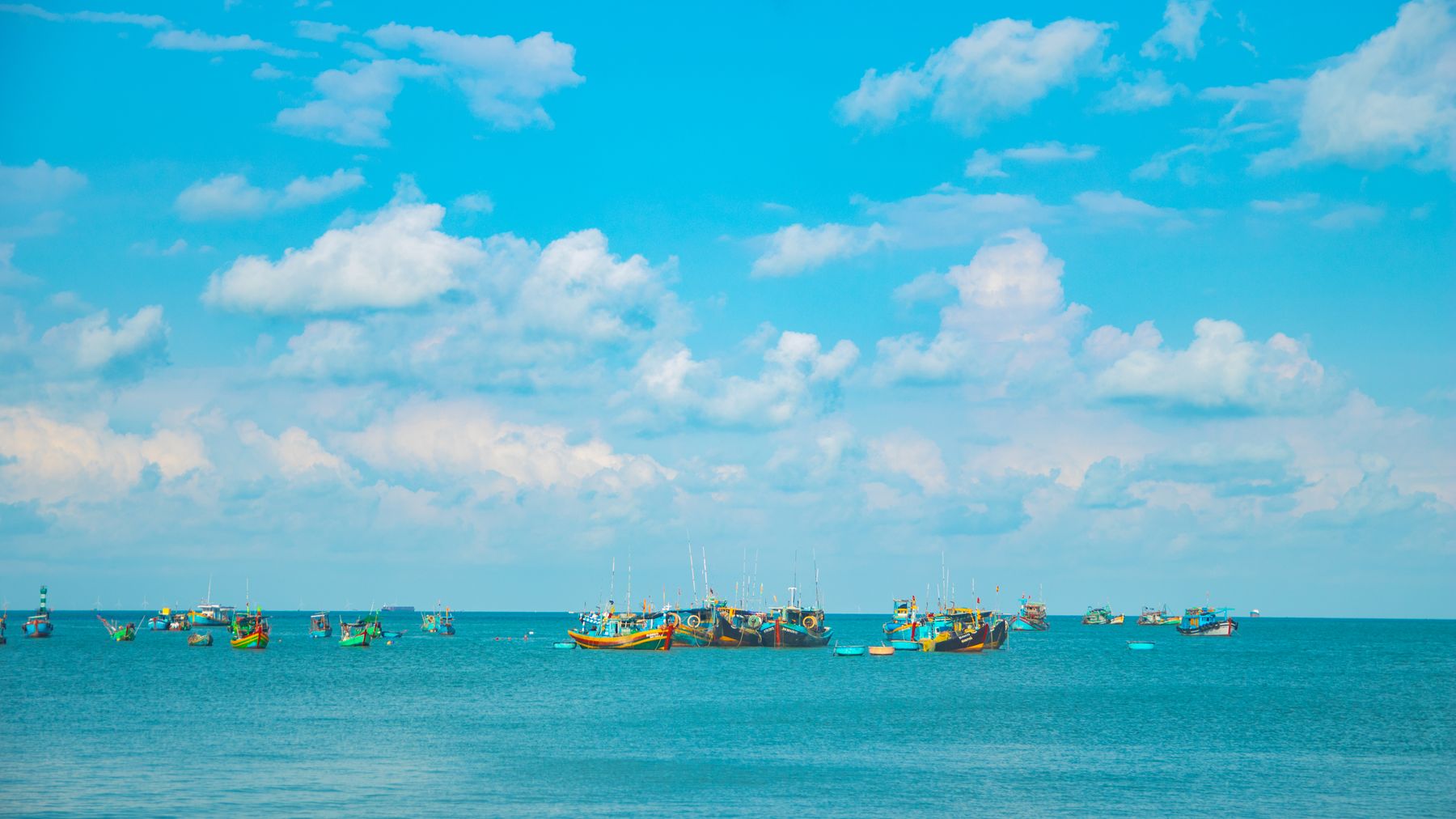
Photo by Tường Chopper on Pexels
Where to stay
Vung Tau has accommodation for every budget:
- Budget: Guesthouses and hostels near Back Beach start around 200,000–350,000 VND per night. Basic, clean, fan or AC.
- Mid-range: Hotels along Thuy Van street go for 500,000–900,000 VND. Most include breakfast and have pools.
- Upper-range: A handful of resorts and boutique hotels near Front Beach charge 1,200,000–2,500,000 VND. The Imperial Hotel and Pullman are the established names.
Book ahead on weekends and public holidays — especially around Tet and the April 30 long weekend, when Saigon empties and Vung Tau fills.
Practical tips locals would tell you
- Wear proper shoes, not flip-flops. The paved road is fine, but the side trails to bunkers are uneven and slippery after rain.
- Bring your own water and sunscreen. There's one small drink vendor near the base of the trail, nothing at the top.
- The lighthouse keeper is sometimes happy to chat if you speak a bit of Vietnamese. A friendly "xin chao" goes further than you'd think.
- If you're riding a motorbike up the access road, park at the designated area partway up and walk the rest. The final stretch is too steep for casual riders.
Common mistakes to avoid
- Going midday. The hill has limited shade, and the concrete path radiates heat. Early morning or late afternoon only.
- Skipping the bunkers. Most visitors walk straight past them. They're the most interesting part of the trail — atmospheric, quiet, and a concrete reminder that this hilltop has had multiple lives.
- Expecting a polished attraction. There's no visitor center, no audio guide, no cafe at the summit. That's the point. If you need infrastructure, this isn't the stop for you.
- Only coming for the day. Vung Tau is better as an overnight trip from Saigon. The town has a different rhythm in the evening — quieter, cooler, with good seafood dinners along the waterfront. Rushing back on the last hydrofoil means missing the best part.
Last updated · May 29, 2026 · independently researched, never sponsored.