"Com tam" — broken rice — is not fancy. The grains are the ones that cracked during milling, historically the cheap option. Saigon turned that into a whole food culture, and now it's the city's default plate at almost any hour. But timing matters more than most visitors realize.
What's on the Plate
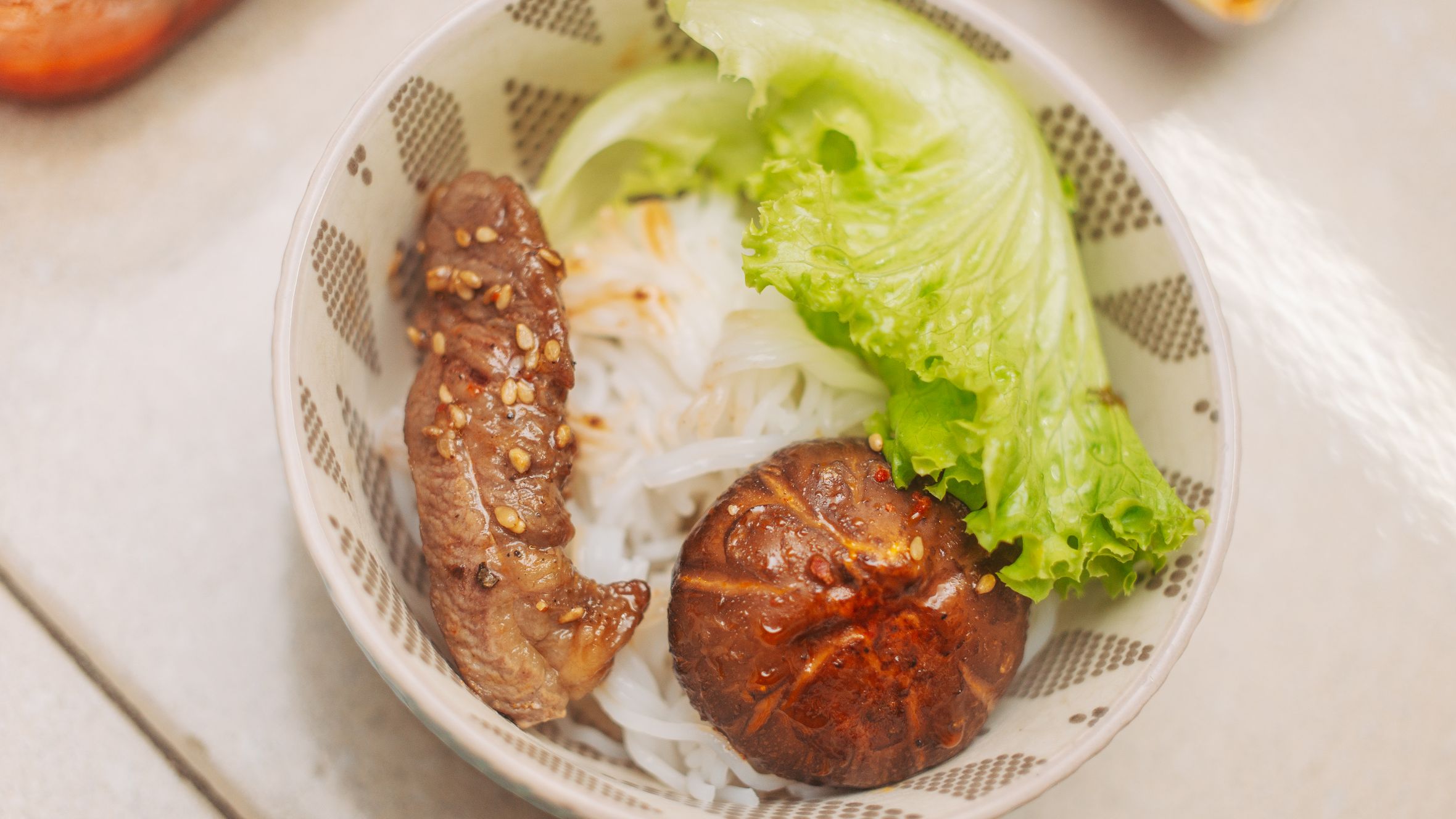
The standard plate is com tam (껌땀 / 碎米饭 / コムタム) bi suon cha: broken rice topped with a grilled pork chop ("suon nuong"), shredded pork skin mixed with dried shrimp and toasted rice powder ("bi"), and a steamed egg cake with pork and glass noodles ("cha trung"). A small bowl of fish sauce — diluted, sweetened, spiked with chili and garlic — comes alongside. That's the baseline. Add a fried egg or extra suon if you want. Total cost at a street stall: 35,000–55,000 VND. At a sit-down spot with AC: 65,000–90,000 VND.
The rice itself should be soft, slightly sticky, with a faint chew. The pork chop should have grill char on the outside and not be dry. If the bi smells off or looks grey instead of golden-white, pass.
Morning: The Best Window
This is the honest answer: morning is when com tam is at its best, and most locals know it.
Stalls open early — 6am is standard, some by 5:30am — and the suon comes off the charcoal grill while it's still got heat. The bi is freshest in the first few hours before it sits in a tray all day. And there's something about eating a proper plate of rice at 7am in Saigon that feels completely correct once you've done it a few times.
Street-side spots in Districts 1, 3, and Binh Thanh are busiest between 7am and 9am. Pull up a plastic stool, order a "ca phe sua da" alongside, and you have the full Saigon (사이공 / 西贡 / サイゴン) breakfast. The crowd will be a mix of motorbike drivers, office workers, and older regulars who have been coming to the same stall for years.
Where to go in the morning: Com Tam Ba Ghien at 84 Dang Van Bi, Thu Duc (opens 6am) is well-known and consistent. For District 1, the stalls on Hoang Dieu 2 near the Binh Quoi area open early and see local traffic before tourists are awake.

Photo by Tuan Vy on Pexels
Lunch: Reliable, Slightly Less Ideal
Lunch works fine. Most com tam shops stay busy through noon into early afternoon, and this is the most common time visitors end up eating it — usually while exploring the city between 11:30am and 1:30pm.
The downside at lunch is that the suon has often been grilled in batches earlier and reheated, not cooked to order. The rice may have been sitting in the cooker since morning. It's still a solid meal, but it's not the peak version. If you're eating at a proper com tam restaurant rather than a street stall, the kitchen is more likely to be grilling continuously, so quality holds up better.
A reliable lunch address: Com Tam Thuan Kieu, 1 Ly Tu Trong, District 1. It's been operating for decades, handles high volume, and keeps quality consistent through the midday rush. Expect to pay around 70,000–85,000 VND for the full plate.
Night: It Exists, But Know What You're Getting
Saigon has 24-hour com tam. Some of the most famous spots lean heavily into the late-night crowd — workers finishing late shifts, people coming home after a night out, anyone who needs actual food at 1am.
Com Tam Suon Bi Cha at 175 Cong Quynh, District 1, operates through the night and has a devoted following. But night com tam is a different experience: the rice is fresh (they cook new batches through the night), but the suon at 11pm is often pre-grilled and sitting under a heat lamp. It's filling and satisfying in a late-night way. Don't expect it to rival the 7am version.
If you're eating com tam at night specifically, go for the version with a fried egg added — it covers the slight dryness a reheated pork chop can have.
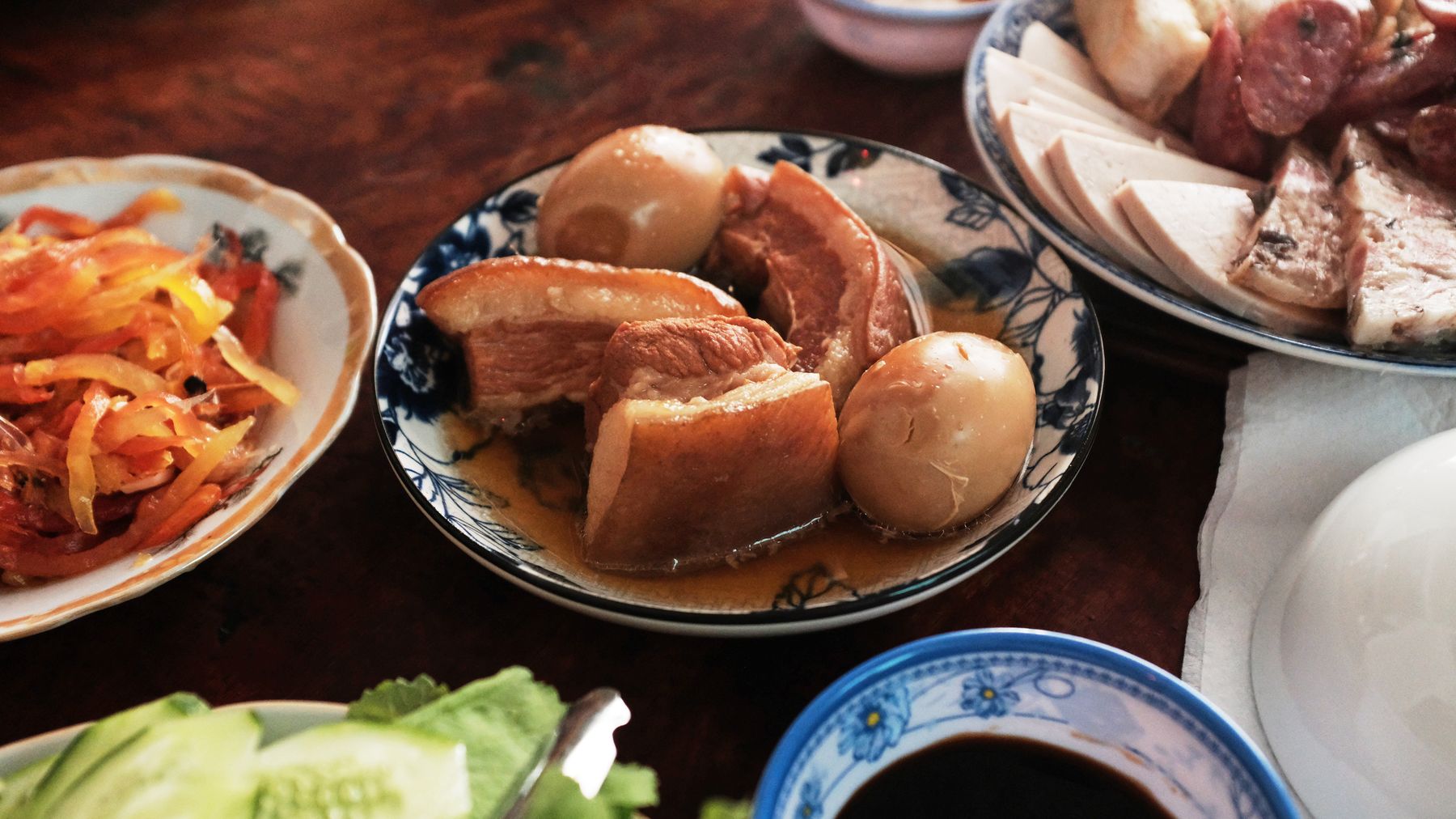
Photo by Nguyen Truong Khang on Pexels
One Thing Worth Knowing
The fish sauce bowl is not decoration. Pour it over the rice and let it soak in slightly before eating. Don't just dip. That's how it's meant to work — the sweetened nuoc cham loosens the bi, seasons the rice, and makes the whole plate come together. Visitors who keep it to the side and eat the components separately are missing the point.
Practical Notes
Most com tam stalls close by 2pm if they're morning-focused, or run continuously if they're all-day operations — it varies by shop, so check before making a trip. Prices are almost always posted; if they're not and you're charged significantly more than 90,000 VND for a basic plate, you're at a tourist-facing spot. Nothing wrong with that, just know what you're paying for.
Last updated · May 26, 2026 · independently researched, never sponsored.