The floating markets of the Mekong Delta (메콩 델타 / 湄公河三角洲 / メコンデルタ) run on their own clock. By 9 a.m., the best vendors have already sold out and started heading home. Show up at sunrise — ideally slightly before — and you'll find a floating street-food scene that's genuinely unlike anything else in the country.
Here are the four markets worth making the effort for, and exactly what to eat at each.
Cai Rang — Can Tho's Big Show
Cai Rang is the largest and most active floating market in the delta, sitting about 6 km southwest of Can Tho's city center. It moves fast. Hundreds of wooden boats cluster on the river before dawn, laden with wholesale produce — dragon fruit, pomelo, watermelon — but tucked between the cargo vessels are the food boats, and that's where your attention should go.
The signature eat here is "hu tieu" served from a low-slung boat with a portable gas burner. The Mekong version runs lighter than the Saigon style — clear pork broth, rice noodles, a few slices of pork and shrimp, fresh herbs piled on top. A bowl runs around 25,000–35,000 VND. Eat it while your boat rocks gently and the cargo vessels muscle past. It's a sensory experience that has nothing to do with Instagram and everything to do with actually being hungry at 6 a.m.
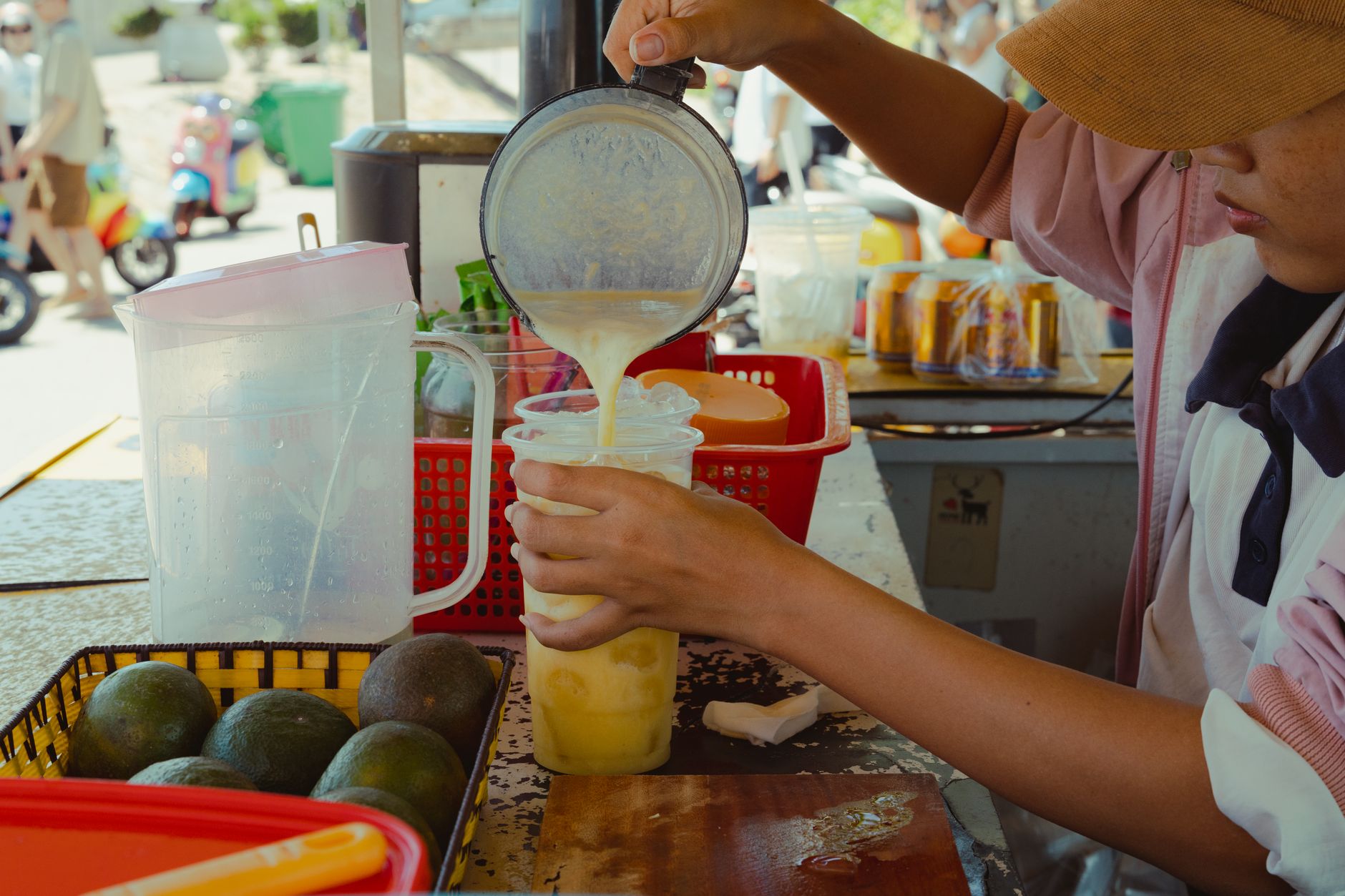
Also look for "banh canh" vendors — thick tapioca noodles in a rich broth — and women selling fresh-cut fruit from flat-bottomed boats. Coffee comes from a thermos, poured into a plastic bag with ice if you're lucky. Don't expect ca phe sua da made to order; take what's offered.
Get to Cai Rang before 6:30 a.m. Hire a boat from Ninh Kieu Wharf the night before. Budget around 150,000–200,000 VND per person for a two-hour tour.
Cai Be — Quieter, More Photogenic
About 90 km northwest of Can Tho (껀터 / 芹苴 / カントー), Cai Be sits in Tien Giang province and pulls fewer tourists than its bigger cousin. That's partly why it's worth the detour. The market peaks between 5 and 8 a.m., and by the time day-trippers from Saigon arrive, it's mostly wound down.
Food-wise, Cai Be is where you'll find "banh mi" boats — long loaves baked in riverside bakeries and sold from canoes, stuffed with pate, pickled vegetables, and a smear of chili sauce. It sounds like a gimmick until you eat one on the water at sunrise with the mist still sitting on the river. Also watch for "banh xeo" cooked to order on small boats — the sizzling crepe filled with shrimp, bean sprouts, and mung bean, eaten wrapped in lettuce and dipped in nuoc cham.
Cai Be is often combined with a homestay in the surrounding fruit orchards. If you're coming from Saigon, the drive is around 2 hours; a speedboat from My Tho cuts that down significantly.
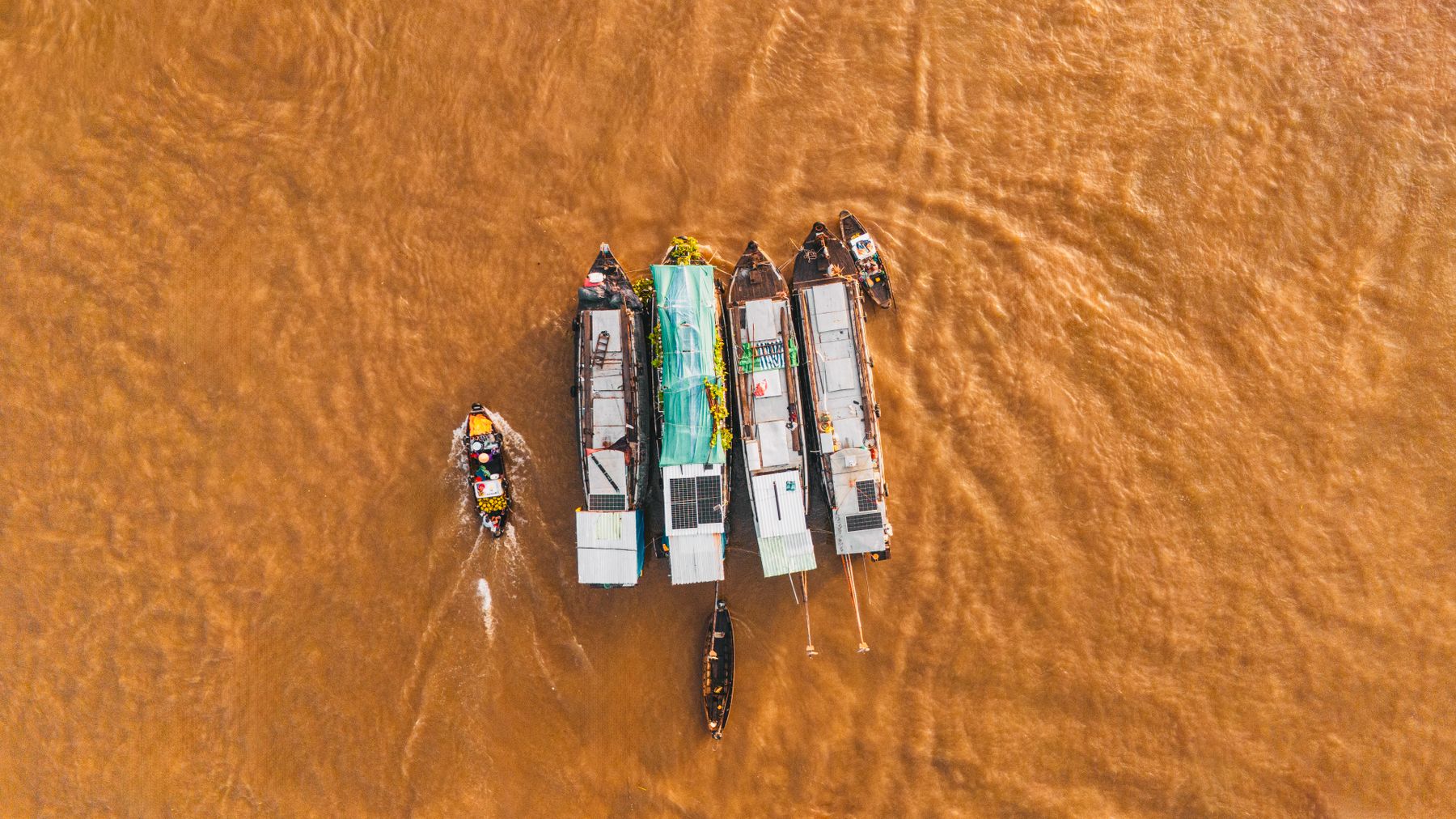
Photo by Duy Nguyen on Pexels
Phong Dien — The Local's Market
Phong Dien is 20 km southwest of Can Tho and small enough that most foreign visitors skip it entirely. That's exactly why it works. There are no dedicated tourist boats here — you hire a local xe om or take a motorbike to the riverbank and watch from the shore or rent a basic boat from a local family for next to nothing (50,000–80,000 VND).
The market is purely retail, meaning goods are sold directly to local buyers rather than wholesale. The food options are accordingly more varied and more local. Look for "bun rieu" — a tomato-and-crab broth noodle soup with a tangy, slightly funky depth — sold by women who set up at the water's edge rather than from boats. Also worth trying: "goi cuon", fresh rice paper rolls stuffed with pork, shrimp, and vermicelli, served with a thick peanut dipping sauce.
Phong Dien starts winding down earlier than Cai Rang, so arrive by 6 a.m. if you want full choice.
Chau Doc — Where the River Meets the Border
Chau Doc sits at the northwestern edge of the delta near the Cambodian border, and its floating market has a different character to the others — slower, stranger, with a visible Cham and Khmer cultural presence in the food.
The floating village here doubles as a fish-farming community, with hundreds of households living on the water above submerged cages of catfish and snakehead. Food vendors weave between the stilted houses selling breakfast from small boats. The thing to eat in Chau Doc is "bun bo Hue" — though locals make a slightly different, less fiery version than the original from Hue, with more emphasis on the fermented shrimp paste (mam ruoc) in the broth. You'll also find "banh chung"-style sticky rice parcels and simple che (sweet soups) sold in tiny plastic cups.
Chau Doc's market is less a spectacle than Cai Rang and more a glimpse into how a river community actually eats and lives. The town is about 4 hours by road from Can Tho, or reachable by speedboat.

Photo by Vietnam Tri Duong Photographer on Pexels
How to Time It
All four markets follow the same basic rule: the earlier you arrive, the better. Aim to be on the water between 5:30 and 7 a.m. After 9 a.m., the food boats are gone and what remains is cargo trading. Weekdays are consistently busier than weekends — counterintuitive, but the markets serve working traders, not tourists.
Can Tho is the natural base for hitting Cai Rang and Phong Dien. Cai Be works as a day trip from Saigon. Chau Doc deserves at least one overnight.
Practical Notes
Bring small bills — 10,000 and 20,000 VND notes — since food vendors rarely have change for 500,000 VND. A light rain jacket is worth having year-round; the delta is wet and the river throws up spray at speed. Don't skip breakfast before you go out — eat on the boat instead.
Last updated · May 29, 2026 · independently researched, never sponsored.