Last updated · May 19, 2026 · independently researched, never sponsored.
We use minimal analytics + ads (no personal tracking). See our privacy policy.
宁江县的Banh gai是越南北部最具地方特色的甜点之一——漆黑、叶包,与其他地方售卖的糯米糕截然不同。

Last updated · May 19, 2026 · independently researched, never sponsored.
Other articles covering this city.

Hai Duong sits between Hanoi and Ha Long but rarely makes traveler itineraries. The food here is worth the detour: sticky rice cakes, crab soup, and markets where locals actually eat.

Loading…
Hai Duong is a working industrial city 50 km east of Hanoi. Accommodation is basic but affordable—useful if you're stopping between Hanoi and Ha Long Bay, or exploring the Red River Delta.

Hai Duong's subtropical climate swings hard between humid summers and chilly winters. Here's when to go based on weather, crowds, and local festivals.
Other articles covering the same region.

Dinh Phat Chi is one of Lang Son's highest peaks and a rewarding day trek near the Chinese border. Here's everything you need to plan the trip.

Chua Ham Long is a centuries-old Buddhist pagoda tucked into a limestone hillside near Bac Ninh. Here's what to expect and how to visit.

Nang To Thi is a limestone rock formation in Lang Son that's woven into Vietnamese folklore. Here's what to expect, how to get there, and what to eat nearby.
More articles from the same category.

Che Hue is sweeter and richer than pho—a royal-court dessert soup made with pork, offal, and herbs. Here's where to eat it like a local in Hue.

Mui Ne's banh can scene is stripped down and perfect—crispy bowls, fresh shrimp, and street-side stalls where fishermen eat breakfast. Here's where to find the real thing.

Nha Trang's take on "bun cha ca" — grilled fish with herb noodles — is lighter and fresher than the Hanoi version. Here's where fishermen and office workers actually eat it.

Ha Giang's version of "thit lon den" — marinated pork knuckle — is denser and more sour than the south. Here's where locals actually eat it, what it costs, and how to order.

Banh hoi long heo—crispy rice noodle cake with grilled pork intestine—is a Mui Ne obsession. Here's where locals actually eat it, what to expect, and how to order.

Ca Loc Nuong Trui—grilled snakehead fish with herbs—is a Can Tho staple. Here's where locals actually eat it, what to expect, and why it tastes different here.
海阳省宁江县出产北方最具辨识度的糕点之一:Banh gai,一种紧实漆黑的糯米糕,用干芭蕉叶紧紧包裹。外形朴素近乎简陋,但内里的馅料才是重点所在。
黑色来自la gai——苎麻(Boehmeria nivea)的叶子,这是一种纤维灌木,在越南北部广泛生长。干燥的la gai叶被磨成细粉,揉入糯米粉中,直到面团变成深沉均匀的墨绿黑色。叶片提取物不仅仅是为了卖相:它带来一丝淡淡的草本苦味,能中和馅料的甜腻,赋予糕点略带草药气息的余韵。没有它,不过是普通的banh nep而已。la gai才是banh gai独树一帜的根本。
宁江的生产商通常提供三种馅料风格,每家店都有各自的比例和手法:
所有版本的面团中都会揉入少量mo hanh(炼制猪油),防止外层干裂,并赋予糕点隐隐的咸香回味。不要因为提到猪油就不敢尝——这是传统工艺的一部分。
北方各地都有banh gai——在清化、太平也能见到——但宁江的品质口碑最为突出,商业化生产的历史已逾百年。当地制作者将这一传统追溯至阮朝末期,彼时宁江县地处海阳通往沿海的活跃商路要道。
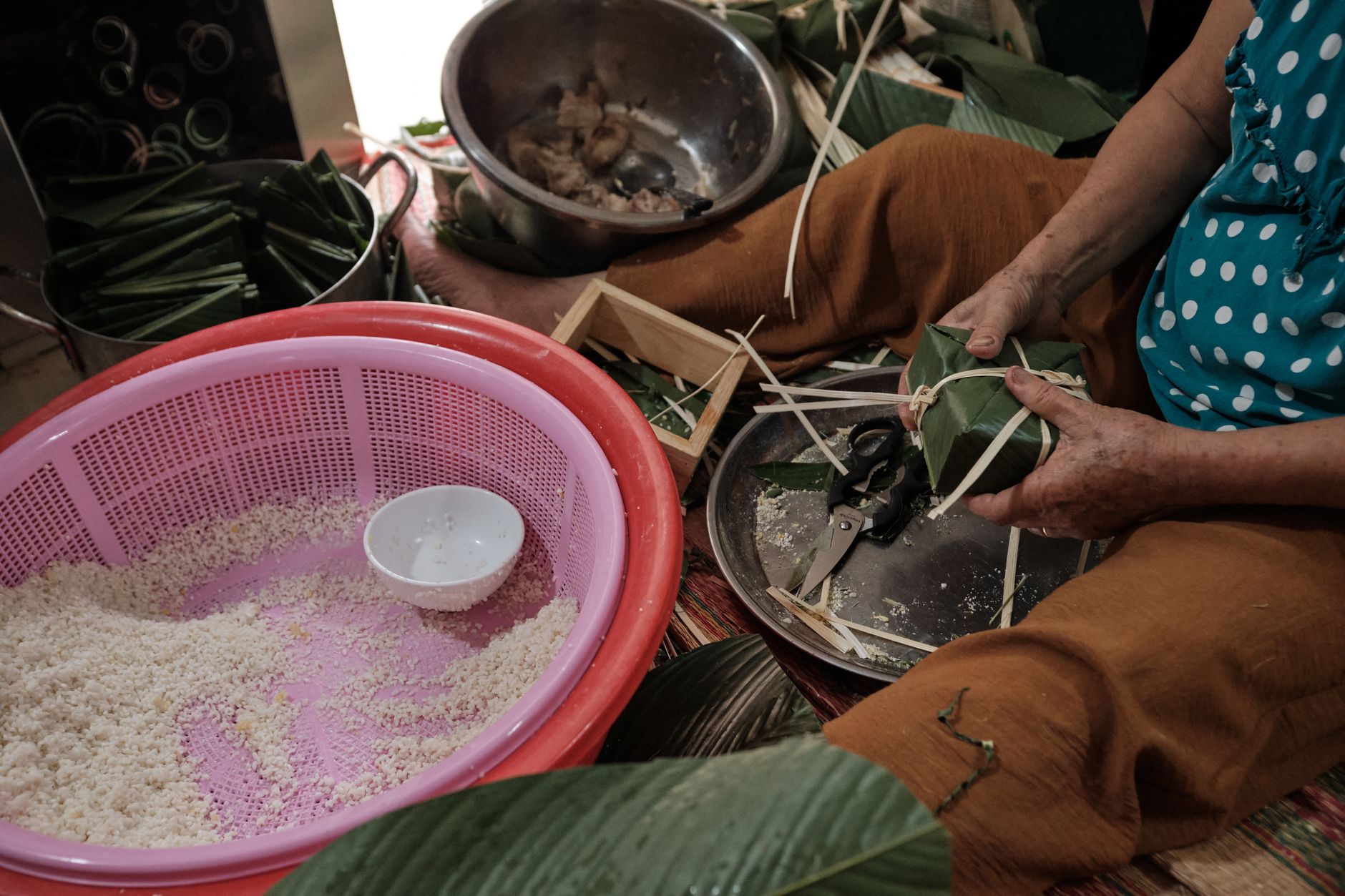
宁江糕点的与众不同,在于la gai的产地(省内清河一侧的本地种植户提供了大部分原料)和包裹工艺。宁江banh gai先用干东叶包裹,外层再覆芭蕉叶,最后以竹绳按特定的交叉格纹捆扎。这种双层叶包在蒸制过程中锁住蒸汽,防止面团吸入过多水分,这正是其口感紧实而不发橡皮的原因之一。

摄影:Nguyen Truong Khang,来自Pexels
慢慢剥开芭蕉叶——蒸过之后很容易撕破,太急着剥糕体有时会粘连。外层面团应略带黏性但能保持形状。常温食用最佳,不要冷藏后直接吃;冷藏会让糯米变硬,味道也会变淡。宁江镇的一些老摊主至今仍搭配一小杯绿茶,切一薄片一起上——茶的苦与馅料的甜相互平衡,干净利落。这才是正确的吃法。
一块约80至120克,比看起来更顶饱。作为午间点心,两块通常足矣。
宁江镇的主要生产街道沿Pho Hien一带,靠近集市。大多数店铺开在民居的前厅——认准那些用竹绳捆扎的深绿色小包。价格约为每块8,000至15,000越南盾,视馅料和大小而定,莲子款通常偏贵。
在海阳市(宁江以北约25公里),宁江banh gai在大多数干货店及中央客运站附近的有顶集市摊位均有售。Bao Phuong、Thu Huong等品牌的真空包装产品在全市各店铺均可买到——比集市新鲜货更便于携带。
如果你途经5号公路往返于Hanoi与海防之间,宁江县境内的几处路边摊直接向过往车辆售卖。靠近宁江桥口的摊位通常每日备货最新鲜。
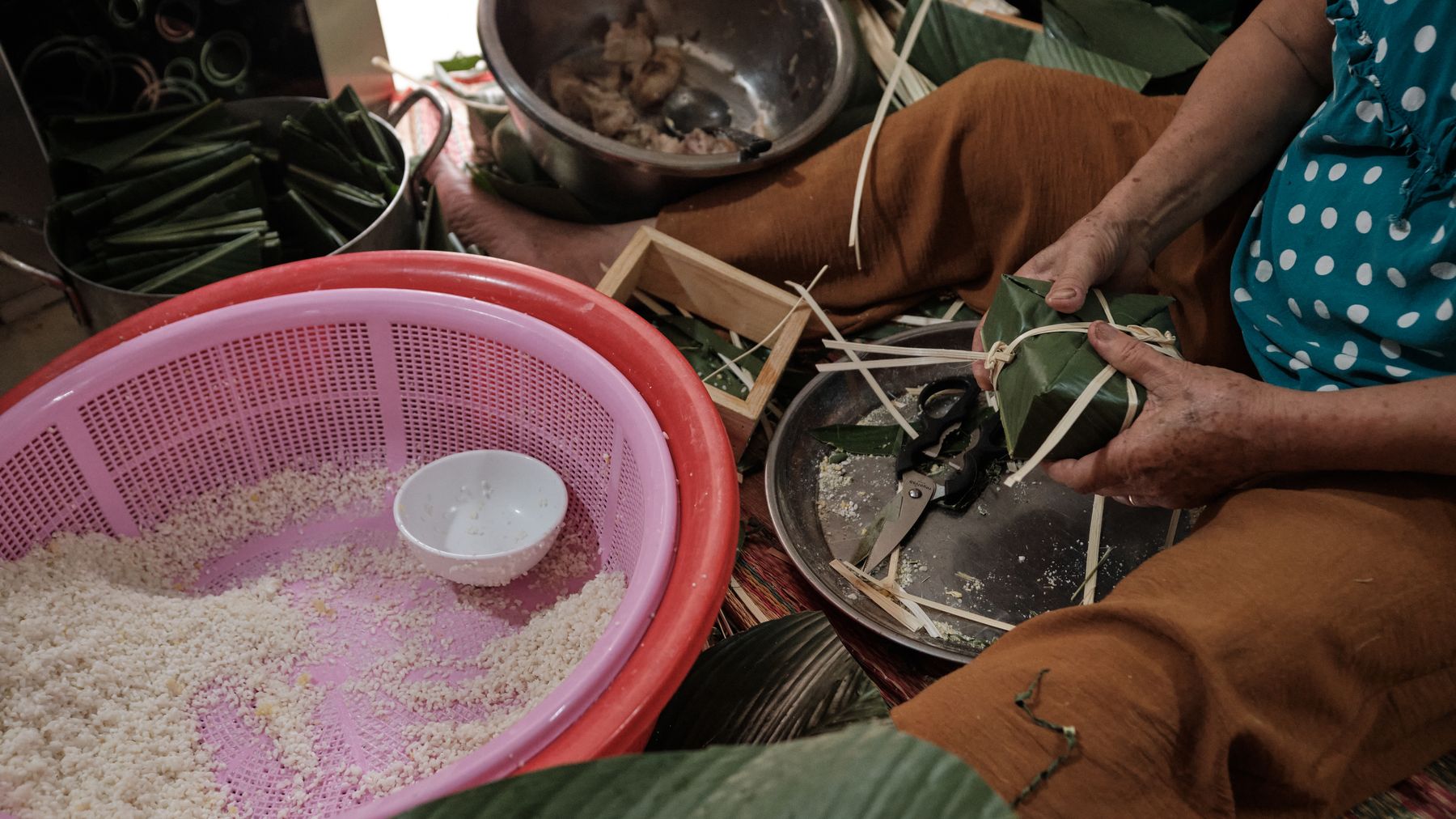
摄影:Nguyen Truong Khang,来自Pexels
集市新鲜banh gai在凉爽天气室温下可保存约3至4天。夏季潮湿环境下,建议2天内食用。真空包装商业版本未开封可延长至7至10天。切勿冷冻——解冻后口感会垮掉,面团变得粗粝颗粒感。
如果要带回Hanoi当伴手礼(很常见的做法——同春市场也有售,但宁江原产的品质明显更好),请用冷藏袋携带,并在购买后一两天内食用完毕。
宁江位于Hanoi东南约60公里,可从Hanoi甲贝客运站乘巴士,在海阳市转车抵达。对大多数旅行者而言,它算不上一个单独成行的一日游目的地,但很自然地融入海阳省的行程路线,或作为Hanoi与海防之间的中途停靠点。条件允许的话尽量直接在宁江购买——新鲜集市货与超市版本之间的品质差距是真实存在的。