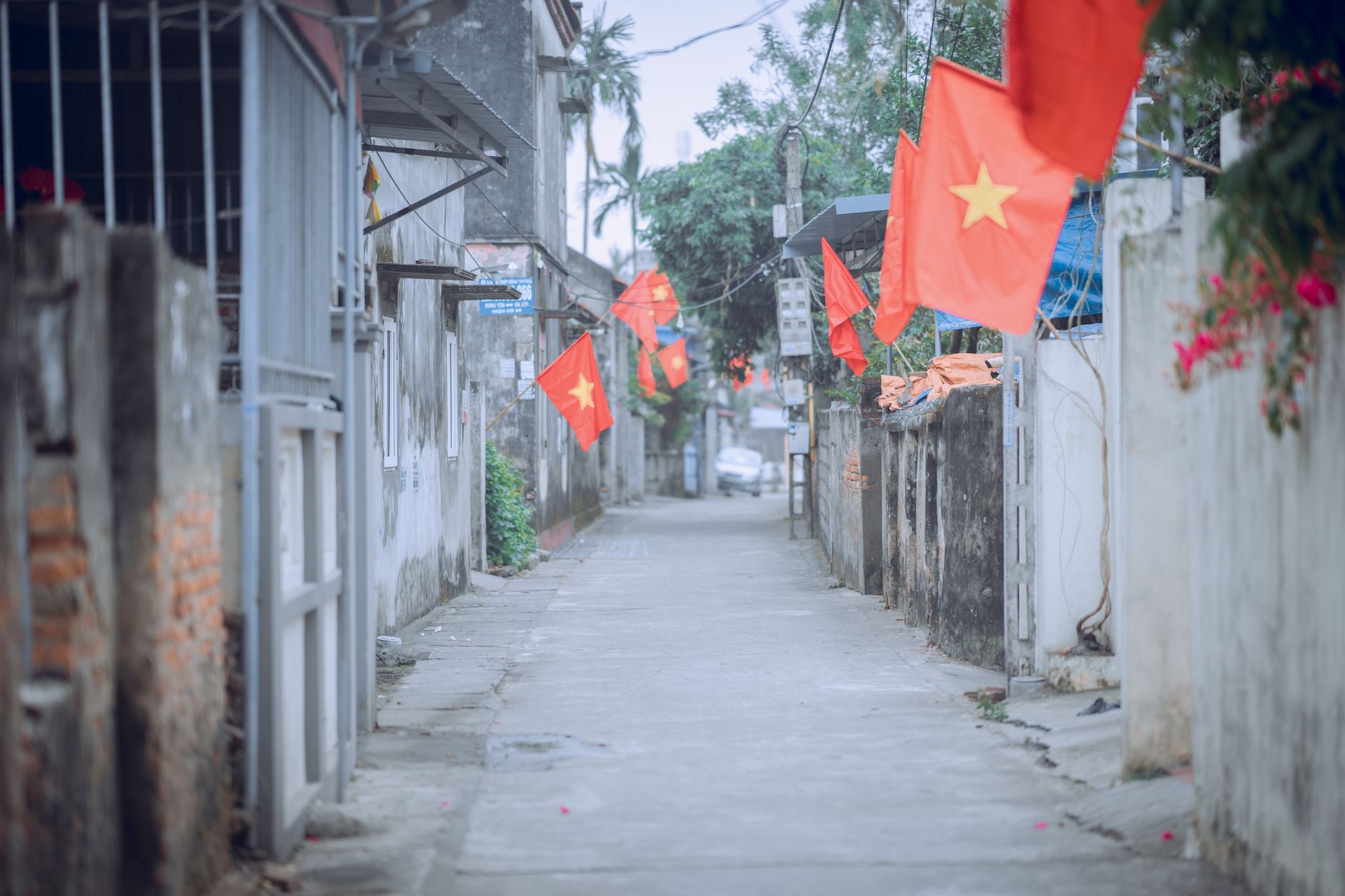
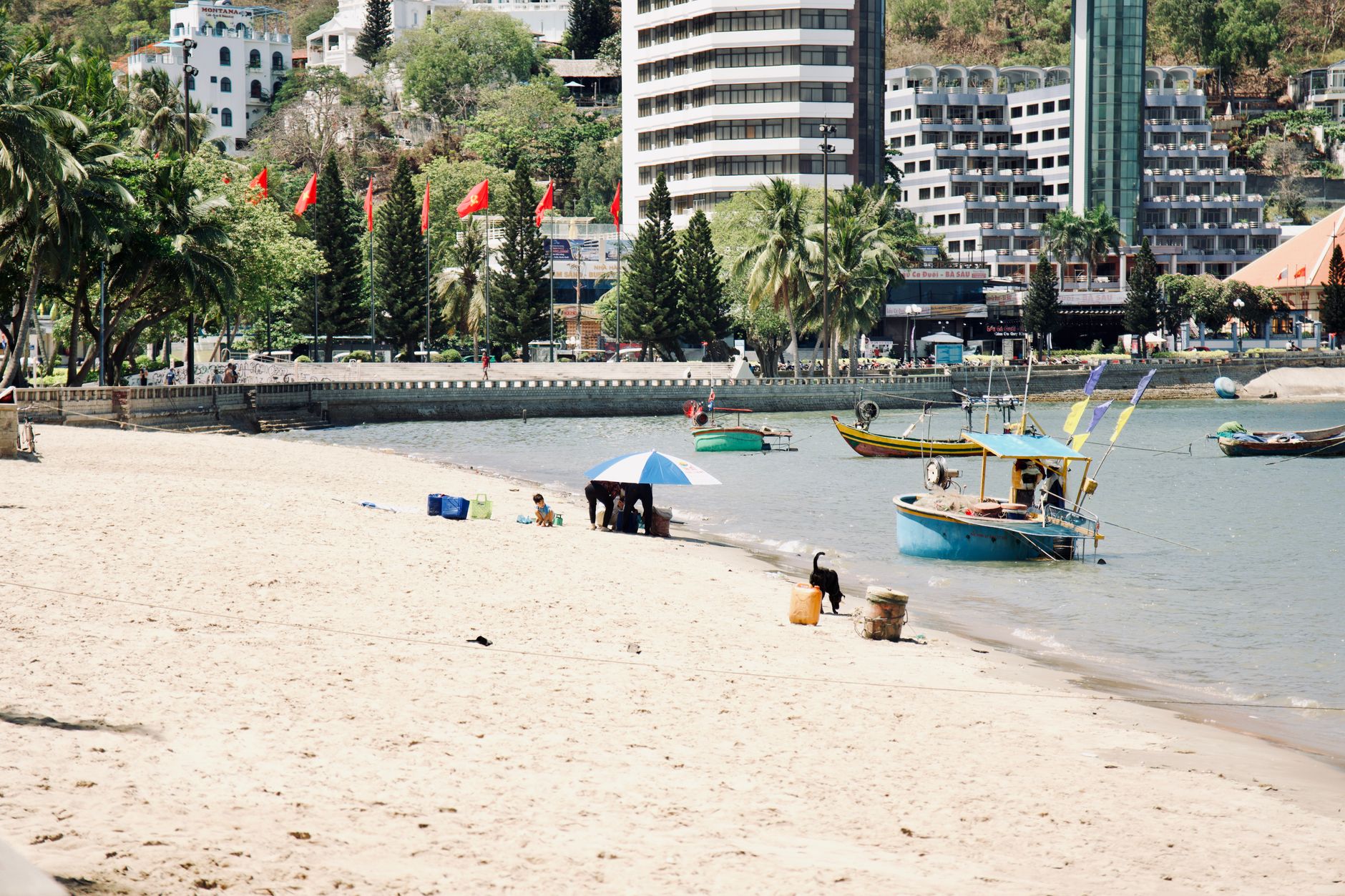
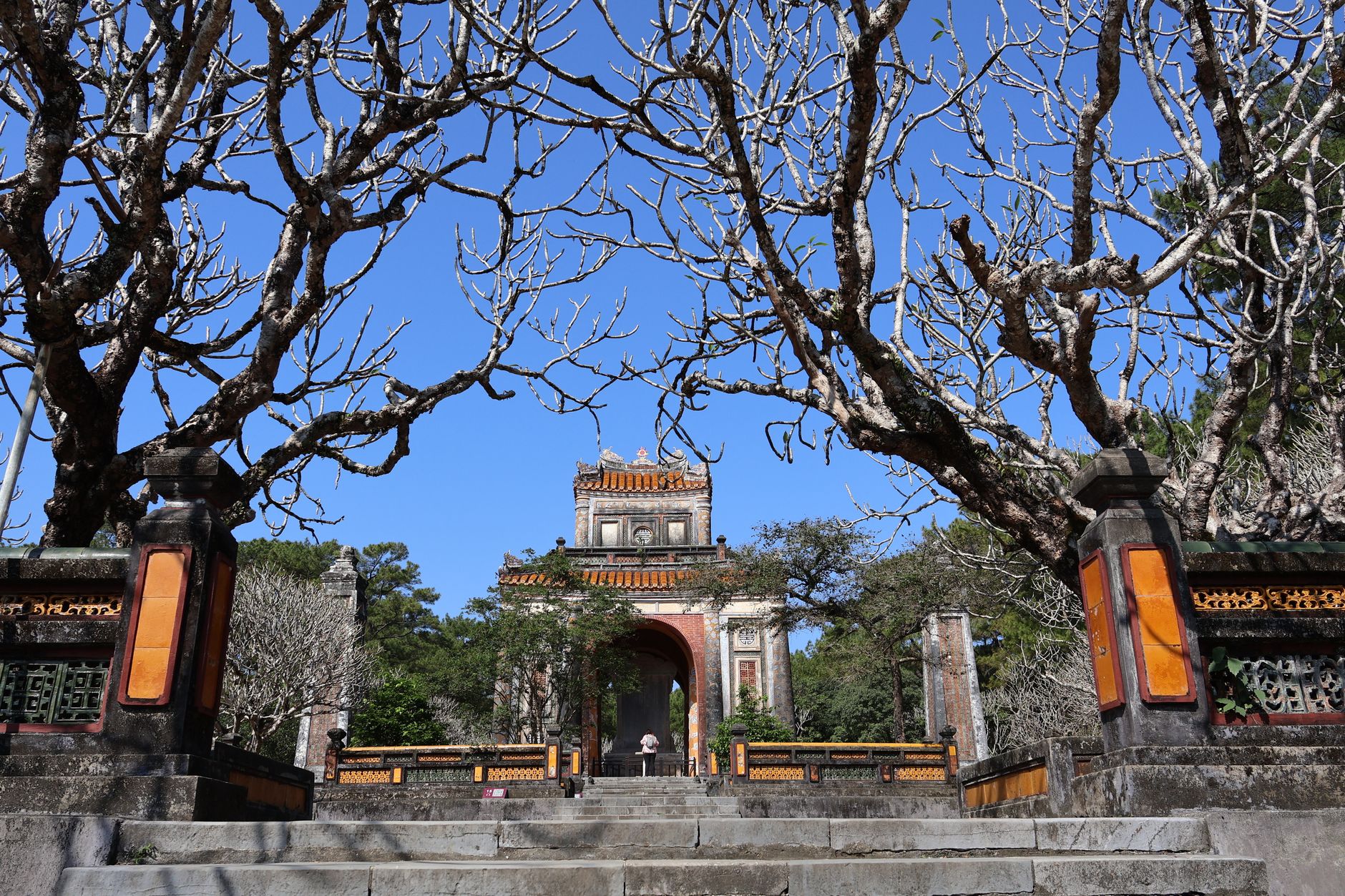
Hue is a city that demands patience from a photographer. To capture its heavy, poetic mood—what locals call "xu tho"—you must look past the quick postcard shots. The city's true character reveals itself in the morning mist rising off the Perfume River, the moss growing on royal brickwork, and the quiet routines of its residents.
This 10-day itinerary is designed for travelers who want to move slowly, chase the best light, and capture the textures of Hue (후에 / 顺化 / フエ) without rushing.
Day 1 — The Citadel's Ochre Walls
Start your trip by exploring the monumental heart of the city. The "Imperial Citadel" is vast, and the mid-day sun creates harsh, flat shadows on the yellow plaster walls. Plan your shoot for the late afternoon, starting around 3:30 PM when the light softens and casts long shadows through the restored corridors.
Focus on the contrast between the weathered, moss-covered stone and the brilliant red-and-gold lacquered wood of the interior pavilions. Look for frames within frames through the circular doorways and ornate screen windows.
- Dish to try: Stop by a street stall on Dinh Tien Hoang street for "banh khoai", a crispy, turmeric-spiced crepe stuffed with pork and shrimp.
- Off-script suggestion: Skip the main tourist paths inside the complex and walk the quiet outer moat along Tang Bat Ho street, where local men fish against the backdrop of the ancient brick ramparts.
Day 2 — Dawn on the Perfume River & Kim Long
Set an alarm for 5:00 AM to capture the river mist. The Perfume River is often blanketed in a soft fog at dawn, creating a minimalist, painterly landscape. Set up your tripod near the iron spans of the Truong Tien Bridge, looking west.
After sunrise, head to the historic neighborhood of Kim Long. This area is famous for its "nha vuon" (traditional garden houses). The architecture here blends domestic life with nature, featuring low tiled roofs, wooden screens, and stone screens designed to ward off bad spirits.
- Drink to try: Sit at a low plastic table by the river and order a "ca phe sua da" to watch the dragon boats begin their daily runs.
- Off-script suggestion: Seek out the small, overgrown boat jetty behind Thien Mu Pagoda where local commuters cross the river on small wooden skiffs.
Day 3 — The Colors of Thuy Xuan & Tomb of Tu Duc
Mid-morning is the best time to visit the Thuy Xuan incense village, located about 7 km from the city center. While it has become highly commercialized with photo booths, you can still find workshops where artisans dye bamboo splints in vibrant shades of pink, green, yellow, and blue. Use a wide aperture to isolate the repeating patterns of the drying incense bundles.
From Thuy Xuan, continue to the nearby "Tomb of Tu Duc". Unlike other royal monuments, this site was designed as a summer retreat and features organic, flowing layouts with lakes, pine forests, and wooden pavilions that blend into the natural landscape.
- Dish to try: A bowl of spicy "bun bo hue" at a roadside eatery near the tomb entrance.
- Off-script suggestion: Hike up Vong Canh Hill just before sunset. The hill offers a panoramic view of a sweeping bend in the Perfume River, framed by pine trees.
Day 4 — Dong Ba Market's Morning Chaos
To capture the raw energy of Hue, arrive at Dong Ba Market by 6:00 AM. This is when the produce boats unload along the canal and the indoor aisles hum with activity. The light inside the market is challenging—low, mixed, and punctuated by dramatic shafts of sun cutting through the corrugated metal roofs.
Focus on environmental portraits of the vendors, many wearing the traditional "non la" (conical hat), surrounded by mounds of purple shrimp paste, fresh herbs, and colorful tropical fruits.
- Dish to try: Head to the food court inside the market for "banh beo" (steamed rice cakes topped with dried shrimp and pork cracklings) served in small ceramic saucers.
- Off-script suggestion: Cross the Phu Xuan bridge to the quiet residential alleys of Chi Lang street, where old Chinese assembly halls stand in semi-ruin.
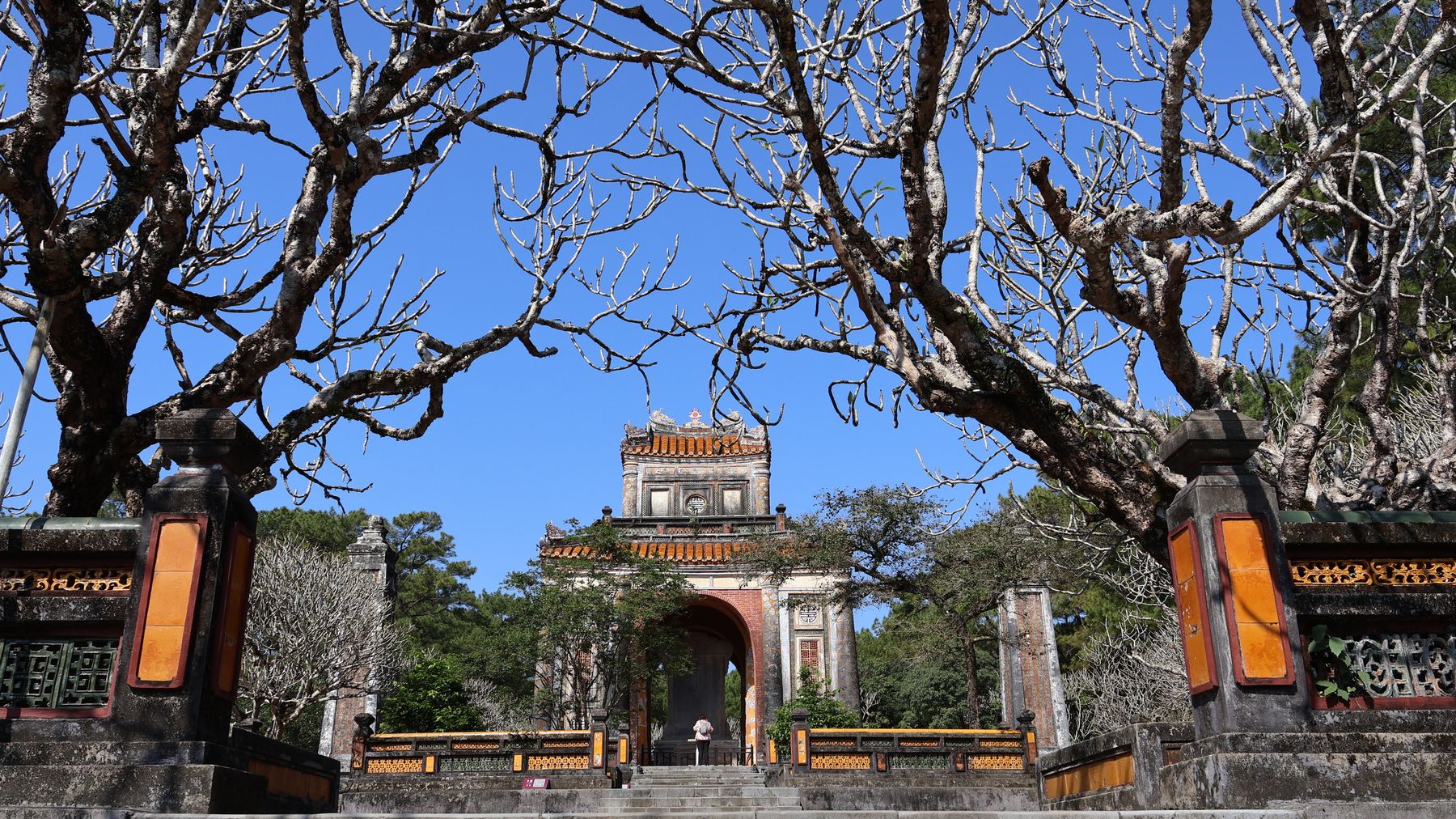
Photo by Minh Lê on Pexels
Day 5 — The Brutalist Decay of Thuy Tien Lake
Spend your fifth day capturing a completely different side of Hue: the abandoned water park at Thuy Tien Lake. Built in the early 2000s and quickly deserted, the site is a study in concrete decay and encroaching nature.
The centerpiece is a giant concrete dragon wrapped around a rusted spherical aquarium. The interior offers excellent opportunities for architectural abstraction, with cracked glass, peeling paint, and wild vegetation growing through the floors.
- Drink to try: Cool down with a glass of "ca phe muoi" (salt coffee), a Hue specialty that balances bitter espresso with sweet condensed milk and a savory cream foam.
- Off-script suggestion: Explore the pine forest trails surrounding the lake to find the rusted remains of an outdoor amphitheater slowly being swallowed by the jungle.
Day 6 — The Symmetry of Tomb of Khai Dinh & Minh Mang
Dedicate today to comparing two radically different royal aesthetics. Start early at the "Tomb of Khai Dinh". Built in the 1920s, it blends traditional Vietnamese motifs with European concrete architecture. The dark, weathered exterior contrasts sharply with the explosive, colorful glass and porcelain mosaics inside the main hall.
In the afternoon, travel to the Tomb of Minh Mang. This site represents the height of classical symmetry and Confucian order. The lakes, gates, and pavilions are arranged along a strict central axis, offering perfect opportunities for symmetrical compositions.
- Practical tip: Buy a combo ticket at your first stop to save on entry fees for multiple royal sites.
- Off-script suggestion: Visit the lesser-known Tomb of Gia Long. Located further upstream, it receives almost no tourists, allowing you to photograph crumbling stone obelisks in complete silence.
Day 7 — The Fishing Nets of Dam Chuon Lagoon
Dam Chuon is a massive brackish lagoon located about 12 km east of Hue. It is a photographer's paradise, characterized by vast expanses of shallow water, bamboo fences, and stilt houses used by local fishermen.
Arrive by 4:30 PM to catch the golden hour. The water turns into a giant mirror, reflecting the soft pastel colors of the sky. Watch for fishermen casting giant V-shaped nets from their wooden motorized boats.
- Dish to try: Eat at one of the rustic stilt restaurants on the lagoon, where you can choose live fish and shrimp to be fried into local pancakes.
- Off-script suggestion: Hire a local boatman for 100,000 VND to take you out into the middle of the lagoon for low-angle shots right at the water's surface.
Photo by Minh Lê on Pexels
Day 8 — The Ancient Village of Phuoc Tich
Take a day trip 40 km north of Hue to Phuoc Tich, a well-preserved ancient village established in the 15th century. The village is famous for its traditional "nha ruong" (wooden-framed houses) and its historic clay pottery kilns.
Phuoc Tich feels like a living museum. Walk the quiet brick paths lined with manicured ornamental hedges and photograph the elderly residents tending to their gardens or working in the few remaining pottery workshops.
- Dish to try: Pack a light lunch or ask a local family to prepare a simple home-cooked meal of braised river fish and local vegetables.
- Off-script suggestion: Walk down to the banks of the O Lau River to photograph the ancient brick piers where villagers once washed their pottery.
Day 9 — The Moody Coast of Lang Co & Lap An
Travel south toward the border with "Da Nang (다낭 / 岘港 / ダナン)" to visit "Lang Co" and Lap An Lagoon. Nestled at the foot of the Hai Van Pass, this area offers dramatic coastal landscapes.
Lap An Lagoon is famous for its oyster farming. The farmers use old rubber tires hanging from bamboo trestles to grow the oysters. At low tide, a sandy pathway emerges in the middle of the lagoon, providing a striking leading line for landscape compositions.
- Dish to try: Fresh grilled oysters topped with scallion oil and crushed peanuts at a roadside shack.
- Off-script suggestion: Photograph the train tracks of the North-South Railway as they curve along the edge of the lagoon under the shadow of the mountains.
Day 10 — The Hidden Pagodas of Ngu Binh
On your final day, focus on the spiritual side of Hue. Avoid the crowded tourist pagodas and head to the quiet pine forests near Ngu Binh mountain. Here you will find Tu Hieu Pagoda, a historic temple closely associated with the Zen master Thich Nhat Hanh.
The pagoda grounds feature ancient tombs of imperial eunuchs, quiet lotus ponds, and monks walking silently along the stone paths. Keep your camera use respectful and quiet, focusing on the play of light through the pine needles and the soft textures of the mossy gravestones.
- Drink to try: End your trip with a cup of hot lotus tea at a quiet garden cafe near the pagoda.
- Off-script suggestion: Climb the small hill of Ngu Binh for a final, elevated view of the city skyline and the Perfume River cutting through the landscape.
Practical notes
Hue is notoriously wet, especially from October to January, when persistent drizzle ("mua dam de") sets in. Do not let the rain stop you; the wet streets and gray skies create the moody, reflective atmosphere that defines the city's visual identity. Always carry a reliable rain cover for your camera gear and wear sturdy, non-slip shoes for exploring the moss-covered stone steps of the royal tombs.
Last updated · May 30, 2026 · independently researched, never sponsored.