Bac Ha Market (Cho Phien Bac Ha) is the largest and most vibrant weekly market in Vietnam (베트남 / 越南 / ベトナム)'s northern highlands. Every Sunday morning, ethnic minority communities walk or ride motorbikes from villages across the surrounding mountains to trade livestock, textiles, produce, and home-brewed corn wine. It's loud, chaotic, and genuinely fascinating — one of those rare places where tourism hasn't yet flattened the original purpose.
What it is and why it matters
Bac Ha's market has operated for generations as a trading post for Flower Hmong, Black Dao, Tay, Nung, and Phu La communities. Unlike some markets in the Sapa area that have shifted heavily toward tourist souvenirs, Bac Ha still functions primarily as a local market. People come to buy buffalo, sell vegetables, drink "ruou ngo" (corn liquor), and catch up with neighbors from distant villages.
The market sits on a hillside in Bac Ha town, roughly 100 km northeast of Sapa (사파 / 沙坝 / サパ) and about 60 km from Lao Cai city. It only runs on Sundays, from around 6:00 AM to early afternoon.
Why travelers go
The draw is simple: it's one of the most photogenic and culturally rich gatherings in northern Vietnam. Flower Hmong women wear elaborately embroidered clothing — deep indigo fabrics with bright pink, green, and orange accents — that they make by hand over months. The livestock section, where Hmong men negotiate over water buffalo and horses, has an energy you won't find anywhere else in the country.
Unlike Sapa's weekend markets, Bac Ha sees fewer tour groups. You'll still encounter other travelers, but the ratio of locals to visitors remains heavily tilted toward locals. That matters if you want photographs that don't look staged.
Best time to visit
The market runs year-round, but conditions vary:
- September to November — Clear skies after the monsoon, rice terraces turning gold in surrounding valleys. The best window overall.
- March to May — Spring flowers, comfortable temperatures (15-22°C). Market is lively but roads can be dusty.
- December to February — Cold, sometimes foggy. Fewer tourists. The Flower Hmong clothing looks even more vivid against grey skies.
- June to August — Monsoon season. Roads from Lao Cai can be slippery. The market still runs but might feel subdued if it's raining hard.
Arrive by 7:00-7:30 AM to see the market filling up. By 8:30 it's in full swing. After noon, vendors start packing.
How to get there
From Sapa
The most common route. It's about 100 km (2.5–3 hours by car or minibus). Many Sapa hotels and agencies offer Sunday day trips for 300,000–500,000 VND per person including transport. You can also rent a motorbike and ride yourself — the road is scenic, winding through Muong Hum valley, but requires confidence on mountain roads.
From Lao Cai city
Local buses depart Lao Cai bus station for Bac Ha early Sunday mornings (around 5:30-6:00 AM). The ride takes roughly 1.5-2 hours, costs about 60,000 VND. A private car or taxi runs 500,000-700,000 VND round trip.
From Hanoi
Take the overnight train to Lao Cai (departs Hanoi around 9-10 PM, arrives 5-6 AM), then transfer to Bac Ha by bus or arranged car. Some travelers combine a Bac Ha Sunday with a Sapa stay — spend a few days trekking around Sapa, then head to Bac Ha for the market before returning south.

Photo by Quang Nguyen Vinh on Pexels
What to do at the market
Livestock section
The buffalo and horse trading area sits on the lower slopes. Arrive early — deals happen fast. Hmong men test buffalo by pulling their horns, checking teeth, slapping haunches. Prices range from 15 to 40 million VND per animal. Don't get between a buyer and a buffalo.
Textile and handicraft stalls
Flower Hmong textiles are the standout. Hand-embroidered skirts, bags, and wall hangings. Prices start around 100,000 VND for small items; a full traditional skirt can cost 1-3 million VND depending on quality. Bargain gently — these take weeks to make.
Food section
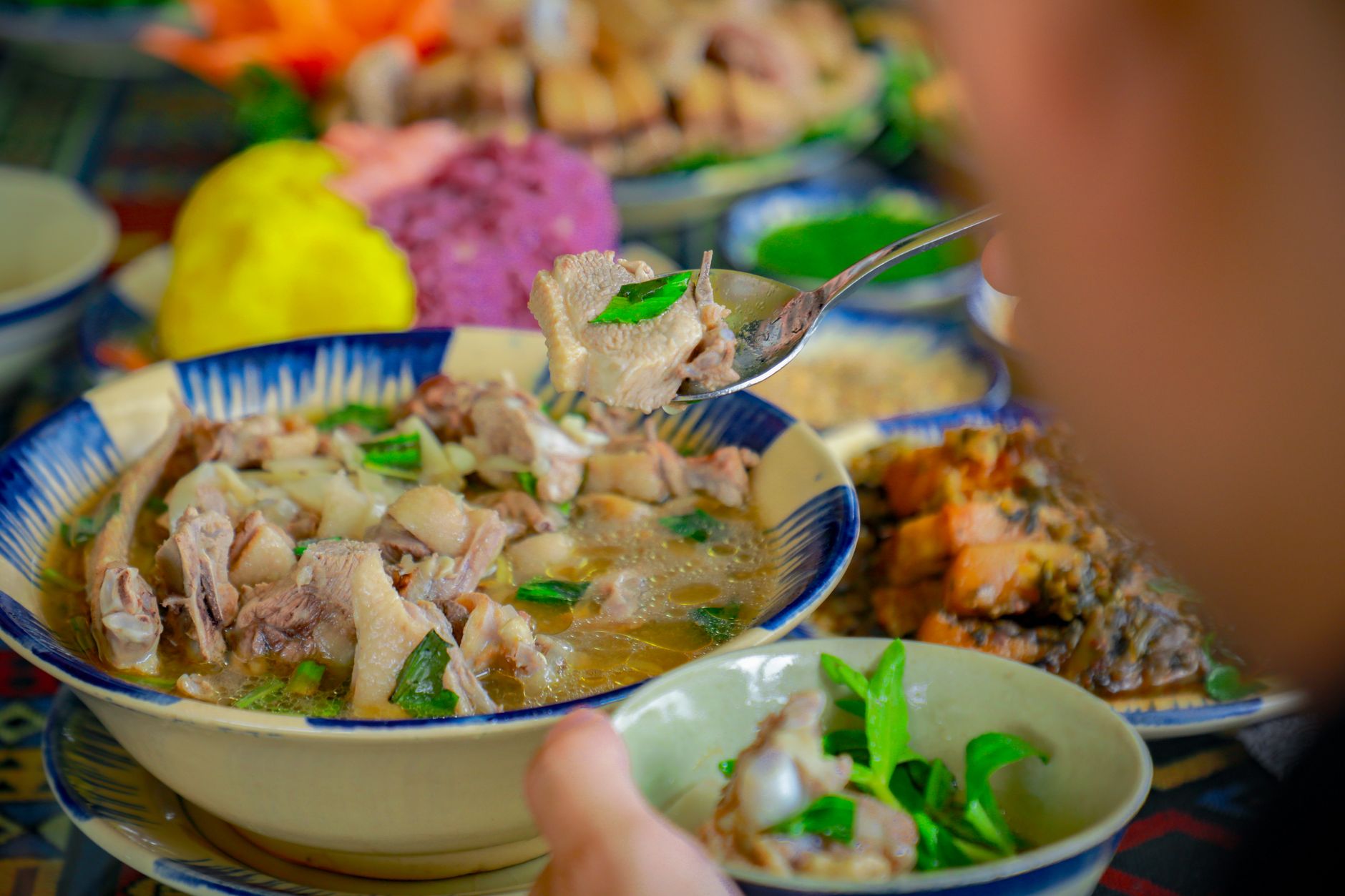
This is where the market gets interesting for eaters. Look for "thang co" — a Hmong offal hotpot made from horse or buffalo organs, simmered with herbs. It's an acquired taste but quintessentially Bac Ha. You'll also find grilled corn, steamed sticky rice in banana leaves, and pho served from makeshift stalls.
Corn wine alley
Vendors sell "ruou ngo" from plastic jugs. It's potent, rough, and costs almost nothing — about 10,000-20,000 VND per glass. Local men gather in circles, drinking and talking. You're welcome to join if you can handle the strength.
Where to eat
Inside the market, grab thang co (15,000-25,000 VND per bowl) and grilled meats. For something more familiar, several small restaurants line the road leading to the market entrance. Try "Com Pho Bac Ha" on the main street for a solid bowl of pho or rice with grilled pork. Expect to pay 40,000-60,000 VND per dish.
Egg coffee hasn't made it up here — stick to strong Vietnamese coffee or hot green tea from market vendors.
Where to stay
Bac Ha town has basic guesthouses and a handful of homestays in surrounding villages. Options:
- Ngan Nga Bac Ha Hotel — Clean, central, around 300,000-400,000 VND per night. Walking distance to the market.
- Homestays in Ban Pho village — 15 minutes from town. Tay family homes with rice wine distilleries. Roughly 200,000-350,000 VND including dinner.
- Coc Ly or Na Lo homestays — More remote, better for combining with weekday minority markets (Tuesday at Coc Ly, Wednesday at Lung Phin).
Book ahead for Saturday nights — rooms fill up with travelers positioning for the Sunday market.

Photo by Quang Nguyen Vinh on Pexels
Practical tips
- Cash only. There's one ATM in Bac Ha town (Agribank). Bring enough dong from Lao Cai or Sapa.
- Photography. Ask before shooting portraits. Most Hmong women are fine with it; some will ask for a small payment (10,000-20,000 VND). Respect a "no."
- Shoes. The livestock area gets muddy. Wear shoes you don't mind getting dirty.
- Combine with other markets. Can Cau (Saturday, 20 km north) and Coc Ly (Tuesday) are smaller but less touristy. A 2-3 day loop covers all three.
Common mistakes
Skipping the livestock section because it smells — that's where the real atmosphere lives. Arriving after 9:30 AM and finding half the stalls packed up. Buying textiles without checking stitching quality — machine-made Chinese imports have crept in; hand-embroidered pieces have slightly uneven stitches and heavier fabric. And booking a rushed day trip from Sapa that gives you only 90 minutes at the market — you need at least 2-3 hours to explore properly.
Practical notes
Bac Ha Market is a genuine weekly gathering, not a performance. Come early, bring cash, wear sturdy shoes, and leave your itinerary loose enough to linger. If you're already planning time in Sapa or heading through Lao Cai, building a Sunday around this market is one of the best decisions you can make in northern Vietnam.
Last updated · May 29, 2026 · independently researched, never sponsored.