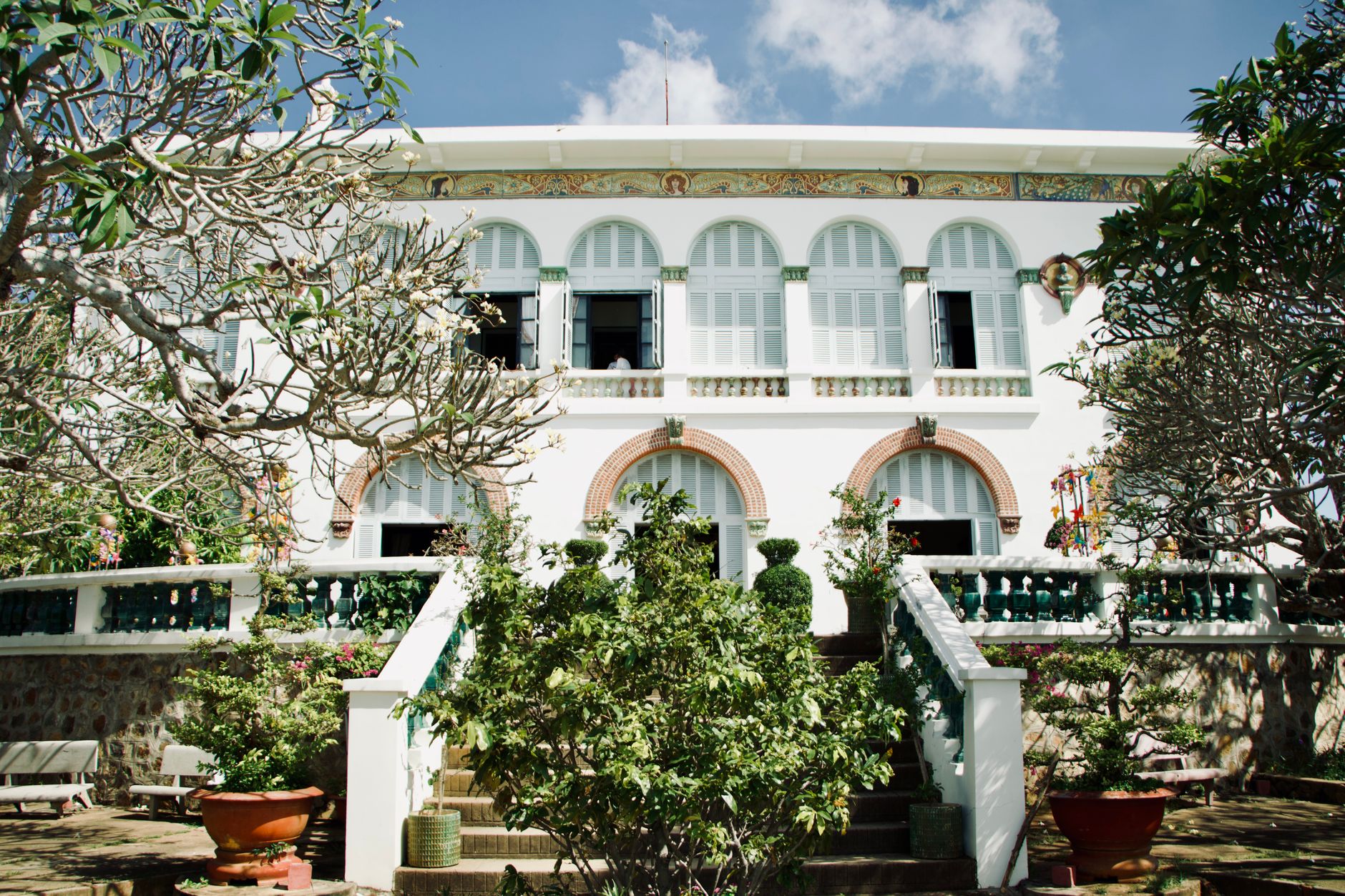
Dien Thai Hoa — the Hall of Supreme Harmony — is the single most important building inside Hue's Imperial City. If you only step into one structure behind those massive walls, this is the one.
What it is and why it matters
Dien Thai Hoa was the main throne hall of the Nguyen Dynasty, Vietnam (베트남 / 越南 / ベトナム)'s last royal line, which ruled from 1802 to 1945. The palace was originally built in 1805 under Emperor Gia Long, then expanded and renovated by subsequent rulers, most notably Emperor Minh Mang in the 1830s. This is where coronations happened, where the emperor received foreign envoys, and where major court ceremonies played out for nearly 150 years.
The building sits on a raised stone platform at the center of the Imperial Citadel, directly behind the Ngo Mon Gate. Its double-tiered roof, covered in yellow and green glazed tiles, is one of the most recognizable silhouettes in Hue (후에 / 顺化 / フエ). Inside, the hall features 80 carved and lacquered ironwood columns, a gilded throne, and elaborate dragon motifs that took teams of artisans years to complete. The palace survived the destruction of the 1968 Tet Offensive — many surrounding buildings didn't — and has been through careful restoration work, most recently in the early 2020s with UNESCO support.
Why travelers go
Dien Thai Hoa isn't a museum full of glass cases. It's the real throne room of a real dynasty, largely intact, and you can walk right up to the platform where the emperor sat. The scale of the interior — the massive columns, the ceiling work, the sense of ceremonial weight — communicates more about Nguyen court culture than any textbook. Photographers come early morning for the light hitting the courtyard's stone tiles. History nerds come for the architecture. Everyone else comes because it's the centerpiece of one of Vietnam's most significant heritage complexes, and it earns that status honestly.
If you're spending time in Hue visiting places like the Tomb of Tu Duc or the Tomb of Khai Dinh on the city's outskirts, Dien Thai Hoa anchors the urban half of that story — the seat of power those emperors once occupied.
Best time to visit
Hue's weather is its own personality. The best months are February through April: warm enough to be comfortable (25-30°C), dry enough that you won't be dodging rain in the open courtyard. September through November is typhoon season — the citadel grounds flood regularly, and some areas close.
For the building itself, weekday mornings before 9 AM give you the best chance of having the throne room relatively uncrowded. Tour buses from Da Nang start arriving around 9:30, and by 10 the courtyard fills up. Late afternoon (after 3 PM) is a second window, especially from March onward when daylight lasts.

Photo by Thái Nguyễn on Pexels
How to get there
If you're coming from Da Nang, the most common hub, you have a few options:
- Train: Hue station is about 2.5 hours from Da Nang by the Reunification Express. Tickets run 60,000-120,000 VND for a hard seat. The route follows the coast over Hai Van Pass — worth doing at least one direction for the scenery.
- Bus: Frequent departures from Da Nang's central bus station, around 100,000-120,000 VND, taking 2.5-3 hours depending on traffic.
- Private car or Grab: About 1.5-2 hours via the Hai Van Tunnel, roughly 800,000-1,000,000 VND one way.
From Hue's city center, Dien Thai Hoa is inside the Imperial City complex on the north bank of the Perfume River. It's a 10-minute taxi ride from most hotels (about 30,000-40,000 VND) or a pleasant 20-minute walk from the backpacker area along Le Loi street. Enter through Ngo Mon Gate — the throne hall is straight ahead across the courtyard.
Admission to the Imperial City complex is 200,000 VND per person (as of 2024). There's no separate ticket for Dien Thai Hoa; it's included.
What to do
Walk the central axis
Dien Thai Hoa was designed to be approached, not stumbled upon. Enter through Ngo Mon Gate, cross the Trung Dao Bridge over Thai Dich Lake, and you'll see the hall rising ahead across the Great Rites Courtyard. The stone courtyard has carved markers showing where mandarins of each rank stood during ceremonies. Take this walk slowly — the spatial sequence is intentional and one of the best-preserved examples of imperial feng shui planning in Southeast Asia.
Study the interior columns
The 80 ironwood columns inside are covered in red lacquer and gold leaf, each carved with dragon and cloud motifs. Look closely at the differences between columns — some were restored after war damage, others are original early-19th-century work. The craftsmanship gap tells its own story.
Photograph the roof details
The double-tiered roof features ceramic dragon finials, phoenix motifs, and the distinctive yellow glazed tiles reserved for imperial buildings. The best angles are from the courtyard at a low position, or from the flanking corridors on either side.
Sit in the courtyard
Seriously. The Great Rites Courtyard is one of the few large open spaces in Hue's old city. After walking the hall, find a shaded spot near the side galleries and just take in the proportions. The whole complex was built to make individuals feel small and the institution feel permanent.
Explore the surrounding structures
Don't leave the citadel after the throne hall. The Forbidden Purple City ruins behind it, the Nine Dynastic Urns to the side, and the Royal Theatre (Duyet Thi Duong) where you can catch a "water puppetry" or "ca tru" performance are all within a short walk.
Where to eat nearby
Hue is one of Vietnam's great food cities, and you're close to several solid options after visiting.
Walk south from Ngo Mon Gate toward the river and you'll hit the streets around Tran Hung Dao and Hung Vuong. "Bun bo Hue" — the city's signature spicy beef noodle soup — is everywhere, but Bun Bo Hue O Phuong on Nguyen Du street is a reliable bowl for around 35,000-40,000 VND. For "banh canh", the thick tapioca noodle soup often served with crab, try the vendors along Chi Lang street, a 10-minute walk southeast. A bowl runs 30,000-45,000 VND.
If you want something lighter, the area around Dong Ba Market (a short walk east along Tran Hung Dao) has vendors selling "banh xeo" — crispy turmeric crepes stuffed with shrimp and pork, Hue-style, meaning smaller and crispier than the southern version.

Photo by lhthoai on Pexels
Where to stay
Hue's accommodation clusters south of the Perfume River, within easy reach of the citadel:
- Budget: Guesthouses along Pham Ngu Lao and Le Loi streets from 200,000-400,000 VND per night.
- Mid-range: Boutique hotels along the riverfront, 600,000-1,200,000 VND. Several converted French-colonial buildings here.
- High-end: The Azerai La Residence or Pilgrimage Village, from 2,500,000 VND upward.
Practical tips locals would tell you
- Wear a hat and bring water. The courtyard has almost no shade, and Hue's midday sun is aggressive even in cooler months.
- Hire a local guide at Ngo Mon Gate (around 200,000-300,000 VND for 1-2 hours) if you want historical context. The building doesn't have much signage in English.
- Combine the Imperial City visit with Hue's royal tombs in one day if you start early. Most people do the citadel in the morning, then head south to the tombs after lunch.
- The combo ticket covering the Imperial City plus several royal tombs is 530,000 VND and saves money if you're doing more than two sites.
Common mistakes to avoid
- Rushing through. Tour groups spend 20 minutes here. You need at least 90 minutes for the citadel complex, and Dien Thai Hoa alone deserves 30-40 minutes.
- Skipping the sides. Most visitors walk straight to the throne, take a photo, and leave. The side galleries and the view from behind the hall toward the Forbidden Purple City ruins are worth your time.
- Visiting at midday. The courtyard becomes a furnace between 11 AM and 2 PM. Plan around it.
- Assuming Da Nang day trips are enough. Hue deserves an overnight. Between the citadel, the tombs, the food, and the Perfume River at dusk, a rushed day trip sells the city short.
Last updated · May 29, 2026 · independently researched, never sponsored.