Bac Ha's Sunday market runs one day a week, and if you're not there by 8 a.m., you'll miss half of it. The food alone justifies the four-hour drive from Sapa or the overnight train from Hanoi to Lao Cai followed by a 65 km minibus ride northeast — and this guide tells you exactly what to eat when you get there.
Who Actually Shows Up
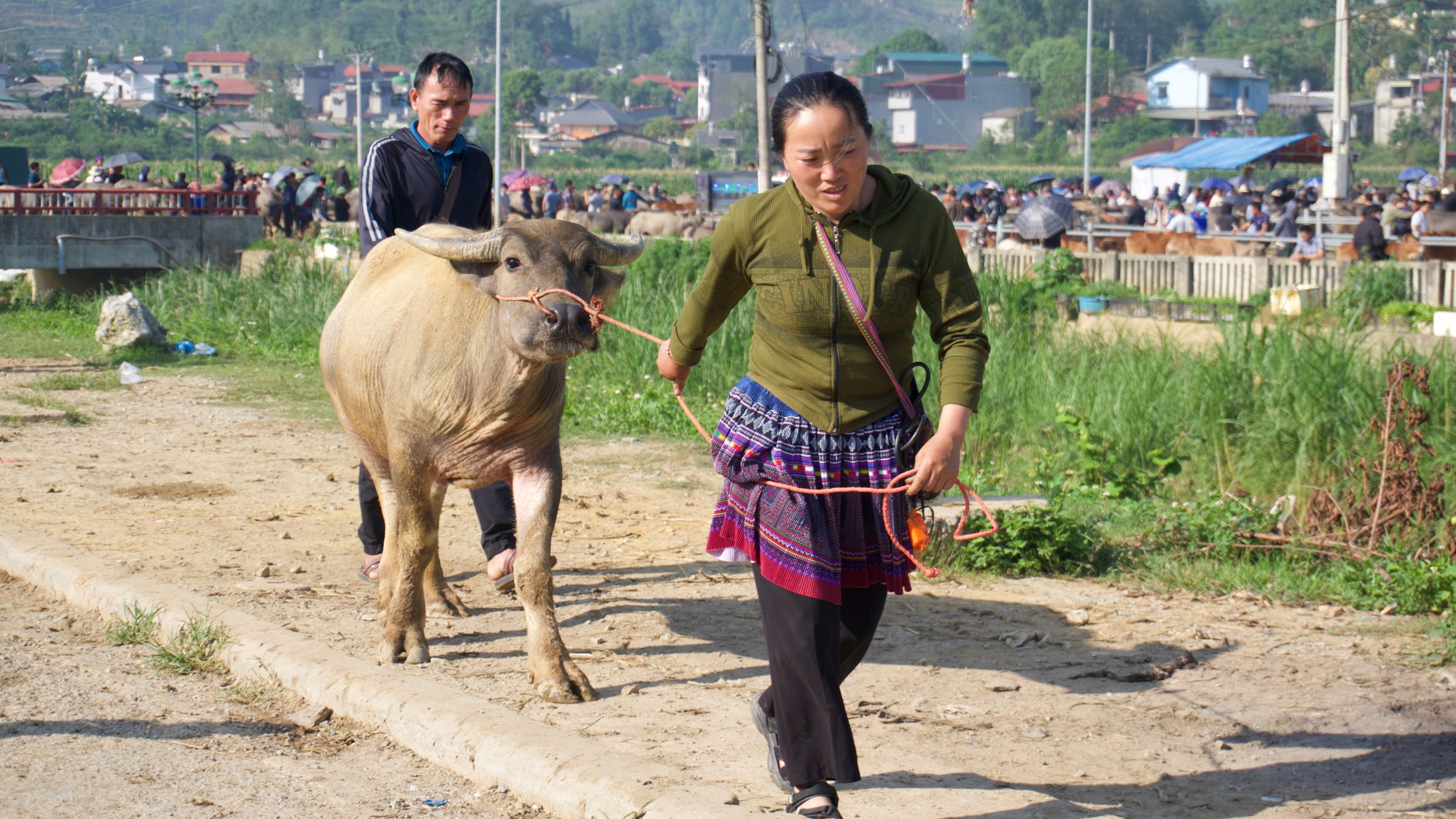
The market isn't staged for tourists. Flower Hmong women arrive in embroidered indigo and fuchsia jackets, carrying baskets of produce and live chickens on foot from villages that can be two or three hours' walk away. Tay traders set up tarpaulin stalls stacked with forest vegetables. Dao women sell medicinal herbs by the bundle. By 9 a.m. the central yard is crowded enough that moving in a straight line becomes a negotiation.
Food vendors cluster in the northeastern corner of the market grounds and spill into the covered hall. That's where you want to spend your first hour.
Thang Co — The Dish Bac Ha Is Known For
"Thang co" is the dish that defines this market. It's a stew of horse meat, offal, and organs — heart, lung, intestine — simmered for hours in a wide iron cauldron with lemongrass, galangal, and a spice mix that varies by cook. The broth runs a deep reddish-brown, faintly funky, intensely savory. It's ladled into metal bowls and eaten with a torn-off piece of "banh mi" or a scoop of sticky rice.
Most first-timers hesitate. Eat it anyway. A bowl costs around 30,000–40,000 VND. The best stalls are the ones with the biggest crowds of Hmong men sitting on low plastic stools — a reliable indicator of quality in any Vietnamese market context.
Thang co is traditionally a cold-weather dish, and Bac Ha at 900 meters elevation stays cool enough even in late spring that a bowl of hot stew makes sense at 8 in the morning.
Horse Meat Beyond the Stew
If the stew seems like too much of a commitment, horse meat also appears in drier preparations. Look for grilled strips ("thit ngua nuong") sold by weight, seasoned with salt, chili, and dried herbs, served on a skewer or wrapped in banana leaf. Texture is somewhere between lean beef and game — chewier than you'd expect, less gamey than the stew. Expect to pay 15,000–25,000 VND per skewer depending on portion size.
A few stalls also sell horse meat "lau" (hotpot) setups for tables of four or more, but those are better for groups who've planned ahead.

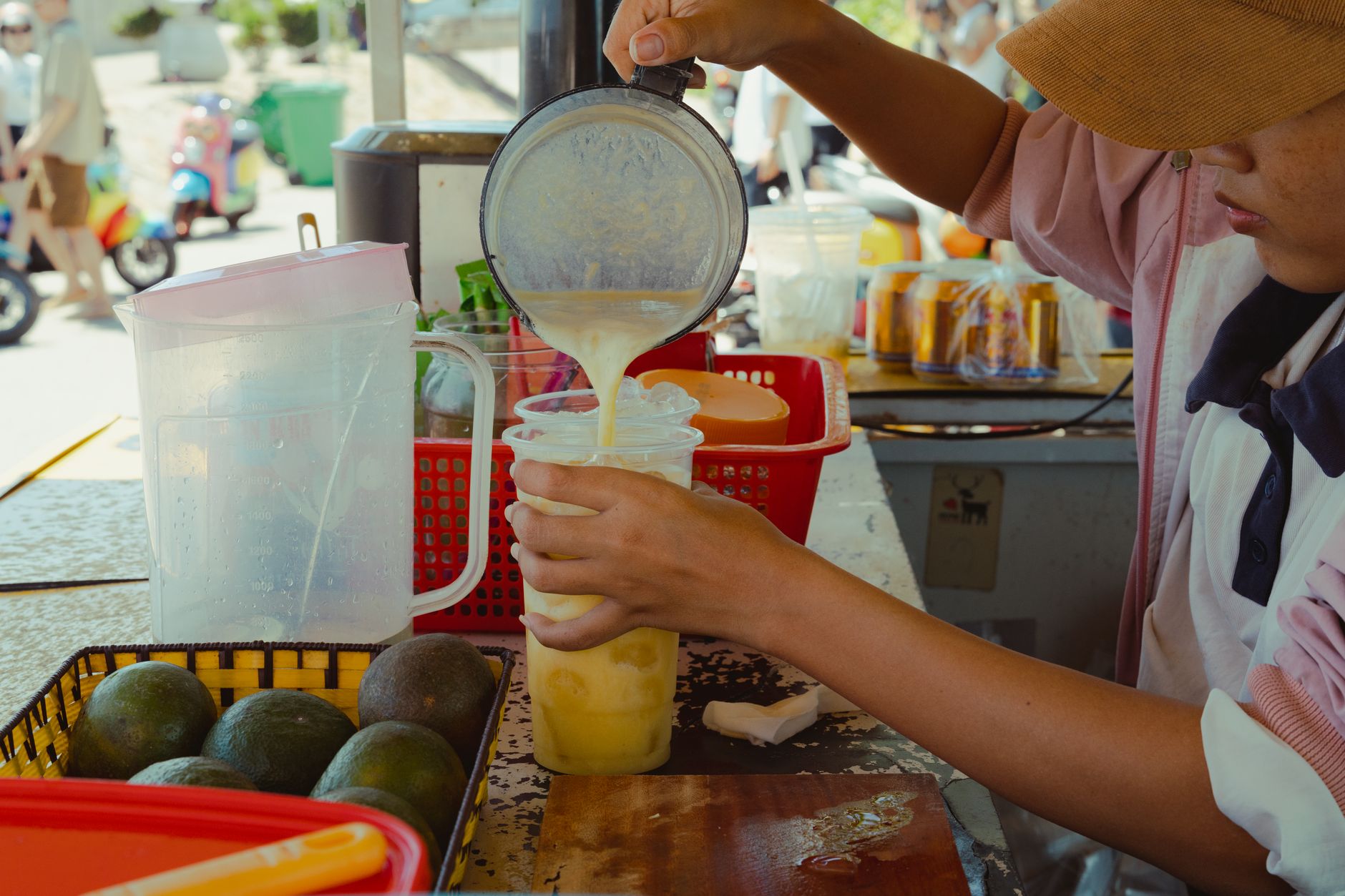
Photo by Duong Nguyen on Pexels
Ruou Ngo — Corn Liquor at 8 a.m.
"Ruou ngo" — corn-fermented rice wine specific to the highland north — is being drunk at the market from early morning. This is not unusual here. Small plastic cups are poured at folding tables near the thang co stalls, and a round costs 5,000–10,000 VND. The alcohol content varies wildly depending on the batch and the producer; some runs are smooth and faintly sweet, others land like acetone.
You're not obligated to drink. But declining a cup offered by a Hmong trader who's been walking since 5 a.m. calls for a smile and a hand gesture, not a lecture about morning drinking.
If you're doing a full market morning and have a long drive back to Sapa (사파 / 沙坝 / サパ) afterward, one small cup is the sensible ceiling.
Other Food Worth Eating
Beyond the headline items, the market has stalls worth working through methodically:
- Sticky rice parcels: Tay vendors sell "xoi" wrapped in banana leaves — plain, or stuffed with black beans and pork fat. 10,000–15,000 VND each.
- Roasted corn: Sold by women walking through the crowd with small braziers. Sweet highland corn, charred at the tips. 5,000 VND per cob.
- Forest greens and herb bundles: Not technically food to eat on the spot, but worth buying if you're staying somewhere with a kitchen. Wild bitter greens, dried mushrooms, and bundles of herbs you won't find at a lowland market.
- Pork skin crackling ("bi lon"): Fried and salted, sold by the bag at snack stalls near the entrance. Good for the minibus ride back.

Photo by Quang Nguyen Vinh on Pexels
Logistics That Matter
The market is officially Sunday only. Show up on a Monday and you'll find an empty concrete yard and a few bored dogs. Arrive before 9 a.m. to see it at full capacity — by noon it thins out considerably, and thang co stalls start running out of stew by 11 a.m.
Bac Ha town itself has a handful of guesthouses for around 150,000–250,000 VND per night if you want to arrive Saturday evening rather than doing a very early morning drive. The town is small and not particularly interesting outside market day, but staying over means you wake up inside the action rather than racing to get there.
From Sapa, shared minibuses to Bac Ha leave on Sunday mornings from the market area near Sapa's town center — ask at your guesthouse the night before. The ride takes about 2.5 hours on winding mountain roads. From Lao Cai city, the distance is shorter (65 km) and easier to arrange by taxi or booked transfer.
Bring cash. No card machines at food stalls. 200,000–300,000 VND covers a full market breakfast with thang co, a skewer of grilled meat, sticky rice, and a couple cups of corn wine if you're so inclined.
Practical Notes
Sundays only, year-round — though market size peaks during cooler months (October through March) when more highland communities make the trip. If you're already doing a loop through Ha Giang or coming from Hanoi (하노이 / 河内 / ハノイ) north through Lao Cai, Bac Ha fits naturally into a highland itinerary without much backtracking. The thang co stalls are gone by 11:30 a.m., so don't sleep in.
Last updated · May 26, 2026 · independently researched, never sponsored.