What it is
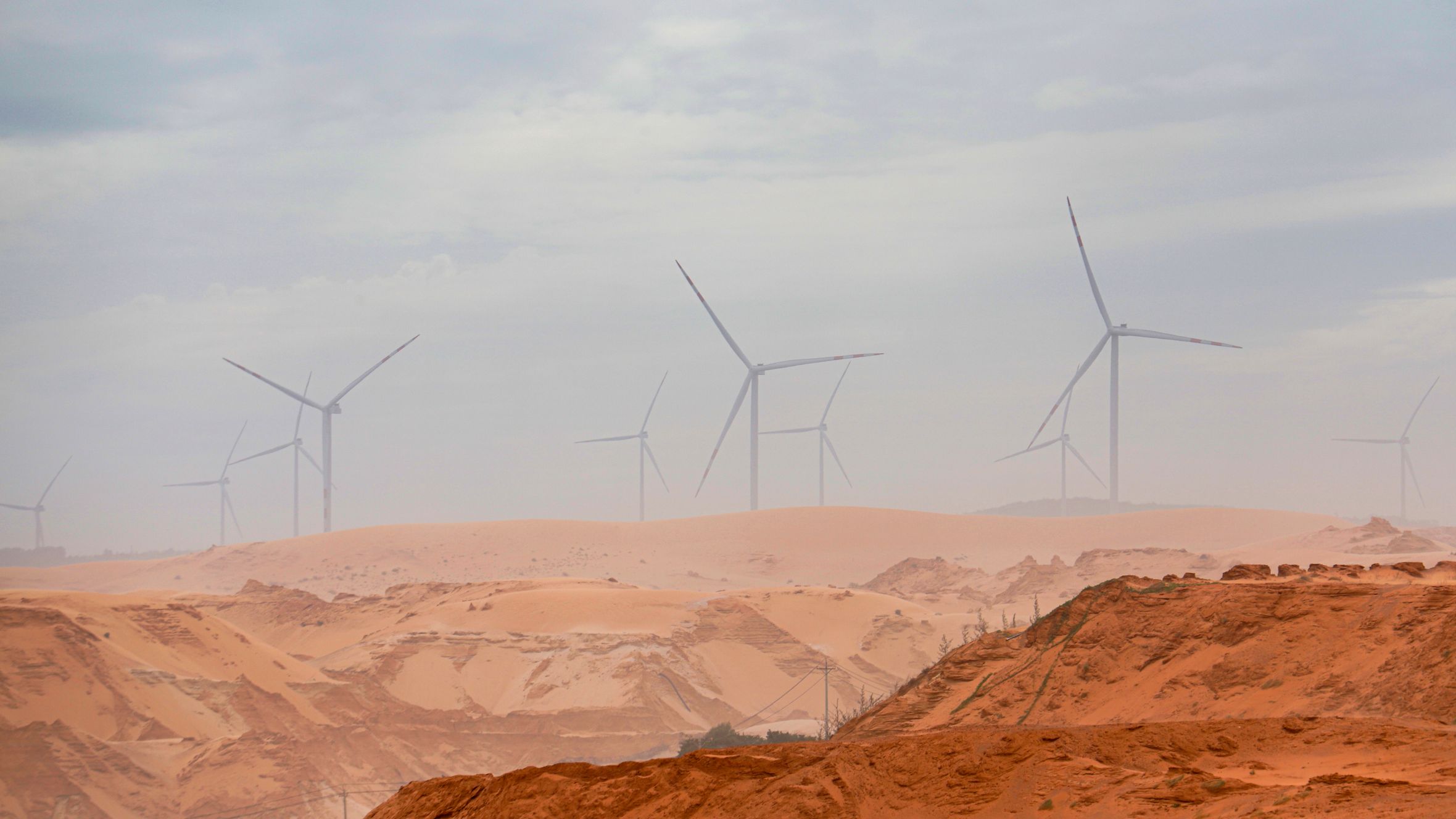
The Bac Lieu wind farm sits on a narrow strip of reclaimed coastal land along the shoreline of Vinh Trach Dong commune, about 10 km southeast of Bac Lieu city center. Built in two phases starting in 2010, it was Vietnam (베트남 / 越南 / ベトナム)'s first large-scale wind energy project — 62 turbines now line the mudflat coast, their blades turning slowly above shrimp ponds and mangrove channels. The area technically falls within what was formerly Bac Lieu province (now merged administratively with Ca Mau), but locals still call it "canh dong dien gio Bac Lieu" — the Bac Lieu wind field.
It's not a theme park or a curated tourist attraction. It's a working energy site that happens to look striking against the flat delta landscape, and that contrast is exactly why people show up.
Why travelers go
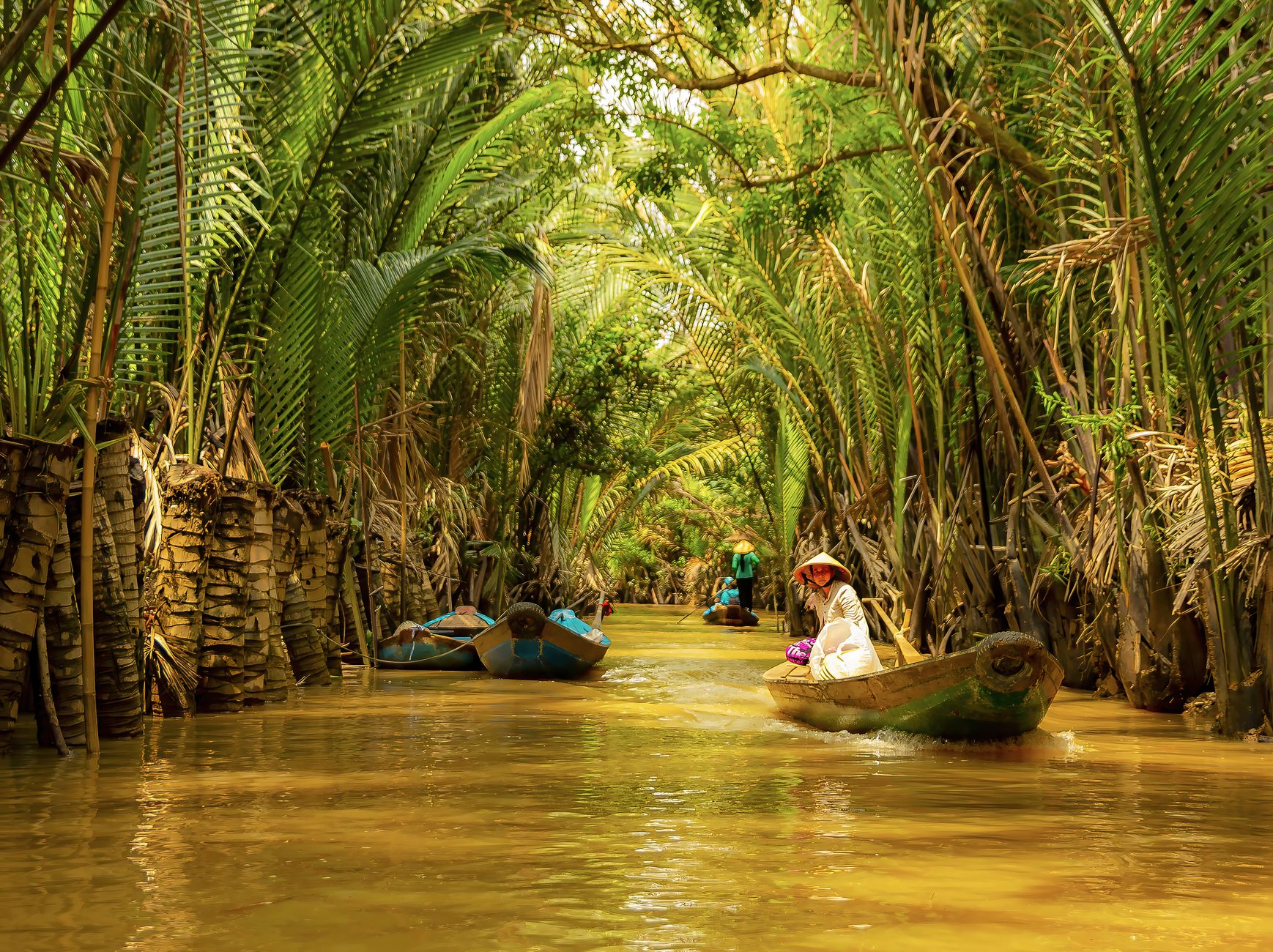
The Mekong Delta (메콩 델타 / 湄公河三角洲 / メコンデルタ) is pancake-flat. Rice paddies, fish ponds, coconut palms — the horizon line barely changes for hours of driving. Then you hit the coast road south of Bac Lieu and suddenly there are dozens of white turbines rising 80 meters into the sky, arranged in rows stretching toward the sea. The visual is unexpected.
Photographers come at sunrise and sunset when the light hits the turbines and the mudflats turn gold. Couples come for photos (this is one of the more popular engagement-shoot locations in the south). Road-trippers on the Ca Mau coastal loop stop here because it breaks up a long drive with something genuinely different.
It's also just a quiet, windswept stretch of coast — good for walking, good for sitting with a coffee, good for staring at the sea without being surrounded by resort development.
Best time to visit
The dry season from November through April gives you the most reliable weather. Skies are clearer, the coastal road doesn't flood, and the light for photography is best.
Avoid July through September if you can — heavy rains turn the access paths muddy and visibility drops. The turbines still spin, but you'll be watching them through grey sheets of rain.
Early morning (before 7 AM) or late afternoon (after 4 PM) are the golden hours here. Midday sun is harsh and the flat terrain offers zero shade.
How to get there
From Can Tho — the nearest major hub — it's roughly 110 km to Bac Lieu city, then another 10 km to the wind farm.
By bus: Phuong Trang (FUTA) runs buses from Can Tho to Bac Lieu every 30-45 minutes. The ride takes about 2.5 hours and costs around 100,000-130,000 VND. From Bac Lieu bus station, grab a xe om (motorbike taxi) or use the Grab app — the wind farm is a 15-minute ride, roughly 30,000-40,000 VND.
By motorbike: The most flexible option if you're doing a delta loop. Take QL1A south from Can Tho through Soc Trang, then cut toward Bac Lieu. Total ride is about 2.5-3 hours depending on traffic in towns. The coastal road (Duong ven bien) running past the turbines is smooth and scenic.
By car: Hire a private car from Can Tho for roughly 1,200,000-1,500,000 VND round-trip with driver, including waiting time. Worth it if you're combining the wind farm with other Bac Lieu stops like the Bac Lieu Prince's House or the bird sanctuary at Vuon Chim.

Photo by VINVIVU ® on Pexels
What to do
Walk the coastal road
A paved path runs along the sea dyke between the turbines. It's flat, easy, and roughly 3 km end to end. The sound up close is just the low hum of blades and wind — oddly meditative for an industrial site. Bring water; there's nothing out there.
Photograph the shrimp ponds at dawn
The turbines are built on land between active shrimp-farming ponds. At sunrise, the water in the ponds reflects the sky and the turbine silhouettes. If you're into landscape photography, this is the shot. A wide-angle lens and a low vantage point work well.
Visit the small observation area
There's a modest viewing platform near the entrance with some informational boards about the project. Nothing fancy, but it gives context. Free entry.
Combine with Nha Mat beach
About 5 km further along the coast road, Nha Mat is a local fishing beach — not a resort beach. There's a seafood strip where you can eat grilled shellfish and drink bia with your feet in the sand. It's scrappy and real.
Ride the full coastal road to Ganh Hao
If you're on a motorbike and have time, continue south along the coast road toward Ganh Hao fishing port (about 30 km). The road passes more turbines, salt flats, and mangrove forests. Ganh Hao itself is famous for its blood cockles — "so huyet" — harvested from the mudflats.
Where to eat nearby
Bac Lieu's signature dish is "bun bo cari" — a curry-spiced beef noodle soup with Khmer and Chinese influences, unlike anything you'll find further north. Look for it at the market stalls near Bac Lieu central market in the morning.
At Nha Mat beach, order grilled "ngheu" (clams) with salt and chili, and "oc" (snails) cooked in coconut milk. A full seafood spread for two runs about 200,000-350,000 VND depending on what's fresh.
For something more substantial, "hu tieu" — the southern-style pork and prawn rice noodle soup — is everywhere in this part of the delta. Light, clean-tasting, and usually under 40,000 VND a bowl.
Where to stay
Budget: Guesthouses in Bac Lieu city center run 200,000-350,000 VND/night. Basic but functional. Try the area around Tran Phu street.
Mid-range: Bac Lieu Hotel or Cong Tu Bac Lieu Hotel (yes, named after the famous "prince") offer air-conditioned rooms with breakfast for 500,000-800,000 VND.
Higher end: Options are limited — this isn't a tourist-resort zone. The best you'll find is around 1,000,000-1,200,000 VND for a clean business hotel. Most travelers use Bac Lieu as a one-night stop on a longer delta trip.

Photo by Sokmeas UY on Pexels
Practical tips locals would tell you
- Wear a hat and sunscreen. The coast is fully exposed — no trees, no buildings, nothing between you and the sun.
- Bring a windbreaker. It's called a wind farm for a reason. The coastal breeze is constant and can get chilly in December-January.
- The turbines are fenced off at the base. You can walk alongside them but can't climb or touch the structures.
- Phone signal is fine along the main road but gets patchy on the sea dyke sections.
- There are no ATMs at the wind farm itself. Withdraw cash in Bac Lieu city before heading out.
Common mistakes to avoid
- Showing up at noon. The light is flat, it's unbearably hot, and you'll last 15 minutes before retreating to your motorbike. Come early or late.
- Expecting facilities. There's no cafe, no bathroom, no convenience store at the wind farm. Bring what you need.
- Skipping the rest of Bac Lieu. The wind farm alone isn't worth a full day. Combine it with the bird sanctuary, the old colonial house, or the drive south toward Ca Mau cape for a complete day.
- Driving the coast road after dark. Unlit, narrow in sections, with shrimp pond ditches on both sides. Not worth the risk on a motorbike.
Practical notes
The Bac Lieu wind farm works best as part of a longer Mekong Delta itinerary — Can Tho to Bac Lieu to Ca Mau cape is a logical 3-4 day loop by motorbike or car. It's a 30-minute detour at most, and it gives you something visually different from the endless green of the delta interior. No entrance fee, no crowds, no hassle — just turbines, mudflats, and wind.
Last updated · May 29, 2026 · independently researched, never sponsored.