
What It Is and Why It Matters
Nha cua Pao — literally "Pao's House" — is a restored H'Mong homestead in Sung La commune, sitting in the Dong Van karst plateau at roughly 1,200 meters elevation. The house became famous as a filming location for the 2006 Vietnamese movie Chuyen cua Pao (Pao's Story), directed by Ngo Quang Hai. The film told the story of a young H'Mong girl navigating family hardship and identity in the northern highlands, and it struck a nerve domestically — winning several Vietnam (베트남 / 越南 / ベトナム) Film Festival awards.
The house itself predates the movie by decades. It's a traditional H'Mong dwelling built with rammed-earth walls, wooden columns, and a clay tile roof, surrounded by a stone fence typical of the plateau's architecture. After the film's success, local authorities restored and preserved it as a cultural site. Following Vietnam's 2025 provincial administrative reorganization, this area — formerly under Ha Giang province — now falls within the expanded Tuyen Quang province. But the landscape, the people, and the road to get there haven't changed.
Most travelers encounter Nha cua Pao as a stop on the Ha Giang loop, Vietnam's most celebrated motorbike route through the northern mountains.
Why Travelers Go
Forget the movie connection for a moment. The house sits in one of the most visually arresting valleys on the entire Dong Van plateau. Sung La is a patchwork of terraced fields — buckwheat in autumn, corn in summer — framed by grey limestone karst towers. The house itself, with its ochre walls and dark timber, photographs beautifully against the valley backdrop.
But the real draw is context. Nha cua Pao is one of the few places along the Ha Giang (하장 / 河江 / ハーザン) loop where you can step inside a preserved H'Mong home and get a sense of how these structures were built and lived in. There's a small exhibition inside with photos from the film and information about local H'Mong culture. It's a 20-minute stop that adds substance to the drive.
Best Time to Visit
The plateau has two peak seasons worth planning around:
- October to early December — Buckwheat flower season. The fields around Sung La turn pink and white, and the whole valley looks like a watercolor painting. This is the most popular window, especially late October through November.
- Late February to April — Peach and plum blossom season, plus clearer skies after the winter fog lifts. Fewer tourists than autumn.
Avoid June through August if you dislike rain. The roads get slippery and visibility drops. December to January can be bitterly cold at this altitude — temperatures dip to 5-8°C, sometimes lower, and fog can sit in the valleys for days.
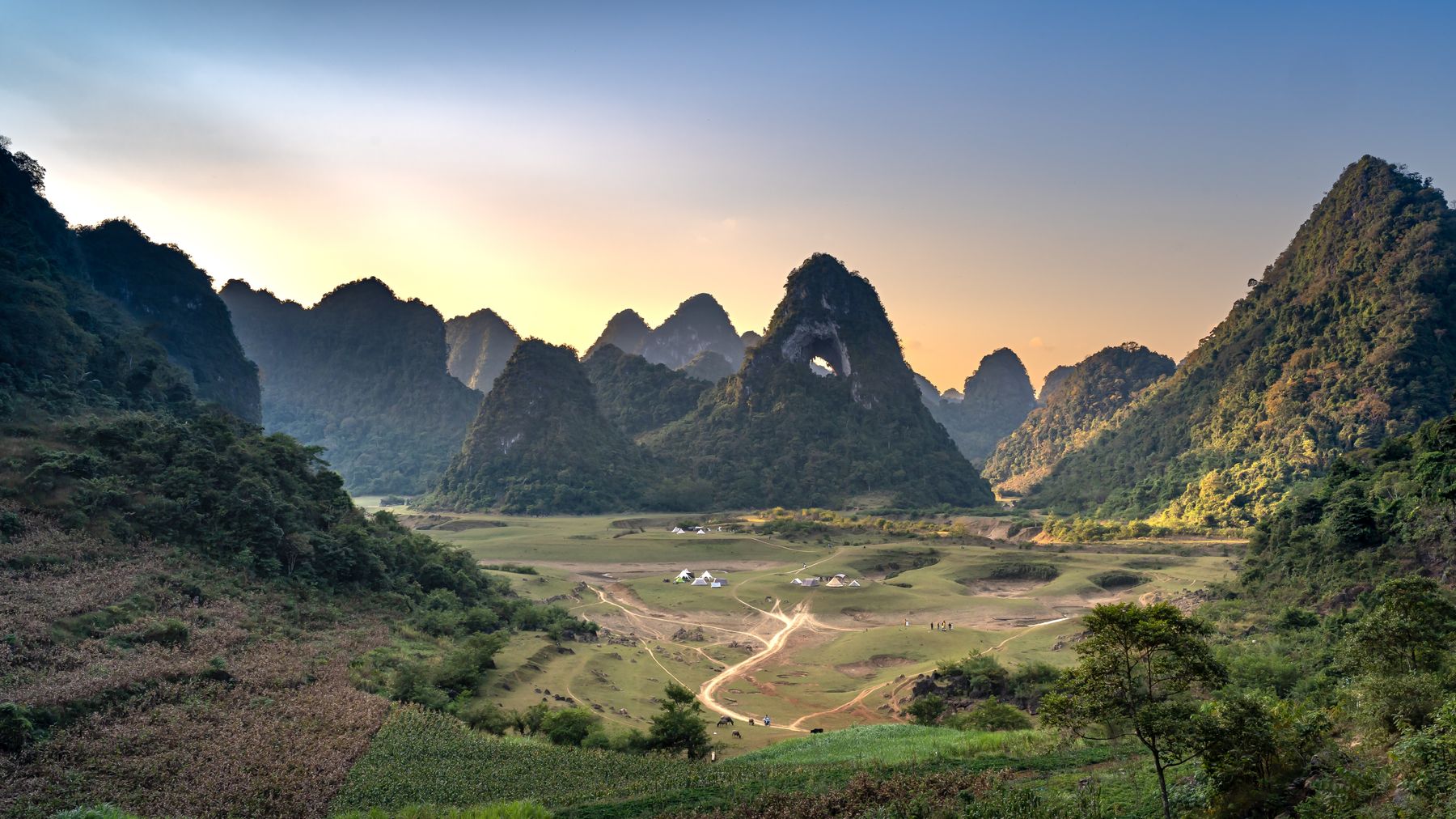
Photo by Quang Nguyen Vinh on Pexels
How to Get There
The nearest major hub is Ha Giang city (still the main gateway, regardless of provincial borders).
Hanoi to Ha Giang city: Sleeper buses run nightly from My Dinh bus station, taking 6-7 hours. Expect to pay 250,000-350,000 VND one way. Several operators run this route — Cau Me, Hung Thanh, and Hai Van are reliable names.
Ha Giang city to Nha cua Pao: The house is roughly 150 km from Ha Giang city via the QL4C highway, through Yen Minh and then toward Dong Van. By motorbike, this takes 4-5 hours depending on your pace and stops. Most travelers ride the loop counterclockwise and hit Sung La on day two.
If you're not riding yourself, book an "Easy Rider" guide with bike in Ha Giang city. Rates run 600,000-900,000 VND per day including the bike, fuel, and a local driver-guide. You can also hire a car with driver for around 1,500,000-2,000,000 VND per day.
What to Do
Walk Through the House
The main dwelling is open to visitors. Step through the stone courtyard, look at the construction — the rammed-earth walls are thick enough to keep the interior cool in summer and warm in winter. Inside, there are a few rooms with film stills and context about H'Mong domestic life. Entry is free, though there's a small donation box.
Explore Sung La Valley on Foot
Don't just snap a photo and leave. Walk 15-20 minutes along the paths behind the house into the surrounding fields. During buckwheat season, the trails through the flowers are genuinely worth your time. You'll pass other H'Mong homes — some occupied, some used for drying corn — and get views of the karst ridgeline that you can't see from the road.
Visit Lung Cam Cultural Village
About 2 km from Nha cua Pao, Lung Cam is a small H'Mong settlement with more traditional houses and a community cultural space. It's quieter than the main site and gives a less curated look at plateau life.
Stop at the Sung La Market (Sunday Only)
If your timing works out, the weekly Sunday market at Sung La draws H'Mong, Lo Lo, and Tay families from surrounding villages. It's smaller and less touristed than the famous Dong Van market. People come to trade livestock, vegetables, and textiles. Get there before 9 AM for the best atmosphere.
Buckwheat Flower Fields (Seasonal)
From mid-October through November, the fields between Sung La and Pho Bang are carpeted with buckwheat flowers. This is peak photo territory. Locals sometimes set up small stalls selling "men men" — a crumbly buckwheat cake that's an acquired taste but worth trying.
Where to Eat Nearby
Sung La itself has a couple of basic roadside eateries. Look for "thang co" — a H'Mong horse-meat hotpot with offal, herbs, and spices that's the signature dish of the plateau. It's served at most local restaurants in the Dong Van area for 60,000-100,000 VND per portion. Not for everyone, but it's the real thing.
For something more familiar, "pho" and rice plates are available at small restaurants in Dong Van town, about 24 km further north. A bowl of pho runs 30,000-40,000 VND.

Photo by Vietnam Hidden Light on Pexels
Where to Stay
There's no accommodation at Nha cua Pao itself. Your options:
- Dong Van town (24 km north): The main overnight stop on this stretch of the loop. Basic guesthouses start at 150,000-250,000 VND per night. A few newer boutique homestays run 400,000-700,000 VND with better beds and hot water that actually works.
- Yen Minh (50 km south): Fewer options but a reasonable stop if you're pacing the loop differently. Budget rooms from 200,000 VND.
- Homestays along the route: Several families between Yen Minh and Dong Van offer overnight stays. Expect basic bedding, shared bathrooms, and home-cooked meals. Around 200,000-350,000 VND including dinner and breakfast.
Practical Tips Locals Would Tell You
- Carry cash. There are no ATMs in Sung La. The nearest reliable ATMs are in Dong Van town, and even those occasionally run dry on weekends. Load up in Ha Giang city.
- Dress in layers. The plateau is significantly cooler than Hanoi. Even in October, mornings can be 12-15°C. If you're on a motorbike, wind chill makes it worse.
- Fuel up in Yen Minh or Dong Van. Petrol stations are sparse between the two towns. Don't assume you'll find fuel near Sung La — sometimes you will, sometimes you won't.
- Respect the homes. Some tourists wander into occupied H'Mong houses for photos. Don't. If a door is closed or there's no signage, it's someone's private residence.
Common Mistakes to Avoid
- Rushing through. Most loop riders spend 5 minutes here, take a selfie, and leave. Give it at least 30-45 minutes. Walk the valley.
- Skipping the Sunday market. If you can time your loop to be in Sung La on a Sunday, do it. It's worth adjusting your itinerary.
- Underestimating the road. The stretch from Yen Minh to Dong Van has sharp switchbacks and unpredictable traffic — trucks, goats, kids on bikes. Don't ride beyond your skill level, especially in rain.
- Expecting a museum experience. This is a preserved house in a rural village, not a polished tourist attraction. That's exactly what makes it worth visiting.
Last updated · May 29, 2026 · independently researched, never sponsored.





