What Bai Truoc is — and why it's not the beach you're picturing
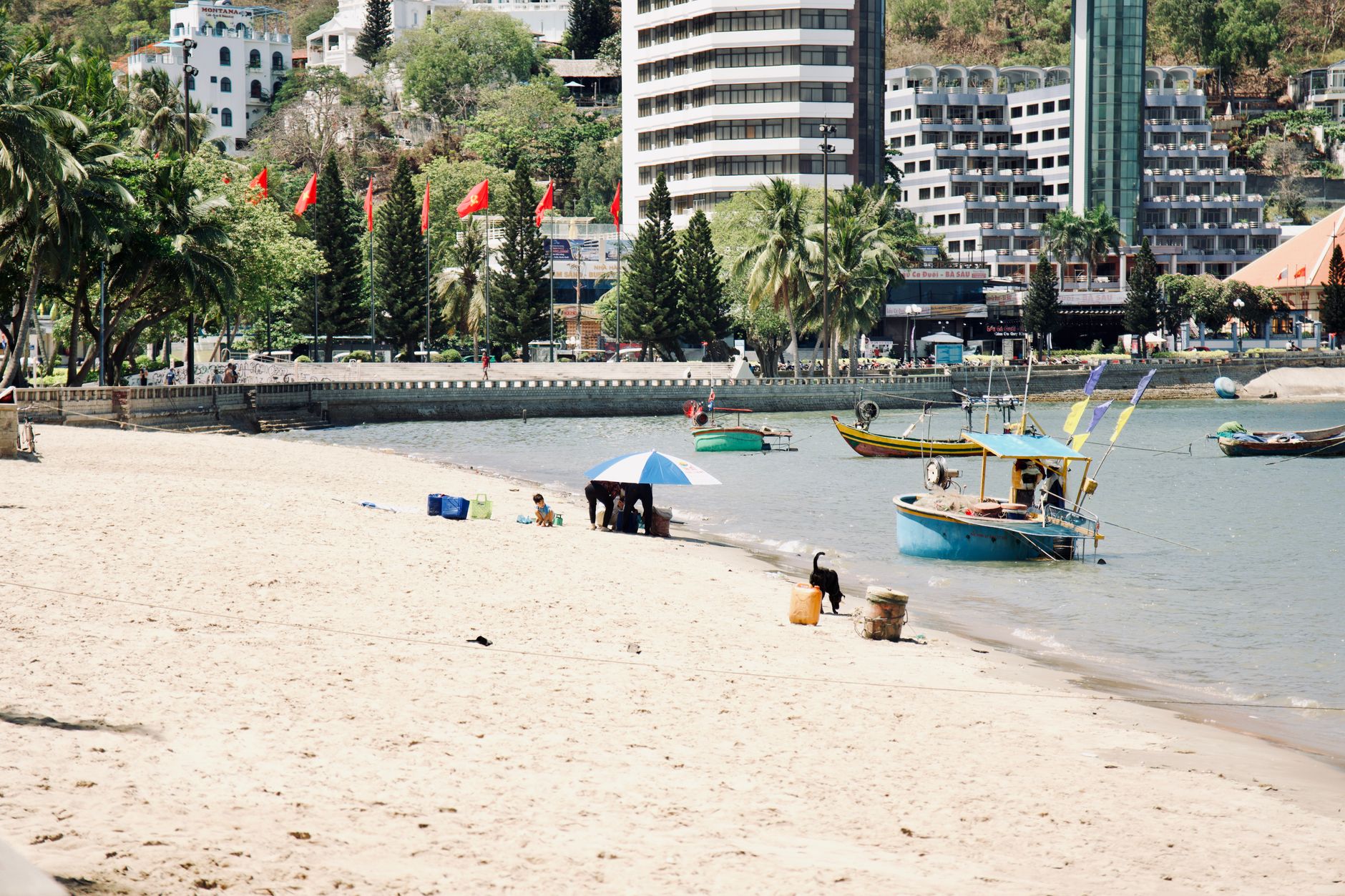
Bai Truoc (Front Beach) is the smaller, more sheltered of Vung Tau's two main beaches, curving gently along the western side of the peninsula. If Bai Sau (Back Beach) is where Saigon families set up camp with coolers and inflatable toys on weekends, Bai Truoc is the quieter counterpart — a 1 km crescent facing the harbour, backed by a paved promenade, old tamarind trees, and a handful of colonial-era buildings that haven't yet been converted into karaoke bars.
Vung Tau (붕따우 / 头顿 / ブンタウ) has been a seaside escape since the French colonial period, when it went by Cap Saint-Jacques. Bai Truoc was the original bathing beach for French officers and administrators. After 1975, it became a public park-beach hybrid — more about the evening stroll than serious swimming. That character holds today.
Since 2025, Vung Tau falls under the expanded Ho Chi Minh City (호치민시 / 胡志明市 / ホーチミン市) administration. In practice, nothing has changed for travelers: same roads, same hydrofoils, same "banh khot" stalls.
Why travelers go
Bai Truoc isn't a destination beach — nobody flies to Vietnam specifically for it. But it fills a real gap: it's the closest saltwater to Saigon, reachable in under two hours, and Bai Truoc specifically offers a mellow pace that Bai Sau doesn't. The water is calm (it faces the harbour, not open sea), the promenade is good for early-morning walks, and the concentration of seafood restaurants along Quang Trung street makes it a better eating destination than a swimming one.
It's also where you'll find the most character in Vung Tau — the old lighthouse on Nui Nho (Small Mountain), the statue of Christ on the hill above, and streets with actual shade. Weekend warriors from Saigon who've grown tired of the Bai Sau circus tend to drift here.
Best time to visit
November through April is dry season, and Bai Truoc is at its best: less humid, clearer skies, calmer water. December and January mornings can be surprisingly cool by southern Vietnam standards — low 20s Celsius.
Avoid the window from June through September if you dislike afternoon downpours. The beach itself doesn't flood, but the rain kills the promenade vibe.
Weekdays year-round are significantly quieter than weekends. If you can swing a Thursday arrival, you'll have the seafood restaurants largely to yourself.
How to get there from Saigon
Three realistic options:
Hydrofoil (fastest, most pleasant)
Greenlines DP operates high-speed ferries from Bach Dang Wharf (District 1, Saigon) to Vung Tau. The ride takes about 1 hour 30 minutes. Tickets run 250,000–350,000 VND one way depending on seat class. Book online or at the terminal — weekend mornings sell out, so reserve a day ahead. From Vung Tau's ferry terminal, Bai Truoc is a 2 km taxi ride or a 25-minute walk along the waterfront.
Bus
Phuong Trang (FUTA) and Kumho Samco run buses from Mien Dong bus station to Vung Tau. About 2–2.5 hours depending on traffic, 100,000–130,000 VND. Buses drop you at the Vung Tau bus station on Nam Ky Khoi Nghia street, roughly 1.5 km from Bai Truoc.
Motorbike or car
Take the HCMC–Long Thanh–Dau Giay Expressway, then continue on the 51 highway. Total distance is around 95 km from central Saigon; figure 1.5–2 hours without bad traffic. Tolls add up to about 70,000 VND for a car.

Photo by Thang Cao on Pexels
What to do
Walk the promenade at sunrise. The Bai Truoc coastal path runs from the ferry terminal area south toward Nui Nho. Early morning — 5:30 to 6:30 — you'll share it with local joggers and tai chi groups. The light on the water is genuinely good at that hour.
Climb Nui Nho to the lighthouse. The old Vung Tau Lighthouse sits at 170 metres elevation on Small Mountain, directly above Bai Truoc. The walk up takes 20–30 minutes on a paved path. Entry is free. From the top you get a full view of both beaches and the shipping lanes. Go before 8 a.m. to beat the heat.
Visit the Christ statue. Whether or not you're religious, the 32-metre Christ of Vung Tau on Nui Nho is worth the climb for the panorama. You can go inside and up the arms — the interior staircase is narrow and not for the claustrophobic. Open 7:30–11:30 and 13:30–17:00. Free entry; modest dress required (no shorts above the knee).
Rent a bicycle and ride to Bai Dau. North of Bai Truoc, the small cove of Bai Dau (Mulberry Beach) is a 10-minute ride. It's rockier and less groomed, but quieter, with a few drink shacks. Hotels along Bai Truoc rent basic bikes for 50,000–80,000 VND per day.
Drink iced coffee on Quang Trung. The strip of old shophouses along Quang Trung street, one block back from Bai Truoc, has some of Vung Tau's best "ca phe sua da" spots. No specific chain — just pick whichever sidewalk setup has the most motorbikes parked outside.
Where to eat nearby
Vung Tau's signature dish is "banh khot" — crispy turmeric coconut-milk pancakes cooked in a dedicated cast-iron mould, topped with shrimp and eaten wrapped in lettuce and herbs. Banh Khot Goc Vu Sua on Nguyen Truong To street (about 800 m from Bai Truoc) is the most well-known spot. A portion runs 40,000–60,000 VND.
For seafood, Ganh Hao on Tran Phu street serves reasonably priced grilled fish, clams, and crab — expect to pay 200,000–400,000 VND per person for a full spread with beer. Avoid the flashier restaurants right on the beachfront; they charge tourist prices for the same product.
If you want something quick and portable, Vung Tau also does solid "banh mi" — the Banh Mi Vuon Tau cart near the Bai Truoc roundabout is a reliable choice.
Where to stay
Bai Truoc has accommodation at every tier:
- Budget: Guesthouses and mini-hotels on Ha Long and Quang Trung streets. Clean doubles from 300,000–500,000 VND/night. Don't expect views.
- Mid-range: The Imperial Hotel and a handful of newer boutique places sit right on the Bai Truoc strip. Expect 800,000–1,500,000 VND/night for a sea-facing room.
- Splurge: The few upmarket options in Vung Tau cluster more toward Bai Sau, but some Bai Truoc properties have been renovated recently. Budget around 2,000,000 VND and up.
Book directly or via the usual platforms. Weekend rates are 20–40% higher than weekday — worth factoring in.

Photo by Theodore Nguyen on Pexels
Practical tips locals would tell you
- The water at Bai Truoc is shallow and harbour-facing, which means it's calm but not crystal clear. Serious swimmers head to Bai Sau. Bai Truoc is better for wading and watching boats.
- Sunscreen is hard to find at fair prices near the beach. Buy it in Saigon before you go.
- If you arrive by hydrofoil, grab a Grab bike rather than negotiating with the taxi drivers who crowd the terminal. They routinely quote double the metered rate.
- The promenade gets taken over by a small night market on weekends — mostly snack vendors and trinket sellers. It's lively but loud if your hotel faces the beach.
Common mistakes to avoid
- Coming on a holiday weekend expecting peace. Vung Tau is Saigon's default beach escape. Tet, April 30, and September 2 weekends are mayhem. If you want the Bai Truoc described in this guide, visit midweek.
- Swimming after rain. Runoff from the hills muddies the water and brings debris. Give it a day.
- Skipping Bai Truoc entirely for Bai Sau. Most first-timers go straight to Back Beach because it's longer and more developed. Bai Truoc has more character per square metre — at least walk the promenade before you decide.
Practical notes
Bai Truoc works best as a day trip or single overnight from Saigon — enough time to walk the beach, climb Nui Nho, and eat your weight in "banh khot." Pair it with Vung Tau's other draws if you have a full weekend, but the front beach alone justifies the hydrofoil ticket.
Last updated · May 29, 2026 · independently researched, never sponsored.