
What it is
Cao Nguyen Van Hoa is a basalt plateau sitting at roughly 400–600 meters elevation in the highlands west of Phu Yen's coastline. It covers around 60 square kilometers of rolling grassland, pine forest, and scattered farming communities — think Da Lat's landscape but without the crowds, the tourist infrastructure, or the inflated prices.
The plateau was used as a hill station by the French during the colonial period, and you can still find remnants of old stone foundations hidden in the grass. After reunification, the area became agricultural land — coffee, cassava, and fruit orchards. Tourism barely registers here. You'll share the roads with cattle and the occasional logging truck, not tour buses.
Why travelers go
Three reasons, mostly:
The quiet. If you've done Da Lat (달랏 / 大叻 / ダラット) on a weekend and sat in traffic on Tran Phu street surrounded by honking tour vans, Van Hoa is the antidote. The plateau gets a fraction of visitors — sometimes you'll have entire hillsides to yourself.
The landscape. Wide-open grassland broken by stands of pine and eucalyptus, with views east toward the coast and west into deeper highlands. Early mornings bring low cloud that sits in the valleys below you. It photographs well without trying.
The transition zone. Van Hoa sits where the coastal lowlands meet the Central Highlands (중부 고원 / 中部高原 / 中部高原). The ecology shifts noticeably — you climb from rice paddies through dry scrub into cool pine forest in under 30 minutes.
Best time to visit
The dry season runs from January through August. March to May is ideal: warm days (22–28°C), cool nights, minimal rain, and the grass is still green from late wet-season moisture. Avoid September through November — heavy rains make the access roads slippery and views disappear into grey cloud for days.
Weekdays are always better. The plateau gets some domestic visitors on weekends, particularly from Tuy Hoa city.
How to get there
The plateau is about 35 km west of Tuy Hoa (Phu Yen's capital city) via Provincial Road 643. The climb starts from Song Hinh district.
From Tuy Hoa: Rent a motorbike (150,000–200,000 VND/day from guesthouses near the train station) and ride west. The road is paved but narrow with some degraded sections near the top. Allow 60–90 minutes including stops.
From Quy Nhon: About 130 km south along the QL1A, then west. A long day trip but doable.
From Da Nang or Hoi An: You're looking at 5–6 hours by road. Most people combine Van Hoa with a broader Central Vietnam loop.
There's no public bus to the plateau itself. You can take a bus to Song Hinh town and hire a "xe om" (motorbike taxi) for the final 20 km climb, but this limits your flexibility once up top.

Photo by Thái Trường Giang on Pexels
What to do
Ride the plateau loop
The main activity is simply riding or cycling across the plateau. A full loop of the main tracks covers 25–30 km and takes 3–4 hours by motorbike with stops. The road passes through pine plantations, open meadows, small Ede and Cham communities, and coffee farms.
Visit the wind farm
A wind power project has placed turbines across parts of the plateau. Love them or hate them aesthetically, they make for interesting photography against the grassland backdrop, and the access roads to the turbines open up viewpoints you wouldn't otherwise reach.
Hike to the eastern edge
Walk east from the plateau center and you'll reach the escarpment where the highlands drop sharply toward the coast. On clear mornings you can see all the way to the ocean — Tuy Hoa's coastline is visible as a thin white line.
Coffee farm visits
Several families on the plateau grow robusta coffee. It's not set up for tourists — no cupping rooms or gift shops — but if you stop and show interest, people will often invite you to see the drying beds and share a cup of their own production. Vietnamese coffee culture at its most unfiltered.
Where to eat
Let's be direct: there are no restaurants on the plateau. Your options:
- Pack food from Tuy Hoa. Grab "banh mi" and fruit before you climb. The central market in Tuy Hoa has excellent "com tam" stalls if you want a proper breakfast before riding out.
- Small roadside stalls in Song Hinh. Basic "com binh dan" (rice plates, 30,000–45,000 VND) available along the main road before the climb.
- Homestay meals. If staying overnight, your host will almost certainly cook for you — expect highland staples like grilled meat, bamboo shoot soup, and local greens. Budget 80,000–120,000 VND per meal.
Where to stay
On the plateau: A handful of homestays operate, mostly family homes with a spare room. Don't expect booking platforms — you'll find them by asking locally or through Vietnamese-language Facebook groups (search "Cao Nguyen Van Hoa homestay"). Expect basic rooms: mattress, mosquito net, shared bathroom. 200,000–350,000 VND per night.
In Song Hinh: Two or three nha nghi (guesthouses) near the district center. Functional, not charming. 150,000–250,000 VND.
In Tuy Hoa: More conventional hotel options if you prefer a day trip. Budget hotels from 300,000 VND; decent mid-range places around 500,000–700,000 VND.
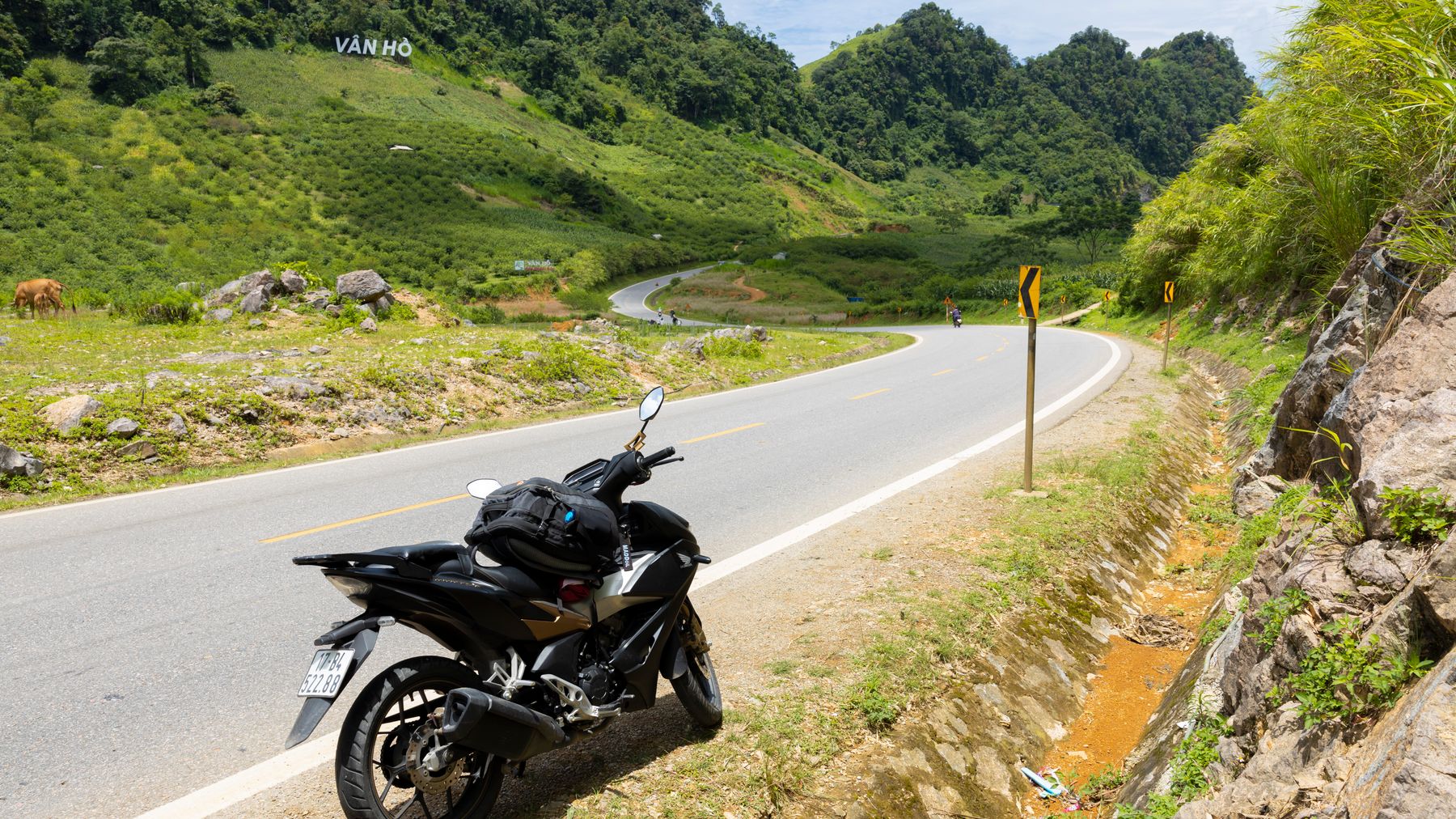
Photo by HONG SON on Pexels
Practical tips
- Fuel up before climbing. The last petrol station is in Song Hinh town. There's nothing on the plateau itself.
- Bring layers. Evenings drop to 15–18°C in dry season. If you're riding a motorbike at dawn, you'll want a jacket.
- Cash only. No ATMs on the plateau. Bring enough from Tuy Hoa — 500,000 VND covers a day comfortably.
- Phone signal is patchy. Viettel has the best coverage up here, but expect dead zones in valleys.
- Respect farming land. The open fields look like public grassland but most are privately held. Stick to roads and tracks rather than cutting across planted areas.
Common mistakes
Going as a half-day trip. The plateau rewards slow travel. Rushing up for a photo and back down misses the point — the atmosphere shifts through the day as light and cloud change.
Expecting Da Lat infrastructure. There's no cable car, no flower garden, no Instagram cafe. That's the appeal, but come prepared.
Riding up in flip-flops. The road has gravel sections and it gets cold. Closed shoes, always.
Practical notes
Van Hoa works best as part of a broader Phu Yen or Central Highlands itinerary. Combine it with a couple of nights on the Phu Yen coast — the contrast between beach and highland in under an hour of riding is one of central Vietnam's underrated pleasures. No entrance fee, no ticket booth, no guided tour required. Just fuel, food, and a willingness to be somewhere with very little going on.
Last updated · May 26, 2026 · independently researched, never sponsored.







