What Ban Ta Phin is
Ban Ta Phin is a commune about 12 km northeast of Sapa town in Lao Cai province. It's primarily a Red Dao (Dao Do) settlement, with some Hmong families in the surrounding hamlets. The village sits at roughly 1,200 meters elevation, tucked into a valley framed by terraced rice fields and bamboo forest.
The Red Dao here have lived in these hills for generations, maintaining traditions like indigo dyeing, medicinal herb cultivation, and the herbal bathing rituals that have become the village's main draw for visitors. Unlike Sapa (사파 / 沙坝 / サパ)'s more developed Cat Cat or Ta Van, Ban Ta Phin still feels like a working agricultural community first and a tourist stop second.
Why travelers go
Three reasons, mostly:
Herbal baths. The Red Dao women prepare baths using a mix of dozens of local plants — some families guard recipes passed through several generations. A soak costs 100,000-200,000 VND depending on the household. It's genuinely relaxing after a day of hiking, and the herbs leave a faint medicinal scent on your skin for hours.
Textiles and embroidery. Red Dao embroidery is intricate — geometric patterns in red, black, and white thread, stitched onto clothing, bags, and wall hangings. You can buy directly from women working at home, which cuts out middlemen. Prices range from 150,000 VND for small pouches to 2,000,000+ VND for full traditional garments.
Hiking without crowds. The trails around Ban Ta Phin connect to surrounding Hmong hamlets and eventually loop back toward Sapa or onward to lesser-visited valleys. You won't dodge selfie sticks on these paths.
Best time to visit
September through November gives you harvested rice terraces turning golden, clear skies, and comfortable temperatures (15-22°C during the day). March through May is also solid — the hills green up, wildflowers appear, and it's before the summer rains turn trails slippery.
December through February can drop below 5°C at night. Beautiful if you like mist and silence, but pack layers. June through August brings rain — trails get muddy, and the herbal bath houses get quieter.
How to get there
From Sapa town: The most common route. Ban Ta Phin is 12 km by road. Options:
- Motorbike rental from Sapa: 120,000-150,000 VND/day. The road is paved but narrow with a few steep sections.
- Xe om (motorbike taxi): roughly 80,000-100,000 VND one way.
- Organized tour: most Sapa tour operators include Ban Ta Phin as a half-day stop, bundled with other villages. Expect 400,000-600,000 VND per person.
- Hiking: a well-trodden trail from Sapa takes about 2.5-3 hours through rice terraces. Ask your hotel for directions or hire a local guide (300,000-500,000 VND for a half day).
From Hanoi to Sapa: Overnight sleeper bus (around 350,000-450,000 VND, 5-6 hours) or the train to Lao Cai city followed by a 45-minute bus or taxi up to Sapa. Some travelers now fly to Van Don or take the expressway — the Hanoi-Lao Cai highway cuts driving time to about 4 hours.

Photo by Đỗ Xuân Hạnh on Pexels
What to do
Take a herbal bath
This is the signature experience. Several households offer baths — look for signs or ask at the village center. The water is dark reddish-brown, steeped with forest herbs. Sessions last 20-30 minutes. Some places offer a simple room with a wooden tub; others have slightly more polished setups. Either way, it's the same local recipe.
Hike the valley loop
A 3-4 hour loop trail circles through the terraces above the village, passing through smaller Hmong settlements before dropping back to the main road. The path is mostly clear but unmarked — a local guide helps, especially in the wet season.
Visit the old monastery ruins
About 1 km from the village center, there are remains of a French-era monastery (sometimes called the "old church"). It's atmospheric — stone walls overtaken by vines and moss. Worth a 20-minute detour.
Watch embroidery workshops
Some families welcome visitors to watch the dyeing and stitching process. This isn't a staged performance — it's women working at home who don't mind company. Buying something is appreciated but not required.
Where to eat
Ban Ta Phin doesn't have a restaurant strip. Your options:
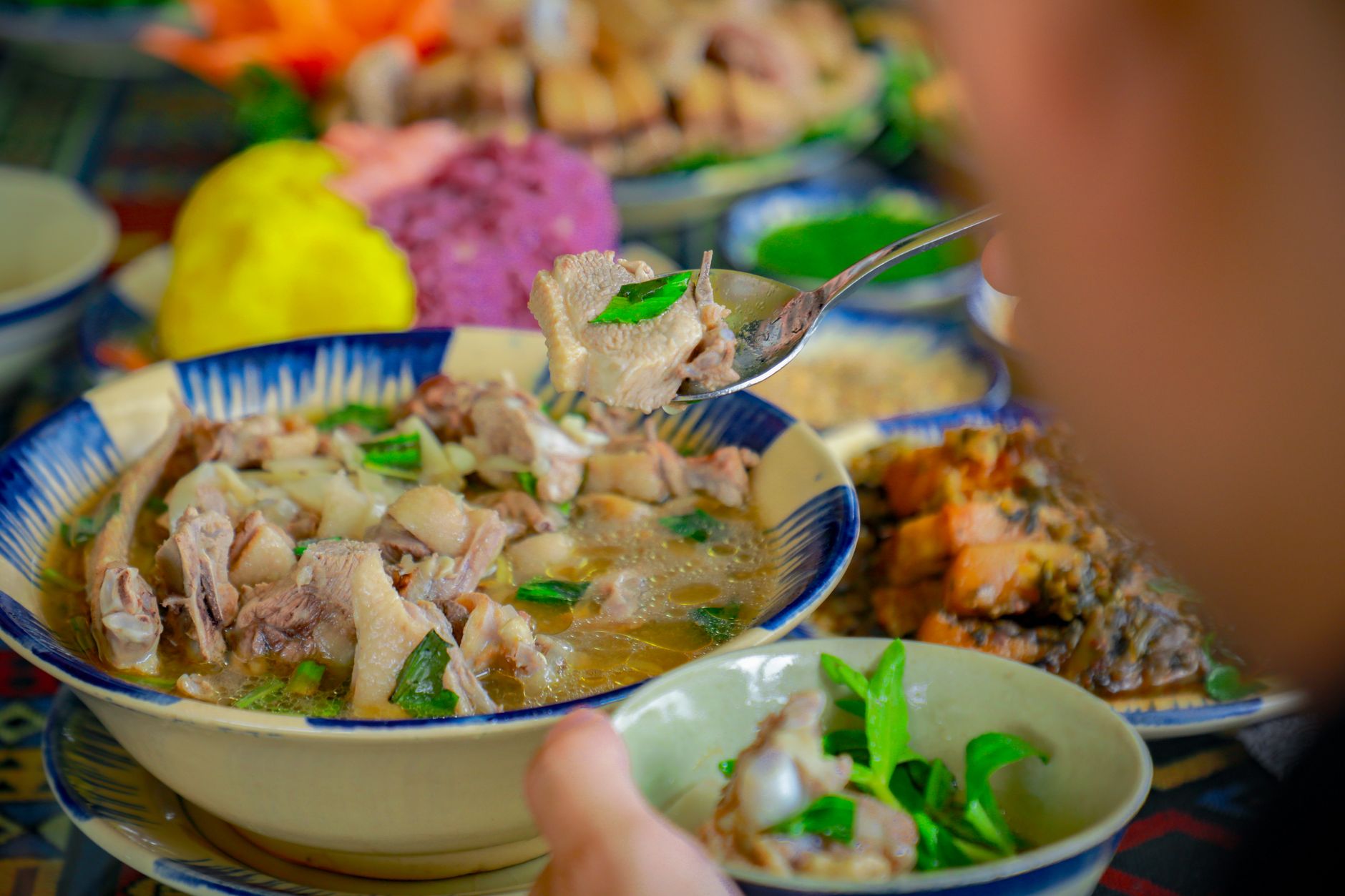
- Homestays serve home-cooked meals — typically rice, stir-fried vegetables, pork or chicken, and local greens. Dinner and breakfast usually come included in your stay (or add 100,000-150,000 VND for a meal if you're day-tripping).
- Small food stalls near the village entrance sell "pho", instant noodles, and basic rice plates for 30,000-50,000 VND.
- Pack snacks from Sapa if you're hiking in and out — there's not much available mid-trail.
If you're craving something more substantial, head back to Sapa town where you'll find everything from "[bun cha](/posts/bun-cha-hanoi (하노이 / 河内 / ハノイ)-grilled-pork-noodles)" to wood-fired pizza.
Where to stay
Homestays are the main accommodation. Most are simple — a mattress on the floor or a basic bed, shared bathroom, wood-frame house. Expect 200,000-400,000 VND per night including dinner and breakfast. A few newer guesthouses have private rooms with hot water for 500,000-800,000 VND.
Book through your Sapa hotel or just show up — homestay hosts are used to walk-ins, though weekends in peak season (October) can fill up.
Alternatively, base yourself in Sapa and visit Ban Ta Phin as a day trip. Sapa has everything from 150,000 VND dorm beds to boutique hotels.

Photo by RDNE Stock project on Pexels
Practical tips
- Cash only. No ATMs in Ban Ta Phin. Withdraw in Sapa or Lao Cai city before coming.
- Dress respectfully. You're visiting people's homes in a traditional community. Shoulders and knees covered is appreciated.
- Learn two phrases. "Xin chao" (hello) and "cam on" (thank you) go far.
- Bring a rain jacket year-round. Mountain weather shifts fast.
- Charge your phone. Electricity is reliable but some older homestays have limited outlets.
Common mistakes
Rushing through. Most tour groups spend 45 minutes here — enough to buy a scarf and leave. Stay overnight. The village at dusk, when the tour buses are gone and smoke rises from cooking fires, is the whole point.
Expecting Sapa-level infrastructure. There's no spa, no cocktail bar, no fast wifi. That's the appeal.
Skipping the herbal bath. Some travelers dismiss it as touristy. It's not — these recipes predate tourism here by centuries. Try it.
Hiking without water or sun protection. The elevation is deceptive. You'll burn and dehydrate faster than you expect, especially on clear days.
Final note
Ban Ta Phin works best as a counterpoint to Sapa — close enough to reach easily, far enough to feel genuinely different. It rewards slow travelers who want texture over highlights.
Last updated · May 26, 2026 · independently researched, never sponsored.