Bac Ha gets the crowds. Sapa gets the tour buses. Coc Ly, held every Tuesday about 35 km southwest of Bac Ha, runs on its own schedule and mostly its own audience — local Flower Hmong, Red Dao, and Tay traders who have little interest in posing for photographs and every interest in getting their trading done before noon.
If you want a highland market that still feels like a market, this is the one.
Getting There
Coc Ly sits in Bac Ha District, Lao Cai province, roughly 100 km north of Sapa (사파 / 沙坝 / サパ) by road and about 35 km from Bac Ha town. Most visitors coming from Sapa hire a motorbike or join a small group tour out of Bac Ha. The road from Bac Ha follows the Chay River valley — narrow, occasionally rough after rain, and genuinely scenic. Budget around 1.5 to 2 hours from Bac Ha depending on road conditions.
From Lao Cai city itself, it's closer to 3 hours. A xe om (motorbike taxi) from Bac Ha will run around 150,000–200,000 VND each way, negotiated before you leave. A few guesthouses in Bac Ha organise day trips that combine Coc Ly with a bamboo raft ride on the Chay River — worth considering if you don't want to navigate independently.
The market runs on Tuesdays only, usually from around 6 a.m. until early afternoon. Get there before 9 a.m. if you want to see it at full energy.
What Happens at the Market
Coc Ly is a general trading market, not a craft market dressed up for tourists. People come to buy livestock, agricultural tools, fabric, and food. The Flower Hmong women arrive in their embroidered indigo and pink clothes not as a cultural performance but because that is what they wear. The Red Dao traders in their distinctive red headdresses are haggling over prices, not waiting to be photographed.
Livestock trading happens near the lower section — pigs in bamboo baskets, chickens tied at the feet, the occasional dog. It's loud, muddy if it's rained, and entirely functional. The food section is clustered toward the upper part of the market, closer to the road.
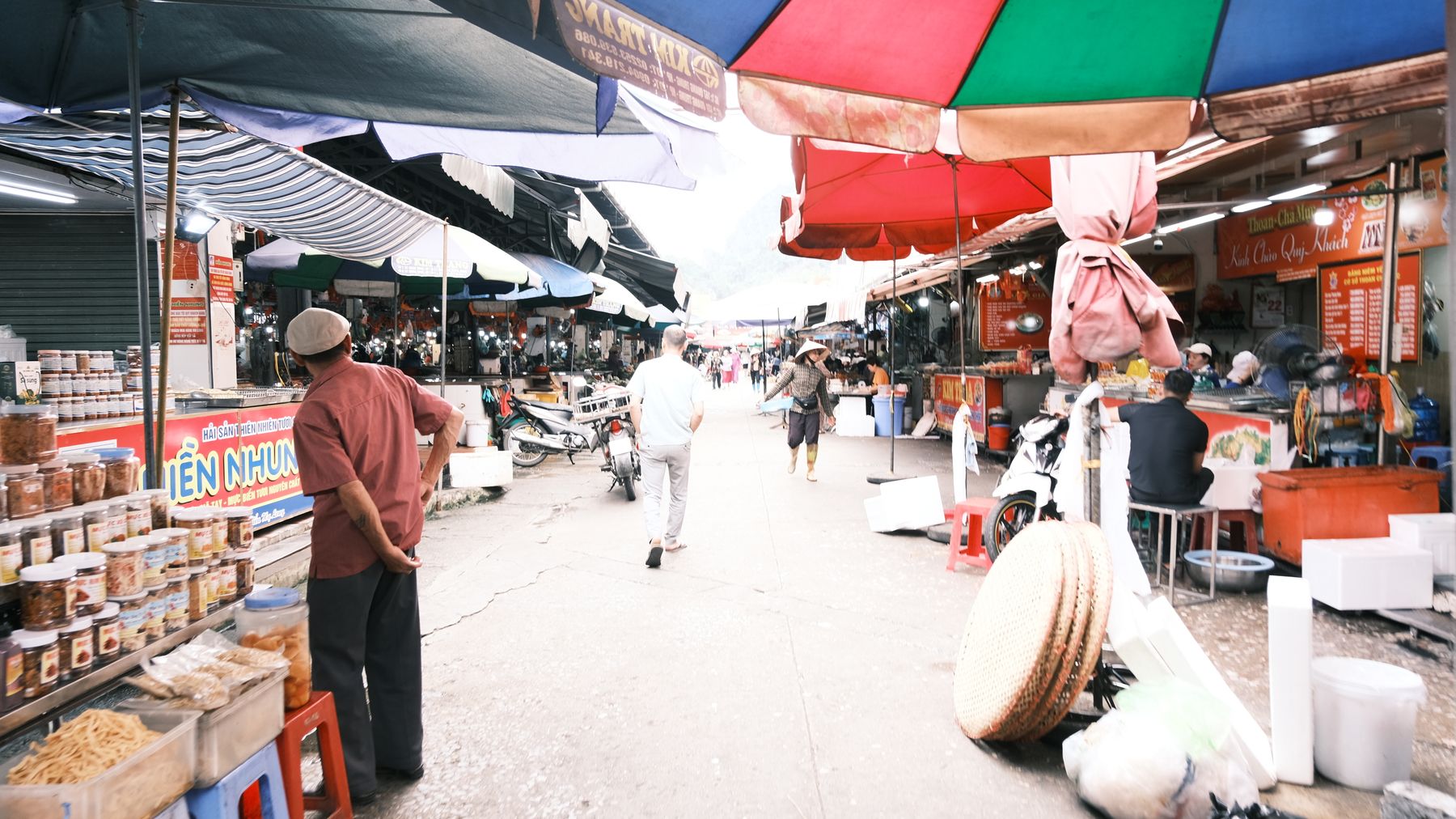
Photo by Đạt Nguyễn on Pexels
The Food Stalls
This is where Coc Ly earns its place on a food-focused itinerary. The stalls are run almost entirely by local women, cooking on wood fires or small gas burners set directly on the ground or on low tables.
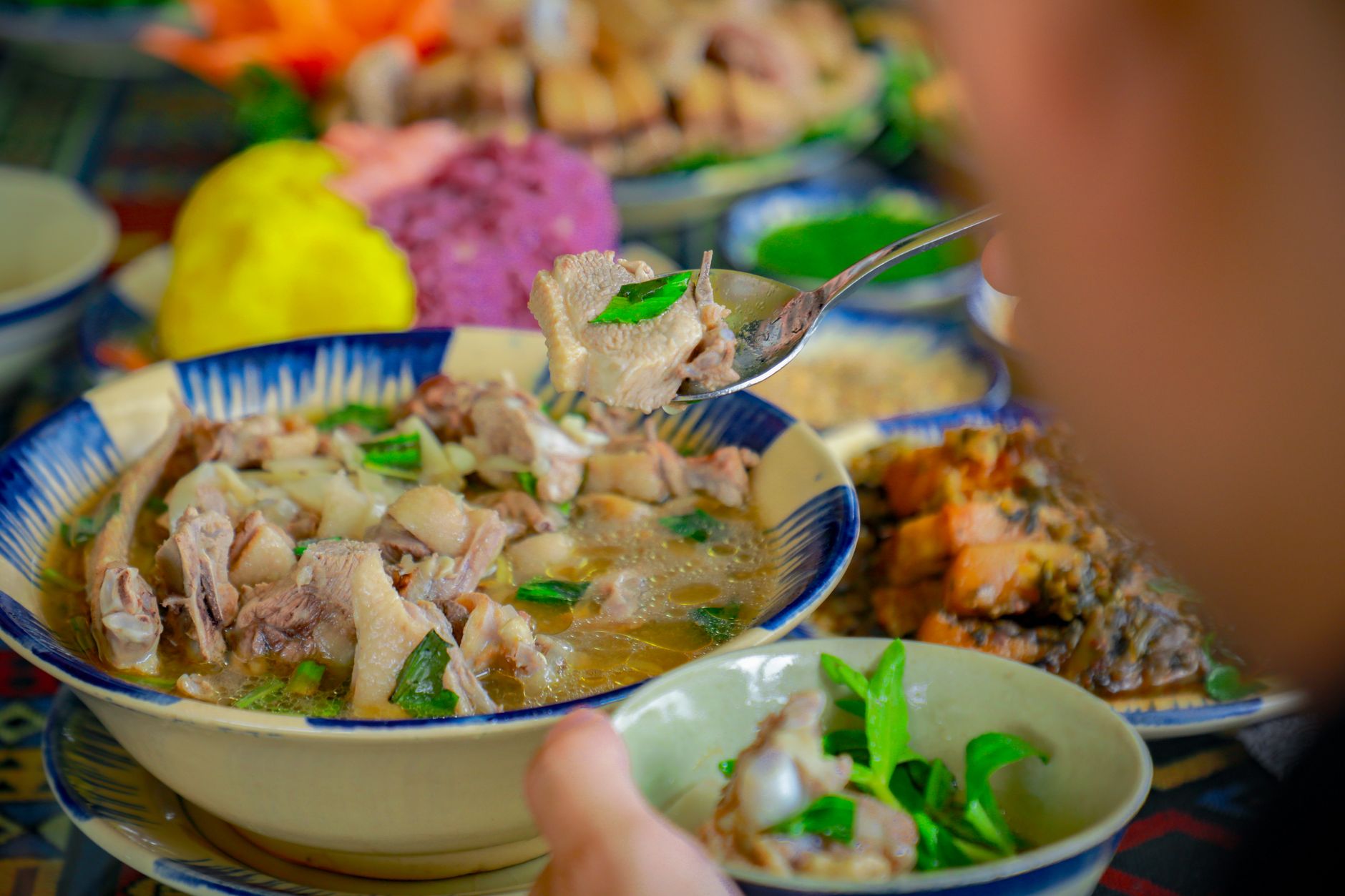
"Thang co" is the dish most associated with northwest highland markets — a slow-cooked stew traditionally made from horse meat and offal, simmered with spices including mac khen (a local Sichuan-adjacent pepper) and cardamom. At Coc Ly the pots start early and cook down through the morning. A bowl runs around 30,000–40,000 VND and is served with a wedge of steamed sticky rice or a piece of corn cake. The flavour is deep and slightly funky; it is absolutely not for everyone, but it's as regionally specific as food gets in northern Vietnam (베트남 / 越南 / ベトナム).
Beyond thang co, look for stalls selling "banh day" — thick, chewy rounds of pounded glutinous rice, sometimes filled with mung bean paste, eaten plain or dipped in sesame sugar. Vendors also sell grilled corn rubbed with pork fat and salt, and skewers of grilled pork intestine (around 10,000 VND each) that disappear fast once the morning crowd thickens.
For something simpler, several stalls run basic "pho" and rice porridge from large communal pots — cheap, warming, and exactly what the traders eating alongside you ordered. Expect to pay 25,000–35,000 VND for a bowl.
Drink options are limited but adequate: hot green tea is free at most stalls if you're eating, and one or two vendors sell "corn wine" — ruou ngo — in recycled plastic bottles. It's rough and it's strong. Morning drinking is entirely normal at highland market day.
What to Buy (and What to Skip)
Coc Ly has a small handicraft section, but it's minor compared to Bac Ha's Sunday market. You'll find embroidered purses, indigo fabric by the metre, and hand-spun thread. Prices are lower than in Sapa's tourist shops and the goods are less standardised — some of it is genuinely handmade, some is wholesale stock brought up from the valley. It's easy enough to tell the difference if you look at the stitching.
Don't come expecting to load up on souvenirs. Come for the food, the atmosphere, and the straightforward experience of a market that functions whether you're there or not.

Photo by Duong Nguyen on Pexels
Pairing Coc Ly With Bac Ha
Bac Ha's famous Sunday market is the natural companion trip — you can base yourself in Bac Ha town for two or three nights and hit both without backtracking. Bac Ha has enough small guesthouses (300,000–600,000 VND per night for a basic room) and simple restaurants to make it a comfortable base. The town itself is quiet mid-week, which makes the contrast of Coc Ly's Tuesday energy all the sharper.
If you're coming from Hanoi, the overnight train to Lao Cai city (around 200,000–350,000 VND in soft sleeper) is the standard approach — then a minibus or car up to Bac Ha from the station.
Practical Notes
Wear shoes you don't mind getting muddy and bring small bills — 10,000 and 20,000 VND notes move faster than 500,000. There is no ATM in Coc Ly village; withdraw cash in Bac Ha or Lao Cai city before you go. The market is free to enter.
Last updated · May 26, 2026 · independently researched, never sponsored.