Ban Ta Van is one of those villages that people stumble into after getting tired of Sapa's tourist strip — and then wonder why they didn't come here first. It sits at the bottom of the Muong Hoa Valley, about 8 km southeast of Sapa town, surrounded by tiered rice paddies and the kind of quiet that makes you forget your phone exists.
What it is
Ban Ta Van (sometimes written Ta Van) is a small village in Lao Cai province, home primarily to the Giay ethnic minority, with Dzao and Hmong communities nearby. Unlike Cat Cat or Lao Chai — which sit closer to Sapa (사파 / 沙坝 / サパ) and absorb the bulk of day-trippers — Ta Van tends to attract people who want to sleep in the valley rather than just photograph it.
The village has been receiving homestay guests since the early 2000s, but it never scaled up the way Sapa town did. Houses are still mostly wood-frame, built along the Muong Hoa stream. A suspension bridge connects the main cluster to the terraces on the opposite bank.
Why travelers go
Three reasons, mostly:
-
The terraces without the crowds. You can walk 20 minutes in any direction from your homestay and be alone with the rice fields. During harvest season (late September–early October), the valley turns gold and the light in the afternoon is genuinely worth the hike.
-
Homestay culture. Staying with a Giay family here isn't a manufactured experience. You eat what they cook — typically a spread of stir-fried vegetables, river fish, and sticky rice — and the evening often involves rice wine whether you planned on it or not.
-
A base for longer treks. From Ta Van you can hike to Giang Ta Chai (Dzao village, about 3 km south), loop back up toward Su Pan or Hau Thao, or push further into the valley toward Ban Ho. These routes are less trafficked than the Sapa–Lao Chai–Ta Van circuit that most guided groups follow.
Best time to visit
The Muong Hoa Valley has two peak seasons:
- Late May–June: Rice has been planted, terraces are flooded and bright green. Fewer tourists than autumn.
- Late September–mid October: Harvest gold. This is when the Instagram crowd arrives, but Ta Van still stays calmer than Sapa.
Avoid late November through February if you dislike cold fog — temperatures can drop to 5-8°C at night and the valley disappears into grey mist for days. March–April is dry and warming up, but terraces look bare.
How to get there
From Sapa town center, Ta Van is 8 km by road. Options:
- Motorbike: Rent in Sapa for 150,000–200,000 VND/day. The road is paved the whole way, though the descent into the valley has a few steep switchbacks. Park at your homestay.
- Walking: The classic trekking route from Sapa goes through Lao Chai village first, then continues to Ta Van — roughly 10 km total, 3-4 hours at a relaxed pace. Most people hire a local guide (300,000–400,000 VND for a half-day) but the path is well-worn enough to follow solo if you have Maps.me downloaded.
- Xe om (motorbike taxi): About 80,000–100,000 VND one way from Sapa center. Arrange through your hotel or grab one at the market.
Getting to Sapa itself: overnight train from Hanoi to Lao Cai station (6-8 hours, from 500,000 VND for a soft berth), then a 35 km bus or taxi up to Sapa town. Or take a direct sleeper bus from Hanoi (5-6 hours, around 300,000–400,000 VND).
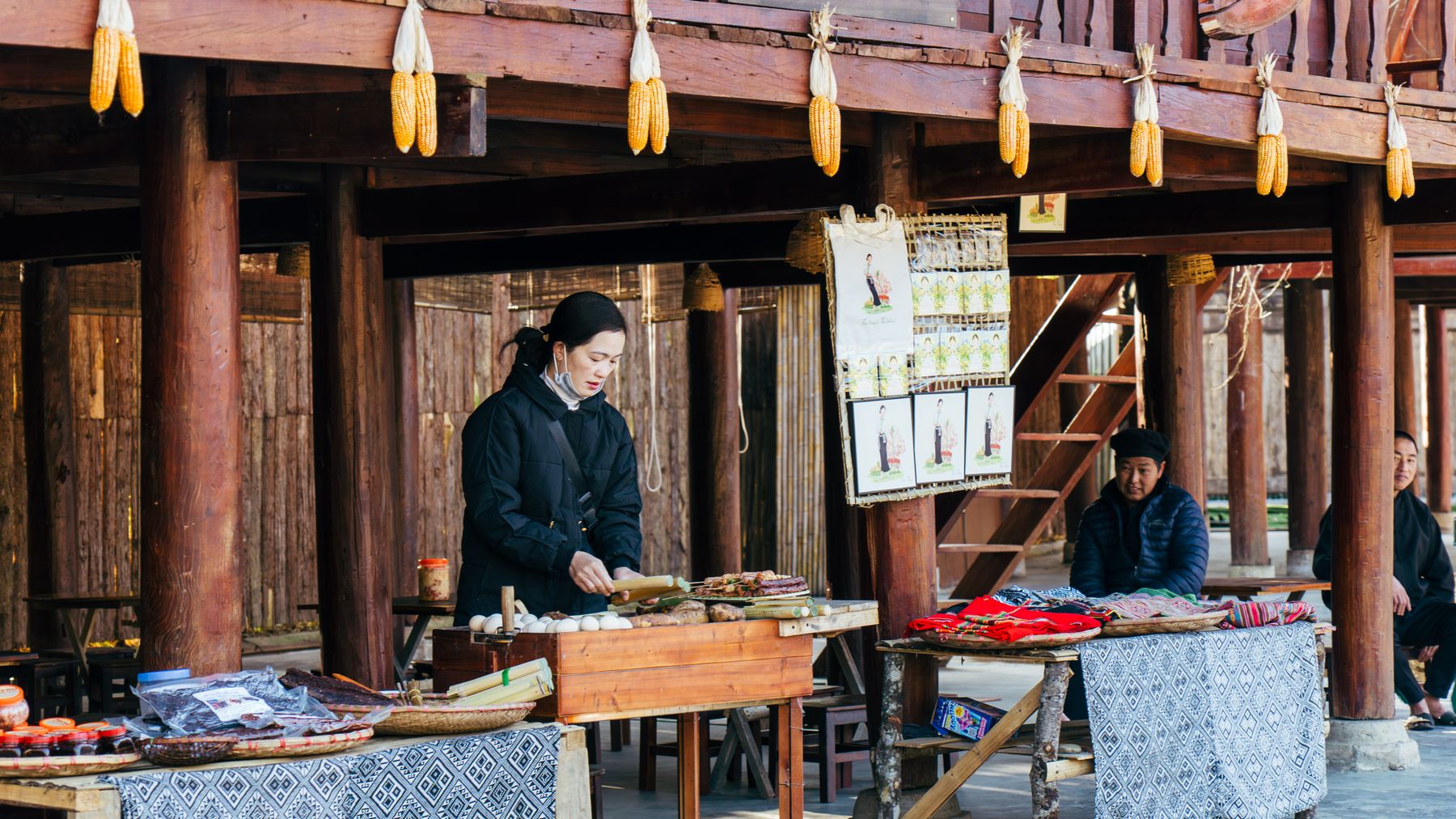
Photo by Gibson Chan on Pexels
What to do
Hike the Muong Hoa Valley loop
The standard route: Sapa → Lao Chai → Ta Van (stay overnight) → Giang Ta Chai → back to Sapa. It's roughly 14-16 km total if you return by road. The section between Lao Chai and Ta Van follows the stream through working rice fields — simple, beautiful, no entrance fee beyond the Muong Hoa Valley ticket (75,000 VND, checked at the trailhead near Lao Chai).
Cross the suspension bridge
The bamboo-and-metal bridge over the stream gives you access to the eastern terraces. In the morning the mist burns off from this side first — good for photos if you're up early.
Visit the rock carvings
Muong Hoa has a set of ancient carved boulders scattered through the valley, dating back roughly 2,000 years. The carvings are abstract — lines, circles, human-like figures. Nobody knows their exact origin. A few are visible between Lao Chai and Ta Van, marked with small signs. They're easy to miss if you're not looking.
Cook with your homestay host
Some families will let you join for meal prep if you ask. Expect to chop vegetables, not perform surgery — but it's a good way to learn about Giay cooking, which uses more fresh herbs and fewer heavy sauces than Kinh (Vietnamese majority) cuisine.
Where to eat
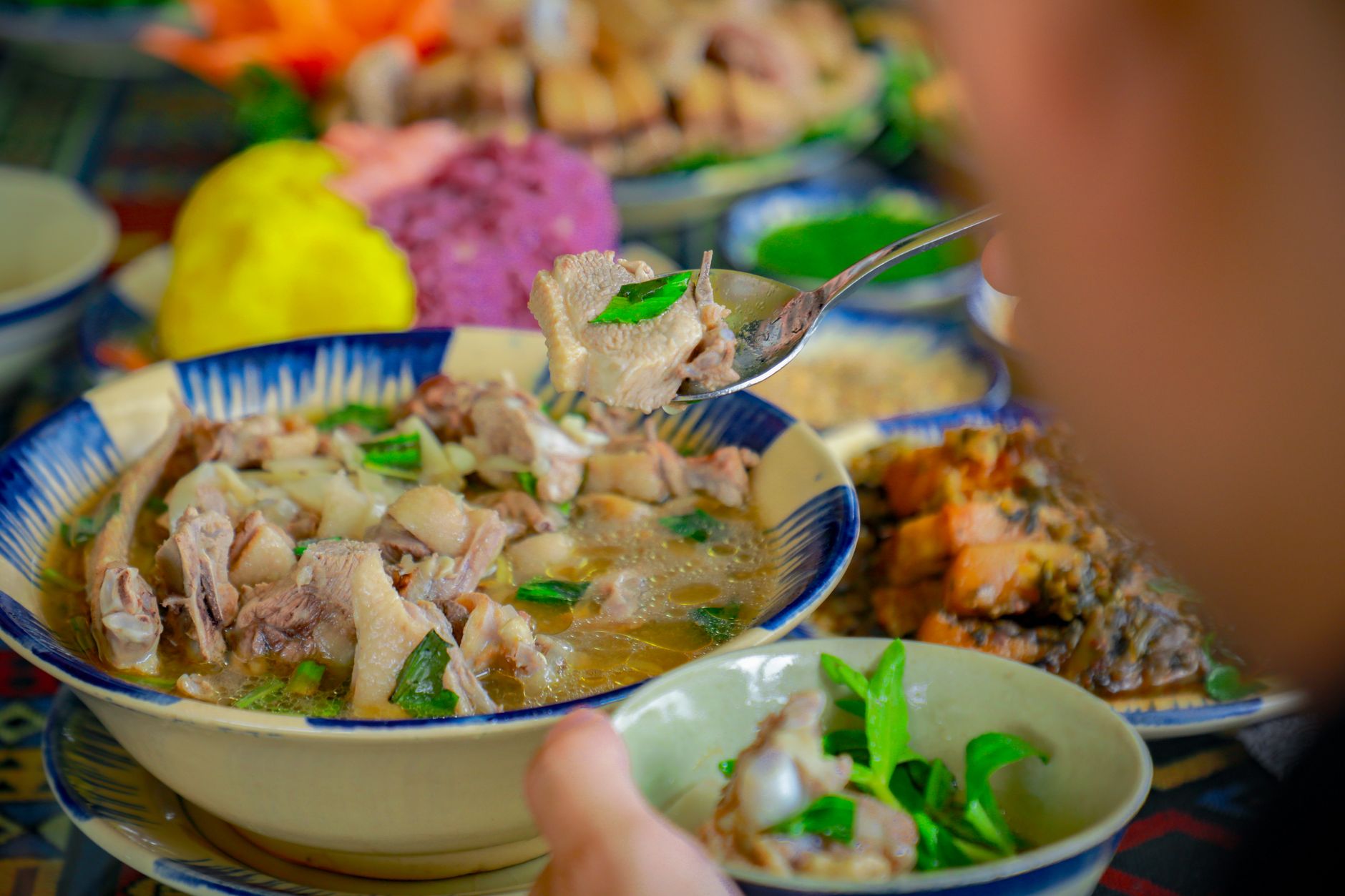
Most visitors eat at their homestay — dinner and breakfast are typically included in the rate (200,000–350,000 VND per person for the night, meals included). The food is family-style: grilled pork, morning glory stir-fry, "thang co" (a Hmong-origin organ soup you'll find at nearby markets), tofu, and rice.
There are a couple of small restaurants along the main road through the village selling "com binh dan" (everyday rice plates) for 40,000–60,000 VND. Nothing fancy. If you want proper Vietnamese coffee, bring your own drip filter — most homestays have instant Nescafe only.
Where to stay
Ta Van has 20+ homestays, ranging from basic (mattress on floor, shared bathroom, mosquito net) to upgraded (private room, hot water, balcony overlooking terraces). Expect:
- Budget: 150,000–250,000 VND/person including dinner and breakfast. Shared facilities.
- Mid-range: 400,000–600,000 VND/room. Private bathroom, better bedding, often a terrace.
- Boutique: A handful of newer places charge 800,000–1,200,000 VND/night with more hotel-like amenities, though staying in these slightly defeats the point.
Book ahead during harvest season (October). Off-season, you can walk in and find a bed.

Photo by Manh Pham on Pexels
Practical tips
- Cash only. There's no ATM in Ta Van. Withdraw in Sapa before you come down.
- Phone signal is decent (Viettel works best in the valley) but don't rely on mobile data for navigation during hikes — download offline maps.
- Leeches are a thing during rainy season (June–August), especially on trail sections through wet grass. Tuck your pants into socks. It's not dangerous, just unpleasant.
- Tipping isn't expected at homestays, but leaving 50,000–100,000 VND for your host is appreciated and goes directly to the family.
Common mistakes
- Treating it as a day trip. The valley deserves at least one night. Day-trippers rush through and miss the evening light and the communal dinner.
- Skipping the guide for long treks. The Ta Van–Giang Ta Chai section is fine solo, but anything further toward Ban Ho or Su Pan gets confusing at junctions. A local guide also keeps you on paths that don't cross private farmland.
- Expecting Sapa-level amenities. No spa, no craft beer bar, no Western breakfast. That's the point.
Final note
Ta Van works best as a counterpoint to Sapa town — come here after you've had your fill of the night market and the tour-group restaurants, and spend a night where the loudest sound is the stream below your window.
Last updated · May 26, 2026 · independently researched, never sponsored.