Hanoi has a handful of foods that feel genuinely untranslatable — not because they're complicated, but because the whole point of them is tied to a specific season, a specific street, a specific ritual. "Banh com" is one of those foods.
What Banh Com Actually Is
Banh com is a small, soft cake made from "com" — young green rice, harvested before the grains fully harden, then roasted and pounded to a flat, chewy texture. The filling is almost always sweetened mung bean paste, sometimes blended with coconut or lotus seed. The cake is wrapped in a folded banana leaf or dong leaf, tied with a thin red or pink string, and sold in pairs. That pairing is deliberate: banh com is a betrothal food, and two cakes tied together carry the same symbolic weight as a ring box in other cultures.
The color is the first thing people notice — a vivid, almost unreal green that comes entirely from the com itself, no food dye involved. When the rice is fresh and the cake is made well, that green is bright and slightly translucent. When it's made badly, or sitting too long under a glass counter, it turns a dull army green and the texture goes gummy. That difference matters, and it's the main reason locals are picky about where they buy.
The Seasonal Logic
Com season in Hanoi (하노이 / 河内 / ハノイ) runs roughly from late August through November, peaking in September and October around the time of Tet Trung Thu — the Mid-Autumn Festival. During these weeks the rice paddies in villages around Vong (a commune in the western outskirts of Hanoi) are harvested before maturity, and the com is processed by hand: roasted in clay pots, stirred constantly, then flattened between wooden planks.
Banh com made from fresh-season com has a faint grassy fragrance and a chew that's firm without being sticky. Outside of peak season, most shops use stored or semi-processed com, which is fine — but it's worth timing a visit to Hanoi for autumn if you want the real thing at its best.
Hang Than Street and the Banh Com Trade
In Hanoi, "Hang Than" is the street most associated with banh com. It sits in the Old Quarter, running between Hang Giay and Phung Hung, and a significant portion of its ground-floor shops are dedicated to Hanoi's specialty confectionery: "o mai" (salted-dried fruit), "mut" (candied fruit), and banh com. The shops here are family-run operations, many spanning three or four generations, and the production style is still largely manual.
What you'll find on Hang Than isn't a single famous shopfront with a queue around the block — it's more like a cluster of ten or fifteen similar shops selling the same items at nearly identical prices. A tray of banh com runs around 20,000–35,000 VND for a pair, depending on size and filling variation. The shops wrap them fresh throughout the day; ask for "banh com nhan dau xanh" (mung bean filling) or "nhan sen" (lotus seed) if you want to specify.
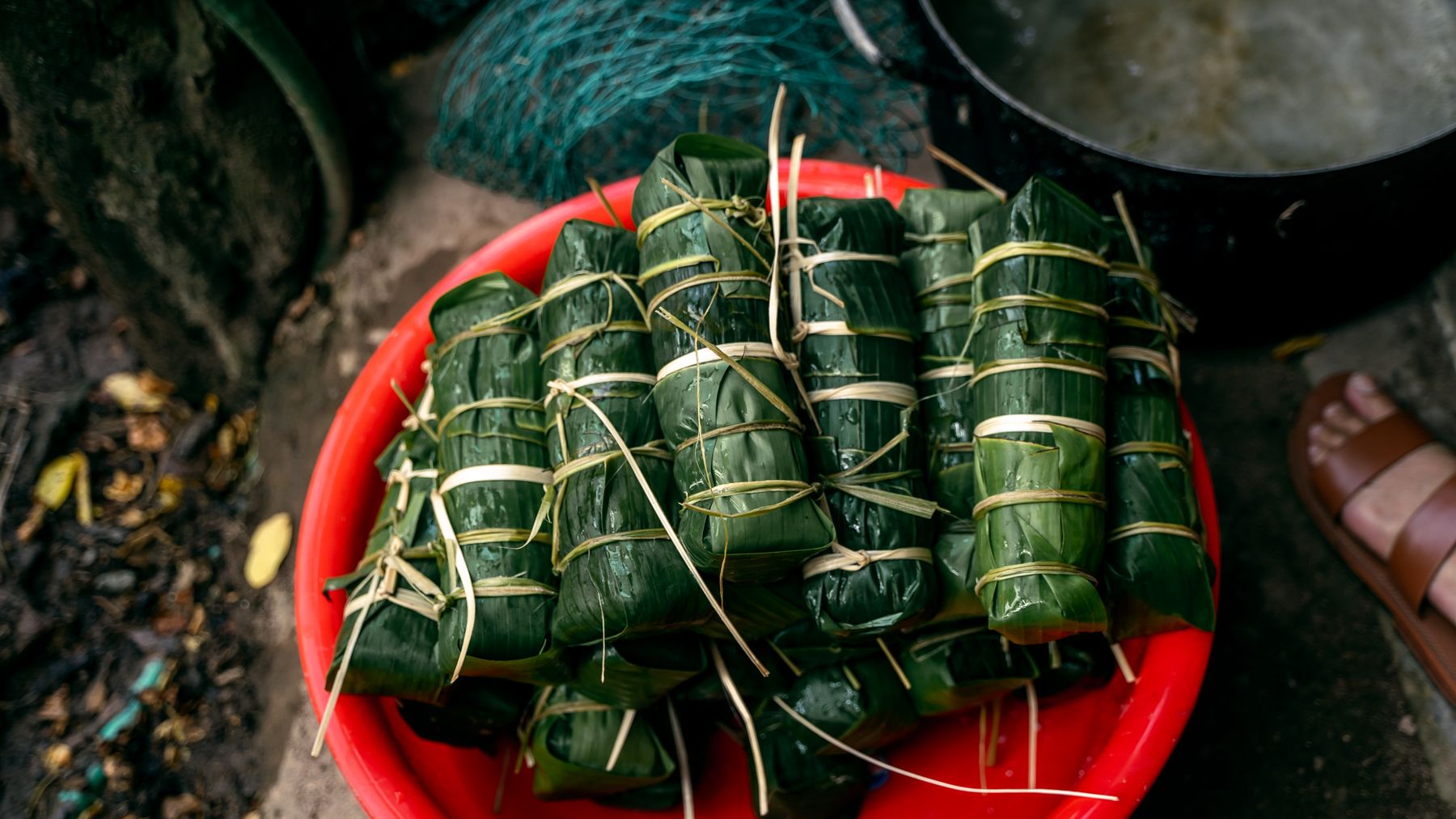
Photo by Vietnam Tri Duong Photographer on Pexels
Variants Worth Knowing
The classic is mung bean, but banh com has absorbed a few filling variations over the decades:
- Mung bean with coconut: The most common variant outside Hanoi, slightly sweeter and more fragrant.
- Lotus seed paste: More expensive, more delicate. Common as a gift item.
- Pandan-infused versions: Newer shops in Saigon and Da Nang have started adding pandan to the wrapper or filling, which shifts the flavor profile considerably — more tropical, less earthy.
- Miniature versions (banh com mini): A modern format sold in tourist-facing shops, about the size of a thumb, designed for gift boxes rather than eating fresh.
For purists, the original mung bean version on a banana leaf is the only version worth discussing. The miniature tourist boxes are fine as souvenirs but bear almost no resemblance to the fresh product in terms of texture.
The Wedding Gift Tradition
In northern Vietnamese custom, banh com is included in the "dam hoi" (engagement ceremony) tray. The number of cakes and the quality of their wrapping carry social meaning — it's not a casual gift. Families from Hanoi will specify which street or which shop the banh com came from, the same way you'd specify a vineyard on a wine label. This context is worth understanding if you're buying banh com as a souvenir: you're not just picking up a sweet, you're handling something with real ceremonial weight in local culture.
This also explains why the packaging — the leaf, the string, the fold — is taken so seriously. A poorly wrapped banh com is a minor insult in a traditional household context.

Photo by Yuko Photography on Pexels
How to Order
Walk into any shop on Hang Than and point at the tray. Most shopkeepers speak enough English to handle a transaction. Ask for a fresh pair: "Cho toi hai cai banh com tuoi" (Give me two fresh banh com). They'll wrap it in front of you. Eat within a few hours — the texture degrades quickly once the leaf dries out, and refrigerating it makes the com go hard.
If you're buying a gift box to take home, ask them to pack it with a cold pack ("tui lanh") and eat within 24–36 hours at room temperature, or within three days refrigerated.
Where to Try the Canonical Version
Hang Than Street, Hanoi Old Quarter — Walk the block between Hang Giay and Phung Hung. Look for shops with trays of green cakes in the window and banana leaves stacked by the door. Nguyen Ninh (No. 11 Hang Than) is frequently cited by locals as consistently good, with fresh batches made daily during com season.
Banh Com Ba Thin, Hanoi — A slightly more old-school production setup in the Dong Xuan market area, often recommended for the lotus seed filling specifically. Expect to pay around 30,000–40,000 VND per pair.
Ninh Kieu floating market area, Can Tho — Southern Vietnam (베트남 / 越南 / ベトナム)'s version uses pandan more aggressively and coconut-heavy mung bean paste. Not the Hanoi classic, but worth trying to understand how the concept drifts southward. Sold by vendors near the riverfront in the early morning.
Practical Notes
Banh com is a hyperlocal product — it peaks in Hanoi in September and October, and the best versions are gone within hours of being made. If you're in Hanoi outside of com season, you'll still find it, but lower your expectations slightly for the color and chew. Budget 20,000–40,000 VND per pair from any reputable Old Quarter shop.
Last updated · Sep 8, 2026 · independently researched, never sponsored.