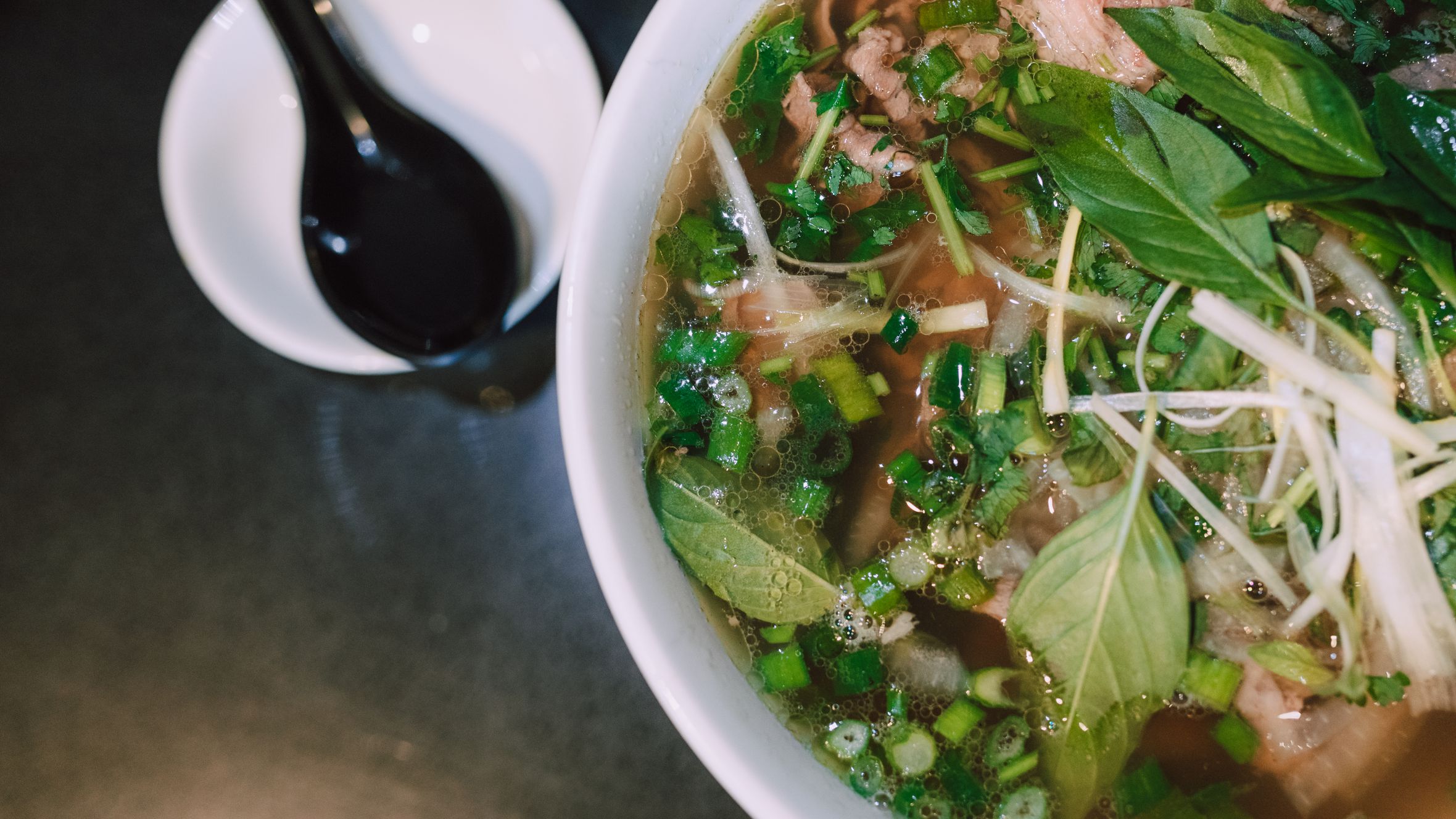
"Banh duc" sits in that category of Vietnamese food that nobody really talks about until you're standing in front of a street vendor's tray, watching her ladle something soft and trembling into a bowl. It's not flashy. It doesn't have a famous restaurant attached to its name. But it's been feeding people across this country for centuries, and once you understand the range of what it can be — savory, sweet, northern, southern — you'll start noticing it everywhere.
What Banh Duc Actually Is
At its core, banh duc is a steamed or set cake made from rice flour, water, and a small amount of lime water (nuoc voi). The lime water is the key: it gives the cake its distinctive slightly alkaline note and helps it hold together without becoming rubbery. The texture is soft, slick, and somewhere between silken tofu and a very loose mochi — yielding under a spoon, cool against the tongue.
There are two broad families: savory (banh duc man) and sweet (banh duc ngot). They share the same base but go in completely different directions from there, and the regional variation within each family is significant enough that a banh duc from Hanoi and one from Saigon might make you wonder if they share a name by coincidence.
The Savory Version: Banh Duc Man
The savory northern preparation is the one most visitors encounter first. In Hanoi (하노이 / 河内 / ハノイ)'s Old Quarter — near Dong Xuan Market and the surrounding streets — vendors sell banh duc man from shallow trays, the cakes already set and sliced into irregular squares. You get a bowl with a few pieces, topped with a spoonful of sauteed minced pork and dried wood-ear mushroom, a drizzle of scallion oil, and nuoc cham on the side. Prices run 15,000–25,000 VND a serving.
The mushroom-pork mixture is what makes the savory version interesting — it's lightly seasoned, a little sticky, and it clings to the slippery cake surface in a way that prevents the whole thing from feeling too plain. Some vendors add fried shallots or a ribbon of egg. A few include tiny dried shrimp pressed into the cake itself before it sets.
In central Vietnam (베트남 / 越南 / ベトナム), the savory banh duc is less common as a standalone dish, though rice flour cakes appear in other forms — the region's energy goes into dishes like "bun bo Hue" and "banh xeo" instead.
Saigon's savory interpretation often includes coconut milk mixed into the batter, which softens the alkaline edge and gives the cake a faint sweetness even when it's technically the savory version. It's a blurring of categories that's very southern.
The Sweet Version: Banh Duc Ngot
The sweet family splits further by region.
In the north, banh duc ngot is often flavored with pandan leaf and served with a thin syrup of palm sugar and ginger — ginger being the northern palate's answer to almost everything sweet. The cake itself is pale green from the pandan, and the ginger syrup adds a warmth that makes it feel almost medicinal in the best sense. This version appears frequently at Tet and at rural markets.
In the south and Mekong Delta, coconut milk is mandatory. Southern banh duc ngot is denser with it — the coconut flavor is forward, the sweetness is higher, and the texture is richer. Some versions are layered: a plain white layer on the bottom, a pandan-coconut layer on top, the two set separately and stacked. This style shows up in Can Tho's markets and at street stalls throughout the delta, sold by the slice off a large tray for around 10,000–15,000 VND.
There's also banh duc la gai — a variation made with ramie leaf extract, which turns the cake a deep, almost inky green-black. It has an earthy, faintly grassy bitterness that pairs well with the palm sugar syrup. This one is more rural and seasonal; you won't find it at every market.

Photo by Quang Vuong on Pexels
How Banh Duc Is Made
The process is straightforward but requires patience. Rice flour is mixed with water and lime water and cooked slowly over low heat, stirring constantly, until the batter thickens into a smooth, heavy paste. At this point, fillings or flavoring agents are folded in — mushroom and pork for the savory version, coconut milk and pandan for the sweet. The mixture is poured into trays or individual molds and left to cool and set at room temperature. No oven. No eggs. The lime water does the structural work.
The cooling period matters. A properly made banh duc should be firm enough to cut but soft enough to tremble when you tap the tray. If it's rubbery, the lime-water ratio was off. If it collapses into paste, it was undercooked.
How to Order
At most street stalls, you point and gesture. The vendor will ask "man hay ngot?" — savory or sweet? If you want the savory version with pork, "man co thit" gets you there. For the pandan sweet version, "ngot la dua" works. Payment is cash, amounts are small, and there's rarely a menu. Go in the morning — banh duc is breakfast and mid-morning snack food. By midday, the better vendors have usually sold out.
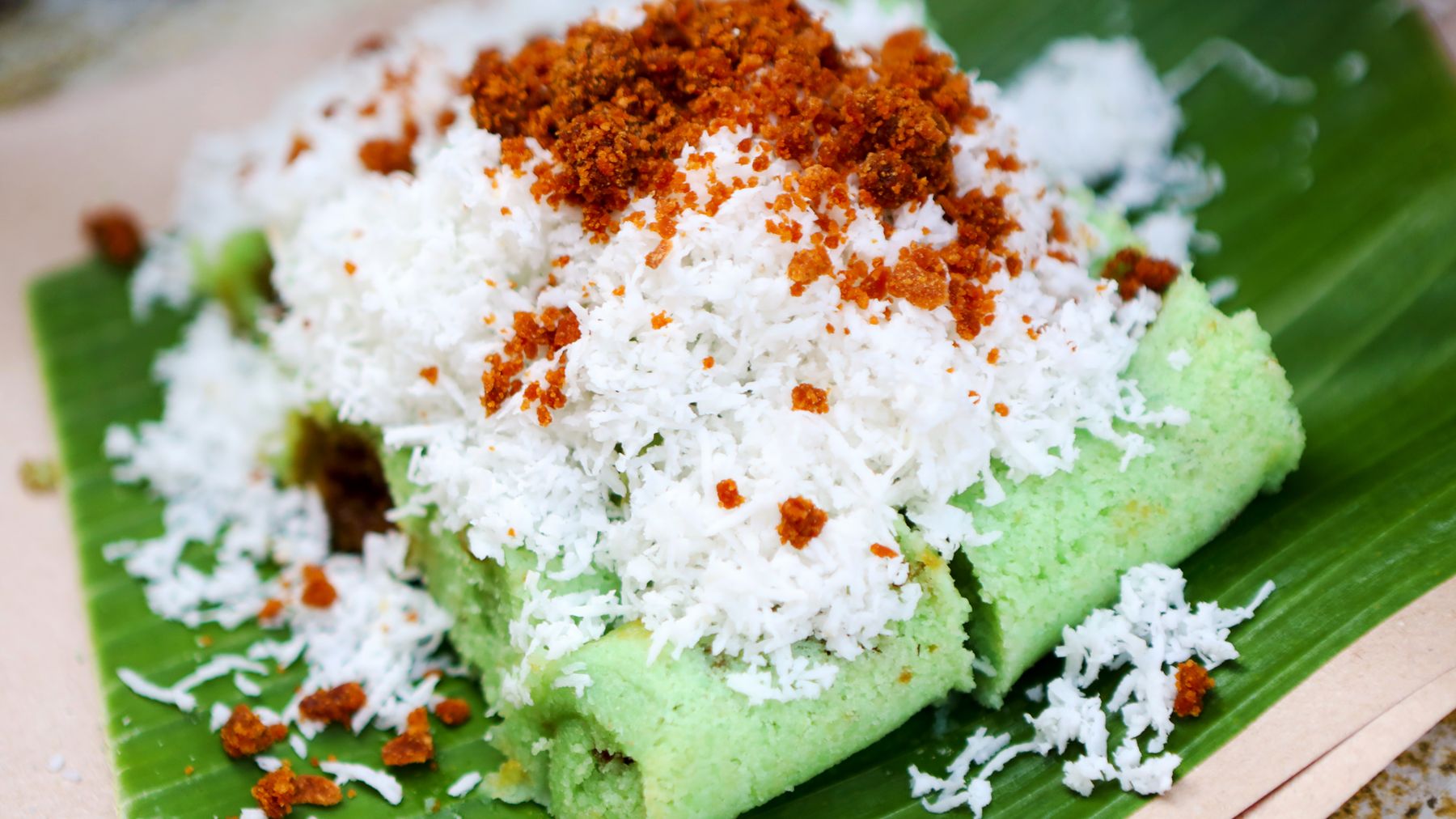
Photo by kevin yung on Pexels
Where to Try the Canonical Versions
Hanoi — Hang Than Street
The stretch of Hang Than in the Ba Dinh district has a handful of banh duc man vendors who've been working the same spots for decades. Look for the woman with the large aluminum tray and the separate clay pot of pork-mushroom topping, usually set up by 7 a.m. This is the northern savory template.
Hoi An — Cam Nam Morning Market
Small, often overlooked by tourists heading for "cao lau" and "mi quang", the Cam Nam market on the south bank of the Thu Bon River has vendors selling both savory and pandan-sweet versions. The sweet here leans central — less coconut than the south, more restrained sweetness.
Can Tho — Cai Rang Floating Market Area
The stalls around the Cai Rang landing sell southern-style banh duc ngot by the slice throughout the morning. The coconut milk content is high, the palm sugar syrup is generous, and the layered pandan version appears here more consistently than almost anywhere else in the delta.
Practical Notes
Banh duc is a morning dish — plan around that. Most vendors are done by 11 a.m. A single serving costs 10,000–25,000 VND depending on city and topping; budget accordingly if you want to try both sweet and savory in one sitting. It travels poorly, so eat it where you buy it.
Last updated · May 29, 2026 · independently researched, never sponsored.




