Few street foods in Hanoi are as quietly specific as "banh khuc" — a fist-sized ball of glutinous rice dyed grey-green by mugwort, packed with a filling of mung bean paste and fatty pork, and sold by vendors whose sing-song calls drift through residential alleys just as the sun drops. It is not photogenic. It is not on most tourist itineraries. It is, however, one of the more honest things you can eat in the city for under 15,000 VND.
What Banh Khuc Actually Is
The name breaks down simply: banh means cake or dumpling, and khuc refers to Gnaphalium affine — a low-growing herb in the cudweed family, sometimes called Jersey cudweed, that grows wild in the Red River Delta through the cooler months between November and March. The plant's small, silver-furred leaves are pounded or ground and folded into glutinous rice flour or steamed sticky rice, giving the outer layer its distinctive dusty green-grey color and a faintly grassy, almost medicinal aroma.
The filling is a two-part layer: a smooth center of cooked, seasoned mung bean paste, surrounded by a ring of fatty pork — usually rendered pork belly or pork skin mixed with a little seasoning. The whole thing is packed together, shaped into a ball roughly the size of a large lime, and coated in a final layer of plain sticky rice grains before being steamed. That outer coating of individual sticky rice grains gives banh khuc its characteristic knobbled, almost hedgehog-like texture.
When done right, each bite delivers soft stickiness, the earthy sweetness of mung bean, and a hit of rich pork fat. The mugwort wrapper keeps it from being cloying.
Where It Comes From
Banh khuc is a northern dish with deep roots in the Red River Delta — the agricultural heartland of Vietnam (베트남 / 越南 / ベトナム)'s north. Food historians generally place it in the category of rural festival and offering food: sticky rice preparations have been central to northern Vietnamese ritual life for centuries, and the habit of incorporating wild or cultivated herbs into rice cakes predates recorded cookbooks by a long stretch. The dish shares this lineage with "banh chung", the square glutinous rice cake wrapped in dong leaves eaten at Tet.
The seasonality of khuc herb — it peaks in winter — historically made banh khuc a cool-weather food, something you ate from around Tet through early spring. In Hanoi (하노이 / 河内 / ハノイ) today that seasonality has softened somewhat, with vendors selling through more of the year using dried or preserved herb, but the best versions still appear in the months after the new year when fresh khuc is easy to source.
The bicycle vendor model is old. The image of a woman cycling through a neighborhood with a cloth-covered basket of banh khuc balanced over the rear wheel, calling out in a drawn-out "Banh khuuuc..." is one of those persistently Hanoi things that has survived decades of the city's rapid change. The vendors typically start their rounds in the late afternoon and are gone by 8 PM.

Photo by Nguyen Truong Khang on Pexels
Variants Across the North
The canonical Hanoi version is what most people mean when they say banh khuc: the round, sticky-rice-coated ball described above. But there are meaningful variations within the north.
Ha Nam and the Flatcake Style
In parts of Ha Nam province, about 60 km south of Hanoi, banh khuc is sometimes made flatter and wider — closer to a disc than a ball — and the herb ratio in the wrapper is higher, making the color more intensely green. The filling is similar but the texture of the outer layer is chewier and the herb flavor more pronounced.
Dry vs. Steamed-to-Order
Street vendors in Hanoi sell pre-steamed banh khuc that are wrapped in leaves or paper and held warm in a basket. Sit-down specialty stalls sometimes steam to order, which produces a noticeably lighter, fresher result — the sticky rice coating doesn't compress as much. If you have the option, steamed-to-order is worth waiting five extra minutes for.
Filling Variations
Some vendors add a small piece of gio lua (Vietnamese pork sausage) inside alongside the mung bean, or use pork rind (bi) instead of plain pork belly. The mung bean paste itself varies — some are drier and more granular, some almost creamy. Neither is wrong; it comes down to the cook.
How to Order
From a bicycle vendor: you flag them down, tell them how many you want ("cho toi [number] cai" — "give me [number] pieces"), hand over the cash, and receive them wrapped in a banana leaf or newspaper. A single banh khuc costs 10,000–15,000 VND in Hanoi as of 2024. Two is a reasonable snack; three is a light meal.
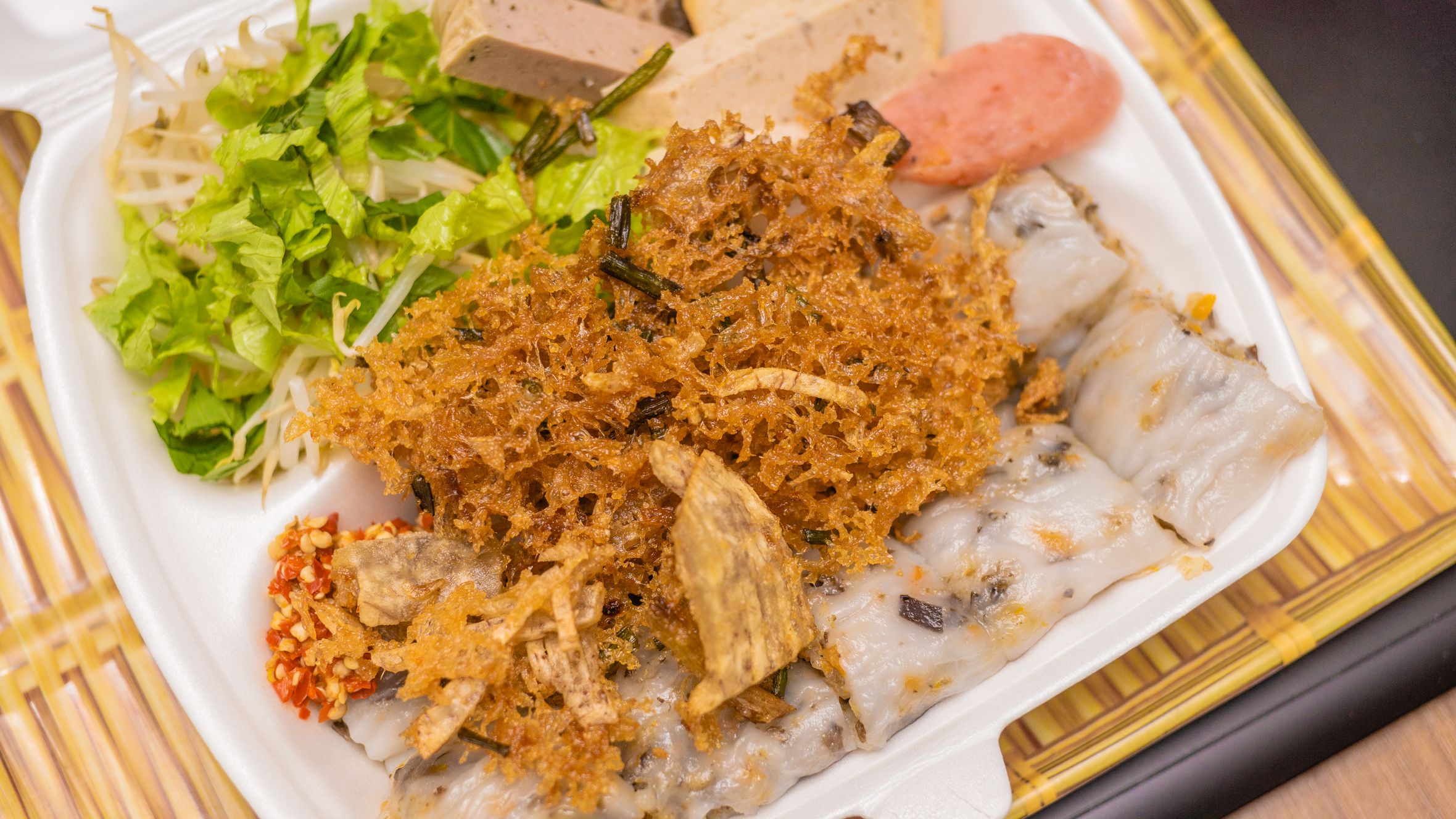
At a fixed stall: point at the basket, hold up fingers for quantity, and watch them reheat or steam-to-order depending on the setup. Some stalls serve banh khuc alongside "banh cuon" or other sticky rice preparations. A glass of hot green tea is standard and usually free.
Eat them warm. Cold banh khuc is edible but the glutinous rice stiffens and loses its point.
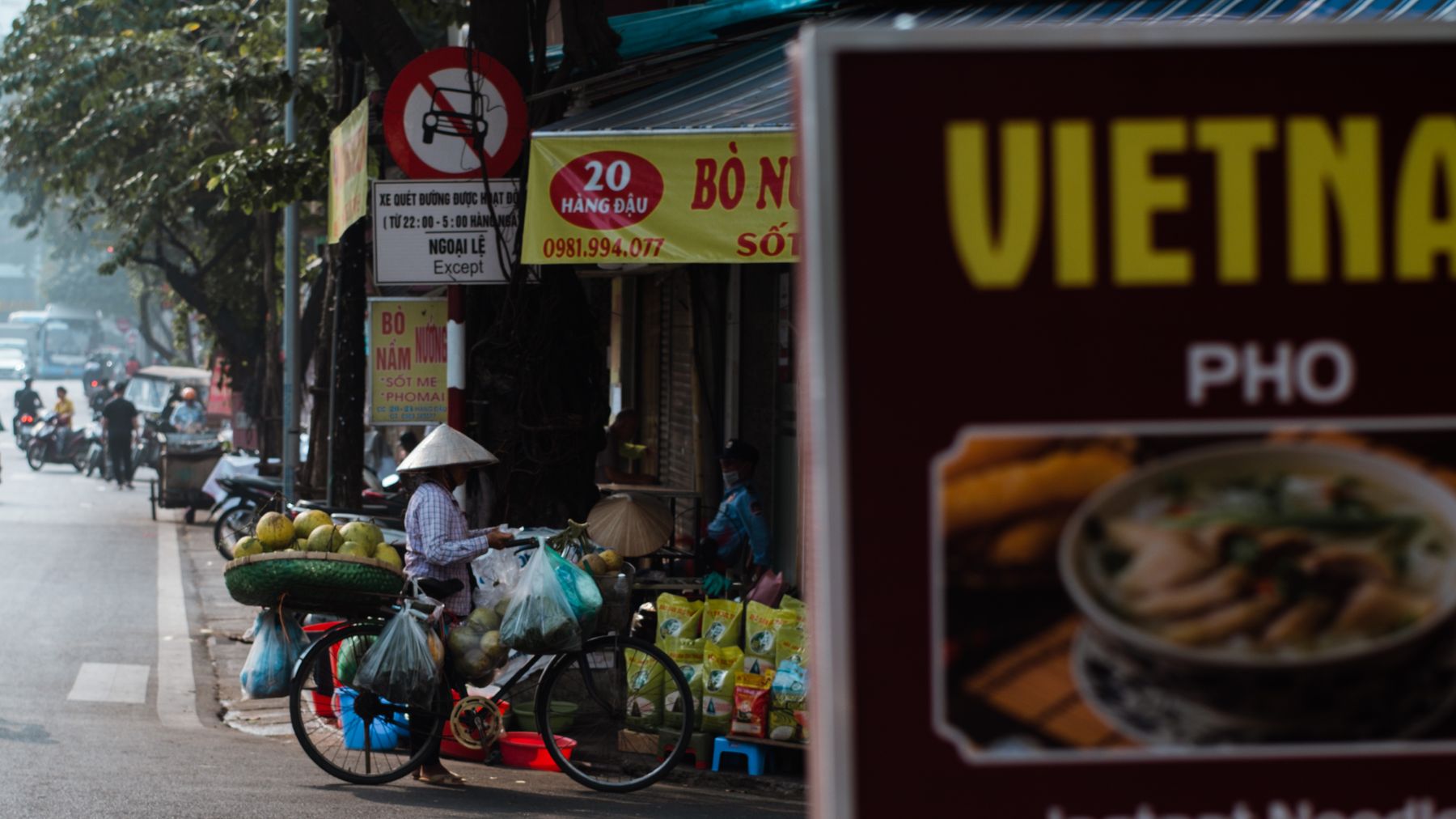
Photo by Hưng Phạm on Pexels
Where to Try the Canonical Version
Hang Dieu Street stalls, Hanoi Old Quarter. The stretch of Hang Dieu near its junction with Bat Dan has had banh khuc vendors working it for years — usually late afternoon from around 4 PM. Look for the baskets covered with cloth near the mouth of the alley.
Cho Dong Xuan morning market, Hanoi. Inside and around Dong Xuan Market, a handful of ground-floor vendors sell banh khuc alongside other sticky rice preparations from early morning. This is the best window for steamed-to-order versions before the tourist foot traffic picks up.
Quan Banh Khuc Co Lan, Dinh Liet Street, Hanoi. A named, fixed address rather than a roaming vendor — Co Lan's stall has been referenced in Hanoi food writing for over a decade. The mung bean filling here is notably smooth and well-seasoned. Expect to pay 15,000 VND per piece and a small queue on weekend mornings.
Practical Notes
Banh khuc is firmly a Hanoi and northern Vietnam dish — you will not find reliable versions in Saigon or Da Nang without specifically seeking out a northern-cuisine restaurant. If you are visiting Hanoi between November and April, fresh-herb versions are worth prioritizing over the dried-herb off-season equivalent. Carry small bills; vendors rarely have change for 200,000 VND notes.
Last updated · May 29, 2026 · independently researched, never sponsored.