What Bat Xat Is
Bat Xat is a rural district in Lao Cai province, sitting northwest of Sapa and running along the Chinese border. While Sapa pulls in the tour buses, Bat Xat stays largely off the radar — a patchwork of terraced valleys, Hmong and Dao hamlets, and cloud-wrapped peaks that top out above 3,000 meters. The district capital, Bat Xat town, is a small administrative center about 25 km from Lao Cai city. Y Ty commune, up at 2,000 meters elevation in the district's far northwest corner, has become the area's headline destination for its sea-of-clouds mornings and crumbling old Hmong earth-wall houses.
Historically, Bat Xat was a trading corridor between lowland Vietnamese and highland ethnic groups. The Monday market at Muong Hum — still running — dates back generations as a gathering point for Black Hmong, Red Dao, and Giay communities.
Why Travelers Go
Three reasons, mainly:
-
Y Ty and the cloud hunting. From October through March, temperature inversions trap clouds below the ridgelines. You wake up at 5:30 AM, ride a motorbike to a viewpoint above the village, and watch valleys fill with white. It's genuinely dramatic — no filter needed.
-
Terraced rice without the crowds. The paddies around Den Sang, Muong Hum, and Sang Ma Sao rival anything in Sapa (사파 / 沙坝 / サパ) or Ha Giang, but you'll share them with maybe two other photographers instead of two hundred.
-
Ethnic market culture. The Muong Hum market (Monday) and Bat Xat market (Saturday) are still functional — locals buying buffalo, selling forest herbs, drinking corn wine at 8 AM. Not staged for tourists.
Best Time to Visit
September–October for golden rice terraces at peak color. The harvest window is tight — usually late September into the first week of October.
November–March for cloud hunting at Y Ty. December and January are coldest (can drop to 2–4°C at night up there), but that's when the cloud sea is most reliable. Bring layers.
April–May brings the water-filling season — terraces turn into mirrors reflecting sky. Less famous than autumn but equally photogenic.
Avoid June–August if you dislike rain. Landslides occasionally block the road to Y Ty during heavy downpours.

Photo by Sk4ter bol on Pexels
How to Get There
From Hanoi, take the overnight train to Lao Cai city (8–9 hours, around 350,000–550,000 VND depending on berth class). From Lao Cai station, Bat Xat town is 25 km northwest — a 40-minute taxi or xe om ride (about 150,000 VND by Grab car if available, otherwise negotiate).
To reach Y Ty from Lao Cai city, you're looking at roughly 80 km on provincial roads — allow 2.5–3 hours by motorbike or private car. The road is paved but narrow with switchbacks after Muong Hum. A hired car with driver from Lao Cai to Y Ty runs about 1,200,000–1,500,000 VND one way.
If you're already in Sapa, you can loop through Bat Xat on the backroad via Den Sang — about 60 km of mountain riding. Only attempt this on a motorbike if you're comfortable with mountain roads.
What to Do
Y Ty Cloud Hunting
The main viewpoint is above the village center — locals can point you there. Set your alarm for 5:30 AM. If the clouds don't show, the sunrise over the Nhiu Co San range is still worth the early start.
Muong Hum Market (Monday)
Arrive by 7 AM for the best energy. The livestock section at the back is chaotic and wonderful — water buffalo changing hands, piglets in woven baskets. Women from different Hmong sub-groups wear distinct clothing; the color coding is a quick ethnography lesson.
Den Sang Terraces
A smaller village between Bat Xat town and Y Ty. The terraces here cascade steeply and are best photographed in the golden hour. Walk the paths between paddies — no ticket, no entrance fee, just you and the farmers.
Nhiu Co San Trek
The peak reaches 2,965 meters. Multi-day treks with a local guide run from Y Ty — expect to pay around 1,500,000–2,000,000 VND per person per day including porter and meals. This is proper mountain trekking, not a Sapa day-walk.
A Mu Sung Border Village
A remote Hmong settlement near the Chinese frontier. The old rammed-earth houses here are slowly disappearing as families rebuild in concrete. Worth a half-day side trip from Y Ty if you have time.
Where to Eat
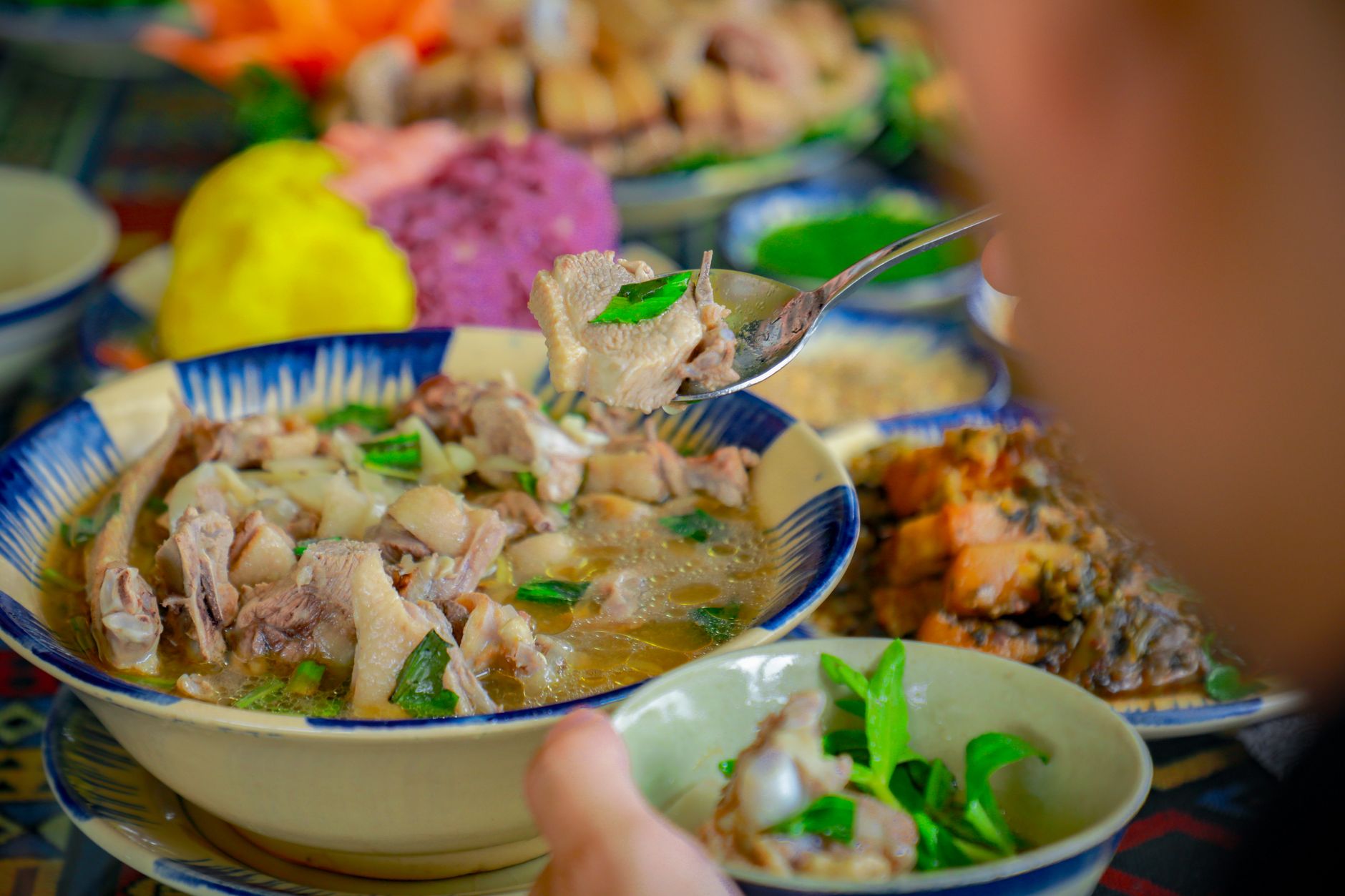
Don't expect restaurant rows. Bat Xat town has a handful of "com pho" joints along the main road — rice plates with pork or chicken for 35,000–50,000 VND. In Y Ty, homestays serve family-style meals: sticky rice, stir-fried greens, grilled pork, local "thang co" (organ soup — an acquired taste, heavily spiced with cardamom and ginger). A homestay dinner typically runs 100,000–150,000 VND per person.
At Muong Hum market, grab "thang co" from the communal pot or try "banh chung" — the black sticky rice version sold by Hmong vendors is denser and nuttier than the Tet lowland version.
Morning "pho (쌀국수 / 越南河粉 / フォー)" is available in Bat Xat town — nothing famous, just the standard northern-style bowl for 30,000–40,000 VND.

Photo by Kirandeep Singh Walia on Pexels
Where to Stay
Y Ty: Several homestays have opened in recent years. Expect basic rooms — mattress on floor, shared bathroom, no hot water in cheaper places. Prices range 150,000–400,000 VND per night. The pricier ones have hot showers and balconies facing the valley. Book ahead on weekends October–January; places fill up with Vietnamese photographers.
Bat Xat town: A few nha nghi (guesthouses) near the market. Simple, clean enough, 200,000–300,000 VND. No frills.
Lao Cai city: If you want a comfortable base with ATMs and restaurants, stay in Lao Cai and day-trip. Hotels here run 300,000–800,000 VND.
Practical Tips
- Cash only in Bat Xat and Y Ty. No ATMs past Bat Xat town. Withdraw in Lao Cai city before heading up.
- Fuel up your motorbike in Bat Xat town or Muong Hum. No reliable petrol past Muong Hum on the Y Ty road.
- Phone signal is patchy above Muong Hum. Viettel works best in the mountains.
- Bring layers. Y Ty gets properly cold November–February. A down jacket isn't overkill.
- Hire a local guide for any trekking beyond the main village paths. Trails aren't marked and weather shifts fast at altitude.
Common Mistakes
Going just for one night. Cloud hunting is weather-dependent. Two nights at Y Ty gives you a realistic shot at catching the sea of clouds. One night is a gamble.
Expecting Sapa infrastructure. There are no spas, no craft beer bars, no Western restaurants. That's the point — but pack accordingly.
Driving to Y Ty in the dark. The switchbacks above Muong Hum have no guardrails and occasional livestock on the road. Leave Lao Cai by early afternoon at the latest.
Skipping the market. Muong Hum Monday market is a genuine highlight. If you can time your visit to include a Monday morning, do it.
Last updated · May 26, 2026 · independently researched, never sponsored.