"Banh can" is the least pretentious breakfast dish you'll find in Vietnam (베트남 / 越南 / ベトナム). A crispy, crepe-like bowl of tapioca flour battered in a spherical mold, filled with shrimp, pork, and scallion oil, then dipped in fish sauce. In Mui Ne, it's not a tourist meal—it's what the fishing community eats at 6 a.m. before heading out to sea. The version here is lighter, more delicate, and less oily than what you get in Hanoi or Ho Chi Minh City, probably because the vendors source ultra-fresh seafood from the harbor two blocks away.
Mui Ne sits 220 km northeast of Ho Chi Minh City (호치민시 / 胡志明市 / ホーチミン市) and has a working fishing fleet. That proximity to the catch matters. The banh can here tastes like an afterthought in other places and a religion here.
Banh Can Phan Rang (The Reference Point)
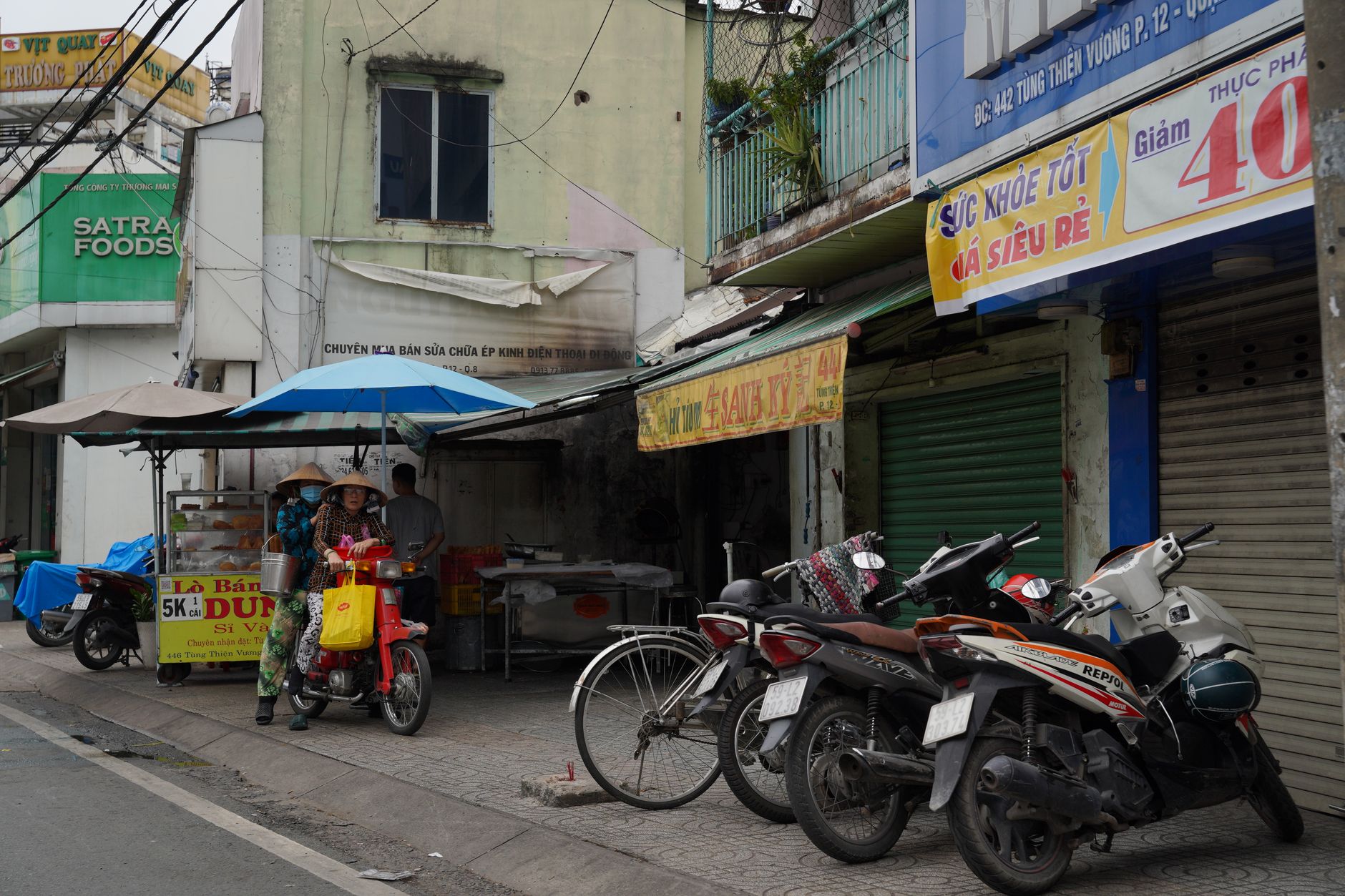
This is the stall everyone points to. It's a metal cart with blue parasol on Nguyen Hue Street, right across from Mui Ne Market, operating from 5:30 a.m. to around 9:30 a.m. The owner, a woman in her 60s, has been there for over 15 years. She fills each bowl with maybe four fat shrimp, a spoonful of minced pork, and a drizzle of clarified pork fat (not oil). The bowl itself—she molds them fresh in front of you—is crispy enough to shatter but not hard. She dips it in a fish sauce that she makes herself, heavy on the lime and chili. One bowl costs 15,000 VND (about USD 0.65). Most people order two. Locals grab 3–4 bowls, stack them, and eat standing up.
Getting there: Walk to Mui Ne Market from the town center; Banh Can Phan Rang sits adjacent on the market's north side. If you arrive after 9 a.m., you'll find the cart being dismantled.
Banh Can Au Lac (The Variety Play)
Around the corner from Phan Rang, on Tran Hung Dao Street, there's a smaller stall run by a younger vendor (40s) called Au Lac. She makes banh can but also sells banh hoai, a local specialty rice cracker wrapped in banana leaf. Her banh can is slightly thicker, with more egg mixed into the batter, making it almost custardy inside. If Phan Rang is crispy-exterior-light-inside, Au Lac is more indulgent. She sources shrimp from her husband's boat, so the fill changes day to day—sometimes it's just shrimp, sometimes with squid or tiny fish. Cost: 18,000 VND per bowl. Open 6 a.m.–10 a.m.
Why the difference? Au Lac's batter sits overnight; Phan Rang's is made fresh each morning. Your preference will tell you something about yourself.
Banh Can Thanh Huong (The Tourist-Aware Spot)
If you're eating with family who sleep past 8 a.m., Thanh Huong on Phan Boi Chau Street is open 7 a.m.–11 a.m. and then again 5 p.m.–8 p.m. (banh can for dinner is rare but does happen here). The bowls are identical in quality to the Phan Rang cart, and the owner speaks broken English. He charges 16,000 VND. The real difference: he has plastic stools and a small counter, so you can actually sit. Most other banh can spots have nowhere to sit; you eat standing or take it away. Thanh Huong is the only place in Mui Ne where you'll see a mix of locals and tourists, and the locals don't seem to mind.

Photo by Quang Nguyen Vinh on Pexels
Banh Can 6 Tran Hung Dao (No Sign, Just the Number)
An unnamed stall (the locals just call it "6 Tran Hung Dao") is tucked between a tire shop and a coconut-water cart. No sign, no parasol, just a woman at a single table with her mold and a bottle of fish sauce. She opens 5:45 a.m., closes when she sells out (usually 8:30 a.m.). The banh can here is the most savory of the bunch—she uses anchovy paste in the filling, not just pork and shrimp. It's a banh can for people who don't want it to taste like breakfast. Cost: 15,000 VND. Seating: standing room only, maybe room for three people max.
This stall is intentionally hard to find. Locals like it that way.
What Makes Mui Ne Banh Can Different
Most banh can regions (Phan Rang, Ninh Thuan) offer a heavier, oiler version, often with more batter and less careful molding. Mui Ne vendors treat it like precision work, probably because they're also selling to fishing crews who need to eat fast and light. The shrimp is fresher here—you taste the salt water in it. The fish sauce is usually made in-house, not bottled and aged. And there's almost no competition, so the vendors have perfected their formula over years without reinventing.

Photo by Sergey Guk on Pexels
How to Order
Point at how many bowls you want. Say "ca ri" if you want extra shrimp (it costs 2,000 VND more). Say "khong ca" if you want no shrimp (locals do this sometimes). Say "thêm sa lach" if you want more herbs (mint, cilantro), though it's usually already in the fish sauce. Most vendors speak zero English, but they've been making the same dish for 10+ years, so the transaction is fast.
Pay cash. None of these stalls take cards.
When to Go
Morning, always. 6:30–8 a.m. is peak time. If you go after 9 a.m., you'll find either sold-out carts or banh can that's been sitting under a heat lamp for 90 minutes. The evening shift at Thanh Huong is an option, but banh can is a breakfast dish—eating it at 6 p.m. feels historically inaccurate.
Many travelers stay in Mui Ne for the beaches and kitesurfing. If you stay, set your alarm once. Banh can is fifteen minutes from most guesthouses, costs 15,000–18,000 VND, and tastes like what Mui Ne actually is: a fishing town with incredible access to the sea.
Practical notes
All stalls are cash-only. The best time to eat is 6:30–8 a.m., when bowls are molded fresh and the fish sauce is at room temperature. If you arrive after 9 a.m., expect to find carts already closing down. Banh can Phan Rang is the most reliable reference point, but Au Lac and the unnamed stall on Tran Hung Dao are worth the hunt if you're in Mui Ne more than one morning.
Last updated · May 29, 2026 · independently researched, never sponsored.