Da Nang has a quietly distinctive breakfast culture, and "bun cha ca" sits at the center of it. The Da Nang version — rice vermicelli in a light tomato-and-pineapple broth, loaded with fried fish cakes, scattered with fresh dill — tastes nothing like the Hanoi dish that shares a similar name. It's tangy, a little sweet, and gone from most stalls by 10 a.m.
What Makes Da Nang's Version Different
Elsewhere in Central Vietnam, "bun cha ca" can mean a simpler fish-broth noodle soup. In Da Nang (다낭 / 岘港 / ダナン), the broth is built on a tomato and pineapple base that gives it a gentle sourness — closer in spirit to a "canh chua" than a standard fish soup. The fish cakes ("cha ca") are fried before going in, so they hold a light crust. Dill is not optional. If there's no dill, you're at the wrong place. Locals typically eat it with raw bean sprouts and a squeeze of lime.
Expect to pay 30,000–50,000 VND per bowl at a proper local stall. Anything over 60,000 VND at a tourist-facing spot is probably not worth the premium.
Ba Lua — 23 Tran Binh Trong
This is the spot Da Nang food people mention first when the topic comes up. Ba Lua has been running for decades and opens around 6 a.m., closing when the pot empties — usually before 9:30. The broth here is clear and aromatic rather than heavy on tomato paste; the pineapple sourness is subtle. Fish cakes are house-made, and you can taste the difference. A bowl runs 35,000 VND. There are no menus, no English signage, and parking is tight on Tran Binh Trong. Just point and sit down.
Bun Cha Ca 109 — 109 Nguyen Chi Thanh
A step up in visibility from Ba Lua, this place gets a lunch crowd in addition to the morning rush, which tells you something about consistency. The broth here leans more tomato-forward and slightly sweeter. They add a generous amount of dill and spring onion, and the fish cakes are thicker than average — chewy in the center, crisp outside. 40,000 VND per bowl. Opens at 6:30 a.m., closes around noon. Seating is basic plastic stools on the pavement.

Photo by Kirandeep Singh Walia on Pexels
Quan Bun Cha Ca O Vuong — 70 Ong Ich Khiem
Less famous but worth the detour. This stall is run by an older woman who has adjusted the recipe very little over the years, which is exactly what you want. The pineapple flavor is more pronounced here than at most spots — almost tart. Fish cakes are smaller and lighter. Bowls cost 30,000 VND and the place is often full by 7:15 a.m. on weekends. Closes by 9 a.m. on busy mornings; sometimes earlier. Come early or miss it entirely.
Bun Cha Ca Bich — Nguyen Duy Hieu Street, near the An Hai Market
On the east side of the Han River, in An Hai ward, Bich is the neighborhood anchor for bun cha (분짜 / 烤肉米粉 / ブンチャー) ca. The broth has good depth and the dill is piled on without restraint. They also offer "banh canh" on the side menu if you want something thicker. 40,000–45,000 VND. Opens 6 a.m., usually done by 10 a.m. This is a good option if you're staying near My Khe Beach and don't want to cross the river for breakfast.
Bun Cha Ca Thi — Hoang Dieu, near the Pho market
Smaller and lower-profile than the others, Thi is a one-woman operation that sets up near the edge of the covered market area on Hoang Dieu. The bowls are served faster than anywhere else on this list — she pre-portions everything. The fish cake quality varies slightly day to day, but when it's good, the broth has a clean, bright flavor with good dill-to-soup ratio. 30,000 VND. Only open until around 8:30 a.m.
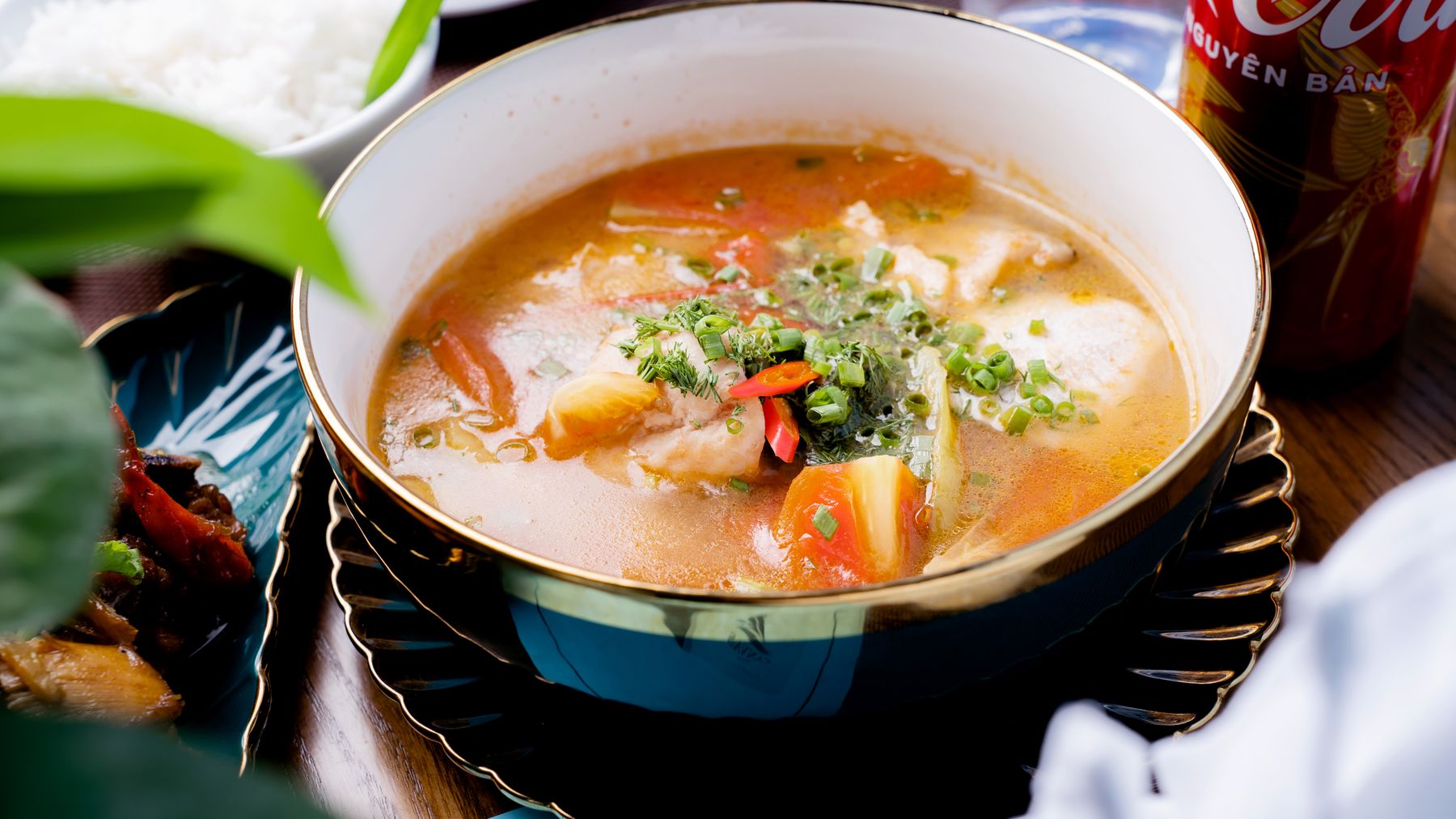
Photo by Xuân Thống Trần on Pexels
Skip This One: Tourist-Facing Spots Near Han Market
The cluster of noodle shops immediately around Han Market — especially those with English photo menus and staff who flag you down from the street — tend to serve bun cha ca that is blander, pricier (60,000–80,000 VND), and built for people who won't be back tomorrow. The fish cakes often come from a commercial supplier, the broth lacks depth, and the dill is an afterthought. This isn't a hard rule, but if a place near Han Market is advertising aggressively to tourists, the bun cha ca is usually not the priority.
A Few Practical Notes on Ordering
Most stalls only serve one or two things, so ordering is straightforward — hold up fingers for the number of bowls. Condiments (fresh chilies, lime, fish sauce) are usually on the table. Bean sprouts come on a plate you add yourself. If you want extra fish cakes, say "them cha ca" and expect to pay 10,000–15,000 VND more. Most places do not accept card payment; bring small bills.
Practical Notes
Bun cha ca in Da Nang is almost entirely a morning food — plan to eat before 9:30 a.m. if you want the best bowls at the best stalls. The dish is filling enough to carry you through to a late lunch, so it pairs well with a morning walk along the Han River or a visit to Da Nang's covered market. If you're traveling up to Hue afterward, note that "bun bo Hue" dominates there — a different beast entirely, heavier and spicier.
Last updated · May 26, 2026 · independently researched, never sponsored.