The One-Dish Restaurant
On Cha Ca Street (formerly Hang Son Street) in Hanoi's Old Quarter sits a restaurant that has done one thing for over 150 years: cook "cha ca la vong." The name refers to a statue inside—Truong Tu Nha, an 11th-century strategist—but locals know it simply as the place where the Doan family perfected grilled fish. The restaurant opened in 1871 at 14 Hang Son Street, and it hasn't strayed from its original menu since.
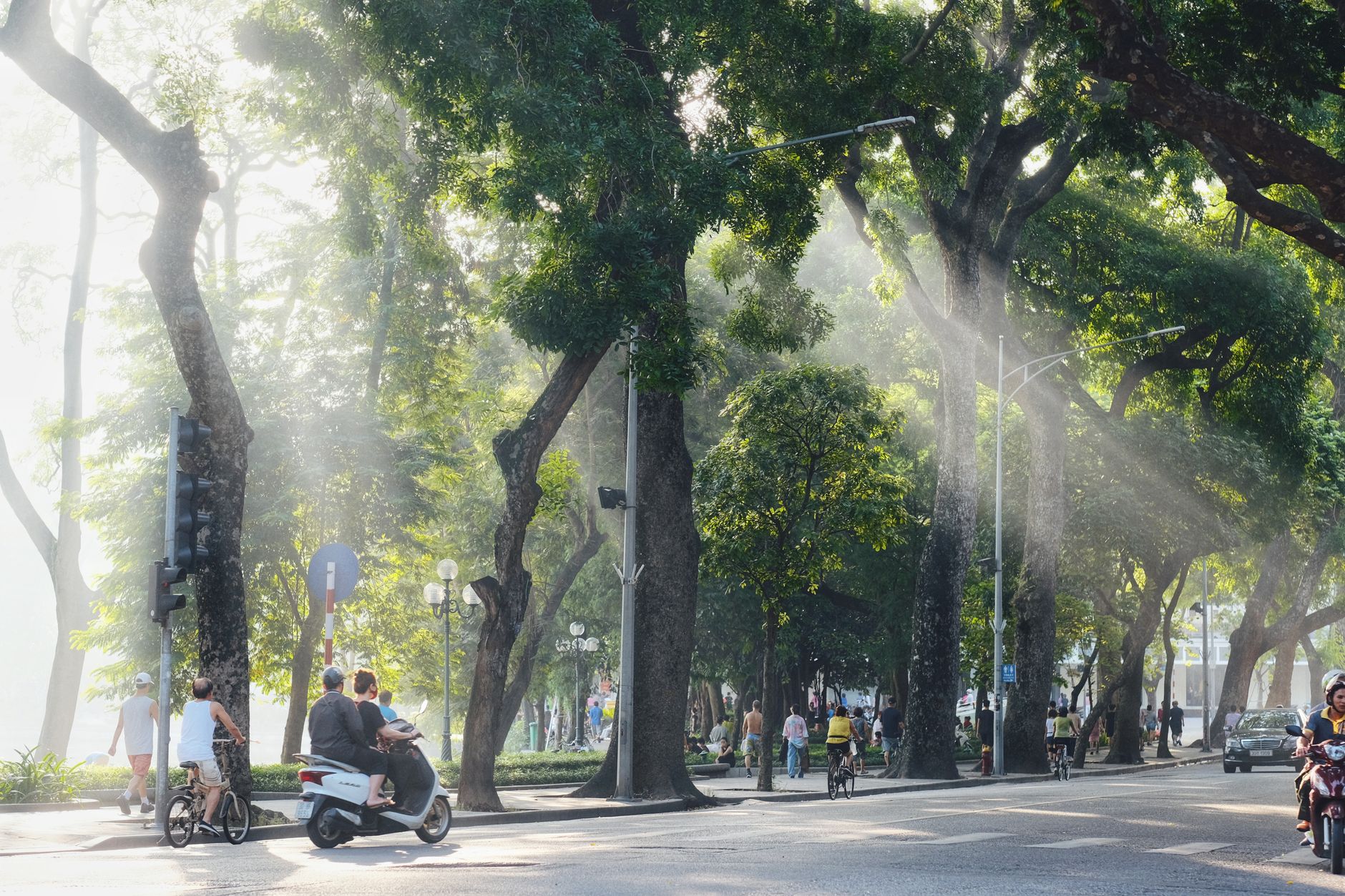
The street itself was literally renamed after the dish. That almost never happens in Hanoi—a city where street names typically honor generals, scholars, and revolutionary figures. Cha Ca Street is the exception: a narrow lane in Hoan Kiem District, about 200 meters north of Hoan Kiem Lake, defined entirely by one family's cooking. If you're walking from the lake, head up Hang Dau, turn left, and you'll see the signage within a few minutes. The building at number 14 is easy to miss from the outside—faded paint, steep staircase, no flashy branding. That's the real one.
What You're Eating
"Cha ca la vong" is built on a single foundation: ca lang (hemibagrus catfish), cut into chunks and marinated in turmeric, galangal, fermented rice, and spices. The fish hits a charcoal grill, then comes to your table sizzling in a hot pan with scallions and fresh dill.
You eat it over "bun" (rice vermicelli noodles), scattered with roasted peanuts, fresh herbs, and dipped in "mam tom"—a punchy shrimp-paste sauce that smells funkier than it tastes. The interplay is deliberate: smoky fish, aromatic herbs, crunchy nuts, fermented salt. It's not subtle.
The experience of eating here is communal. You share long tables. Charcoal burners sit at each one. Waiters bring pans of sizzling fish directly from the kitchen. It's theater and dinner at once.
A standard portion runs about 150,000–200,000 VND per person (roughly $6–8 USD as of 2024). That's expensive by Hanoi (하노이 / 河内 / ハノイ) street food standards—a bowl of pho down the road costs 40,000–60,000 VND, and a banh mi is 20,000–30,000 VND. But you're paying for the fish itself (ca lang isn't cheap), the charcoal setup, and frankly, 150 years of reputation. Drinks are separate. A bia hoi (draft beer) or a Hanoi Beer will add 15,000–30,000 VND.

Image by Cheong. Original uploader was Cheong Kok Chun at en.wikipedi via Wikimedia Commons (CC BY-SA)
How to Order and Eat It Properly
There's no menu decision to agonize over—that's the beauty of a one-dish restaurant. You sit down, tell them how many people, and the fish comes. But there's a technique to eating it well that first-timers often miss.
When the pan arrives, the fish is already partially cooked. The charcoal burner on your table keeps it going. Let the dill wilt slightly in the oil before you start pulling pieces out. The dill should darken and crisp at the edges—that's flavor, not overcooking. Layer your bowl: bun on the bottom, then fish chunks, then a handful of peanuts, a few sprigs of cilantro and perilla, and finally a spoonful of mam tom mixed with a squeeze of lime and sliced chili.
If mam tom is too aggressive for you, ask for "nuoc mam" (fish sauce) instead. Nobody will judge you. Plenty of Vietnamese diners skip the shrimp paste too. But if you can handle it, the fermented funk of mam tom is what makes this dish complete—it bridges the richness of the turmeric-marinated fish and the freshness of the herbs in a way that regular fish sauce can't.
A useful phrase: "Cho them bun" means "more noodles, please." The fish-to-noodle ratio in the first serving is usually heavy on the fish, and you'll want extra bun to stretch the sauce and drippings at the bottom of your bowl.
Why It Matters
CNN named it one of the world's best Vietnamese dishes in 2016. Florence Fabricant of The New York Times wrote: "The combination of ingredients—turmeric, dill, shrimp paste and fish sauce—delivers an intriguing muskiness bolstered with chiles, silky noodles and a thicket of other fresh herbs to season the chunks of moist fish. My memories are still vivid after 10 years."
The dish has survived because it's excellent and because the Doan family refused to chase trends. Other restaurants in Hanoi serve "cha ca"—variations using different fish, shortcuts, modern plating. The original restaurant serves the original. That singularity is what drew international food writers and what keeps locals returning.
It's worth understanding what makes this dish different from other Hanoi classics. A bowl of bun cha—the smoky grilled pork noodle soup that Barack Obama and Anthony Bourdain famously ate together in 2016—is built on charcoal and herbs too, but it's a fundamentally different architecture: sweet-sour broth, fatty pork, cool noodles served on the side. Cha ca la vong has no broth. The fat comes from the fish and the oil in the pan. The heat stays on your table throughout the meal. It's closer to Korean barbecue in structure than to any other Vietnamese noodle dish.

Image by CEphoto, Uwe Aranas via Wikimedia Commons (CC BY-SA)
The Imitators: Cha Ca Thang Long and Others
You'll find dozens of "cha ca" restaurants within a few blocks of the original. The most well-known alternative is Cha Ca Thang Long at 19-21-31 Duong Thanh, about a five-minute walk away. It's cleaner, more tourist-friendly, and cheaper—around 120,000–150,000 VND per portion. The fish is good. The dill is fresh. But the setup is gas burners, not charcoal, and the marinade tastes lighter.
Other popular spots include Cha Ca Anh Vu (120 K Mai, Hai Ba Trung District) and Cha Ca Lao Ngu (various locations across the city). Each takes small liberties—some use more galangal, others add tomato to the pan. None of them are the original, but several are genuinely good. If you're in Ho Chi Minh City, you can find cha ca restaurants in District 1 that do a respectable version, though the dish belongs to Hanoi the way com tam belongs to Saigon.
The original Cha Ca La Vong is open daily from roughly 11:00 AM to 2:00 PM and 5:00 PM to 9:00 PM. Get there by 11:30 or 5:30 to avoid waits. The dining room is on the second and third floors—there's no ground-level seating.
Common Mistakes Foreigners Make
Skipping the mam tom entirely. I get it—the smell is confrontational. But at least try a small dab mixed with lime juice. It transforms the dish. Order nuoc mam as a backup, but give the shrimp paste a chance.
Eating the fish straight from the pan too early. Let the dill do its work. The herbs need a minute on the heat to release their oils. If you pull everything out immediately, you're eating a half-finished version.
Going to the wrong restaurant. There are at least three places on Cha Ca Street with similar-sounding names. The original is at number 14, upstairs. If someone is standing on the sidewalk aggressively waving you in, that's probably not it.
Expecting a full multi-course meal. This is a one-dish restaurant. You eat cha ca. You might get a side plate of herbs. That's it. If you want variety in a single sitting, this isn't the place—go eat bun rieu or banh cuon somewhere else first, then come here for the main event.
Comparing it to other fish dishes. Cha ca la vong has no real equivalent in Southeast Asian cooking. It's not Thai fish curry. It's not Cambodian amok. The turmeric-dill-shrimp paste combination is uniquely northern Vietnamese. Let it be what it is.
Quick Reference
- Dish: Cha ca la vong — turmeric-marinated grilled catfish with dill, served over rice vermicelli
- Original restaurant: Cha Ca La Vong, 14 Cha Ca Street (formerly Hang Son), Hoan Kiem District, Hanoi
- Price: ~150,000–200,000 VND per person at the original; ~120,000–150,000 VND at alternatives
- Hours: Approximately 11:00–14:00 and 17:00–21:00 daily
- Key condiment: Mam tom (fermented shrimp paste), mixed with lime and chili
- Backup condiment: Nuoc mam (fish sauce) if mam tom is too intense
- Useful phrase: "Cho them bun" = more noodles, please
- Getting there: Walk north from Hoan Kiem Lake through the Old Quarter, about 600 meters. Or grab a Grab bike for 15,000–20,000 VND from most central Hanoi locations.
- Best alternative nearby: Cha Ca Thang Long, 19-21-31 Duong Thanh, ~5 min walk
- Pair with: A post-meal egg coffee at Giang Cafe, a 10-minute walk south
Beyond Hanoi
As the dish crossed borders, chefs adapted it. American restaurants use grilled catfish, basa, tilapia, even halibut, because ca lang isn't available. The recipe travels; the ingredient flexibility keeps it alive outside Vietnam (베트남 / 越南 / ベトナム). But the dish's soul—turmeric, charcoal smoke, communal eating—stays intact.
Within Vietnam, the dish stays stubbornly northern. You won't find great cha ca in Da Nang or Hoi An, where the noodle conversation revolves around mi quang and cao lau. Down in Saigon, hu tieu and com tam dominate the local palate. Cha ca is a Hanoi dish, and it tastes best in Hanoi—partly because of the ca lang supply chain from the Red River Delta, partly because of the dry, cool winters that make a sizzling charcoal pan feel exactly right.
For anyone eating in Hanoi, Cha Ca La Vong is not a tourist checkbox. It's a meal that connects you to 150 years of a single family's obsession with one dish. That's worth a table.
Bottom Line
Cha ca la vong is one of the few dishes in Vietnam where the original restaurant still exists, still cooks over charcoal, and still serves nothing else. Go to 14 Cha Ca Street, sit down, let the dill wilt in the pan, and eat it the way people have eaten it since 1871. Not every meal needs a story behind it—but this one has earned its.
Last updated · May 29, 2026 · independently researched, never sponsored.