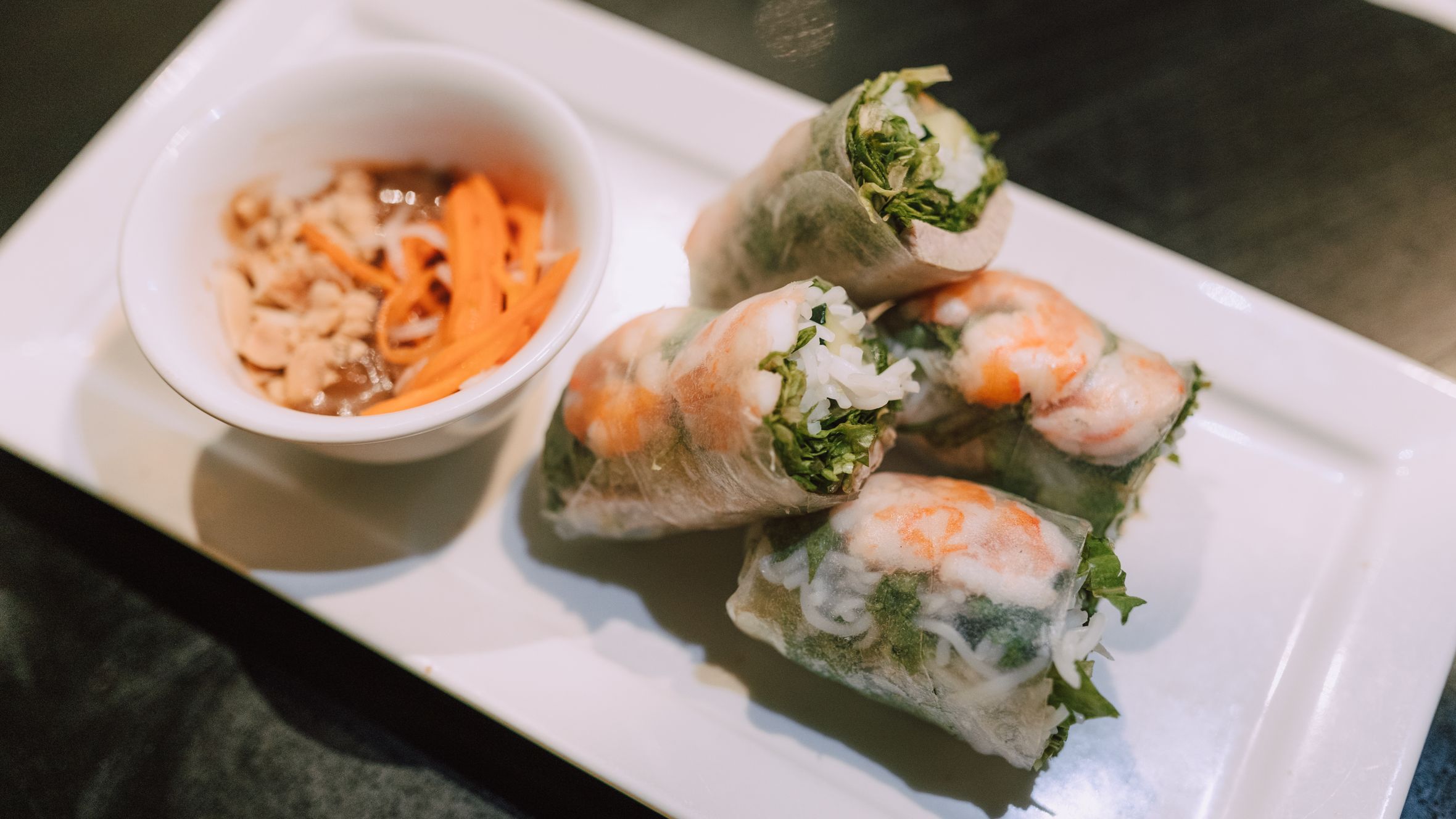
Raw herring tossed with shredded coconut, roasted peanuts, lime, chili, and a pile of fresh herbs, then wrapped in rice paper with green banana and starfruit — "goi ca trich" is the dish that separates people who actually eat in Phu Quoc from those who stick to the resort buffet.
The island's waters supply ca trich (Indian mackerel herring) year-round, but the freshest fish show up between October and March when the seas are calm and the boats go out daily. Here's where to find it done properly.
Quan Goi Ca Trich Ba Dung
Address: 4 Tran Hung Dao, Duong Dong town
Hours: 10:00–21:00 daily
Price: 60,000–80,000 VND per plate
Ba Dung has been at this corner for over fifteen years and is the name most locals give you first when you ask about goi ca trich. The fish is sliced thin and marinated briefly in lime juice — just long enough to firm the flesh without cooking it through, so you still get the clean oceanic taste. The coconut here is freshly grated, not the desiccated kind that shows up in lazier kitchens. Order a plate, wrap everything yourself in the banh trang (rice paper) provided, and add slices of green banana and khe (starfruit) from the condiment plate. The house nuoc mam pha (dipping sauce) is punchy and sweet — the fish sauce is local Phu Quoc (푸꾸옥 / 富国岛 / フーコック)-grade, not the diluted mainland version.
Quan 49 Goi Ca Trich
Address: 49 Bach Dang, Duong Dong
Hours: 11:00–22:00 daily
Price: 55,000–75,000 VND per plate
Smaller, rougher around the edges, and beloved by motorbike taxi drivers and market vendors. The fish-to-coconut ratio leans heavier on the fish here — each plate gets noticeably more ca trich than most places nearby. They also add thin slivers of sauteed shallots and a scattering of thinly sliced lemongrass, which gives the salad a fragrance the other spots don't bother with. No English menu, but pointing at the single dish on the table in front of every other diner works fine.
Thi Tuong — Market Stall, Duong Dong Night Market
Address: Duong Dong Night Market, Bach Dang Street (stall near the central fish vendor row)
Hours: 18:00–23:00 daily
Price: 50,000 VND per serving
For the cheapest version on the island, find Thi Tuong's stall in the Duong Dong night market. Her setup is four plastic tables and a cooler full of fish. The goi ca trich here is more casual — less architectural than Ba Dung's, more lime-forward, and she doubles the herbs (she grows rau ram and kinh gioi herself). It's the night market, so expect crowds after 19:30. Come at opening if you want a seat. Skip the grilled seafood at the neighboring stalls — overpriced and aimed at tourists.

Photo by Tuan Vy on Pexels
Nha Hang Hai San 88
Address: 88 Tran Hung Dao, Duong Dong
Hours: 10:00–22:00 daily
Price: 85,000–100,000 VND per plate
This is a full seafood restaurant, not a street stall, and the goi ca trich is worth ordering here if you're already sitting down for a larger meal. The fish is excellent — the owners buy direct from a cousin's fishing boat — and the plating is more composed. They add toasted sesame and a thin strip of fresh chili that most spots skip. Slightly pricier because you're also paying for a proper table, ice water, and service. Not the best value if goi ca trich is all you want, but the right call if you're eating with a group and want to order grilled squid and steamed clams alongside it.
Quan Goi Ca Trich Co Ut
Address: 12 Nguyen Trai, An Thoi town (southern tip of the island)
Hours: 09:00–19:00 daily
Price: 60,000 VND per plate
Most visitors to Phu Quoc never make it down to An Thoi — they stay clustered around Duong Dong — which is exactly why Co Ut remains a local canteen rather than a tourist stop. The southern fishing community has slightly different fish access than the north, and the ca trich here is smaller and leaner. Co Ut slices it against the grain, which gives a different texture: softer, less chewy. She also serves banh canh cha ca (thick noodle soup with fish cake) if you want a full lunch. The 40-minute drive from Duong Dong is only worth it if you're already heading to An Thoi for the cable car or the ferry terminal.

Photo by Thu Huynh on Pexels
Skip This Place
Several restaurants on the Long Beach resort strip (particularly along Tran Hung Dao between km 8 and km 11) now list goi ca trich on English-language menus. In practice, the fish at these places is often not ca trich at all — it's substituted with a milder, meatier fish that doesn't have the same flavor — and the coconut comes from a bag. Prices run 120,000–150,000 VND for an inferior result. If the menu has photos, lamination, and QR codes, keep walking.
What Makes Phu Quoc's Version Distinct
The island's goi ca trich differs from the central coast versions (which use similar technique in Da Nang or Quy Nhon) mainly because of the fish sauce. Phu Quoc produces some of Vietnam's most prized nuoc mam, and the dipping sauce you get here — even at a 50,000 VND market stall — reflects that. The coconut milk used in some preparations is also fresher than what you'll find inland. These aren't marketing claims; they're just the result of geography.
Practical Notes
Goi ca trich is best eaten at lunch or early evening before the fish has sat out too long — if a stall opens at 10:00, don't arrive at 21:00 and expect peak freshness. Most places are cash only; bring small bills. If you're renting a motorbike — the standard way to eat well on Phu Quoc — park on Bach Dang and work your way through Duong Dong on foot.
Last updated · Aug 23, 2026 · independently researched, never sponsored.






