Phu Quoc's fish sauce — "nuoc mam" — has been made the same way for over a century: black anchovies, sea salt, wooden barrels, and at least 12 months of patience. If you've only ever used the mass-produced bottles from a Vietnamese supermarket, what comes out of the island's working factories will genuinely surprise you.
What Makes It Different
The designation "nuoc mam Phu Quoc (푸꾸옥 / 富国岛 / フーコック)" is geographically protected under Vietnamese law and recognized by the EU — one of the few Vietnamese food products with that status. The production zone is the island itself. The anchovies (ca com do, the red-bodied variety) are caught in the waters around Phu Quoc between July and January, then layered immediately with sea salt in large jackwood barrels. The ratio matters: 3 parts fish to 1 part salt. The barrels ferment for a minimum of 12 months, often longer. The first extraction — called "nuoc mam nhi" — is the premium grade, with protein content above 40°N on the Vietnamese scale. Anything below that gets blended down or sold cheap.
The color should be a deep amber-red, almost like aged soy sauce. It should smell pungent but clean — funky, not rotten. If it smells flat or chemical, it's been diluted or processed off-island.
Visit a Factory First
Before buying anything, spend 30 minutes at a working factory. Khai Hoan Fish Sauce (Duong Dong town, 2 Hung Vuong) is the most visited and runs free walkthroughs. You walk past rows of 10,000-litre barrels, the guides explain the grading system, and you taste the difference between 30°N and 43°N side by side. The factory shop sells direct — prices run from around 50,000 VND for a 500ml bottle of standard grade to 250,000–350,000 VND for 500ml of their top-grade nhi. It's not the cheapest on the island but the quality control is consistent and bottles are properly sealed for travel.
Phung Hung Fish Sauce (Co May street, Duong Dong, roughly 800m south of the night market) is smaller, family-run, and worth the walk. They've been producing since the 1950s and the barrels here look like they predate the factory tourism era — because they do. No glossy tour, just barrels and staff who'll fill a bottle in front of you from the tap at the base of a barrel. 500ml of their 40°N nhi is around 180,000 VND. They open roughly 7:00–17:00, closed Sundays.

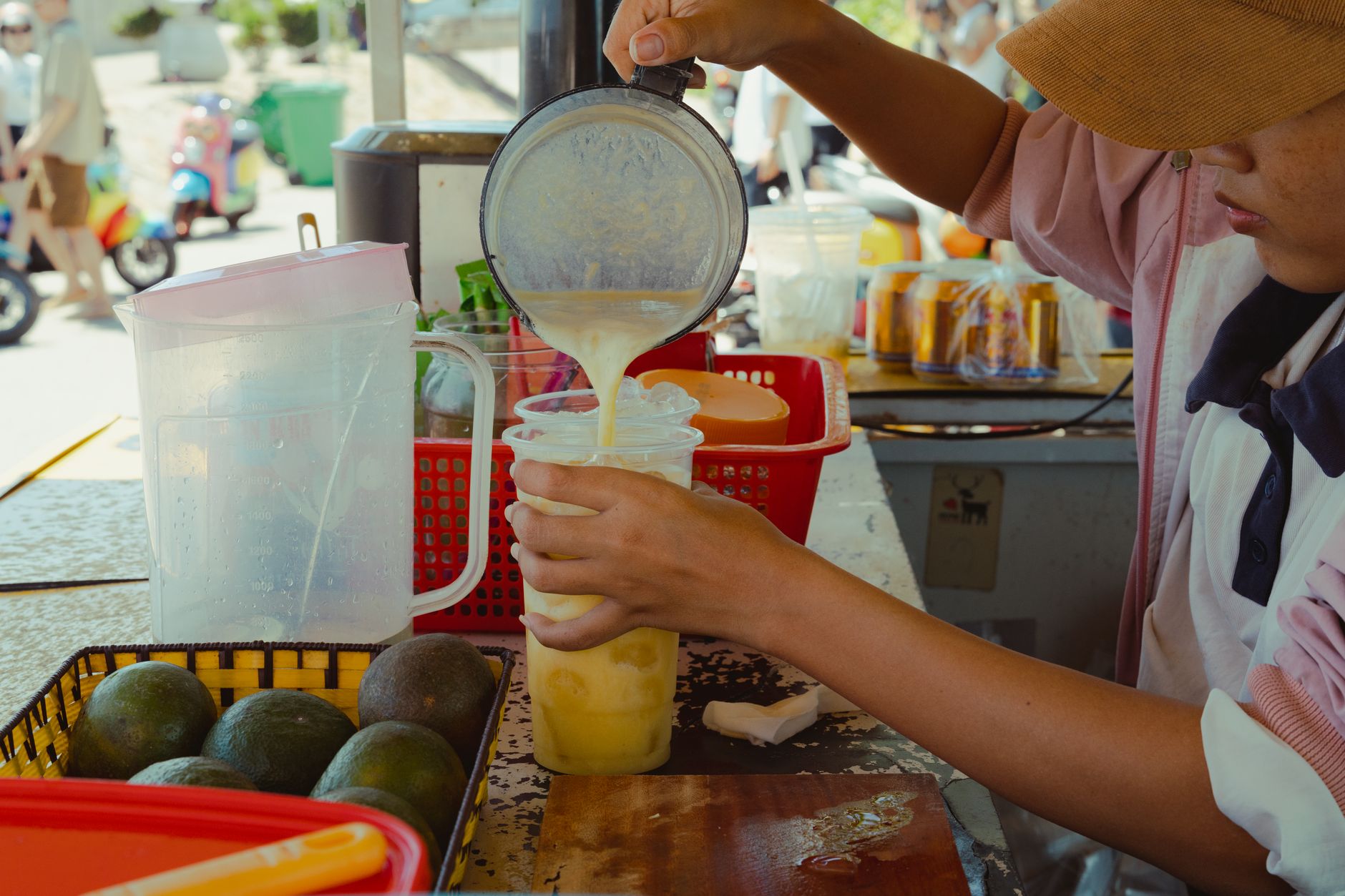
Photo by Pew Nguyen on Pexels
Where Locals Actually Shop
Duong Dong Market (Cho Duong Dong)
The covered market on Bach Dang street is the real answer to "where do locals buy it." Stalls in the dry goods section sell nuoc mam in bulk — you bring your own container or buy a plain plastic bottle for 5,000 VND. Expect to pay 80,000–120,000 VND per litre for decent 35°N grade. The vendors here aren't performing for tourists; they'll tell you the protein grade, the factory source, and whether a particular batch ran long or short. Go before 9:00 to avoid the tour groups filtering through from nearby resorts.
Hung Thanh Fish Sauce Shop (Tran Hung Dao, near the Ong Lang road junction)
A small shophouse that sources from two local producers and labels honestly — the grade is marked on every bottle in clear type, not buried in small print. Their 43°N single-extraction nhi runs 280,000–300,000 VND for 500ml, which is on the higher end, but the owner will open a bottle for tasting before you commit. Reliable hours: 8:00–18:30 daily.
Cho Ham Ninh (Ham Ninh fishing village, ~15 km east of Duong Dong)
If you're visiting Ham Ninh for the crab and "goi cuon" anyway, the small market stalls near the pier sell fish sauce sourced from operations on the east coast of the island. The east-coast product tends to be slightly lighter in color than Duong Dong-area sauce. Prices are lower — around 70,000–100,000 VND per 500ml — partly because packaging is basic and partly because you're buying closer to source. Worth picking up a small bottle to compare.
Skip This Place
The row of souvenir shops immediately outside the Khai Hoan factory gate and around the Duong Dong night market sells branded, attractively packaged nuoc mam at prices between 180,000–400,000 VND for 500ml. Some of it is fine. But a meaningful portion is blended product — Phu Quoc-origin fish at a lower grade, cut with sauce produced elsewhere, then rebottled under a Phu Quoc label. It's technically legal under current labeling rules as long as the blend includes island-origin fish. The gift packaging makes it hard to spot. Rule of thumb: if the label doesn't state the protein grade in °N and the production address isn't on Phu Quoc, skip it.

Photo by Valeria Drozdova on Pexels
What to Do With It
The most honest use for single-extraction 40°N+ nuoc mam is as a dipping sauce, barely diluted — a splash of lime juice, a sliced chili, maybe a pinch of sugar. It doesn't need to be cooked into anything. Drizzle it over steamed rice or use it exactly as locals use it alongside "banh mi" or a simple plate of boiled pork. Cooking destroys the aromatic compounds that make first-press sauce worth the price; save that for your standard-grade bottle.
Practical Notes
Liquid restrictions on carry-on luggage mean you'll want to check bottles or buy at the departure hall — Phu Quoc International Airport has a small selection of Khai Hoan products airside, priced about 20% higher than factory direct. Pack bottles inside zip-lock bags inside your checked luggage regardless; the lids on the local plastic bottles are not always airline-pressure friendly. A 500ml bottle of quality nhi weighs almost nothing and will outlast anything you'd buy at a Vietnamese restaurant supply store back home.
Last updated · Sep 4, 2026 · independently researched, never sponsored.