
What is "Pho Saigon", anyway?
"Pho" arrived in Saigon during the mid-20th century, but it evolved. Northern "pho", the canonical version from Hanoi, is a lean broth simmered for 12+ hours with charred onion and ginger — it's austere, mineral, patient. "Pho Saigon" trades that austerity for sweetness. The broth is lighter, cooked shorter, often sweetened with rock sugar or fish sauce balanced differently. The noodles are thinner, the presentation looser, the whole bowl eaten faster. It's not better or worse — it's adapted to heat, speed, and southern taste buds that want umami and sweet before savory depth.
In Ho Chi Minh City (호치민시 / 胡志明市 / ホーチミン市), "pho Saigon" is the default. If you order "pho", this is what arrives.
Where locals actually eat it
Pho Hoa Noodle Soup (District 1, Ben Thanh area)
This is a chain now, but the original branch near Ben Thanh Market is where the formula crystallized in the 1980s. Order at the counter, grab a plastic stool, wait 5 minutes. A bowl of pho (쌀국수 / 越南河粉 / フォー) bo (beef "pho") with rare brisket costs 60,000–75,000 VND. The broth is sweet-forward, the noodles thin and soft, the herb plate generous (Thai basil, sawtooth coriander, lime). Go at 6 a.m. or 11 a.m. — lunch lines form by 11:30 a.m. and don't break until 2 p.m.
Pho Tau Bay (District 5, Cho Lon)
So Tau Bay is a tiny stall — 4 stools, one pot — wedged into a Cho Lon alley near the vegetarian temple. Owner Tau has run it for 20+ years. She buys beef bones from a specific slaughterhouse in Thu Duc, simmers them from 3 a.m., and sells out by noon. Bowl: 50,000 VND. The broth tastes faintly of caramelized garlic and fish sauce, no fluff. It's less sweet than Pho Hoa but still unmistakably southern. Cash only. Arrive before 10 a.m.
Pho 2000 (District 1, Pasteur Street)
Famous because Bill Clinton ate here in 1995, but the fame hasn't ruined it. This is a proper sit-down restaurant, not a stall. Pho costs 65,000–90,000 VND depending on cuts (rare beef, brisket, tendon). The broth is balanced — sweet but not cloying, with a faint star anise note. The noodles are medium-thin, springy. Tourists outnumber locals, but the kitchen is consistent and the air-conditioning is a mercy in the afternoon. Go midday or you'll wait.
Pho Huynh (District 3, Nguyen Trai Street)
Another stall, 6 plastic stools, cash only, 55,000 VND per bowl. Huynh has run this for 18 years. The broth is made with beef marrow bones and a touch of sweetness from rock sugar — less fish-sauce-forward than Tau Bay, more delicate. Noodles are thin. Fresh herbs (basil, coriander, sawtooth) are restocked every 2 hours. Opens at 5:30 a.m., closes by 1 p.m. Locals queue from 6 a.m. You'll eat next to delivery drivers, construction workers, school-run parents.
Pho Thanh (District 10, Tran Hung Dao Boulevard)
A middle ground — larger stall with 8–10 stools, but still family-run. Pho costs 60,000 VND. The broth has a slight caramel edge (from slow-roasted onion). Rare beef arrives paper-thin. One distinguishing move: they offer "pho truong" (a regional variant with beef organs — kidney, liver, muscle) for the same price, if you ask. Most tourists don't know to ask. Opens at 6 a.m., steady crowd until 12:30 p.m.

Photo by Sergey Guk on Pexels
How to order + what to eat
Unless the menu is in English (at Pho 2000), ordering is simple: point or say "mot tia pho" (one bowl of pho) or "pho bo" (beef pho). If you want specific cuts, point at the meat chart on the wall or say "tai" (rare beef), "nam" (brisket), "gan" (liver), "sach" (tripe), or "bo" (mixed). Most stalls offer a "dac biet" (special) that mixes two cuts for the same price.
The herb plate arrives separate — basil, sawtooth coriander, lime, chili, and sometimes saw-tooth herb or mint. Squeeze lime into the broth, tear basil into the noodles, chew raw chili between slurps. Don't be shy.
Sriracha and hoisin sit on every table. Locals use both, especially at sweeter stalls like Pho Hoa. Hoisin deepens the sweetness; sriracha cuts it.
Why southern pho tastes different
The heat. Hanoi winters drop to 10°C; a 12-hour broth makes sense when the city is cold. Saigon is 28°C year-round. A heavy, slow broth feels cloying. Instead, southern cooks learned to build sweetness from fish sauce depth and rock sugar, then serve it fast. The noodles are thinner so they cook quickly and don't absorb broth for more than 5 minutes before you eat. It's designed to be light, quick, and comforting in heat — not a meditation bowl.
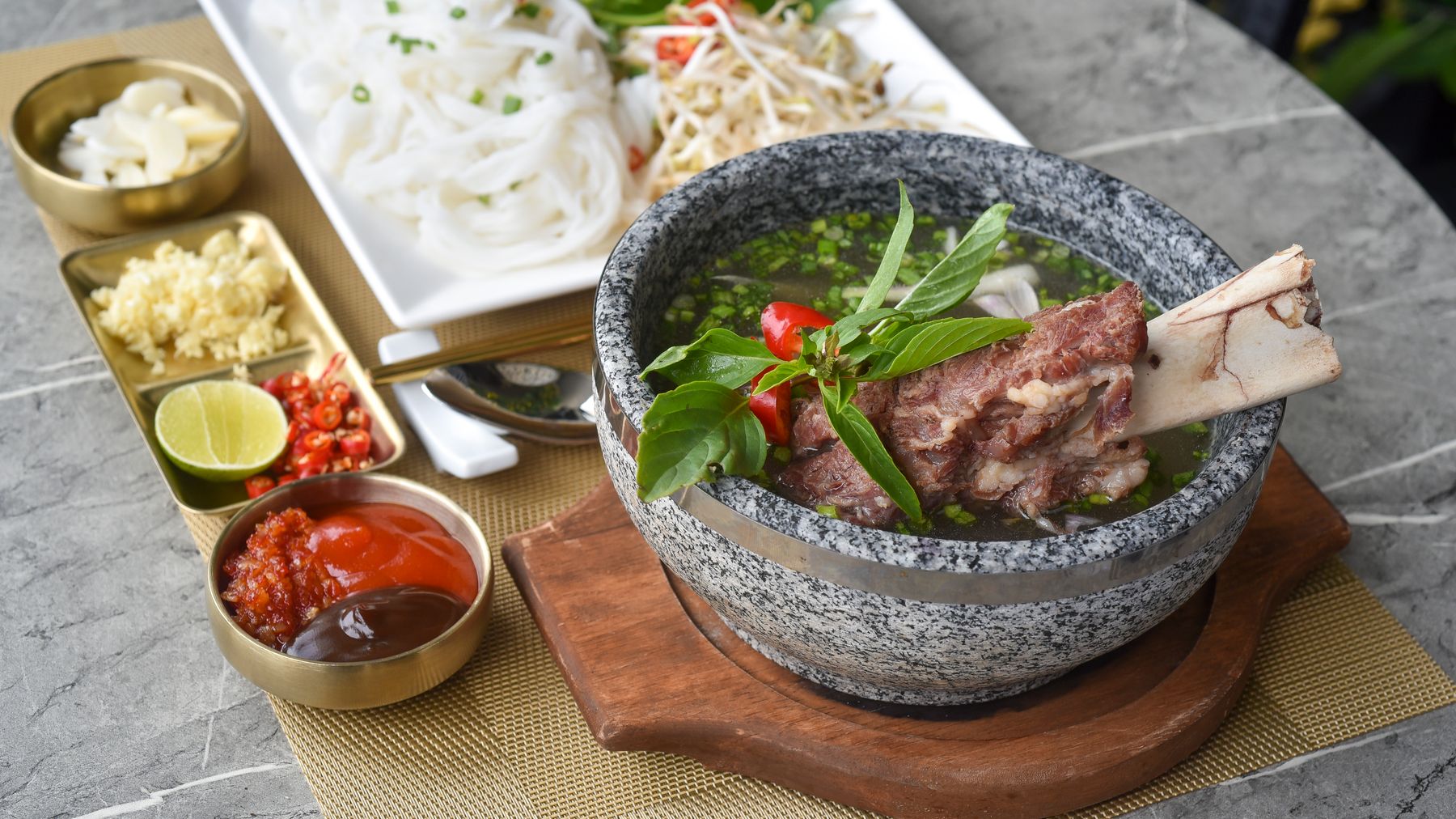
Photo by DUONG QUÁCH on Pexels
When to go
Morning (5:30 a.m.–8 a.m.). Locals eat before work. Stalls are fresh, lines are short, the air is cool. Best pho of the day, usually.
Mid-morning (9 a.m.–11 a.m.). Second rush. Still manageable if you avoid peak lunch.
Lunch (11:30 a.m.–2 p.m.). Crowded, especially at famous stalls. You will wait. The pho is fine, but the crowd and heat make the experience less pleasant.
Afternoon / dinner (3 p.m.–9 p.m.). Most stalls close by 1 or 2 p.m. Pho 2000 and a few sit-down places stay open for dinner. Broth quality drops because the morning pot is exhausted.
Practical notes
Expect to pay 50,000–90,000 VND per bowl (USD $2–4). Stalls are cash-only; Pho 2000 takes cards. The experience is fast — 8 to 15 minutes from order to empty bowl. Sit next to whoever arrives first; table-sharing is normal. Bring tissues; slurping is loud and respectful.
Last updated · May 29, 2026 · independently researched, never sponsored.






