Why Da Lat Feels Different
Da Lat sits at 1,500 meters (4,900 feet) above sea level in Lam Dong Province, giving it a subtropical highland climate that genuinely feels alien after weeks in Vietnam (베트남 / 越南 / ベトナム)'s sticky lowlands. The average temperature hovers between 14–23°C (57–73°F) year-round. Locals joke that Da Lat experiences all four seasons in a single day — spring in the morning, summer at noon, autumn in the afternoon, winter at night. The mist rolls in thick. The pine woods smell like nowhere else in Vietnam.
The French discovered this place in the 1890s for exactly these reasons and built a resort town. Bacteriologist Alexandre Yersin and explorer Etienne Tardif convinced the colonial administration to develop it. The first hotel opened in 1907. Urban planner Ernest Hebrard laid out the streets with villas, boulevards, schools, and intentionally no factories — a resort aesthetic that stubbornly persists. Walk the old quarter and you see that influence in the architecture, the wide avenues, the deliberate absence of industrial chaos.
Vietnamese honeymooners have been coming here for decades. Couples pose under pine trees and beside Xuan Huong Lake. The nickname "City of Eternal Spring" is not marketing — it is a genuine climate description. If you have been sweating through Saigon at 35°C, stepping off the bus here at 18°C and pulling on a jacket feels surreal. The temperature difference alone justifies the trip.
The Food Scene
Da Lat (달랏 / 大叻 / ダラット) is Vietnam's produce basket. The cool climate grows things you won't find elsewhere: artichokes, avocados, strawberries, mulberries, persimmons, cauliflower, cabbage, tea, wine. The city is famous for its flowers — hydrangeas, Da Lat roses, golden everlastings — and for "mut," a type of fruit preserve made from strawberries, mulberries, sweet potatoes, and roselle. These are real souvenirs: dense, sweet, shelf-stable. A box of mixed "mut" runs about 80,000–150,000 VND depending on weight and variety.
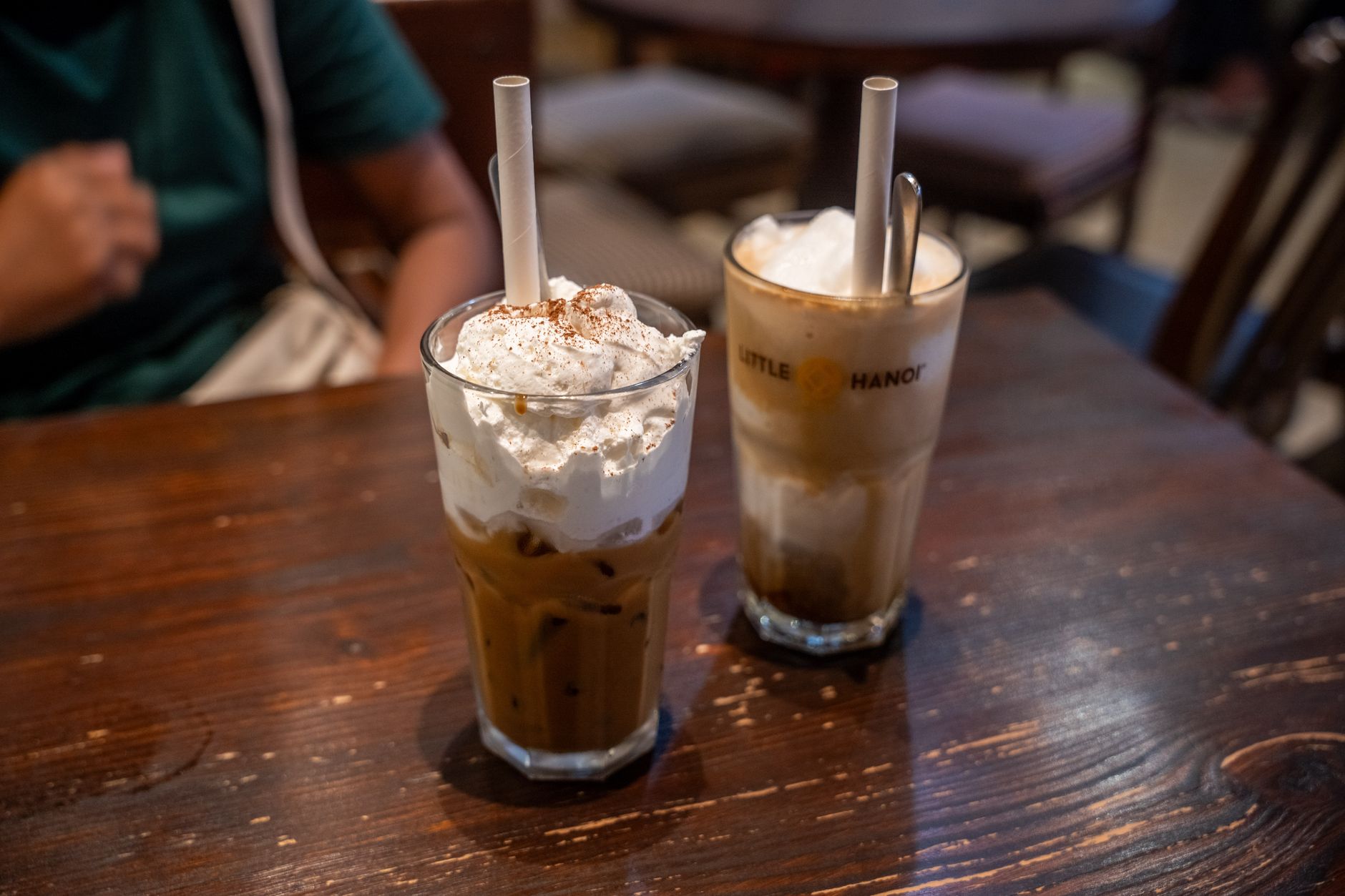
The singular local dish is "banh trang nuong" — grilled rice paper, usually eaten as a snack with salt, sugar, or soy sauce. Buy it from street vendors in the early morning. Most carts set up around the night market area on Nguyen Thi Minh Khai Street starting from about 5 PM; a single portion costs 15,000–25,000 VND. Da Lat avocado ice cream is legitimately good and nowhere else in Vietnam makes it this way — look for it at Bo Cafe on Truong Cong Dinh Street or from any of the small vendors lining the walking street near the central market. "Ca phe sua da" (iced coffee with condensed milk) tastes sharper here because of the cooler air and the local coffee plantations in the surrounding highlands.
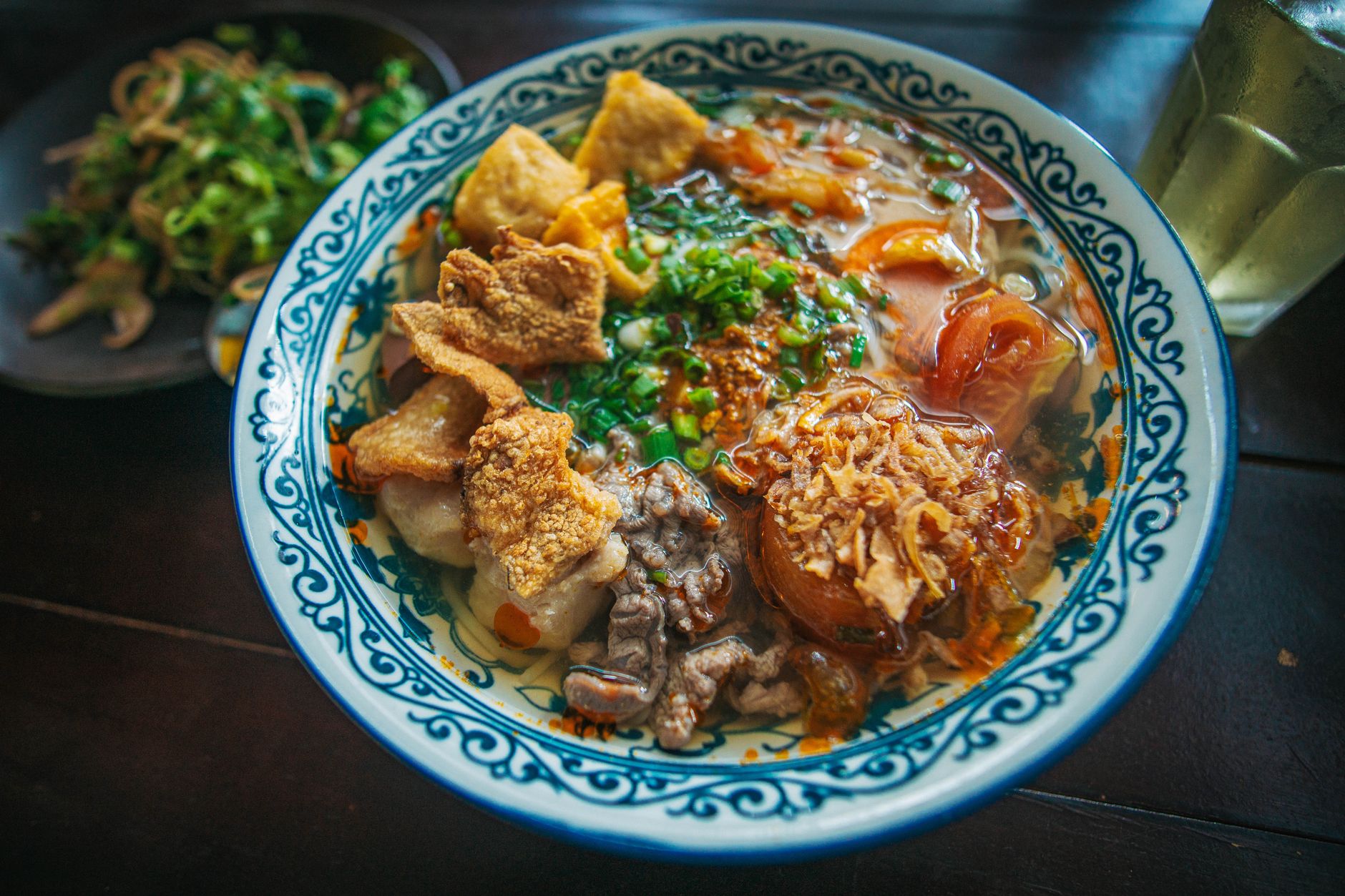
Beyond the well-known snacks, Da Lat does interesting things with hot pot. "Lau ga la e" — chicken hot pot with "la e" (a pungent local herb that grows only at elevation) — is served at clusters of restaurants on Ngo Quyen Street in Ward 6, roughly 4 km north of the center. A pot for two runs 180,000–250,000 VND. The herb has a slightly medicinal, anise-adjacent flavor that does not exist in lowland Vietnamese cooking. If you have eaten your share of "pho" and "bun cha" and "com tam" in other cities, this is a flavor that is genuinely specific to the highlands.
The Dalat flower market (Cho Hoa) operates year-round and sells both cut flowers and potted plants. The garment market caters to the climate — cool-weather clothing, sweaters, rain jackets. Neither is a culinary destination, but both reflect how the climate shapes daily life here. Da Lat Market (Cho Da Lat), the main central market on Nguyen Thi Minh Khai, is where you find dried artichoke tea (tra atiso, about 60,000 VND per bag), strawberry jam, and avocado — the market's ground floor is produce, upper levels are clothing and souvenirs.

Image by Diane Selwyn (talk) via Wikimedia Commons (CC BY-SA)
History Without the Heat
After the French withdrew, Da Lat became the summer retreat for South Vietnamese civilians and military. The Vietnamese National Military Academy was established here in 1954, taking over a former French academy building. The city remained relatively untouched by major conflict — a rarity in wartime Vietnam.
Post-reunification, Da Lat reinvented itself as a romantic tourist destination, alongside Hoi An and Da Nang. It also developed into a scientific research hub, home to Dalat University, Yersin University, and teacher-training colleges. The city feels less like a tourist trap than a place people actually live and work.

Image by Diane Selwyn (talk) via Wikimedia Commons (CC BY-SA)
The Coffee Culture Up Here
Vietnam is the world's second-largest coffee producer, and a huge portion of that robusta grows in the Central Highlands — Lam Dong Province specifically. Da Lat is not just a place that serves coffee; it is surrounded by the farms that grow it. Drive 15–20 km outside the city in any direction and you hit plantation country.
In town, the cafe scene reflects this. You can find third-wave roasters doing single-origin arabica alongside traditional "ca phe" stalls where an older woman brews through a "phin" (metal drip filter) into a glass of condensed milk. Both cost almost nothing — a "phin" coffee at a street-side shop runs 15,000–25,000 VND, a specialty pour-over at a newer roaster like La Viet Coffee (1 Hoang Dieu) goes for 45,000–65,000 VND. La Viet operates its own farm and roastery and offers tours.
If you have had "egg coffee" in Hanoi, you will find versions here too, though it is not a local tradition — it migrated south with tourism. What is local is weasel coffee ("ca phe chon"), which Da Lat vendors sell aggressively. Be skeptical. Most of what is marketed as weasel coffee is artificially processed, not genuinely civet-digested, and the ethical concerns around caged civets are real. A bag of "authentic" weasel coffee sold at the market for 500,000 VND is almost certainly not what it claims to be. Spend that money on a good bag of locally roasted arabica instead.
For a genuinely different experience, try "ca phe muoi" — salt coffee. It originated in Hue but has become popular in Da Lat cafes. The salt cuts the bitterness of robusta and adds an unexpected savory edge. Most cafes in the Hoa Binh Square area serve it for 25,000–35,000 VND.
Getting There and Around
Da Lat Station connects the city via the Da Lat–Thap Cham railway line — a scenic, winding route. The railway currently operates a short tourist segment (about 7 km) from Da Lat Station to Trai Mat village, running several times daily; tickets cost around 150,000 VND round trip and the ride takes about 30 minutes each way. It is worth doing once for the views and the Art Deco station building itself. Direct buses run daily from Ho Chi Minh City (about 6 hours, 200,000–280,000 VND on operators like Thanh Buoi or Phuong Trang). The new Dau Giay–Dalat Expressway has cut travel time significantly. Lien Khuong Airport (DLI) is 30 km south of the city center and receives domestic flights from Hanoi, Da Nang, and Saigon — flight time from Saigon is about 50 minutes and fares start around 800,000 VND if booked early on VietJet or Bamboo.
Once in Da Lat, rent a motorbike or hire a taxi. The winding mountain roads are part of the appeal. Motorbike rental runs 100,000–150,000 VND per day for an automatic scooter. If you are not confident on mountain switchbacks, grab taxis or use the Grab app — a ride across town rarely exceeds 50,000 VND.
What to Do
Walk the old quarter. Visit Xuan Huong Lake for the morning mist. Hike in the pine forests. Visit the flower gardens and markets. Eat "banh trang nuong" at sunrise. Sit in a cafe with a hot coffee and watch the temperature actually change throughout the day. In winter (December–February), the city cools further, and flowering plants peak. In summer (May–October), it rains hard and frequently, but the mist is thicker.
Beyond the center, Langbiang Mountain (about 12 km north) offers a half-day hike to 2,167 meters with views across the plateau — jeep rides to the summit cost around 300,000 VND per person, or you can hike the trail in roughly two hours. Datanla Waterfall (about 10 km south on Highway 20) is a popular stop with a roller coaster that descends to the falls; entry is 70,000 VND. The Valley of Love (Thung Lung Tinh Yeu, 5 km north) is kitschy — swan boats, heart-shaped hedges — but it is a window into Vietnamese domestic tourism culture and how local couples use Da Lat as a romantic backdrop. Entry is 100,000 VND.
Da Lat is not a beach town or a chaos-packed metropolis. It's a place to slow down, eat local produce, breathe cooler air, and understand why the French thought it worth building an entire resort here.
What Surprises Foreigners
The cold catches people off guard. If you pack for Vietnam assuming tropical heat, Da Lat will humble you. Nighttime temperatures in December and January can drop to 8–10°C, and guesthouses do not always have heating. Bring a fleece or buy a cheap jacket at Da Lat Market for 150,000–200,000 VND.
It rains differently. Da Lat's rainy season (May–October) does not produce the all-day downpours of the Mekong Delta. Instead, you get intense afternoon storms that last one to two hours and then clear. Mornings are usually dry. Plan outdoor activities before noon during these months.
The domestic tourist crowd is massive. Da Lat is one of the most popular internal destinations in Vietnam. On weekends and holidays (especially Tet and the September 2 national day), the city floods with Vietnamese visitors. Hotel prices spike 50–100%, traffic on Nguyen Thi Minh Khai clogs up, and the night market becomes shoulder-to-shoulder. Visit midweek if you can.
Prices are higher than lowland Vietnam. A bowl of "pho" in Saigon costs 40,000–50,000 VND; in Da Lat it is often 55,000–70,000 VND. Accommodation runs 15–30% more than equivalent quality in Ninh Binh or Hue. The produce is cheap, but restaurants and hotels price for the domestic tourist market, which is willing to pay for the climate.
Street food timing is different. Because mornings are cool, the street food rhythm shifts. "Banh mi" carts appear later. "Bun rieu" and noodle soup stalls do brisk business at breakfast because people want something hot. Evening snack culture — grilled corn, "banh trang nuong," roasted sweet potatoes — is bigger here than in lowland cities because the cool air makes standing around a charcoal grill pleasant rather than punishing.
Quick Reference
- Elevation: 1,500 m / 4,900 ft
- Average temperature: 14–23°C year-round; coldest Dec–Feb (lows of 8–10°C at night)
- Best weather: November–March (dry, cool, flowers in bloom)
- Rainy season: May–October (afternoon storms, mornings usually clear)
- From Saigon: ~300 km; 6 hours by bus (200,000–280,000 VND), 50 min by flight
- From Da Nang: ~660 km; domestic flight via DLI airport or 12+ hours overland
- Airport: Lien Khuong (DLI), 30 km south of city center
- Motorbike rental: 100,000–150,000 VND/day
- Budget meal: 40,000–70,000 VND
- Mid-range hotel: 400,000–800,000 VND/night
- Currency: Vietnamese Dong (VND); ATMs widely available downtown
- Useful phrase: "Cho toi mot phin ca phe sua" — Give me one drip coffee with milk
Final Note
Da Lat earns its reputation not through spectacle but through contrast. After the heat of Saigon, the chaos of Hanoi, or the coastal humidity of Da Nang, arriving here feels like the country quietly handed you a different climate. The food is shaped by elevation, the pace is shaped by temperature, and the whole city exists because someone a century ago decided this plateau was worth building on. They were right.
Last updated · May 29, 2026 · independently researched, never sponsored.