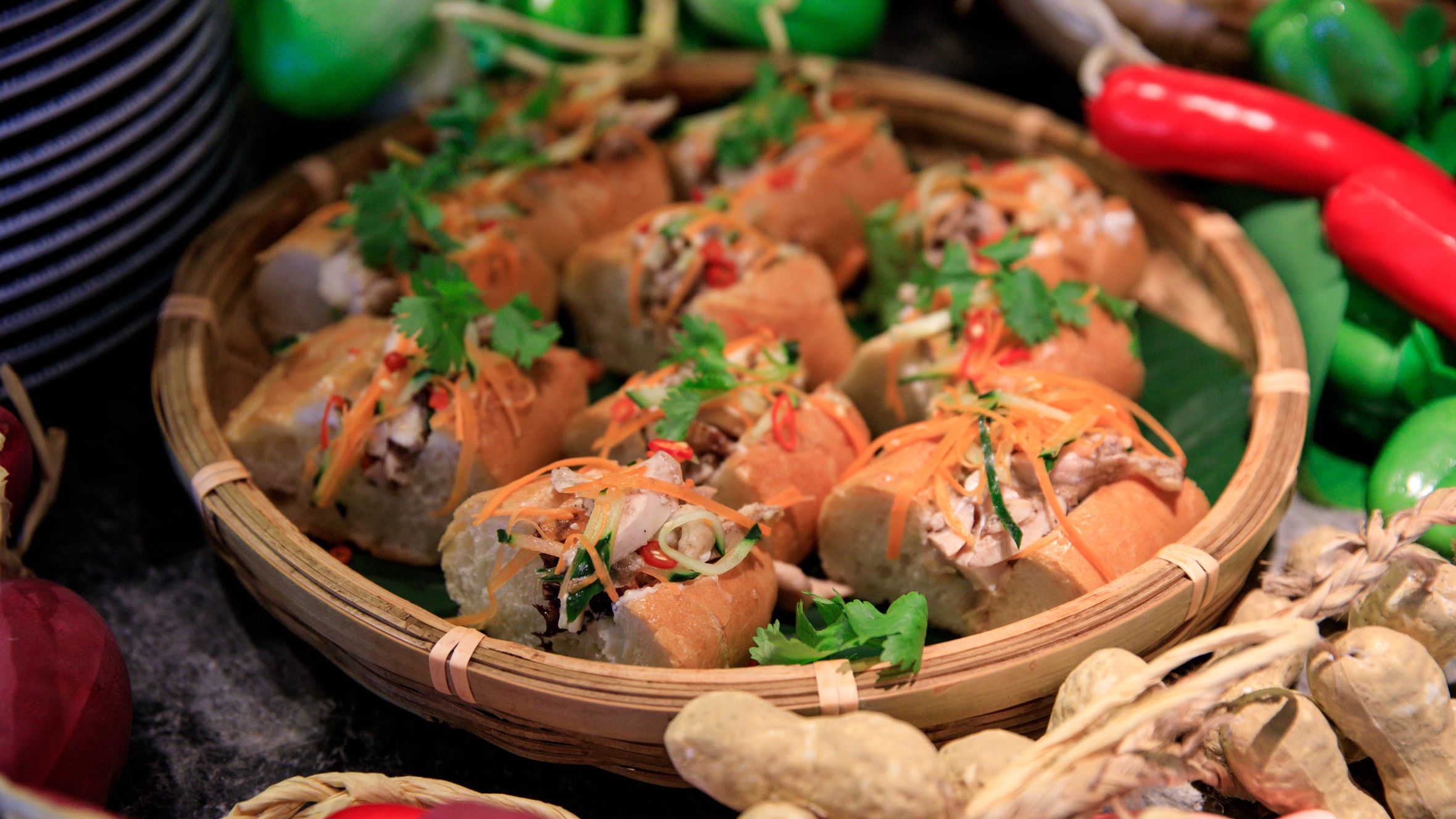
Hanoi has a lot of opinions about food, but few are held as firmly as those about "bun cha" — who makes it best, whether gas grills are an abomination, and exactly how sweet the broth should be. This is the full story, from the charcoal smoke up.
What Bun Cha Actually Is
At its core, bun cha (분짜 / 烤肉米粉 / ブンチャー) is grilled pork served in a shallow bowl of "nuoc cham" — a warm, diluted fish-sauce broth spiked with vinegar, sugar, garlic, and chili — alongside a plate of fresh "bun" (round rice vermicelli) and a heap of raw herbs: perilla, mint, lettuce, and sometimes sliced green banana or papaya. The pork comes two ways: flat patties made from ground pork mixed with shallots and fish sauce ("cha vien"), and fatty sliced pork belly or shoulder that has been marinated and grilled separately ("cha mieng"). You get both in one order. The whole thing costs somewhere between 40,000 and 70,000 VND depending on the shop and the neighborhood.
It is a lunch dish. Almost exclusively. Bun cha shops in Hanoi (하노이 / 河内 / ハノイ) open around 11 a.m. and are frequently sold out or closed by 2 p.m. If you show up at 7 p.m. looking for it, you will be redirected to "pho".
The History Behind the Smoke
Bun cha is documented in Vietnamese writing as far back as the 1950s — the writer Vu Bang described the smell of grilling pork drifting through Hanoi's Old Quarter streets in his essay collection Thuong Nho Muoi Hai (1960), treating it as an already-established ritual rather than a novelty. The dish is almost certainly older than that, tied to the street-food economy of the Old Quarter's 36 guild streets, where vendors needed something fast, cheap, and portable for workers eating between shifts.
The cooking method — charcoal grill, pork fat dripping and flaring — is inseparable from the original appeal. The char on the outside of the patty, the slight smokiness that gets into the broth when you dip the hot meat straight from the grill: that's the point. Gas grills replicate the caramelization but not the smoke, which is why old-school Hanoians tend to be vocal about the difference. In practice, you can still find charcoal grills in many traditional shops, usually on the sidewalk out front where the smoke can escape — and where it functions as advertising.

Photo by Tuan Vy on Pexels
The Dipping Bowl: Getting the Ratios Right
The nuoc cham broth is where most outside-Hanoi versions fall apart. It should be warm, not hot. It should taste balanced — lightly sweet, lightly sour, with enough fish sauce to give it depth but not enough to make it salty. The ratio of water to fish sauce to vinegar to sugar is something every bun cha cook guards carefully, and it varies enough between shops that regulars have strong preferences.
What it should NOT be is the cold, sharp, concentrated dipping sauce you get with "goi cuon" in the south. This is a broth you eat from, spooning meat and noodles into it between bites. Garlic slices and thin-cut green chili float in it. Some shops add a few pieces of pickled green papaya or carrot on the side to cut through the fat.
When you order, the server will bring the broth bowl, the plate of bun, and the herb plate separately. You are expected to assemble it yourself. Pull a small bundle of noodles from the plate, drop it into the broth, add some herbs, and eat. There is no single correct ratio. Adjust as you go.

Photo by RDNE Stock project on Pexels
Regional Spinoffs and What Changed
Bun cha is a Hanoi dish. It spread south during and after the 20th century, but it mutated along the way — mostly in ways that reflect southern taste preferences for sweetness.
In Saigon, bun cha is available but often sweeter in the broth, sometimes served with a broader herb plate that includes Thai basil and bean sprouts, and occasionally with "cha gio
Last updated · May 26, 2026 · independently researched, never sponsored.



