
A clay pot of "ca kho lang Vu Dai" takes between eight and twelve hours over a low charcoal fire to finish. That commitment to time is the whole point — and it's exactly what separates Vu Dai's version from every shortcut imitation sold elsewhere.
What Is Ca Kho Lang Vu Dai
"Ca kho" is Vietnam (베트남 / 越南 / ベトナム)'s broad category of fish braised low and slow in a savory-sweet reduction — soy sauce, fish sauce, sugar, galangal, fresh chili. "Lang" simply means village. The full name, ca kho lang Vu Dai, pins the dish to its origin: Vu Dai village, now part of Ly Nhan district in Ha Nam province, roughly 50 km south of Hanoi along Highway 1.
The fish used is "ca tram" — common carp, typically weighing 3–5 kg per fish, farmed in the Red River delta's pond systems. The carp is cut into thick cross-sections, layered in an unglazed terracotta pot with galangal slices at the base to prevent sticking, then covered with the braising liquid and left over smoldering longan-wood charcoal. Longan wood burns slow and even, and villagers will tell you the wood choice is non-negotiable — it contributes a faint aromatic quality that charcoal briquettes simply can't replicate.
By hour four, the liquid has begun to reduce. By hour eight, the collagen from the fish bones has broken down completely, the bones themselves have softened to the point where you eat them whole, and the sauce has thickened into a dark, glossy lacquer. The fat from the carp belly renders into the pot, creating a self-basting environment. What comes out has a texture closer to confit than to anything you'd call "boiled fish."
The History Behind the Dish
Vu Dai village's braising tradition is old enough that its exact origin is genuinely unclear. The most credible local account connects it to the necessity of preservation: in a pre-refrigeration delta economy, a fish braised this thoroughly — and this low in residual moisture — could last unrefrigerated through the cold northern winter for several days. That practical logic aligned with Tet, when households needed food that could be prepared days in advance.
The dish entered wider Vietnamese cultural consciousness partly through Nam Cao, the early 20th-century realist writer who was born in Vu Dai and set several of his best-known short stories there. The village and its food carried his literary reputation outward. By the 1990s, ca kho lang Vu Dai had begun appearing in Hanoi (하노이 / 河内 / ハノイ) markets as a specialist Tet item. By the 2010s, it was shipping nationwide.
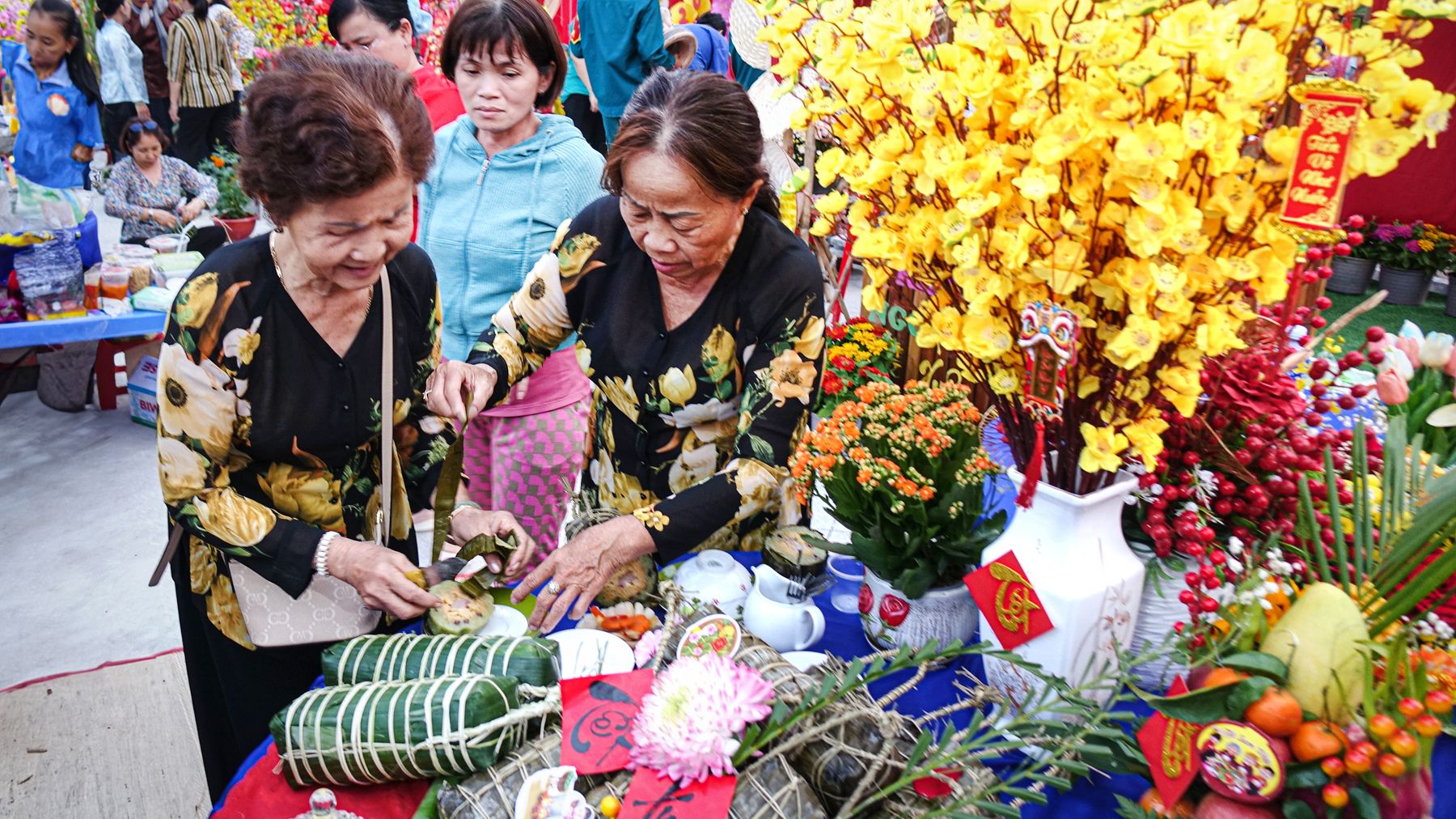
Photo by Vyvan BÙI VY VÂN on Pexels
Variants Worth Knowing
Not all ca kho lang Vu Dai pots are identical. There are three meaningful variations:
The Tet Pot (Standard)
The classic version uses ca tram, galangal, soy sauce, fish sauce, and caramel made from raw sugar. The sauce goes in at ratio — typically 1 part fish sauce to 2 parts caramel — and the pot fires for 8–12 hours. This is the one you order for Tet / 越南春节 / テト).
The Pepper-Heavy Northern Variant
Some Vu Dai producers load the pot with cracked black pepper and dried chili, pushing the heat forward. This version is popular with buyers from Hanoi who want the dish to function as a standalone rice condiment — the spice cuts the richness.
The Shortened Restaurant Version
Any ca kho you encounter in a restaurant that's ready in under two hours is almost certainly pressure-cooked or par-cooked before service. The bones will be harder, the sauce thinner, the fat not fully rendered. It's edible. It's not Vu Dai.
How to Order the Real Thing
If you want an authentic pot, you're ordering ahead, not walking up cold.
During Tet season (typically from early January through the week before the Lunar New Year), Vu Dai village producers sell through three channels: direct farm-gate purchase, Hanoi market intermediaries, and online via Shopee and Tiki. Prices for a 2 kg pot — enough for a family of four across two or three meals — run 350,000–500,000 VND from village producers, and 500,000–700,000 VND from Hanoi resellers. Price spikes to 800,000–1,000,000 VND in the final week before Tet are standard.
When ordering online, look for sellers who specify: ca tram (not tilapia or catfish substitutes), longan wood fire, and minimum 8-hour cook time. Producers who list cook time under their product description are usually the ones who actually care about it.
For the trip-planning version of this — driving down to Ly Nhan district, finding the village kitchens, and watching the pots — Ha Nam is a manageable day trip from Hanoi, or can be combined with a visit to Ninh Binh to the south.

Photo by FOX ^.ᆽ.^= ∫ on Pexels
Where to Try the Canonical Version
Three spots worth your time, at different levels of effort:
At the source — Vu Dai village, Ly Nhan, Ha Nam. Drive 50 km south of Hanoi, follow signs into Ly Nhan district. During Tet season, the smell of charcoal fires gives the village away before the signs do. Buying direct from a producer — 350,000–450,000 VND for a 2 kg pot — gets you the freshest product and the context that makes the dish make sense.
Hang Be Market, Hanoi Old Quarter. Several vendors near the covered section of Hang Be sell authentic Vu Dai pots during Tet, sourced from Ha Nam producers. Expect 500,000–600,000 VND and bring your own bag — the clay pots are heavier than they look.
Quan Com Vu Dai, 70 Nguyen Du, Hanoi. This small sit-down spot serves ca kho lang year-round, cooked in-house using the village method. A single-portion clay pot with steamed rice runs about 85,000–110,000 VND. It's the most accessible entry point if you're in Hanoi and want to taste the dish before committing to ordering a whole pot.
Practical Notes
Ca kho lang Vu Dai ships reasonably well — the low moisture content and preserved salt level keep a sealed pot good for 3–4 days at room temperature in cool weather, or a week refrigerated. If you're buying to take home, ask the seller to re-seal with plastic wrap over the clay lid. The dish reheats best in the original pot over a low flame, with a tablespoon of water added to loosen the sauce.
Last updated · May 29, 2026 · independently researched, never sponsored.



