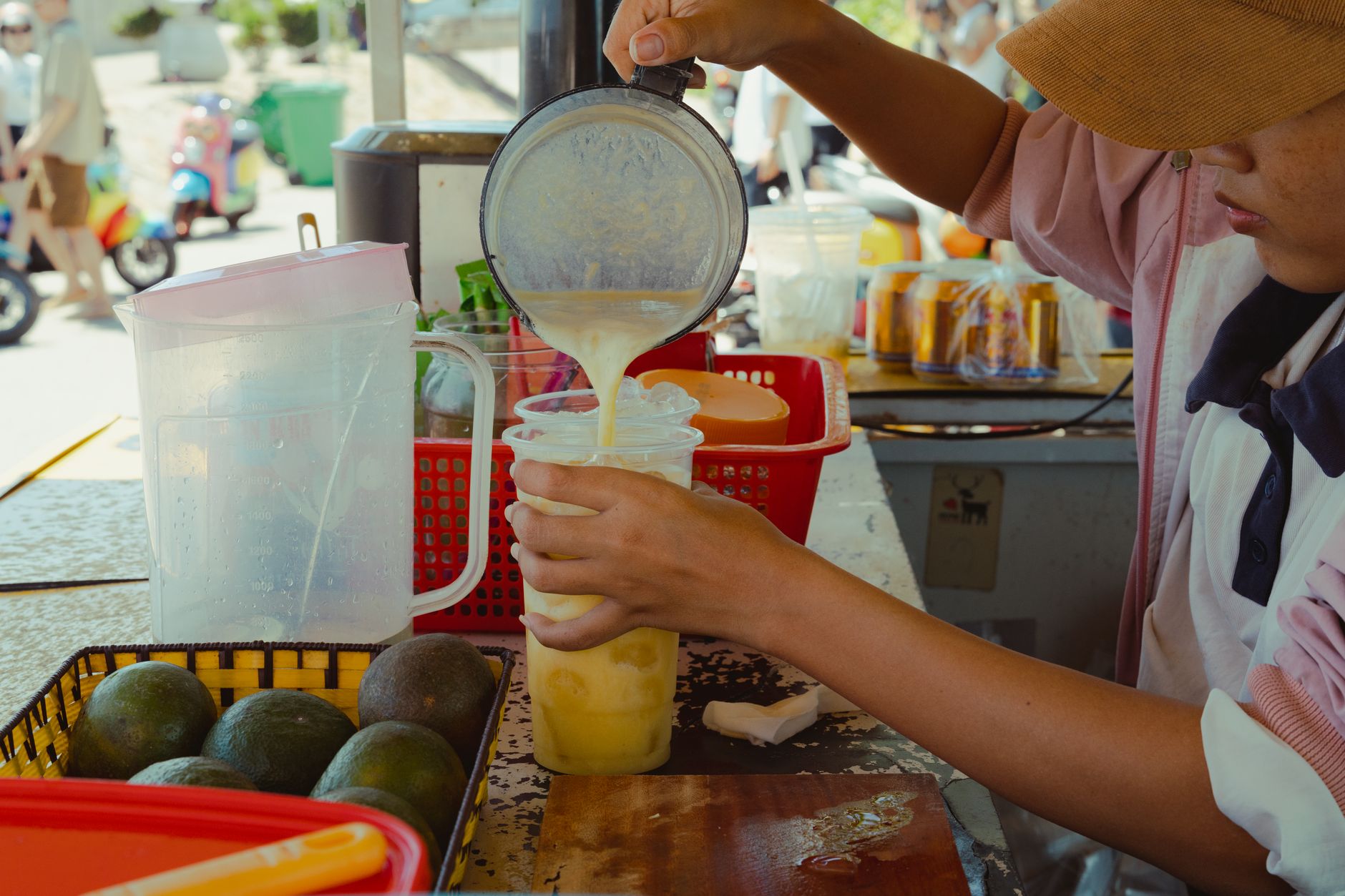
Tet is Vietnam (베트남 / 越南 / ベトナム)'s most food-intensive holiday, and on the surface it looks like a carnivore's paradise — roasted pork, braised fish, pork-stuffed "banh chung". But spend a few days eating through the New Year season and you'll find a parallel plant-based tradition running quietly alongside it, rooted in Buddhist practice and a remarkably well-stocked vegetable pantry.
Why Tet and Vegetarianism Overlap
Vietnam's Buddhist calendar designates the 1st and 15th of each lunar month as days of vegetarian eating — called "an chay" — and the New Year period amplifies this significantly. Many families, especially in the north and central regions, eat entirely plant-based on the first morning of Tet (뗏 (베트남 설날) / 越南春节 / テト) as a way of starting the year clean. Temple visits on Mung 1 (the first day) are packed, and the food stalls and canteens clustered outside pagodas pivot almost entirely to vegetarian menus for the holiday week.
This isn't a fringe practice. Walk past any large pagoda — say, Tran Quoc Pagoda in Hanoi on Tet morning — and you'll find full kitchens running, dishing out "xoi" (sticky rice), braised tofu, and stewed mushrooms to hundreds of visitors. The food is free or donation-based at some temples, sold cheaply at others.
What's Actually on the Vegan Tet Table
The plant-based spread during Tet pulls from a deep well of Vietnamese ingredients, and a lot of it is genuinely good rather than compromise cooking.
Banh chung chay is the vegetarian version of the iconic square sticky rice cake. The pork-and-mung-bean filling gets swapped for seasoned mung bean paste, mushroom, and sometimes wood ear fungus. It tastes almost identical to the original — the banana leaf wrapping and slow-boiling process do most of the flavor work. Markets in Hanoi's Ba Dinh and Dong Da districts sell them in the week before Tet; look for the stacks of green-wrapped parcels near Dong Xuan Market.
Dua hanh — pickled shallots — appear on every Tet table regardless of diet. Sharp, crunchy, slightly sweet, they're eaten alongside almost everything and happen to be completely vegan.
Cu kieu (pickled rakkyo bulbs) is the southern equivalent. Same idea: fermented alliums to cut through rich food. Saigon households put these out with braised dishes through the entire Tet week.
Nam kho — braised mushrooms in caramel sauce — is one of those dishes that barely needs meat to justify its existence. King oyster or shiitake mushrooms cooked down with soy sauce, palm sugar, and pepper until lacquered and sticky. It's the "thit kho" (braised pork) of the an chay table and genuinely satisfying.
Tofu appears in at least three or four forms: fried and braised with tomato, stuffed and steamed, or simmered in a light mushroom broth. Vietnam produces excellent firm tofu — the kind that holds its shape and takes on flavor rather than dissolving — and Tet cooking shows it off.
For the soup course, "canh kho qua" (bitter melon soup) is a southern Tet staple eaten for its symbolic meaning — the bitterness of the old year giving way to sweetness. The vegetarian version uses tofu-stuffed melon in a light vegetable stock and is almost universally plant-based already.
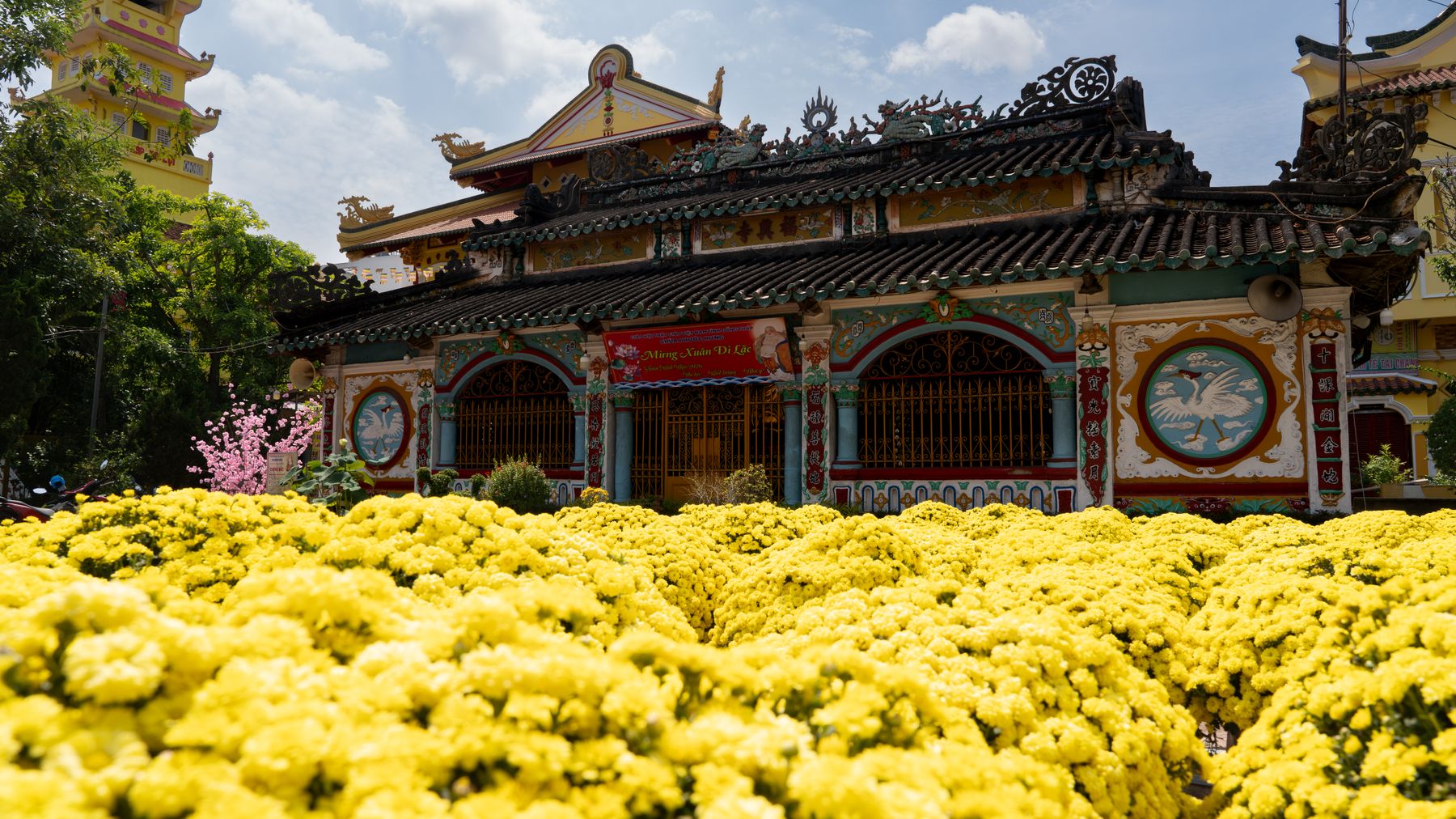
Photo by Felix Schickel on Pexels
Finding Vegan Menus During Tet
The holiday creates an odd window: some restaurants close entirely for three to five days while others — particularly those catering to temple-goers — stay open specifically to serve an chay food.
In Hanoi, the streets around Tran Quoc Pagoda and Phu Tay Ho temple fill with small vendors selling vegetarian rice plates and soups from around 6am on Tet morning. Expect to pay 20,000–40,000 VND for a full plate. Established vegetarian restaurants like Nang Tam (Hang Bun street) typically stay open through Tet and run a holiday menu.
In Hue, the vegetarian tradition runs deepest — the city has more Buddhist institutions per capita than anywhere in Vietnam, and an chay restaurants operate year-round at a serious level. During Tet, the area near Thien Mu Pagoda has street-side kitchens running through the first three days of the holiday. Hue-style vegetarian food is worth a separate visit entirely: the city produces remarkable plant-based versions of "bun bo Hue" broth and "banh canh" that could fool a careful eater.
In Saigon, the District 3 and District 5 vegetarian restaurant clusters (particularly around the pagodas on Nguyen Trai) are reliable through Tet. Larger buffet-style an chay restaurants often extend hours during the holiday because demand spikes.
Navigating the Language Gap
The phrase you need is: "Toi an chay" — "I eat vegetarian." Most Vietnamese cooks understand this immediately and will either confirm the dish is safe or redirect you. The complication at Tet is fish sauce, which sneaks into marinades and dipping sauces even on dishes that are otherwise plant-based. If you're strict, follow up with: "Khong co nuoc mam?" (No fish sauce?). At dedicated an chay restaurants this is a non-issue — they use soy-based sauce substitutes as standard.
Also watch for pork lard, which is sometimes used to fry "xoi" or season rice dishes even outside of obvious meat contexts.

Photo by Vietnam Tri Duong Photographer on Pexels
The Buddhist Angle Is Worth Leaning Into
If you're traveling during Tet and want to eat well as a vegan, the most reliable strategy is to follow the temple circuit. Visiting Bai Dinh in Ninh Binh or any of Hue's major pagodas during the first days of Tet puts you in exactly the right place — the food surrounding these spaces during the New Year is overwhelmingly plant-based, freshly cooked, and cheap. It's also just a good way to experience Tet as it's actually practiced rather than as it gets packaged for tourists.
Practical Notes
Tet falls in late January or February depending on the lunar calendar — confirm the exact dates before planning. Many restaurants close for three to seven days around Mung 1, so stock up on snacks and identify your nearest an chay spot before the holiday starts. Supermarkets like Co.op Mart and Vinmart typically stay open through Tet and carry packaged vegetarian Tet foods including pre-wrapped banh chung chay.
Last updated · May 29, 2026 · independently researched, never sponsored.