Can Tho gets all the attention for floating markets, but if you want the same river commerce without the convoy of tourist speedboats circling you, Cai Be in Tien Giang province is the more useful option. It's smaller, genuinely working, and close enough to My Tho that you don't need to build your whole itinerary around it.
Cai Be vs Cai Rang: Why Smaller Works Better
Cai Rang, outside Can Tho (껀터 / 芹苴 / カントー), is the one plastered across every travel magazine — which also means it runs two parallel economies by now: actual wholesale trade and a performance of itself for day-trippers. Cai Be has fewer vendors and far fewer tour groups. The boats trading pineapples, watermelons, and river fish are there because that's how the supply chain works, not because photographers are watching.
The tradeoff is scale. Cai Rang is genuinely impressive at peak hours. Cai Be is quieter, sometimes sparse by 9am. That's a feature if you want to move at your own pace; it's a limitation if you're expecting wall-to-wall boats.
Getting There: Boat from My Tho
My Tho is the most practical base. It's 70km from Saigon — about 1.5 hours by bus from Mien Tay bus station, or a straightforward drive if you've rented a motorbike or car. From the My Tho riverfront, Cai Be is roughly 20km upstream by boat, following a route through the waterways of the Tien River.
Joint boat hire from My Tho waterfront runs around 300,000–450,000 VND per hour depending on the boat size and your negotiation. A 3-hour round trip covering the market and one or two workshops lands at roughly 900,000–1,200,000 VND for the whole boat. Split across two or three people, that's reasonable. Solo travelers are better off joining a small group tour out of My Tho, which the guesthouses there can arrange for 350,000–500,000 VND per person.
Alternatively, base in Cai Be town itself. It's a small place, but a few guesthouses operate near the waterfront and let you walk straight to the dock at dawn.
The 5–8am Window
The market runs every morning, but activity peaks between 5am and 8am. Arrive after 8am and much of the wholesale trading is already done — you'll find a few boats, but the density drops quickly.
Leaving My Tho by 4:30–5am gets you there in time for the busiest hour. If you're staying in Cai Be town, a 5am departure on foot to the dock is enough.
Bring a light jacket. The river at that hour is noticeably cooler than midday, and the boat ride has wind.

Photo by Flint Huynh on Pexels
What You'll Actually See
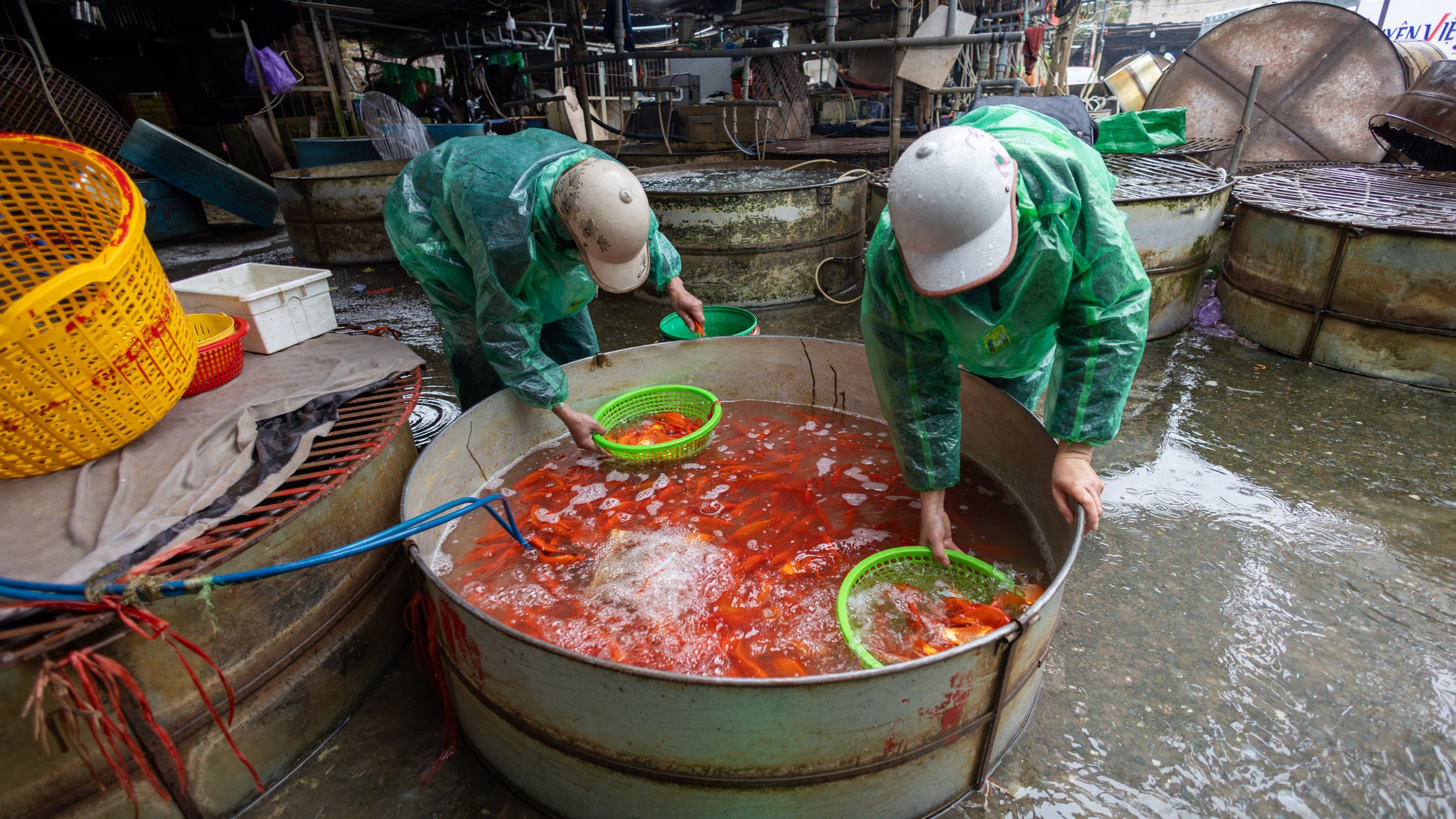
The goods at Cai Be skew toward what the Mekong Delta (메콩 델타 / 湄公河三角洲 / メコンデルタ) actually produces: pineapples from the surrounding farms, watermelons, mangoes in season, live fish, and sacks of rice. Vendors signal what they're selling by hanging a sample from a pole at the front of the boat — a practice called "coc beo" that functions as a floating signboard. Buyers from smaller boats pull alongside and deal directly.
The surrounding canals feed into the main market area, and some of the most interesting movement happens on those narrower waterways rather than the open river. A good boat driver will take you through them without being asked.
Workshops Along the Route
The stretch of canal between Cai Be and the surrounding villages hosts several cottage-industry workshops that have been operating for decades. Most boat tours include stops at one or two of them — confirm before you leave the dock, since some drivers treat this as optional.
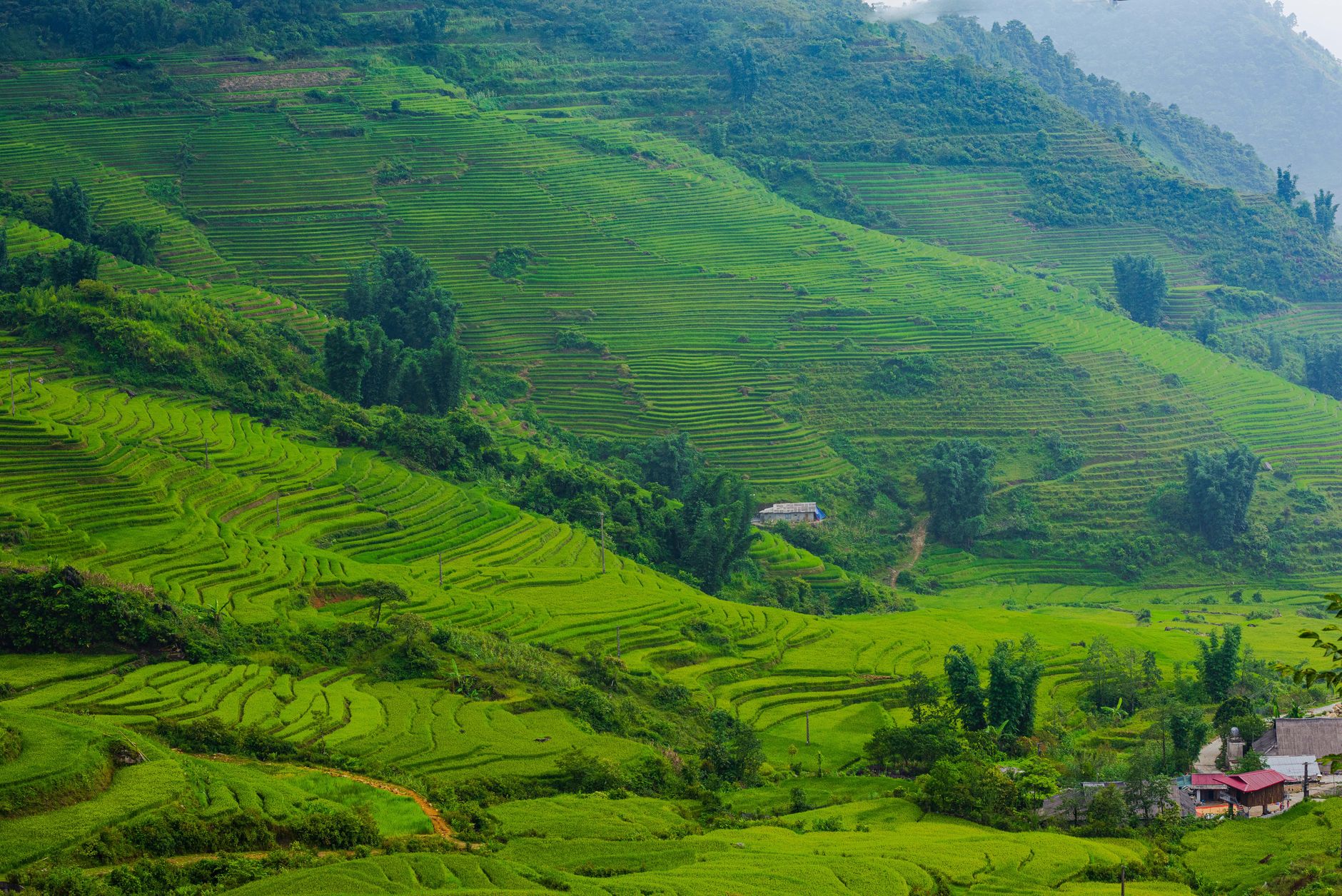
The "banh trang" (rice paper) workshops are worth 20 minutes: sheets poured thin over a drum and sun-dried on bamboo frames in rows outside the house. Coconut candy production is a separate stop — the process is more industrial than it looks, involving hours of cooking down coconut milk with malt sugar, then rolling and wrapping by hand. Pineapple farms line the canal banks; some allow short walks through the fields.
None of these require a hard-sell performance to be interesting. The family operations in Cai Be tend to be lower-key than similar stops near Can Tho, where the workshop-to-souvenir-shop pipeline is more developed.

Photo by Quang Nguyen Vinh on Pexels
What It Costs in Total
For two people based in My Tho:
- Bus from Saigon to My Tho: 80,000–100,000 VND per person
- Boat hire (shared): 450,000–600,000 VND per person for a 3-hour tour
- Breakfast on the water or at the dock: 40,000–70,000 VND
Solo travelers joining a group tour from My Tho should budget 400,000–500,000 VND all-in for the boat portion. Accommodation in My Tho runs 250,000–450,000 VND per night for a clean guesthouse room.
Where to Base
My Tho is the most flexible base — better transport links to Saigon, more food options, and the floating market is a half-day from here without needing to commit a full day. After the market, you can be back in Saigon by afternoon.
Cai Be town makes sense if you want to spend more time in the delta and pair the market with a bicycle ride through the surrounding orchards and villages. The pace is slower and the infrastructure thinner, but that's the point.
Can Tho works as a base too, though it adds distance and makes the early morning logistics harder unless you're renting a motorbike for the ride.
Practical Notes
Bring cash — 500,000 VND notes are fine, exact change helps when buying directly from vendors. The market runs year-round; water levels are higher July through November, which makes canal navigation easier and the landscape greener. Negotiate boat prices firmly but without drama — the going rate is well-known and drivers won't budge far below it.
Last updated · May 29, 2026 · independently researched, never sponsored.