Can Tho does not ease you into the morning. By 6am the sidewalks along Hai Ba Trung and the lanes behind Ninh Kieu wharf already have people squatting over bowls, plastic bags of iced coffee sweating in the heat. If you sleep through it, you miss the best version of the city.
The First Bowl: Hu Tieu
In the Mekong Delta (메콩 델타 / 湄公河三角洲 / メコンデルタ), the default breakfast soup is not pho — it is "hu tieu". Can Tho's version tends to be lighter than the Saigon style, with a pork-and-dried-squid broth that is clean and slightly sweet. You get it with thin rice noodles, a few slices of pork, a quail egg if you are lucky, and a plate of raw bean sprouts and herbs to add yourself.
Look for carts on Phan Dinh Phung street or the small lanes off Nguyen Trai. A bowl runs 25,000–35,000 VND. The sign to look for is just "Hu Tieu (후띠우 / 粿条 / フーティウ)" hand-painted on a board, sometimes with "Nam Vang" (Phnom Penh style) underneath, which means the broth is darker and richer — also worth trying.
If you want something with a bit more fire, some stalls also do "bun rieu" — a crab-paste tomato broth that is tangy and deeply savory. Less common at this hour, but you find it if you walk far enough.
Banh Mi and the Cart Circuit
Can Tho has a solid "banh mi" scene that operates almost entirely from carts. The ones parked near Tay Do market open before 6am and move fast. The standard filling here is pate, head cheese, a smear of butter, pickled daikon and carrot, cucumber, and a few slices of chili. Some carts add a fried egg on request.
Price is 15,000–25,000 VND. It is fast food in the best sense — bought, wrapped in paper, and eaten walking or on the back of a parked motorbike.
Sticky Rice: "Xoi" Options
"Xoi" is underrated as a breakfast and locals eat it more than tourists notice. In Can Tho you will find vendors with stacked aluminum trays — sticky rice in yellow (cooked with turmeric), purple (from gac fruit or food coloring), or plain white. The toppings are what matter: fried shallots, mung bean paste, shredded coconut, or a generous scoop of "cha lua" (pork roll).
A portion wrapped in a banana leaf costs 10,000–20,000 VND. Markets are the best place to find this — Xuan Khanh market on the south side of the city runs a good xoi section that is operational from 5:30am.

Photo by Trần Phan Phạm Lê on Pexels
Banh Canh and the Heavier Option
For people who want something substantial, "banh canh" — thick tapioca noodles in a rich pork or crab broth — shows up at a handful of fixed stalls rather than carts. The noodles have a slightly gummy texture that polarizes people, but the broth is always deeply seasoned. A bowl is 30,000–40,000 VND.
The area around Cai Khe canal has a few reliable banh canh spots that have been operating for years. It is a ten-minute ride from the riverside, but worth the detour if soup is what you want and you have already had hu tieu twice.
Coffee: The Non-Negotiable
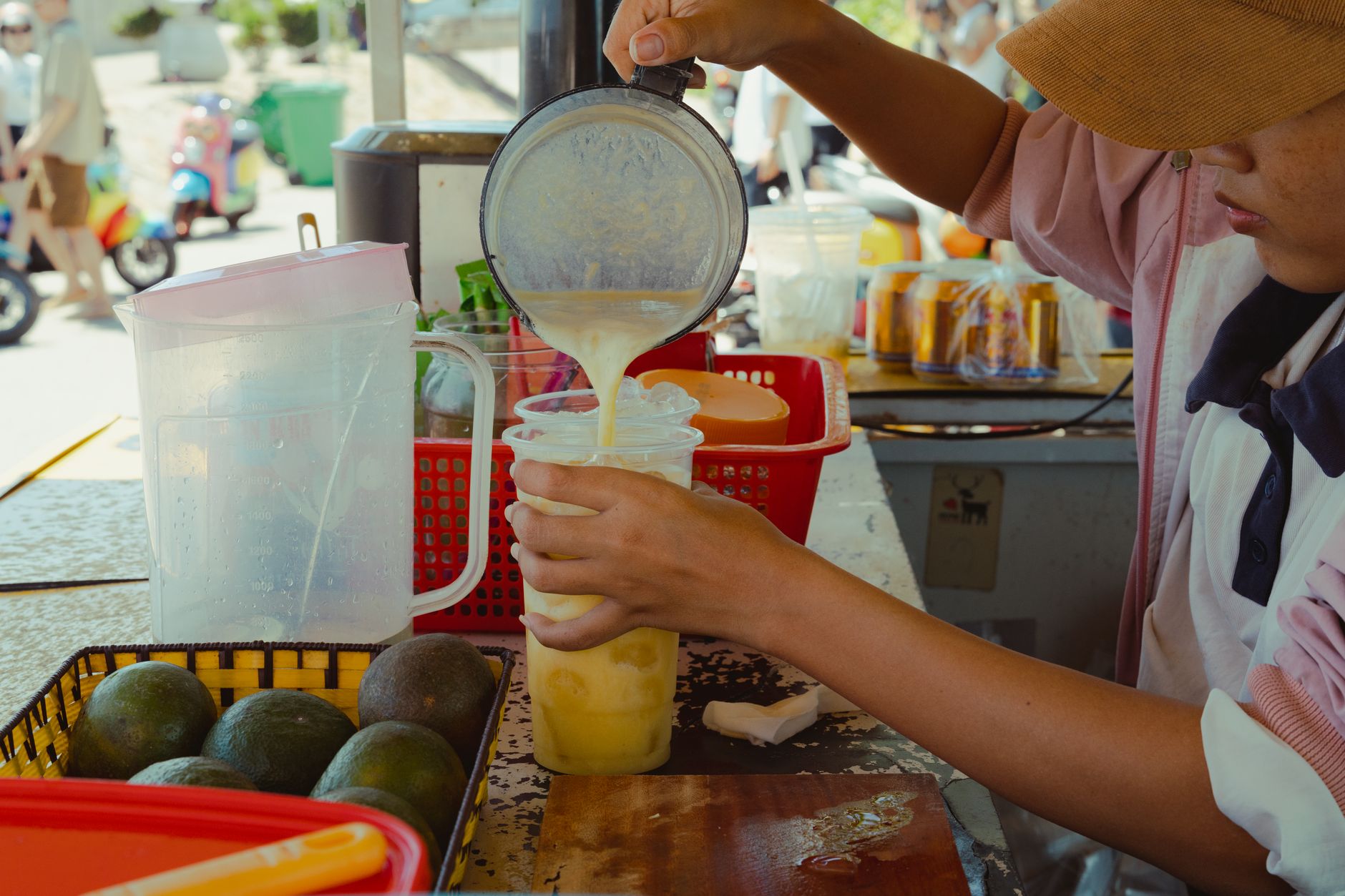
Can Tho's coffee culture runs on "ca phe sua da" — iced coffee with sweetened condensed milk dripped through a small metal filter into a glass already full of ice. The ratio matters more than the brand. At good spots, the coffee is strong enough that the ice barely dilutes it.
The older coffee shops along Ngo Quyen and near the night market area operate from 5am. These are not Instagram cafes — they are dark, fan-cooled rooms with plastic chairs and regulars who sit with the same cup for an hour. A ca phe sua da is 15,000–20,000 VND. Vietnamese coffee served this way is not something you rush.
If you want a quieter spot with river views, a few small cafes along Ninh Kieu promenade open early, though they cater slightly more to tourists and charge accordingly — closer to 30,000–40,000 VND.

Photo by Vietnam Tri Duong Photographer on Pexels
How to Eat a Can Tho Morning
The practical approach is to start at the riverside around 6am and work outward into the side streets. Ninh Kieu wharf gives you orientation — boats are already moving, vendors are set up along the embankment — but the better food is one or two streets back.
No single street has everything. Can Tho's breakfast scene is distributed across neighborhoods, which is partly why it rewards walking rather than going directly to a known spot. Follow people who look like they are on their way to work, not tourists following a map.
If you are staying near the center, a reasonable loop: xoi or banh mi from a cart first, then hu tieu when you find a stall with a queue, then coffee somewhere you can sit down. That covers two hours and costs under 80,000 VND total.
Practical Notes
Most breakfast stalls in Can Tho operate from roughly 5:30am to 9am, after which they pack up or switch menus. Cash only everywhere at this hour — carry small bills. A few words of Vietnamese help ("mot to" means one bowl), but pointing at what the person next to you ordered works fine too.
Last updated · May 29, 2026 · independently researched, never sponsored.