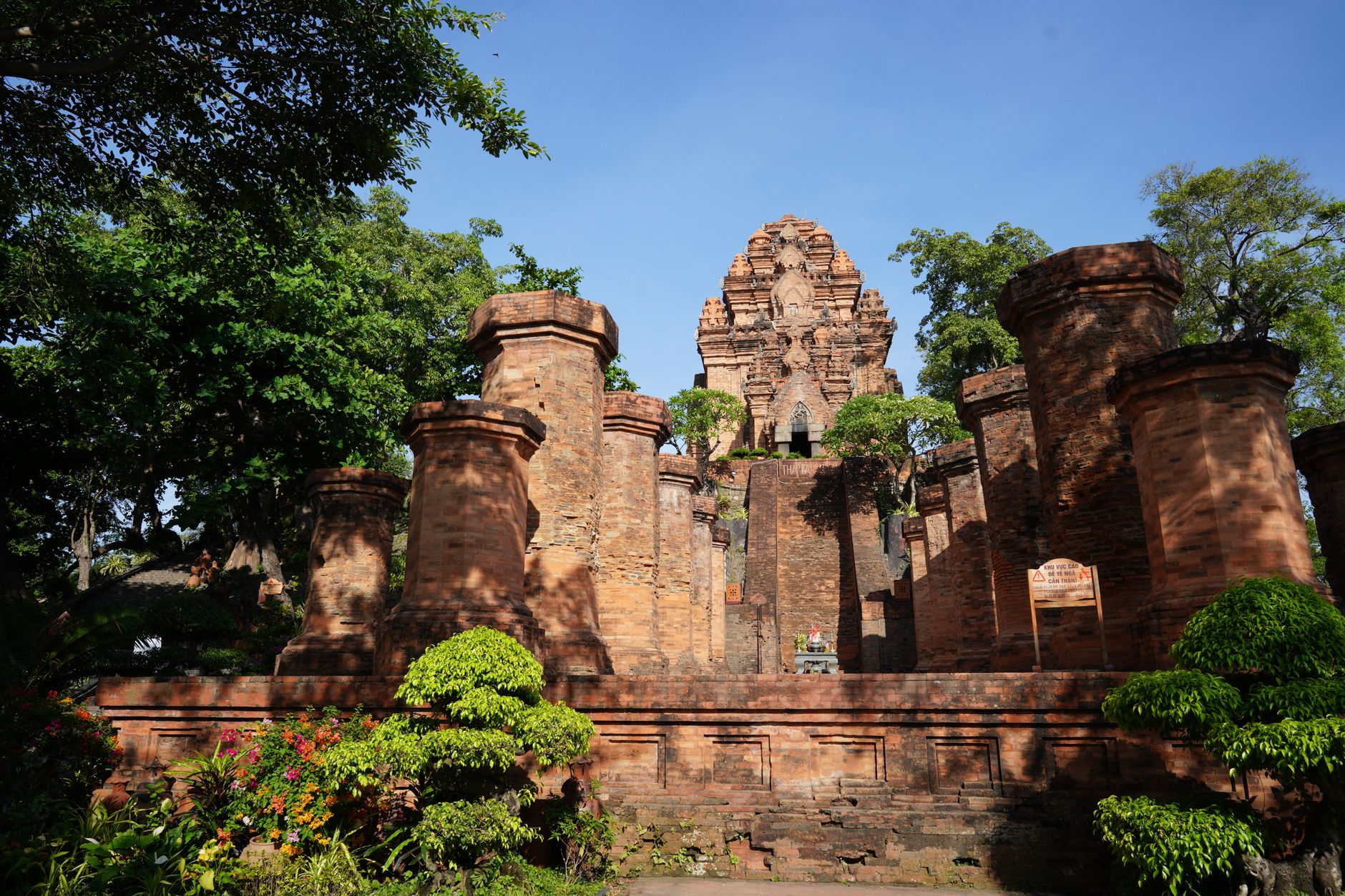
Nha Trang (냐짱 / 芽庄 / ニャチャン)'s reputation is built on beaches and diving, but the city has a genuine late-night food culture that most visitors never find because they stay too close to the Tran Phu seafront. Once the sun goes down and the tour groups retreat to their hotels, a different Nha Trang opens up — smoky, loud, cheap, and worth every minute.
The Grilling Streets: Where the Smoke Is
The stretch of Nguyen Thi Minh Khai and the alleys branching off Phan Boi Chau are ground zero for after-dark grilling. From around 7pm onwards, plastic stools appear on footpaths and the charcoal smells start pulling people in. The main draw is "oc" — snails and shellfish grilled or steamed in a dozen different preparations.
Order "oc huong" (tiger snails) grilled with salt and chili, "oc mo" (apple snails) steamed with lemongrass, or "so huyet" (blood cockles) flash-cooked and eaten with a dipping sauce that's heavy on lime and chili. A full spread for two people — four or five dishes, two cold beers — runs somewhere between 150,000 and 280,000 VND depending on which spot you land at and whether they clock your accent.
The local trick: walk two or three stalls deep before sitting down. The ones right on the corner tend to be slightly pricier and quicker to switch to tourist pricing. Mid-block spots with Viet-language chalkboard menus are your anchor.
Cho Dam Night Extension
"Cho Dam" (Dam Market) is Nha Trang's central wet market and it runs a daytime operation selling everything from dried seafood to motorcycle parts. But the surrounding streets — particularly Nguyen Hong Son — host a loose cluster of food stalls that stay active until 11pm or midnight.
This is a better spot for cooked noodle dishes than pure grilling. Look for "bun sua" — jellyfish noodle soup, a dish that's genuinely local to the Khanh Hoa coast and almost impossible to find outside the region. It's a light, slightly oceanic broth with thin rice noodles and strips of jellyfish that have a pleasant crunch. Bowls run 35,000 to 50,000 VND. Some stalls add "cha ca" fish cake on top; take it if offered.
There's also usually a "banh mi" cart operating near the market's north entrance from about 9pm onwards — grilled pork, pate, the standard build, around 20,000 to 25,000 VND. Nothing revolutionary, but it's good and it's fast.
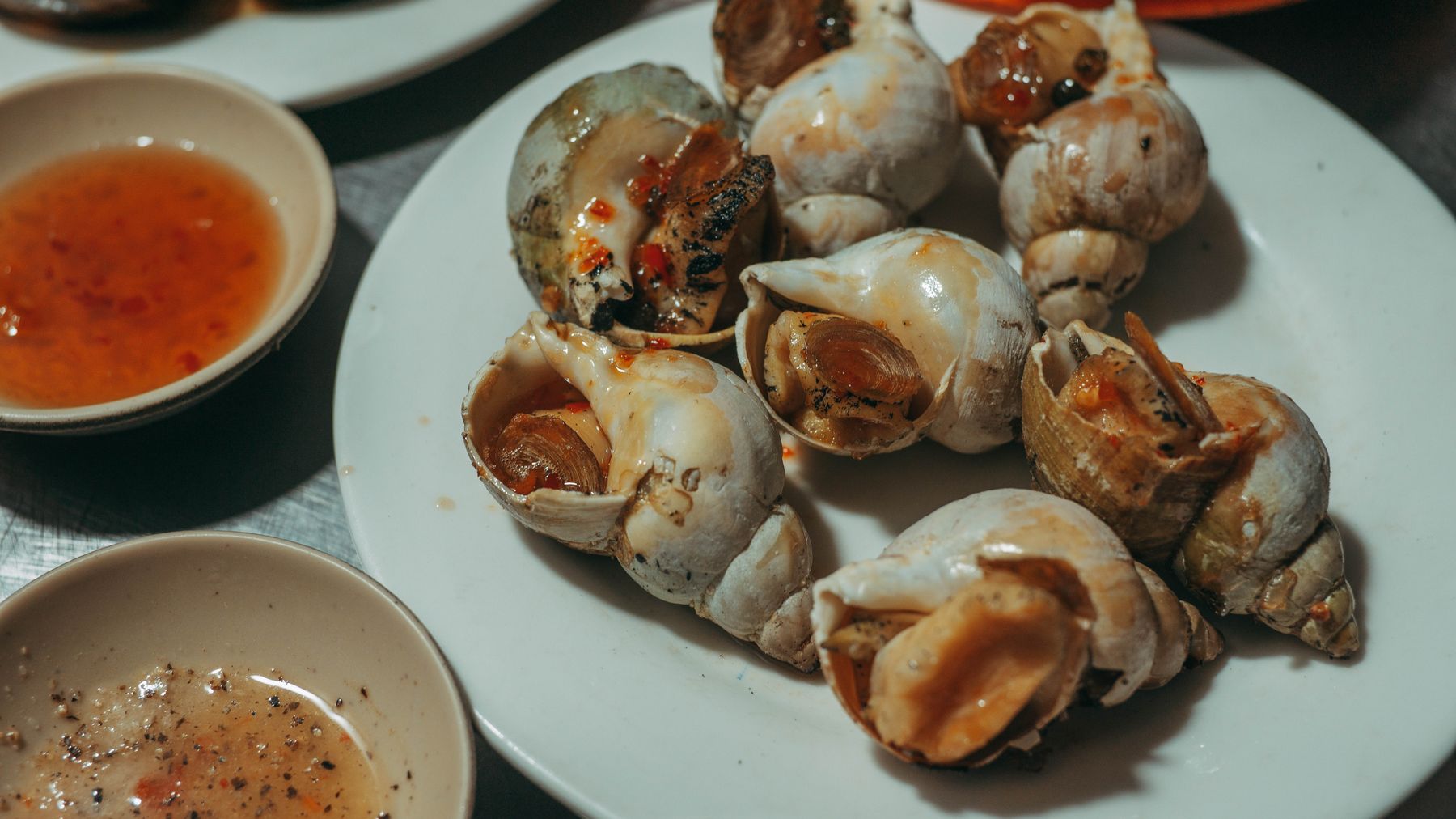
Photo by FOX ^.ᆽ.^= ∫ on Pexels
Dessert Carts and Sweet Soup Stalls
Nha Trang does "che" — Vietnamese sweet soups and desserts — seriously. The dessert cart culture here is more active than in many coastal cities, probably because the heat makes people want cold sweet things at 10pm.
The area around Bach Dang Street, away from the direct beachfront restaurants, has a handful of permanent "che" stalls. "Che bap" (corn and coconut milk), "che dau xanh" (mung bean with coconut cream), and "thach" (grass jelly) are the reliable orders. Portions are served in cups or bowls over crushed ice and cost 15,000 to 25,000 VND.
For something more substantial, find the roving dessert carts near the 2-9 Park on Tran Phu. They operate a loose circuit from about 8pm and are easy to spot — two-wheeled glass-case carts lit with LED strips. "Banh cuon" rolls sometimes appear here too, though that's more a northern thing finding its way south.
Where the Tourist Route Ends
The Tran Phu beachfront strip between Yersin and Hung Vuong is where most visitors eat — the seafood restaurants here are fine but they're priced for people who haven't figured out the exchange rate yet. A grilled fish that costs 120,000 VND on Nguyen Thi Minh Khai will cost you 280,000 VND on the beachfront with no meaningful difference in quality.
"Xom Luoi" — a fishing neighborhood about 2km north of the main tourist center — has a low-key cluster of seafood shacks that locals use. Getting there by xe om (motorbike taxi) costs around 30,000 VND from the center. The eating there is better value and the atmosphere is zero percent performative.

Photo by Nguyễn Thị Thảo Hà (Ha Nguyen) on Pexels
Prices, Safety, and Practical Notes
Nha Trang's night food scene is generally safe. The areas mentioned above are busy, well-lit, and populated by families as much as by groups of young people. Bag-snatching exists in any Vietnamese city; keep your phone off the table and your bag on your lap rather than hanging it on your chair, particularly on Tran Phu.
Pricing: if a menu has no prices listed, ask before ordering — "bao nhieu?" will get you an answer. Most local stalls are honest about this. The places most likely to over-charge are the ones that have laminated English-language menus already out on the table before you've sat down.
Cash only at street stalls. Bring smaller denominations — 20,000 and 50,000 VND notes. Most stalls can't easily break a 500,000 VND note at 10pm.
The eating window is roughly 7pm to midnight, with peak hours from 8 to 10pm. After midnight, options thin out quickly outside of a few 24-hour pho spots near the hospital district on Yersin Street.
Practical Notes
Nha Trang's street food geography rewards a bit of wandering — the best spots are rarely the ones closest to the beach hotels. Budget 150,000 to 300,000 VND per person for a proper night out eating across multiple stalls, drinks included. A xe om or Grab bike is the easiest way to move between neighborhoods; the distances are short but the heat makes walking less appealing after the first 20 minutes.
Last updated · May 26, 2026 · independently researched, never sponsored.