Ca Mau sits at the bottom of Vietnam's map, where the Mekong Delta (메콩 델타 / 湄公河三角洲 / メコンデルタ) finally runs out of land and gives way to mangrove and mudflat. Its floating market — Cho Noi Ca Mau — doesn't pull tour buses the way Can Tho's Cai Rang does, and that's precisely why it's worth the trip.
What it is
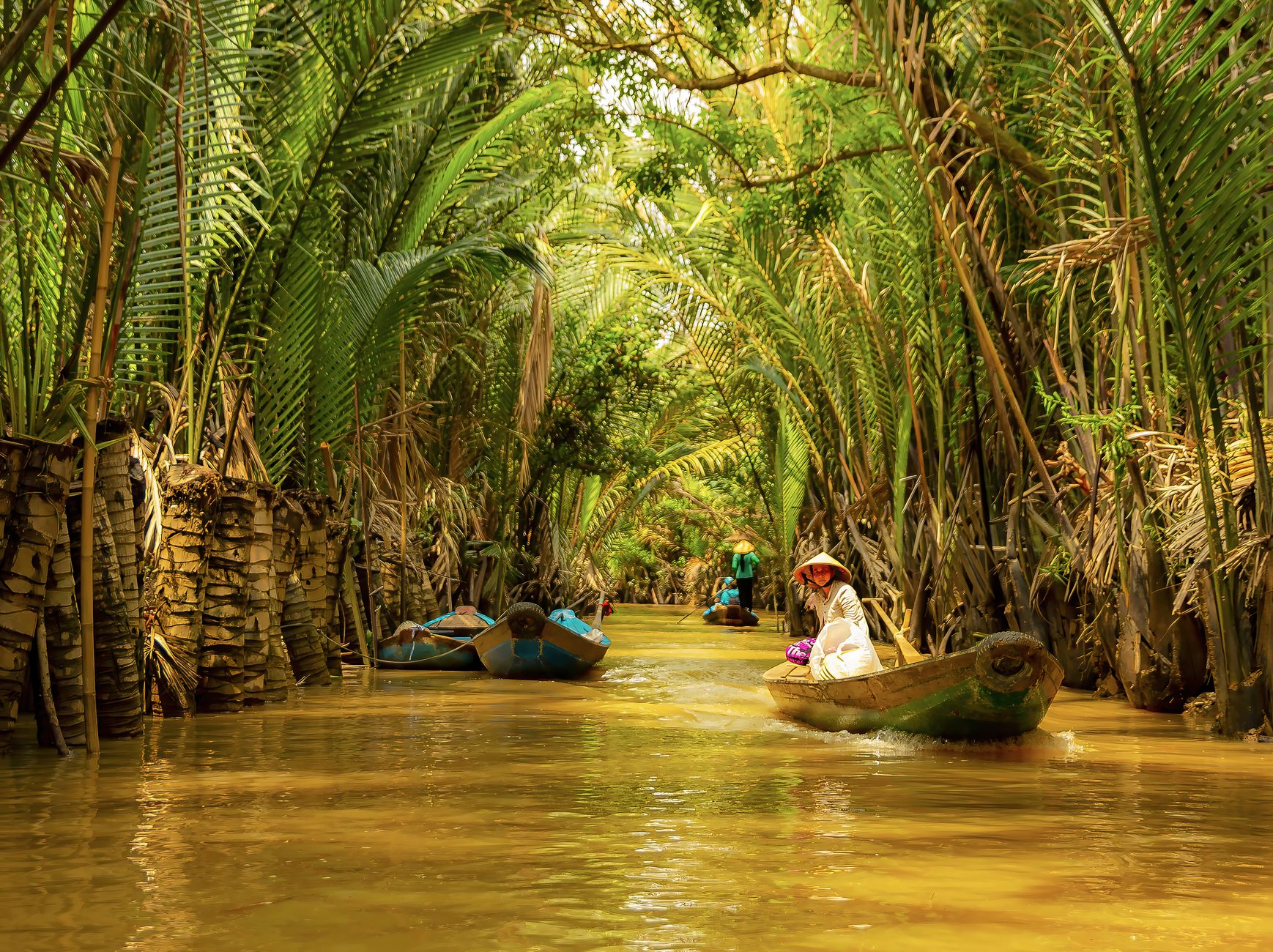
Cho Noi Ca Mau operates on the Ganh Hao River, roughly 2 km from the center of Ca Mau city. It's a trading market first, a tourist attraction second. Boats loaded with fruit, vegetables, dried fish, and household goods cluster along the river from before dawn, and most of the commerce wraps up by 8 or 9 AM.
The market has roots going back decades, when waterways were the only reliable transport through the deep delta. Even after roads improved, the habit stuck — partly because rivers remain the most practical way to move heavy cargo through Ca Mau's web of canals. Unlike Cai Rang in Can Tho (껀터 / 芹苴 / カントー), which has grown significantly around tourism, Cho Noi Ca Mau is still primarily a working market. You'll see more wholesale fish transactions than selfie sticks.
Why travelers go
Three reasons, mostly. First, it's authentic in a way that the bigger floating markets are slowly losing. Second, Ca Mau province is the endpoint of Vietnam — the literal tip of the country — and people passing through on their way to Dat Mui (Cape Ca Mau) often add the market to their morning. Third, it connects well with a broader Mekong Delta loop that might include Can Tho, Soc Trang, and Bac Lieu.
If you've already seen Cai Rang or Phong Dien, Cho Noi Ca Mau offers a contrast: smaller scale, fewer tourists, more of the raw commercial energy that makes floating markets interesting in the first place.
Best time to visit
The dry season — December through April — is the most comfortable window. Water levels are manageable, rain is rare in the mornings, and the market is active with seasonal fruit like "vu sua" (star apple) and mangoes.
Avoid September and October if you can. That's peak rainy season in the deep delta, and while the market still operates, heavy downpours can make early morning boat trips unpleasant. The river also runs muddier and faster.
Regardless of month, arrive before 6 AM. By 7:30, the busiest trading is done and boats start dispersing.
How to get there
From Can Tho — the nearest major hub — Ca Mau is about 180 km southwest, roughly 3.5 to 4 hours by bus. Phuong Trang (Futa) runs frequent departures from Can Tho's bus station; expect to pay around 120,000–150,000 VND for the one-way ticket.
From Saigon, it's a longer haul: roughly 350 km via the southern expressway and National Highway 1A, then Highway 63. Direct buses from Saigon to Ca Mau take 7–8 hours and cost about 200,000–280,000 VND depending on the operator. Flying isn't an option — Ca Mau's airport handles limited domestic routes and schedules shift frequently.
Once in Ca Mau city, getting to the floating market means hiring a boat. Most guesthouses can arrange this. A small motorboat for 1–2 hours runs about 200,000–350,000 VND total, depending on your negotiation and whether the boat owner senses you're in a hurry. The pier at the Ganh Hao riverside is the standard departure point.

Photo by Vũ Nguyễn on Pexels
What to do
Watch the wholesale trading up close
The core experience. Boats pull alongside each other, goods get weighed and transferred, and prices get haggled — all on the water. Each boat hangs its product from a tall pole (called a "cay beo") so buyers can spot what's for sale from a distance. Dried shrimp, coconuts, bananas, and river fish are the staples.
Buy fruit directly from a boat
Your boat driver can pull alongside a fruit seller. Mangoes, rambutans, and dragon fruit are common and cheap — a kilo of rambutan might cost 15,000–25,000 VND. Eating fresh fruit on the river at 6 AM while the market buzzes around you is one of those small, good things.
Eat breakfast on the water
A few boats sell "hu tieu" — the southern-style rice noodle soup that's a Mekong Delta staple. They cook on the boat, ladling broth from a pot balanced over a gas burner. A bowl runs about 20,000–30,000 VND. It's simple, pork-based, and exactly what you want at that hour.
Continue to the mangrove forest
If you're already on the water, many boat operators offer an extended trip into Ca Mau's mangrove system — U Minh Ha or the coastal mangroves near Dat Mui. This is a separate half-day trip, but combining a market morning with an afternoon in the mangroves makes a solid full day.
Visit the riverside morning market on land
Back onshore, the streets near the Ganh Hao pier have a regular wet market that peaks between 6 and 8 AM. Dried fish, shrimp paste, and fermented "mam" products are Ca Mau specialties. Worth a walk even if you don't buy.
Where to eat nearby
Ca Mau's signature dish is "banh canh" made with crab — specifically the local mud crab that the province is famous for. Banh Canh Cua stalls cluster around the city market area; a generous bowl costs 35,000–50,000 VND. The broth is thick, orange-tinted from crab fat, and genuinely rich.
Also look for "bun nuoc leo" — a fish-based noodle soup with a fermented fish broth, garnished with roasted pork and fresh herbs. It's a Khmer-influenced dish common across the deep delta. Stalls along Ly Bon Street serve reliable versions for around 30,000 VND.
Where to stay
Ca Mau city has a handful of decent hotels but nothing fancy. Budget guesthouses near the market area run 200,000–350,000 VND per night. Mid-range hotels like Anh Nguyet or Quoc Te are clean and air-conditioned for 400,000–700,000 VND. There are no international-brand hotels in town.
Book a room near the river if you can — it makes the pre-dawn boat departure much easier.

Photo by Alberto Capparelli on Pexels
Practical tips locals would tell you
- Bring cash. There are few ATMs near the river, and no one on a floating boat takes card.
- Wear a hat and sunscreen. Even at 6 AM, the delta sun reflects hard off the water.
- Negotiate boat price before boarding. Agree on duration and route, not just price. "Two hours, floating market and back" is clearer than "one trip."
- Mosquito repellent matters if you're extending into the mangroves. Ca Mau's insects are aggressive.
- Learn a few words. "Bao nhieu" (how much) and "Giam gia" (discount) go a long way at the market.
Common mistakes to avoid
Arriving after 8 AM is the biggest one — you'll find a quiet river and wonder what the fuss was about. Another: booking a tour from Saigon that tries to do Ca Mau as a day trip. It's too far. You need at least one night in town, ideally two if you also want to reach Dat Mui.
Don't skip the land market either. Some travelers spend an hour on the water and leave. The riverside streets are half the experience.
Practical notes
Cho Noi Ca Mau works best as part of a wider Mekong Delta loop — fly or bus to Can Tho, then work your way south through Soc Trang, Bac Lieu, and finally Ca Mau over three to four days. The floating market is a strong morning stop, but Ca Mau province as a whole — mangroves, the cape, the seafood — rewards travelers who give it more than a few hours.
Last updated · May 29, 2026 · independently researched, never sponsored.