What it is
Chua Long Doi Son sits on top of Doi Son hill in Duy Tien district, Ha Nam province — about 30 km north of Ninh Binh (닌빈 / 宁平 / ニンビン) city. The pagoda dates to 1054, built under King Ly Thai Tong during the Ly Dynasty, making it one of the oldest Buddhist sites in the Red River Delta. What remains today is a mix of original stone foundations, reconstructed temple halls, and a 13-story stupa that anchors the hilltop.
The site holds National Heritage status. Unlike the polished tourist circuits around Tam Coc or Bai Dinh, Long Doi Son gets almost exclusively Vietnamese pilgrims and history buffs. If you've already done the big-ticket Ninh Binh attractions and want something quieter with genuine historical weight, this is it.
Why travelers go
Three reasons, honestly:
-
The Ly Dynasty stonework. Carved stone pedestals, lotus-motif pillars, and weathered stele from the 11th century are still in situ. This isn't a recreation — you're looking at actual thousand-year-old craftsmanship.
-
The view. Doi Son hill is only about 80 meters high, but in flat-as-a-table Ha Nam, that's enough to see kilometers of rice paddies, the Day River curving south, and scattered limestone karsts on the horizon toward Ninh Binh.
-
The quiet. No ticket booths, no electric carts, no loudspeaker commentary. On weekdays you might share the hilltop with a handful of monks and a couple of incense-burning grandmothers.
Best time to visit
October to March — dry, cool, clear skies for the hilltop views. January and February overlap with Tet and the spring pilgrimage season, so expect more local visitors (still not crowded by tourist standards). The annual Long Doi Son festival falls on the 9th and 10th of the third lunar month (usually March or April), with processions, chanting, and folk performances — worth timing if you're interested in living Buddhist tradition rather than museum-piece religion.
Avoid June through August: the hill path gets slippery, humidity is punishing, and haze kills the view.
How to get there from Ninh Binh
From Ninh Binh city center, you're looking at roughly 30 km north on QL1A and then local roads — about 40 minutes by motorbike or car.
- Motorbike rental: 120,000–150,000 VND/day from most Ninh Binh guesthouses. Head north on QL1A toward Phu Ly, then turn east at Duy Tien. Google Maps has the pagoda pinned accurately.
- Grab car: Around 250,000–300,000 VND one way. Getting a return ride can be tricky since drivers are scarce in the area — arrange a round trip or have your driver wait.
- Local bus: Bus from Ninh Binh to Phu Ly (Ha Nam's capital), about 30,000 VND, then a xe om (motorbike taxi) the remaining 8 km to the pagoda for 40,000–50,000 VND. Functional but slow.

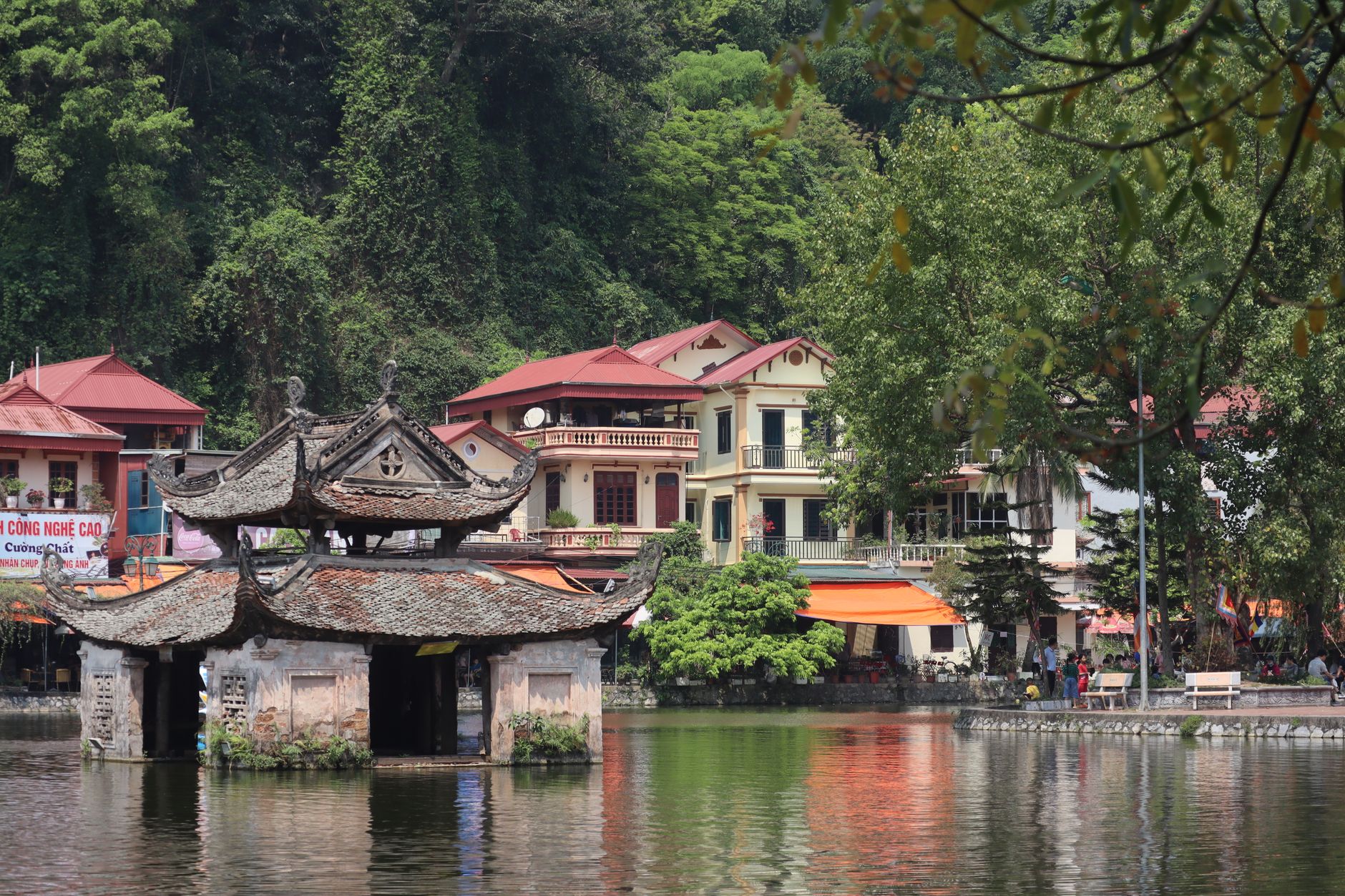
Photo by Maylight st on Pexels
What to do
Climb the 300-step stone staircase
The main approach is a stone stairway winding up through old-growth trees. It takes 15–20 minutes at a relaxed pace. The steps are uneven in places — this isn't Bai Dinh's manicured escalator experience — so wear shoes with grip.
Examine the Ly Dynasty stone carvings
At the summit, look for the original stone pedestals near the main hall's foundation. The lotus carvings and dragon motifs are distinctly 11th-century Ly style — rounder, less ornate than later Tran or Le dynasty work. A small on-site display has context in Vietnamese; Google Translate on the signboards works well enough.
Walk the 13-story stupa
The reconstructed stupa (completed in 2009) dominates the hilltop. You can circle its base and enter the lower level. The interior houses a bronze bell and Buddhist relics. Photography is fine outside; ask permission inside.
Wander the lower temple complex
Back at the hill's base, a cluster of prayer halls, a lotus pond, and monks' quarters spread across a shaded courtyard. This is where daily monastic life happens. Respectful visitors are welcome to sit, watch, or light incense (bundles available for 10,000 VND at the entrance).
Catch the rice paddy panorama
Bring your camera to the hilltop terrace on the east side. In harvest season (May–June and September–October), the paddies below turn gold. Even outside harvest, the geometry of the fields against the karst backdrop is genuinely photogenic.
Where to eat nearby
The immediate area around the pagoda is rural — no restaurant strip. Your best bet:
- Phu Ly town (8 km away): Try "bun cha" at any of the small shopfronts along Tran Hung Dao street. Ha Nam's version uses a slightly sweeter broth than Hanoi's. A bowl runs 35,000–45,000 VND.
- Roadside com binh dan: On the drive back toward Ninh Binh, pull over at any rice-and-dish shop for "[com tam](/posts/com-tam-saigon (사이공 / 西贡 / サイゴン)-broken-rice)" or whatever's in the glass case. Expect 30,000–50,000 VND for a full plate with meat, greens, and soup.
If you're heading back to Ninh Binh for dinner, the area around Van Giang street has reliable options for "bun rieu" and grilled goat — the local specialty.
Where to stay
Most travelers base in Ninh Binh city or Tam Coc and day-trip to Long Doi Son.
- Budget (Tam Coc area): 200,000–400,000 VND/night. Dozens of family-run homestays along the road to Tam Coc pier.
- Mid-range (Ninh Binh city): 500,000–900,000 VND/night. Hotels clustered around the train station area.
- Splurge (Trang An area): 1,500,000–3,000,000 VND/night. A few resorts with karst views west of town.
Staying in Phu Ly is possible but pointless for tourists — there's nothing else to anchor you there.

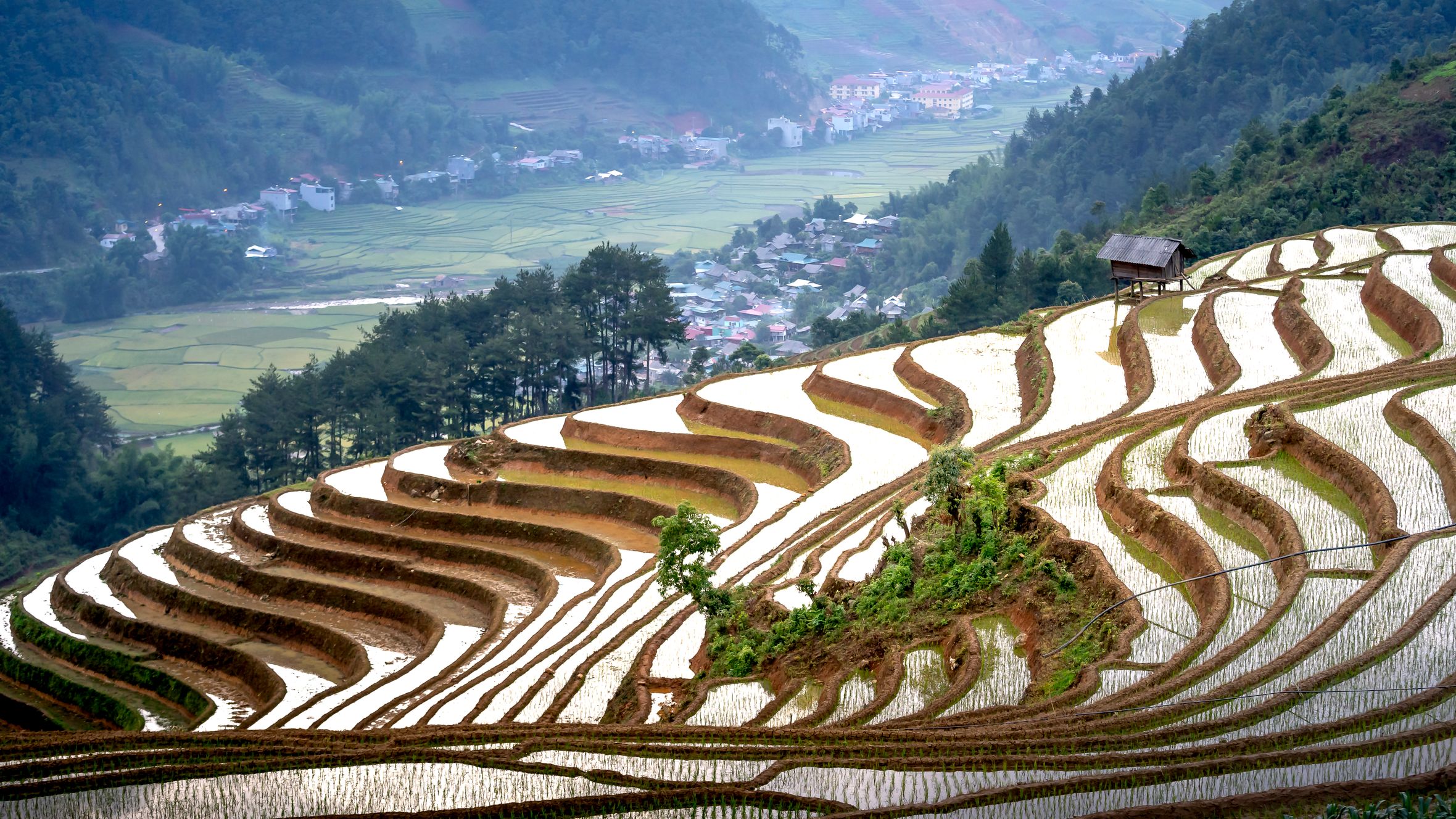
Photo by Son Tung Tran on Pexels
Practical tips locals would tell you
- Dress modestly. This is an active monastery, not a ruin. Cover shoulders and knees. You'll see signs at the base reminding visitors.
- Bring water. There's no shop on the hilltop. One bottle minimum for the climb.
- Go early. Before 8 AM, you'll have the staircase to yourself and the light is best for photos.
- Cash only. No ATMs near the pagoda. Bring small bills for incense, donations, and xe om drivers.
- Combine with Ninh Binh sights. Long Doi Son works as a half-day add-on before or after Tam Coc, Hoa Lu, or a boat ride. Don't make it your only stop — it's wonderful but compact.
Common mistakes to avoid
- Expecting Bai Dinh scale. This is a historic site, not a mega-complex. If you want grandeur, go to Bai Dinh. If you want atmosphere and history, come here.
- Wearing sandals for the climb. The stone steps get mossy and slick, especially in the morning dew. Sneakers or hiking sandals with straps.
- Arriving midday. No shade on the upper staircase. Between 11 AM and 2 PM in summer, it's brutal.
- Skipping the base complex. Many visitors rush up and down the hill without exploring the lower courtyards. The lotus pond and old banyan trees are worth 20 minutes.
Practical notes
No entrance fee as of 2024. The pagoda is open daily, roughly sunrise to sunset. Allow 2–3 hours total including the drive from Ninh Binh, the climb, and time to wander. Combine it with a morning at Tam Coc or an afternoon drive to Hoa Lu for a full day that covers both tourist-circuit highlights and something off the usual path.
Last updated · May 29, 2026 · independently researched, never sponsored.