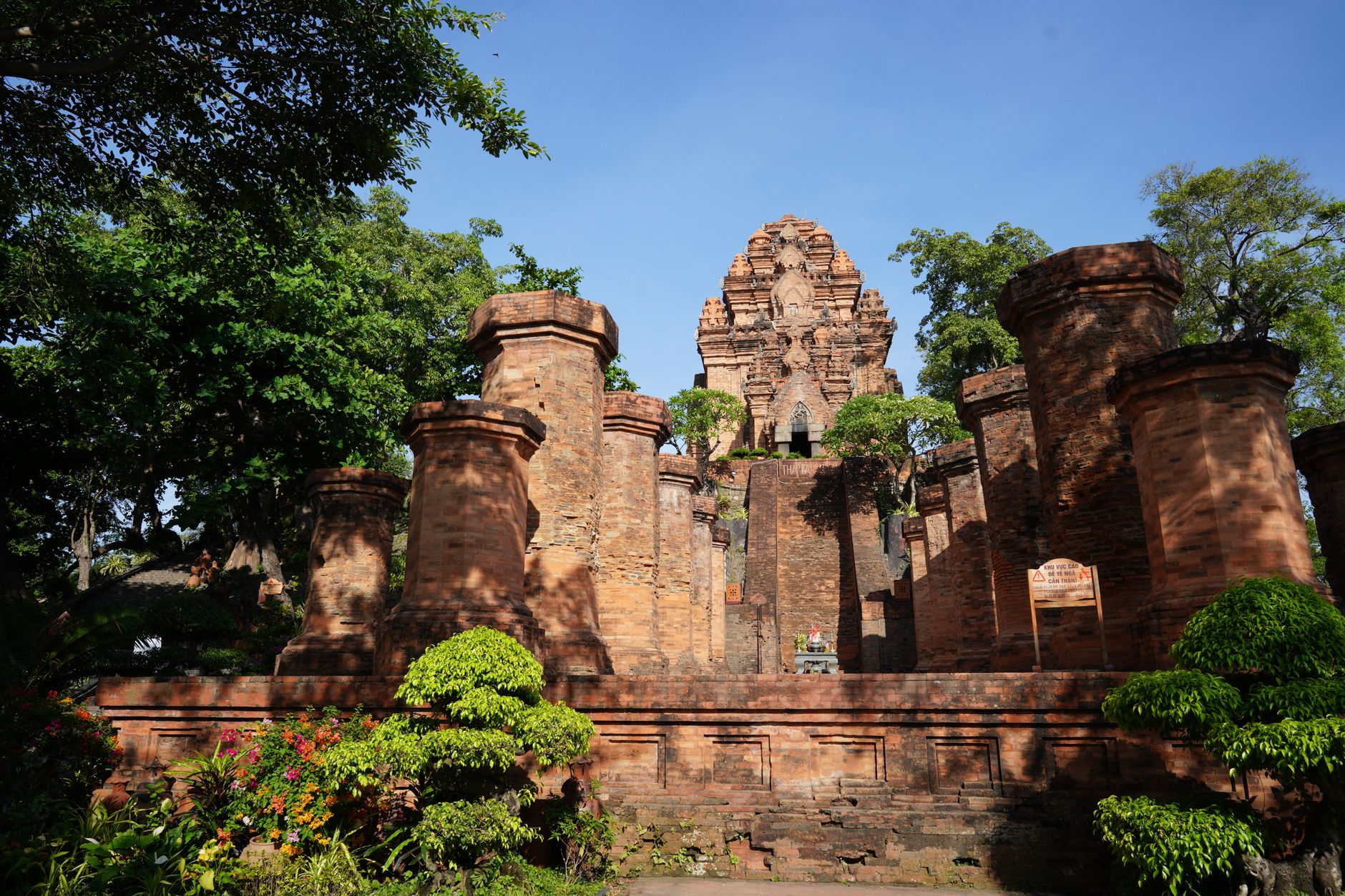
Chua Long Son sits at the base of Trai Thuy Hill in central Nha Trang (냐짱 / 芽庄 / ニャチャン), roughly 2 km west of the train station. It's the city's most prominent Buddhist temple and home to a 24-meter white Buddha statue that you'll spot from half the neighborhoods in town. If you're spending any time in Khanh Hoa province, this is one of the few cultural stops that genuinely earns a visit.
What it is and how it got here
The temple was originally built in 1886 on a different hilltop before a cyclone destroyed it in 1900. Monks rebuilt it at the current location on Duong 23 Thang 10, and it's been expanded and restored several times since. The main hall dates to the early 20th century, with dragon mosaic work along the exterior walls made from glass and ceramic tile — a style you'll see in Hue's royal tombs but rarely this far south.
The large white Buddha — Kim Than Phat To — was completed in 1963 and sits cross-legged at the hilltop behind the main temple complex. It commemorates monks who self-immolated during the early 1960s, and their photos are displayed at the base of the statue. The site is an active monastery, not a museum, so you'll often see monks going about daily life.
Why travelers go
Most people come for the Buddha statue and the view from the hilltop. From the top of the 152 steps, you get a wide panorama over Nha Trang's rooftops, the coastline, and the surrounding hills. It's one of the better elevated views in the city without paying for a rooftop bar.
Beyond the view, the temple architecture is worth attention. The mosaic dragons wrapping around the main hall are genuinely impressive craft work — each one assembled from broken beer bottles, ceramic shards, and colored glass. The main prayer hall has detailed woodwork and a reclining bronze Buddha inside that most visitors walk right past.
Best time to visit
Nha Trang's dry season runs from January through August, with February to April being the most comfortable — warm but not brutal. The temple gets crowded mid-morning when tour buses arrive, usually between 9:30 and 11:00. Show up before 8:00 or after 14:00 and you'll have the stairs mostly to yourself.
Avoid visiting during Tet or major Buddhist holidays (Vesak in May, especially) unless you want to see the temple at its most active. It'll be packed, but the decorations and ceremonies are worth the crowd if that's your thing.
How to get there from Nha Trang center
Chua Long Son is only about 2 km from Nha Trang's beachfront tourist strip, so getting there is straightforward.
- Grab bike: 15,000–25,000 VND from the beach area. Five minutes in normal traffic.
- Grab car: 30,000–40,000 VND. Useful if it's raining or midday hot.
- Walking: Doable in 20–25 minutes from the central beach hotels along Duong Le Thanh Ton turning onto Duong 23 Thang 10. Flat the entire way until you hit the temple stairs.
- Cyclo: Drivers along Tran Phu beach road will offer rides for 50,000–80,000 VND round trip including a wait. Negotiate before you sit down.
If you're arriving in Nha Trang by train, the temple is a 10-minute walk northwest from Nha Trang Railway Station — easy to hit on the way into town.

Photo by Hồng Quang Official on Pexels
What to do
Walk the 152 steps to the hilltop Buddha
The main draw. The staircase is concrete and shaded partway up but exposed near the top. At the summit, the white Buddha sits on a lotus platform with views in every direction. Budget 15–20 minutes for the climb if you take it easy. There's a small platform behind the statue that most visitors miss — it gives you the best angle looking east toward the sea.
Study the mosaic dragons
Before heading uphill, spend time in the lower temple courtyard. The dragon mosaics along the main hall walls and entrance gate are assembled from thousands of glass and ceramic fragments. Look closely at the scales — you'll recognize pieces of old rice bowls, tea cups, and bottle glass. This is folk craft at a serious scale.
Sit in the main prayer hall
The interior of the main hall is dim, cool, and quiet. There's a large bronze reclining Buddha and elaborate woodwork on the altar screens. If monks are chanting, you're welcome to sit quietly at the back. Remove shoes before entering.
Visit the memorial at the statue base
At the base of the hilltop Buddha, there's a small memorial with photographs and information about the monks the statue commemorates. It's sobering and worth a few minutes of attention.
Explore the monastery grounds
Wander the paths around the lower complex. There are smaller shrines, a bell tower, and bonsai gardens that most visitors skip because they're focused on the hilltop. The grounds are well-maintained and peaceful early in the morning.
Where to eat nearby
Duong 23 Thang 10 and the surrounding streets have plenty of local food options. Two worth seeking out:
- "Bun cha ca" — Nha Trang's signature noodle soup with fish cake. Quan Bun Cha Ca Ba on Duong Ngo Gia Tu (about 1 km from the temple) is a reliable local spot. A bowl runs 35,000–45,000 VND.
- "Banh canh" — thick tapioca noodle soup, often served with fish or crab. Street stalls along Duong Yersin sell solid versions for 30,000–40,000 VND.
If you want something more substantial, Nha Trang's Cho Dam market area is a 15-minute walk southeast and has dozens of food stalls selling "com tam (껌땀 / 碎米饭 / コムタム)", grilled seafood, and fresh "goi cuon".
Where to stay
Chua Long Son is close to central Nha Trang, so most accommodations put you within easy reach.
- Budget (250,000–500,000 VND/night): Hostels and guesthouses along Duong Hung Vuong and Duong Biet Thu. Basic but functional.
- Mid-range (600,000–1,200,000 VND/night): Hotels along Tran Phu beachfront. Many include breakfast and pools.
- Upper (1,500,000+ VND/night): Beachfront resorts north of the city center or on Duong Tran Phu south.
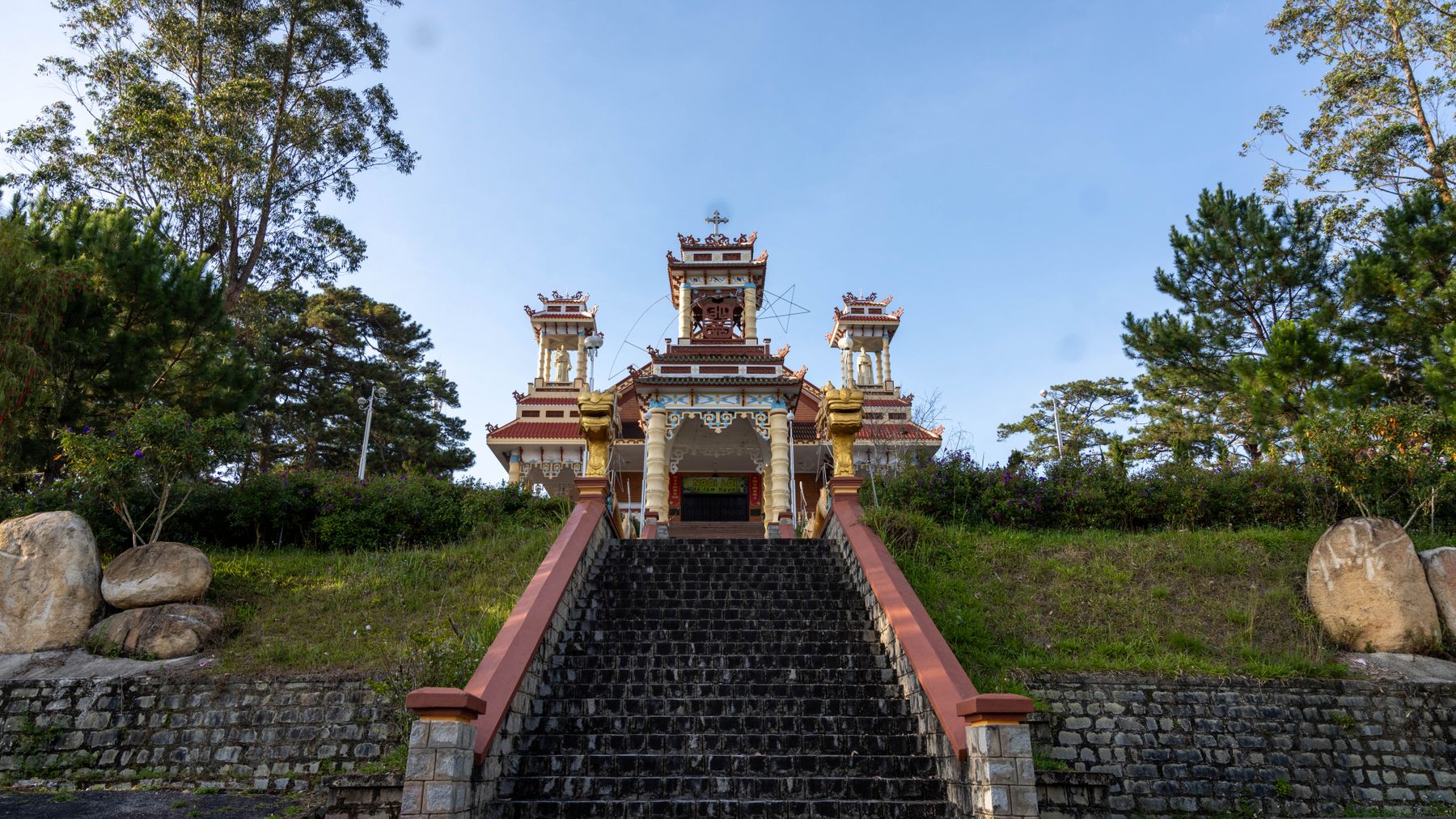
Photo by Quang Vuong on Pexels
Practical tips locals would tell you
- Dress appropriately. Shoulders and knees covered. The temple sometimes has loaner wraps at the entrance, but don't count on it.
- Bring water. The climb is short but hot, especially between 10:00 and 15:00. There are no vendors on the stairs.
- Free entry. There's no admission fee. Donation boxes are inside the main hall if you want to contribute.
- Watch for aggressive souvenir sellers at the base of the staircase. A polite "khong, cam on" (no, thank you) and keep walking.
- Shoes off inside any building with an altar. Look for the pile of shoes at the door.
Common mistakes to avoid
- Arriving with a tour bus at 10:00. The steps get congested and the experience suffers. Early morning is better in every way — cooler, quieter, better light for photos.
- Skipping the lower temple. Most group tourists beeline for the hilltop Buddha and ignore the main hall and mosaic work below, which is arguably the more interesting part.
- Wearing flip-flops on the stairs. Some steps are uneven and slippery when wet. Proper sandals or shoes with grip save you trouble.
- Taking photos of monks without asking. This is an active monastery. A nod or gesture asking permission goes a long way.
Practical notes
Chua Long Son is open daily from roughly 6:00 to 17:30. Plan 60–90 minutes for the full complex including the hilltop. It pairs well with a morning visit to Po Nagar towers, which are about 3 km north — you can do both before lunch without rushing.
Last updated · May 26, 2026 · independently researched, never sponsored.