Coconut coffee started as a single item on a single menu in Hanoi, got photographed a few million times, and is now served at roughly every third cafe in the city. Whether that makes it a trend or a tradition is still up for debate — but the drink itself, when made properly, is genuinely good.
Where It Came From
Cong Caphe is the origin point. The chain launched its "ca phe cot dua" — coconut coffee — sometime around 2013-2014 at its flagship on Trieu Viet Vuong Street, a few blocks from Hoan Kiem Lake. The concept was simple: blend frozen coconut cream or coconut milk with strong Vietnamese robusta espresso, pour it over ice, and serve it in a can or glass with a layer of condensed milk at the bottom.
Cong Caphe already had a look — military-green walls, war-era memorabilia, vintage Viet Cong-aesthetic furniture — so the drink fit the brand's studied nostalgia. Western tourists arriving in Hanoi (하노이 / 河内 / ハノイ) went there, photographed the drink against the peeling paint, posted it, and the loop fed itself. By 2016 it had become shorthand for "Hanoi cafe experience" in a way that, say, a straightforward "ca phe sua da" never quite managed photographically.
The chain now has dozens of locations across Vietnam (베트남 / 越南 / ベトナム). The Trieu Viet Vuong spot is still there and still crowded.
What's Actually in It
A proper coconut coffee has three components working together:
The coffee base. Vietnamese robusta, brewed strong — either through a "phin" drip filter or pulled as a concentrated shot. Robusta is more bitter and more caffeinated than arabica, which is why it holds up against the sweetness of coconut. A coconut coffee made with weak coffee just tastes like a coconut milkshake.
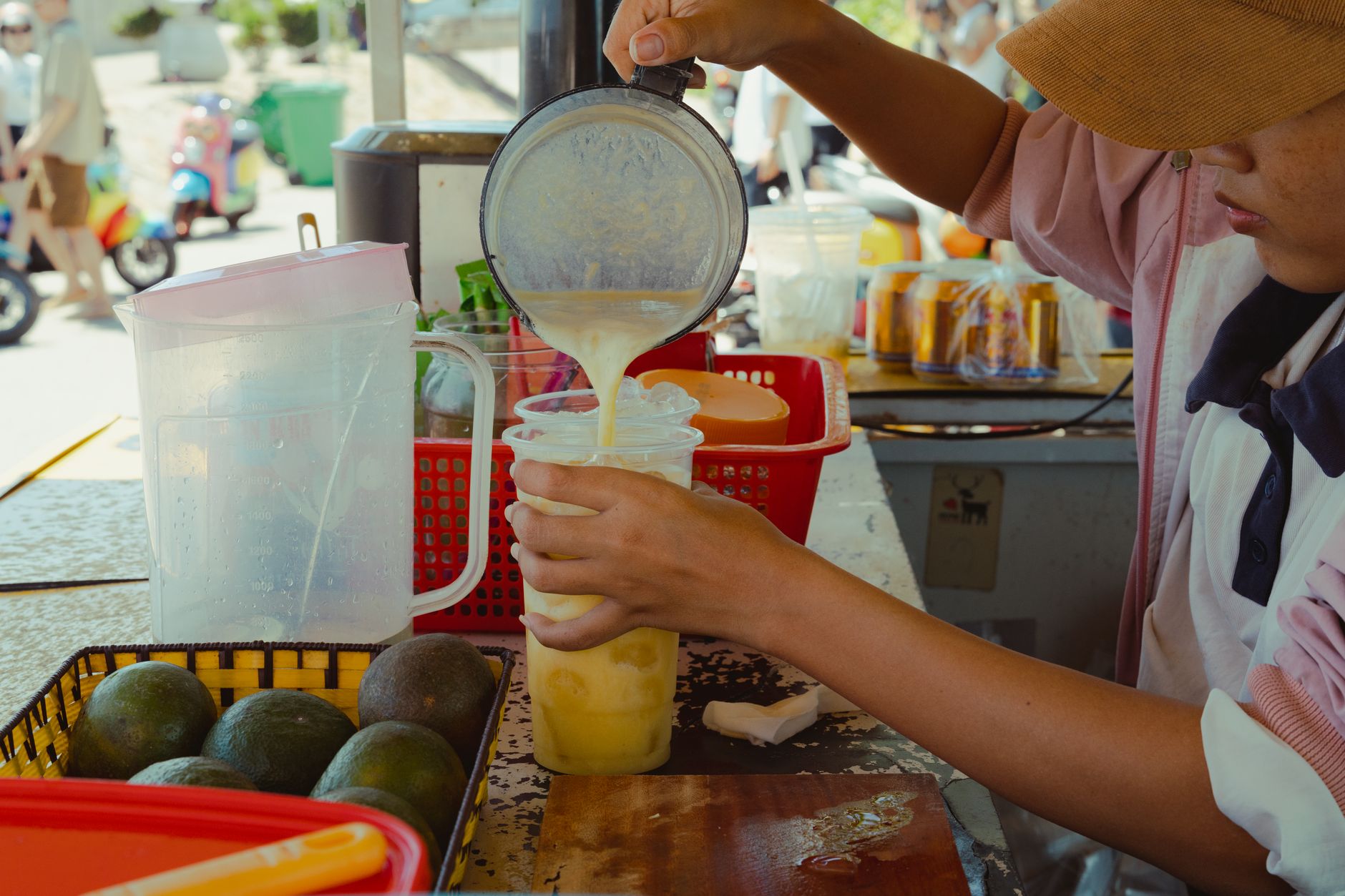
The coconut element. This is where versions diverge. Cong Caphe uses a frozen coconut cream mixture — blended smooth, almost sorbet-like in texture — which gets layered with or swirled into the coffee. Cheaper copies use tinned coconut milk straight from the can, which is thinner and less interesting. A few specialty cafes are now making their own coconut cream fresh, which makes a noticeable difference.
The sweetener. Usually condensed milk, pooled at the bottom. You stir it up yourself. Some places add a pinch of salt to the coconut layer, which cuts the sweetness and is worth seeking out.
Calorie count is not small. This is not a light drink.

Photo by Pragyan Bezbaruah on Pexels
The Copycat Problem
After Cong Caphe proved the market, imitation spread fast. Most cafes in Hanoi's Old Quarter now have some version on the menu, usually listed in English as "coconut coffee" and priced between 45,000 and 65,000 VND. Many of them are fine. Some are thin and over-sweetened, relying on the novelty of the presentation rather than the quality of the coffee.
The tell is the coffee itself. If the coconut cream is sitting on top of something that tastes like watered-down instant, no amount of good coconut fixes it. Ask if they use a phin or an espresso machine — either can work, but it signals whether the cafe is thinking about the drink seriously.
Where to Drink It
Cong Caphe, Trieu Viet Vuong. Still the reference version. Expect to queue on weekends. Prices around 55,000-65,000 VND. The canned presentation is their signature; ask for it without the can if you want a cleaner taste.
Giang Cafe, Nguyen Huu Huan. Better known for "egg coffee" — "ca phe trung" — but their coconut version is underrated. The coffee base is stronger than average and the coconut layer has a slightly salted edge. Small, tight space. Worth the visit.
Loading T Cafe, Dinh Liet. A few minutes' walk from Hoan Kiem, this place takes its coffee more seriously than most of the tourist-strip neighbors. Their coconut coffee uses fresh coconut cream blended to order, and it shows in the texture.
The quiet option. If you're staying near the West Lake area, several neighborhood cafes along Dang Thai Mai serve solid coconut coffee without the Old Quarter markup. Prices drop to around 35,000-45,000 VND and you'll likely be drinking it among locals rather than tour groups.
Photo by Pragyan Bezbaruah on Pexels
Is It Actually Vietnamese Coffee?
This is a fair question. Traditional northern Vietnamese coffee culture runs toward the drip phin, black or with condensed milk — the straight "vietnamese coffee" that takes fifteen minutes to drip and rewards patience. "Egg coffee" and coconut coffee are both Hanoi inventions, but they're relatively recent ones, and they're calibrated partly toward tourists who want something photogenic.
That doesn't make them fake. Egg coffee was invented at Giang Cafe in the 1940s as a milk substitute during wartime shortages — it has roots. Coconut coffee is shallower historically, but the ingredients are genuinely Vietnamese: robusta coffee and coconut have been part of the country's food culture for a long time, just not combined this way until recently.
Hanoi's coffee scene also runs much deeper than these two drinks. If you're spending more than a couple of days in the city, it's worth sitting with a plain phin coffee somewhere quiet — maybe near the Long Bien Bridge, or in one of the alley cafes off Ma May — and understanding what the base actually tastes like before you add the coconut.
Practical Notes
Coconut coffee is best drunk cold and fresh — the texture degrades as it melts, so drink it within the first fifteen minutes. Most cafes serve it year-round, but it's especially welcome between April and October when Hanoi humidity makes anything frozen feel like a reasonable life choice. Budget 45,000-65,000 VND for a standard version at a tourist-area cafe; 35,000 VND or less if you wander ten minutes off the main drag.
Last updated · May 29, 2026 · independently researched, never sponsored.