
Da Lat sits at 1,500 metres above sea level, and when it's 16°C outside and drizzling — which is often — you want something warm in your hands. The city has built an entire culture around that feeling.
The Coffee Situation
Da Lat (달랏 / 大叻 / ダラット) grows its own arabica beans on farms around the plateau, so "vietnamese coffee" here tastes different from what you'll get in Saigon or Hanoi — less robusta bitterness, more floral acidity. Most of the city's cafes roast in-house or source directly from farms in the surrounding hills.
The cafe density in Da Lat is genuinely absurd. Nguyen Chi Thanh street alone has twenty-odd places within a 500-metre stretch. A few are worth singling out.
Maze Coffee (39 Truong Cong Dinh)
A four-floor converted house with plants growing through the railings and mismatched furniture on every landing. A cup of their single-origin drip costs around 45,000 VND. Come on a weekday morning if you want a table without negotiating.
Le Chalet Da Lat (6 Hung Vuong)
This one leans hard into the French-colonial aesthetic — stone walls, timber beams, the smell of pine from a fireplace in the back room. Their hot chocolate (55,000 VND) is thick and not too sweet. It's the kind of place that would be insufferable if it were in a city warmer than 20°C, but in Da Lat it makes complete sense.
Tu Do Cafe (Truong Cong Dinh area)
A no-frills spot that's been around since before Instagram decided Da Lat was interesting. The "ca phe sua da (연유커피 / 越南冰咖啡 / ベトナムアイスコーヒー)" here — iced coffee with condensed milk — is strong enough that your hands shake slightly afterwards. About 25,000 VND.
The Strawberry Wine Problem (and Its Solutions)
Da Lat produces wine. This is a fact that requires some context.
The region's cool climate suits grapes, and vineyards have been operating here since the French planted the first ones in the early twentieth century. The Da Lat Winery — government-operated, established in 1999 — produces red, white, and rosé under the "Vang Da Lat" label. You'll see these bottles everywhere from convenience stores to restaurant wine lists. At around 120,000–160,000 VND a bottle retail, they're drinkable with the right expectations: light, slightly sweet, better cold.
The strawberry wine is a separate category entirely. Local producers ferment strawberries — Da Lat grows enormous quantities of them — into something closer to a fruit liqueur than a wine. Sweet, low-alcohol, and sold in hand-labelled bottles at the Cho Da Lat market (Da Lat Central Market) for 50,000–80,000 VND. Buy one bottle to try. The mulberry wine (ruou dau) sold alongside it is actually better.
If you want something more serious, a handful of restaurants have started importing and serving international wines by the glass. Quan An Ngon on Nguyen Thi Minh Khai and a few spots near Ho Xuan Huong lake have short but reasonable lists at 80,000–120,000 VND per glass.
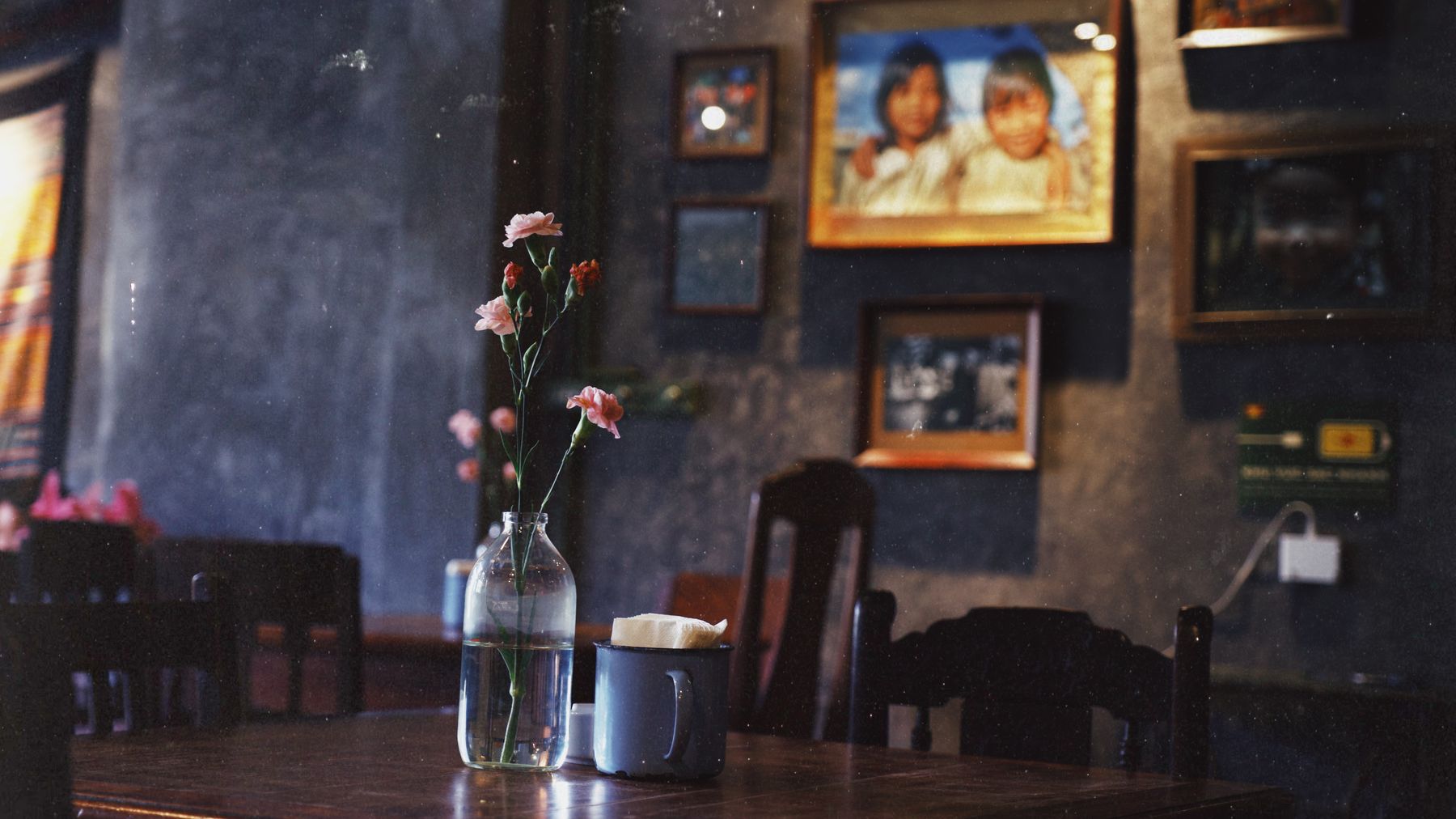
Photo by Quang on Pexels
The French-Villa Drinking Experience
Da Lat has more French colonial architecture than almost anywhere else in Vietnam — the city was designed as a hill station retreat, and the villas, the train station, the old lycee, all survived relatively intact. Several of these buildings are now cafes.
Da Lat Train Cafe, adjacent to the old Da Lat station (Quang Trung street), is the most visited. Sit outside on the platform with a coffee and watch zero trains arrive — the line runs a tourist route to Trai Mat village a few times a day, but the station itself is mostly quiet. Worth thirty minutes.
Lan Anh Garden Cafe (3 Hoang Dieu) occupies a restored French-era house with a garden that's been left deliberately shaggy. On cold evenings, people order "ca phe trung" — "egg coffee", a Hanoi invention that Da Lat has fully adopted — and sit by the window. The egg coffee here is richer than most Hanoi versions, almost dessert-like.

Photo by HONG SON on Pexels
What to Order in the Evening
Da Lat's evenings cool down fast. The local habit is to graze the Cho Da Lat night market (opens around 5 PM on Nguyen Thi Minh Khai) for grilled corn, banh trang nuong (grilled rice paper with toppings, sometimes called "Vietnamese pizza" by guesthouse owners who know their audience), and hot soy milk.
For a proper drink, the wine bars clustered around the lake area open from around 6 PM. Some serve Vang Da Lat alongside local craft beers that have started appearing in the last few years — 333 still dominates the cheap end, but you can find locally-brewed pale ales at around 60,000 VND a can if you know where to look.
Avoid the tourist-trap wine-tasting "experiences" advertised near the central market. They charge 200,000–300,000 VND per person to pour you three thimble-sized glasses of wine you could buy retail for 150,000 VND a bottle.
Practical Notes
Most cafes in Da Lat open by 7 AM and close around 10 PM; some stay open later on weekends. Bring a light jacket even in dry season — the temperature drops sharply after sunset. The Cho Da Lat market is the best single stop for buying strawberry wine, mulberry wine, and dried fruit to take home.
Last updated · May 29, 2026 · independently researched, never sponsored.


