
Den Bac Le sits about 30 km south of Lang Son city, tucked into the hills of Huu Lung district. It's one of the most important temples in the "Dao Mau" (Mother Goddess worship) tradition, and for many Vietnamese travelers, it's the reason they come to Lang Son at all.
What it is and why it matters
Den Bac Le is dedicated to "Ba Chua Thuong Ngan" — the Mother Goddess of the Forest — one of the principal figures in the Vietnamese practice of "Dao Mau," or the worship of the Mother Goddesses. This spiritual tradition, recognized by UNESCO as intangible cultural heritage, blends Taoist, Buddhist, and indigenous Vietnamese beliefs into something entirely its own.
The temple dates back several centuries, though the current structure has been rebuilt and expanded over the years. It's not a museum piece — this is a living, active place of worship. On any given day you'll find pilgrims lighting incense, making offerings of fruit and sticky rice, and participating in "hau dong" (spirit mediumship) ceremonies. These rituals involve elaborate costumes, traditional music, and a trance-like channeling of spirits that's unlike anything you'll see at a standard pagoda.
If you've visited Tran Quoc Pagoda in Hanoi or other Buddhist temples across the country, Den Bac Le will feel different — louder, more colorful, more emotionally charged. The energy here comes from devotion, not tourism.
Why travelers go
Most foreign visitors end up at Den Bac Le because they're curious about "Dao Mau" and want to see a "hau dong" ceremony firsthand. These rituals happen regularly, especially around the temple's festival periods. Even outside festival dates, the temple sees steady pilgrim traffic, so there's usually something happening.
Beyond the spiritual element, the surrounding landscape — limestone hills, rice paddies, a river running alongside the access road — makes the drive itself worthwhile. Lang Son province doesn't get the attention that Ninh Binh (닌빈 / 宁平 / ニンビン) or Ha Giang does, but the scenery shares some of the same karst geography without the tourist infrastructure.
Best time to visit
The main festival at Den Bac Le falls on the 18th day of the 9th lunar month (usually October). This is when the largest "hau dong" ceremonies take place and when the temple is at its most intense — thousands of pilgrims, heavy incense smoke, ceremonial music echoing off the hills. If you want the full experience, this is when to come.
The broader window of the 1st to 3rd lunar months (roughly February to April) is also busy, as many Vietnamese make pilgrimages to temples during and after Tet. The weather in Lang Son is cool and dry during this stretch, which makes it comfortable for walking around the temple grounds.
Avoid July and August if you can. The heat is manageable, but afternoon thunderstorms can turn the temple steps slippery, and the humidity makes the incense smoke feel heavy.
How to get there
From Hanoi (하노이 / 河内 / ハノイ), take the highway toward Lang Son city — it's about 150 km and takes roughly 2.5 hours by car or private driver. Buses from My Dinh or Gia Lam stations run to Lang Son city for around 120,000–150,000 VND. From Lang Son city, Den Bac Le is another 30 km south toward Huu Lung. You'll need a taxi or "xe om" (motorbike taxi) for this leg — expect to pay around 150,000–200,000 VND one way by car.
If you're riding a motorbike from Hanoi, the whole trip takes about 3–3.5 hours. The road from Lang Son city to the temple is paved but narrow in places, with some sharp turns through the hills. Nothing technical, but stay alert.
There's no direct public bus from Hanoi to Den Bac Le. The two-step approach — bus to Lang Son, then local transport — is the budget option.
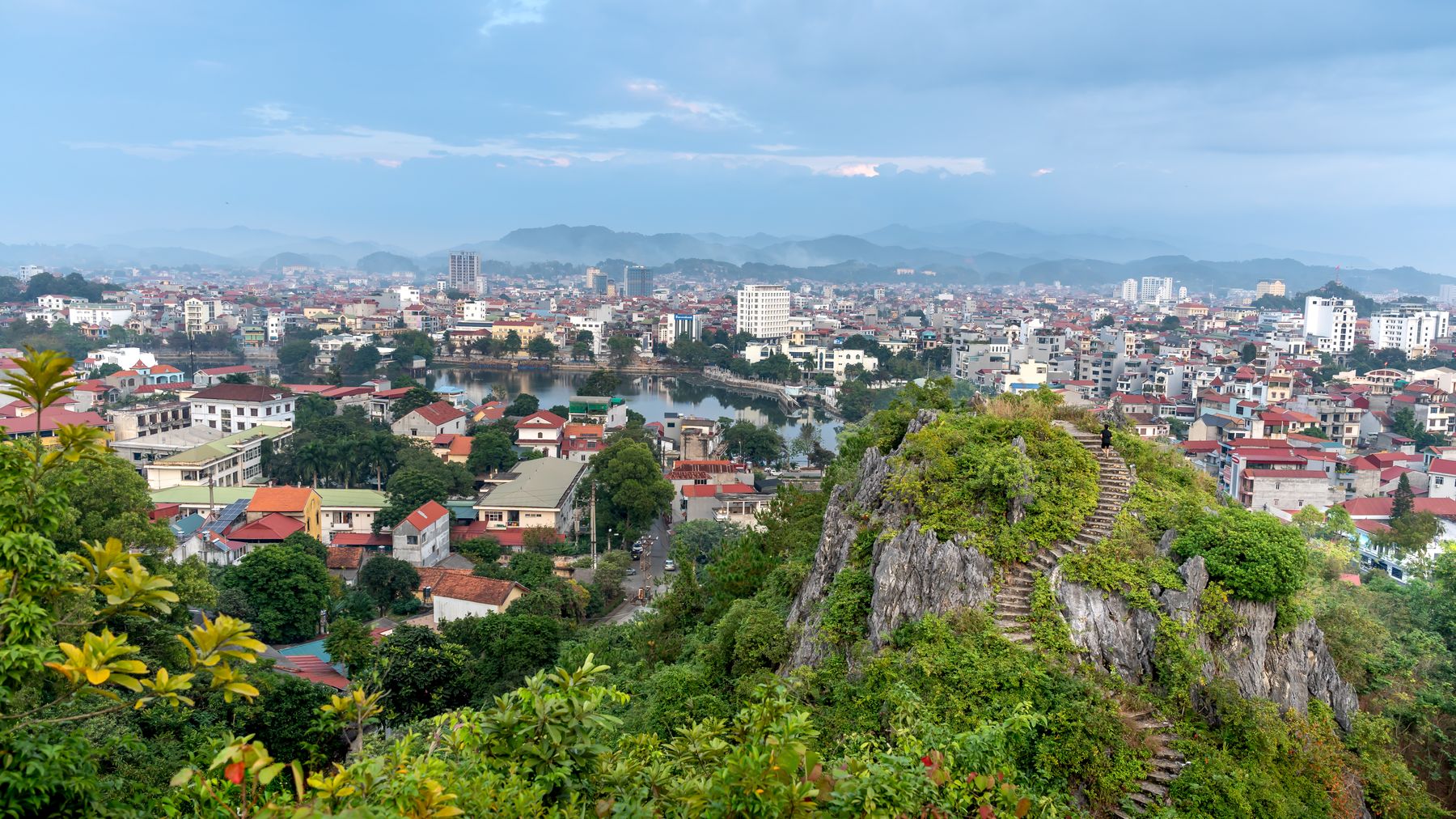
Photo by Quang Nguyen Vinh on Pexels
What to do
Watch a hau dong ceremony
This is the main draw. "Hau dong" ceremonies can last hours and involve a medium channeling different spirits, each represented by a change of costume and a shift in music. It's theatrical, spiritual, and genuinely absorbing. Don't film without asking — some participants are fine with it, others aren't.
Walk the full temple complex
Den Bac Le isn't just one building. The complex includes the main temple, several smaller shrines, and a hillside path leading to upper altars. Most visitors stick to the main hall. Walk the full loop — the upper shrines are quieter and offer a view over the valley.
Visit the river and surrounding village
The Bac Le River runs near the temple. There's a small bridge and a path along the water that locals use. It's a good 20-minute walk to reset after the intensity of the temple. The village houses nearby are traditional northern Vietnamese style — brick and tile, with small courtyard gardens.
Pick up offerings at the market stalls
The row of stalls leading to the temple entrance sells everything pilgrims need: incense bundles, fruit, "vang ma" (votive paper), flowers. Even if you're not making offerings yourself, browsing gives context to what you'll see inside.
Where to eat nearby
Lang Son province is known for "khau nhuc" — a slow-braised pork belly dish with fermented bean curd that falls apart when you look at it. Most restaurants in Lang Son city serve it, and a plate runs about 80,000–120,000 VND. Near the temple itself, options are limited to small roadside stalls selling "pho" and rice plates. Eat a proper meal in Lang Son city before or after.
Also worth trying: "banh cuon" Lang Son-style, which uses thicker rice sheets than the Hanoi version and is stuffed with wood ear mushroom and minced pork. You'll find it at morning-only stalls in Lang Son city for around 30,000–40,000 VND.
Where to stay
Den Bac Le is a day trip from either Lang Son city or Hanoi. There are a few basic guesthouses near the temple (200,000–350,000 VND/night), but they're bare-bones — a bed, a fan, maybe hot water.
Lang Son city has more options. Mid-range hotels in the center run 400,000–700,000 VND per night. Nothing fancy, but clean rooms with air conditioning and Wi-Fi. If you're driving up from Hanoi, you can do the temple visit and be back in the capital by evening.

Photo by TBD Tuyên on Pexels
Practical tips locals would tell you
- Dress modestly. Shoulders and knees covered. This is a working temple, not a tourist attraction. You'll see Vietnamese visitors in their best clothes.
- Bring cash. There's no ATM near the temple. Bring enough for offerings, food, and transport.
- Remove shoes before entering any shrine building. Sandals are easier than laced shoes.
- Arrive before 10 AM on festival days if you want to actually get inside the main hall. By midday the crowd can be dense.
Mistakes to avoid
- Treating it like a photo opportunity. People are here to pray. Be respectful with cameras, especially during ceremonies.
- Skipping the upper shrines. The main hall is crowded; the hillside altars are where you get the real atmosphere.
- Not eating in Lang Son city. The food near the temple is forgettable. Lang Son city has a distinct cuisine — "khau nhuc," grilled duck, and roasted chestnuts in season — that's worth planning around.
- Driving back to Hanoi at night. The highway is fine, but the last stretch from Huu Lung to Lang Son is poorly lit. Give yourself daylight for the return.
Practical notes
Den Bac Le is free to enter. Budget around 500,000 VND per person for a day trip from Lang Son city, covering transport, food, and offerings. From Hanoi, a motorbike trip keeps costs under 800,000 VND round trip including fuel and meals. The temple is open daily, but weekday mornings are the quietest time to visit outside of festival season.
Last updated · May 26, 2026 · independently researched, never sponsored.






