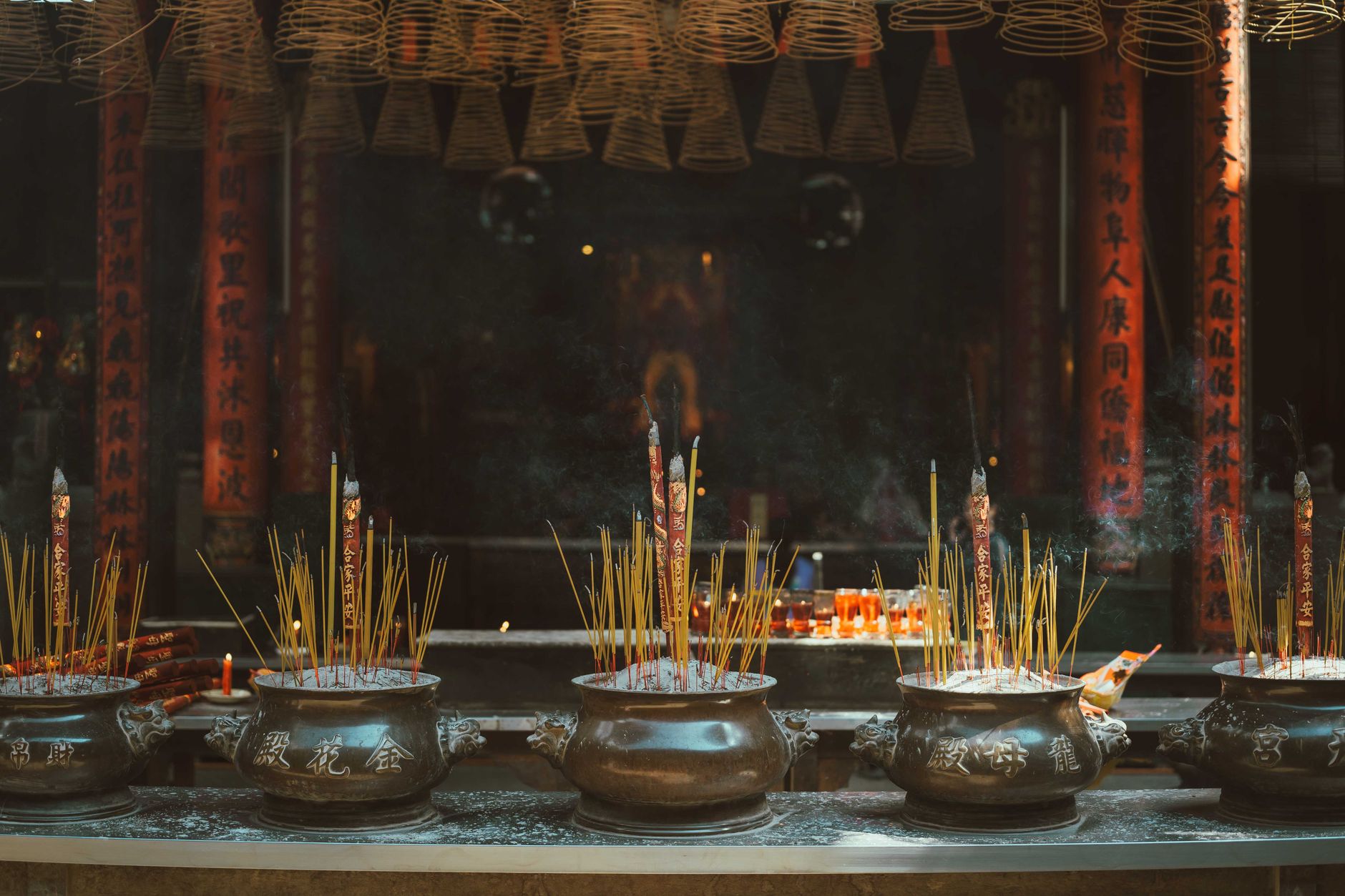
Den Chua Thac Bo is one of those places that most foreign travelers have never heard of, but every Vietnamese person in the northern provinces knows well. Perched on the banks of the Hoa Binh reservoir where the Da River widens into a calm inland sea, this temple complex draws pilgrims and curious travelers year-round — especially during the [lunar new year](/posts/tet (뗏 (베트남 설날) / 越南春节 / テト (ベトナム旧正月))-lunar-new-year-guide) festival season.
What it is and why it matters
Den Chua Thac Bo is a temple complex dedicated to two figures central to local Muong folklore: Ba Chua Thac Bo (the Lady of the Thac Bo rapids) and Chua Thac Bo, spirits believed to govern the waters of the Da River. The original temple sat beside a set of powerful rapids — Thac Bo — that were submerged when the Hoa Binh hydroelectric dam was completed in 1994. When the reservoir flooded the old site, the temple was relocated to higher ground on the lakeshore.
That history gives the place a particular atmosphere. You're visiting a temple rebuilt out of necessity, one that carries the weight of a displaced community and a drowned landscape. The Muong people, the largest ethnic minority in the northwest, consider this a deeply significant spiritual site. It's not a museum piece — it's active, incense-filled, and visited by boatloads of worshippers on festival days.
Why travelers go
Three reasons. First, the boat ride. Getting to Den Chua Thac Bo means crossing a stretch of the Hoa Binh reservoir by boat, weaving between karst hills that rise straight out of green water. It's one of the more scenic short boat trips you can take in northern Vietnam without committing to a full Ha Long Bay excursion.
Second, the cultural layer. This isn't a standardized tourist attraction. The rituals here — offerings of fruit, incense, and paper votives — follow Muong spiritual traditions that differ noticeably from lowland Kinh Vietnamese practices. If you've spent time at temples in Hanoi, you'll spot the differences.
Third, it connects well to a broader northwest loop. If you're heading toward Mai Chau or deeper into the mountains, Den Chua Thac Bo makes a worthwhile half-day stop rather than just blowing through on the highway.
Best time to visit
The temple festival runs from the 7th to the 9th of the first lunar month (usually February), and that's when the site is at its most alive — drumming, chanting, boats packed with pilgrims in bright clothing. It's crowded, but the energy is worth it.
Outside of festival season, the sweet spot is October through March, when the reservoir water is high and the surrounding hills are green from recent rains. April and May get hot and hazy. Summer (June–August) brings occasional heavy rain that can make the boat crossing choppy, though services rarely stop entirely.
How to get there
The practical starting point is Hanoi, about 100 km southeast.
By motorbike or car: Take the Ho Chi Minh Highway (QL6) west toward Hoa Binh city, then continue northwest toward Thung Nai. The turnoff to the boat pier at Thung Nai is well-signposted. Total drive time from Hanoi is around 2.5–3 hours depending on traffic through Xuan Mai. The road is paved and in decent shape the whole way.
By bus: Catch a bus from My Dinh bus station in Hanoi to Hoa Binh city (around 60,000–80,000 VND, 2 hours). From Hoa Binh, you'll need to arrange a local xe om (motorbike taxi) or taxi to Thung Nai pier — about 25 km, roughly 150,000–200,000 VND by taxi.
The boat: From Thung Nai pier, hire a boat to the temple. Small boats for 4–6 people cost around 300,000–500,000 VND for the round trip. Larger group boats are cheaper per person. The ride takes about 20–30 minutes each way, and the boatmen will wait while you visit.

Photo by Theodore Nguyen on Pexels
What to do
Visit the main temple hall
The central shrine houses the altar to Ba Chua Thac Bo. Even if temple protocol isn't your thing, take a few minutes to watch how locals make offerings — the sequence of incense, bowing, and paper burning follows a specific rhythm. Remove your shoes, dress modestly (cover knees and shoulders), and keep your voice low inside.
Walk the hillside complex
The temple grounds extend up the hillside with secondary shrines, small pavilions, and lookout points over the reservoir. A loop walk takes 30–40 minutes. The views from the upper shrines back over the water and karst formations are the real draw here.
Explore the reservoir by boat
Ask your boatman to add a short loop around the nearby karst islands before or after the temple visit. Some boats will take you past submerged forest areas where tree trunks still poke above the waterline — a strange, photogenic reminder of what the valley looked like before the dam.
Stop at Thung Nai
The pier village of Thung Nai itself is worth 30 minutes. Small stilt-house homestays line the shore, and a few floating restaurants serve grilled fish pulled from the reservoir that morning.
Combine with a Mai Chau visit
Mai Chau is only about 60 km further west. A two-day trip — Den Chua Thac Bo on day one, Mai Chau valley on day two — makes a solid weekend escape from Hanoi without the long drive to Sapa or Ha Giang.
Where to eat nearby
At the floating restaurants near Thung Nai pier, order "ca song Da" — Da River fish, typically grilled whole over charcoal or steamed with ginger and dill. The reservoir produces good-sized carp and tilapia. A whole grilled fish with rice and greens runs about 150,000–250,000 VND depending on size.
Also try "com lam" — sticky rice cooked inside bamboo tubes over a fire. It's a Muong staple and you'll find it at most of the small eateries near the pier. Around 20,000–30,000 VND per tube.
Where to stay
Budget: Thung Nai has basic homestays on stilts overlooking the water, mostly run by Muong families. Expect a mattress on the floor, mosquito net, shared bathroom. Around 200,000–350,000 VND per person including dinner and breakfast.
Mid-range: A few guesthouses in Hoa Binh city (25 km back toward Hanoi) offer air-conditioned rooms with private bathrooms for 400,000–700,000 VND per night.
Comfortable: For something with more polish, book in Mai Chau where several ecolodges and boutique homestays have opened in recent years, ranging from 800,000–1,500,000 VND per night.

Photo by Karolina on Pexels
Practical tips locals would tell you
- Bring cash. There are no ATMs at Thung Nai or anywhere near the temple. The nearest reliable ATMs are in Hoa Binh city.
- Negotiate boat price before boarding. Agree on the round-trip fare, waiting time, and any side trips. Get the number clearly stated — write it down if your Vietnamese isn't strong.
- Wear shoes you can slip on and off easily. You'll remove them at every shrine entrance, and the hillside paths can be slippery after rain.
- Life jackets are provided on boats — wear them. The reservoir is deep and the water is cold, especially from November to March.
Common mistakes to avoid
Don't come on a major festival day expecting a quiet, contemplative experience. The 1st lunar month festival draws thousands of people — if you want calm, visit on a weekday outside festival season.
Don't skip the boat ride and try to reach the temple by road. The water approach is half the experience, and the road access is limited and poorly maintained.
Don't wear shorts and a tank top into the temple halls. This is an active place of worship, not a tourist site with relaxed dress codes. You'll get looks, and possibly turned away from inner shrines.
Practical notes
Den Chua Thac Bo works best as part of a longer day trip or overnight from Hanoi — pair it with Mai Chau or the Hoa Binh reservoir area for a full weekend. Budget around 500,000–800,000 VND per person for transport, boat, and food for a day trip. The temple itself has no entrance fee, though donations are customary.
Last updated · May 29, 2026 · independently researched, never sponsored.