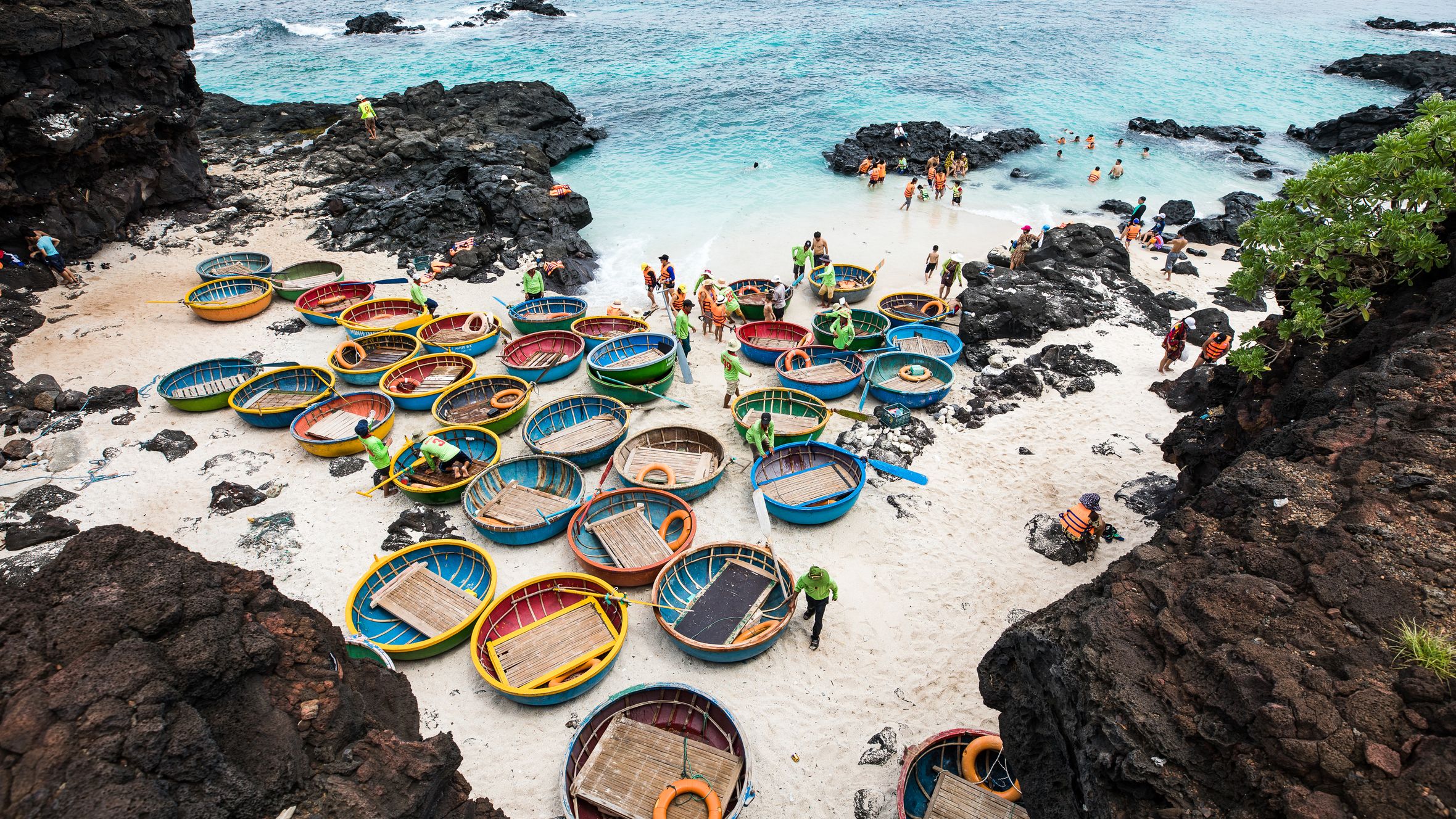
Bai Dua — literally "Coconut Beach" — is one of those places along Vietnam (베트남 / 越南 / ベトナム)'s central coast that most travelers blow past on the train between Hoi An and Quy Nhon. That's part of its appeal. The beach sits in Quang Ngai province, a stretch of coastline that rarely makes it onto itineraries but rewards the people who stop.
What Bai Dua actually is
Bai Dua is a crescent-shaped beach fringed by coconut palms, located along the coast of Quang Ngai province. The name is straightforward — "bai" means beach, "dua" means coconut — and the trees deliver. The sand here is coarser than what you'll find at bigger resort beaches further south, more golden-brown than white, and the water is clean enough to swim in for most of the year.
This isn't a resort destination. There are no beach clubs, no cocktail menus, no Instagram influencers posing by infinity pools. What you get is a genuine stretch of Vietnamese coastline where local families come on weekends, fishermen pull boats up on the sand in the morning, and the seafood restaurants along the shore charge prices that would make Phu Quoc blush.
Why travelers go
Honestly, most don't — and that's the draw. If you've been moving through Da Nang, Hoi An (호이안 / 会安 / ホイアン), or Hue and you're tired of bumping into tour groups, Quang Ngai province offers a reset. Bai Dua specifically gives you a beach day without the performance of a tourist beach. You swim, you eat, you sit under a coconut tree, you leave. There's something to be said for a place that doesn't try to sell you an experience.
It also works well as a stopover if you're doing a longer Central Vietnam road trip — the coastal route between Hoi An and Quy Nhon is genuinely one of the better drives in the country, and Bai Dua makes a solid lunch-and-swim break.
Best time to visit
Aim for March through August. This is the dry season along this part of the central coast, with temperatures between 28-35°C and calm seas. June and July are the hottest months — great for swimming, less great for long walks.
Avoid October through December if you can. This is typhoon season for central Vietnam, and Quang Ngai gets hit hard by rain. The beach isn't dangerous exactly, but it's not pleasant either — grey skies, rough water, and most of the beachside food stalls close up.
September is a coin flip. You might get perfect weather or three days of solid rain.
How to get there
The nearest major hub is Da Nang, roughly 130 km to the north.
- By train: Take the Reunification Express from Da Nang to Quang Ngai station. The ride takes about 2.5-3 hours and costs 80,000-150,000 VND depending on seat class. From Quang Ngai city, you'll need a taxi or motorbike to reach the beach — expect around 20-40 minutes depending on the specific stretch of coast, costing 100,000-200,000 VND by Grab or local taxi.
- By motorbike: This is the better option if you're comfortable riding. The QL1A highway from Da Nang is straightforward, or you can take the slower coastal roads for better scenery. Budget 3-4 hours with stops.
- By bus: Regular buses run from Da Nang's central bus station to Quang Ngai city for around 100,000-120,000 VND. The ride takes about 3 hours.
If you're coming from Quy Nhon to the south, it's about 170 km — similar transport options, slightly longer travel time.
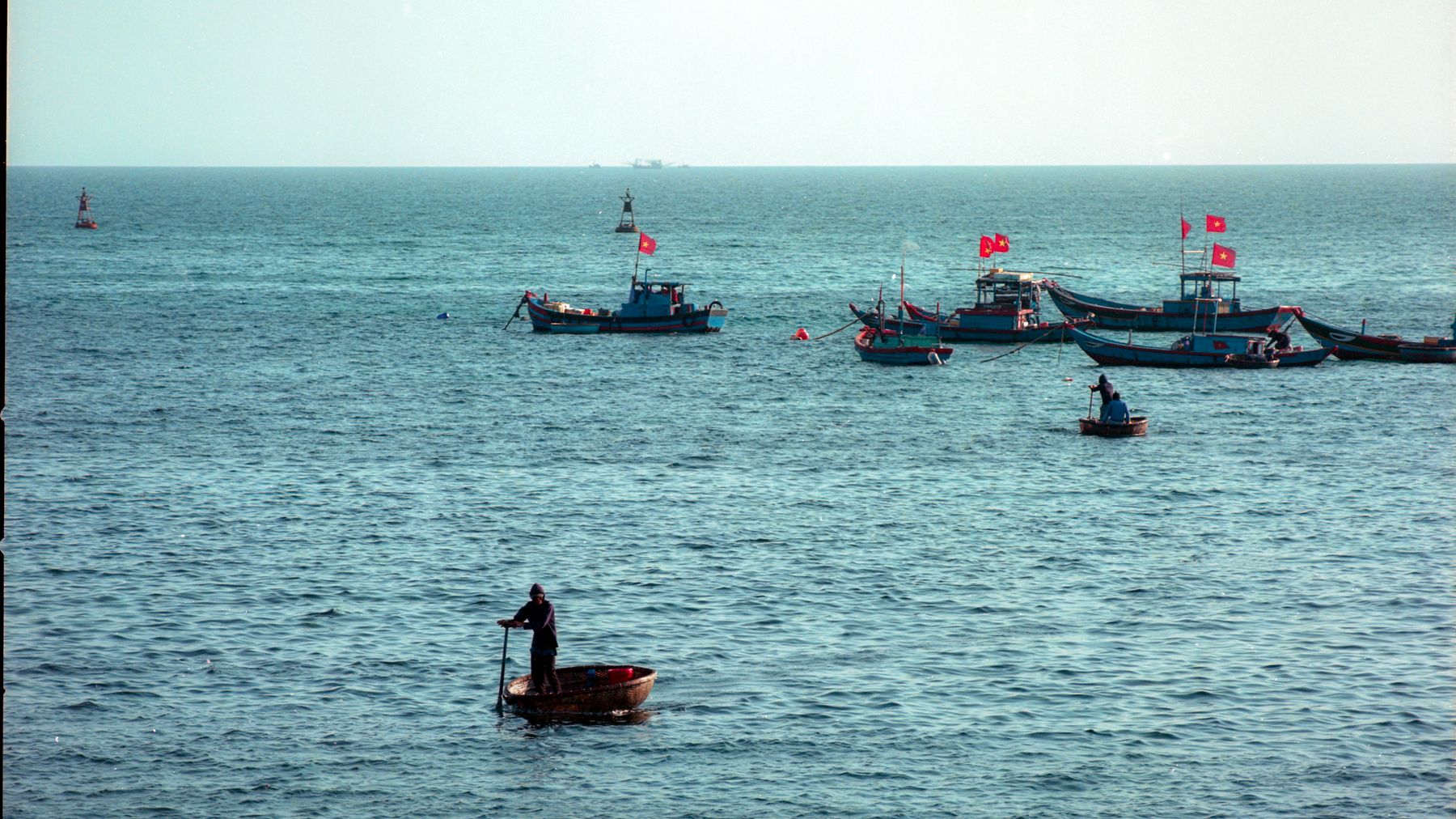
Photo by Q. Hưng Phạm on Pexels
What to do
Swim and do very little
This is the main event. The water is warm, the beach is uncrowded on weekdays, and there's enough shade from the coconut palms that you don't need to rent an umbrella. Bring your own towel — this isn't the kind of place with beach chair rentals.
Eat seafood at the shore restaurants
Small family-run restaurants line parts of the beach area. Point at whatever's fresh — grilled fish, steamed clams, shrimp fried with salt and chili. A full seafood meal for two rarely tops 250,000 VND. The "don ca" (grilled fish wrapped in banana leaf) is common here and consistently good.
Walk the coconut groves
The palm-lined stretches behind the beach are genuinely pleasant for a morning walk before the heat sets in. You'll pass through small fishing hamlets where people are mending nets or drying squid on racks — everyday coastal Vietnam without any curation.
Day trip to Ly Son Island
If you have an extra day, Quang Ngai province is the jumping-off point for Ly Son Island, a volcanic island about 25 km offshore. Speedboats leave from Sa Ky port (around 180,000 VND one way, 30 minutes). Ly Son is known for its garlic fields and volcanic rock formations.
Visit Quang Ngai city
The provincial capital is small but has a decent morning market worth wandering through. Look for "com ga" (chicken rice, Quang Ngai-style) — it's a regional thing here, simpler than the Hoi An version but satisfying.
Where to eat nearby
Two dishes to seek out in the area:
- "Don" (banh don): A Quang Ngai specialty — thin rice pancakes layered and served with shrimp, pork, and a light dipping sauce. It's somewhere between "banh cuon" and "banh xeo" but its own thing entirely. Ask at any local restaurant.
- Ram bap: Deep-fried corn fritters, a Quang Ngai snack that's addictive with beer. You'll find them at street stalls in Quang Ngai city for around 5,000-10,000 VND per piece.
Pair either with a cold "bia hoi" if you spot a local draught beer spot, though Quang Ngai is more of a bottled-beer territory.
Where to stay
Don't expect beachfront resorts. Accommodation options are mostly in Quang Ngai city:
- Budget: Basic guesthouses and mini-hotels in Quang Ngai city run 200,000-400,000 VND per night. Clean enough, air-conditioned, nothing fancy.
- Mid-range: A few newer hotels in the city center offer decent rooms for 500,000-900,000 VND. Look along Quang Trung street.
- Near the beach: Homestay options exist but are limited and often Vietnamese-language only on booking platforms. Having a Vietnamese-speaking friend or using Google Translate on Zalo helps.

Photo by Quang Nguyen Vinh on Pexels
Practical tips locals would tell you
- Bring sunscreen from the city. You won't find it easily near the beach.
- Cash only. Card payments are basically nonexistent outside Quang Ngai city center. ATMs are in the city — withdraw before heading to the coast.
- Rent a motorbike in Quang Ngai city (150,000-200,000 VND/day) for maximum flexibility. The roads to the beach are manageable even for less experienced riders.
- Wear reef shoes if you plan to walk along the rocky parts of the shoreline. The rocks are sharp and barnacle-covered in spots.
Common mistakes to avoid
- Showing up without transport arranged. There are no taxis idling at the beach waiting for you. Have a Grab booked or bring your own wheels.
- Coming in November expecting beach weather. The central coast rainy season is real. Check the forecast.
- Skipping Quang Ngai city entirely. The food there is the underrated part of this trip. Don't just beeline to the sand — eat first.
- Expecting English signage or menus. This is not Hoi An. Download Google Translate's Vietnamese offline pack before you arrive.
Practical notes
Bai Dua works best as part of a longer Central Vietnam trip rather than a standalone destination. Combine it with a few days in Hoi An or Quy Nhon and you'll appreciate the contrast. Budget two nights in Quang Ngai to give yourself a beach day plus time to eat your way through the city.
Last updated · May 29, 2026 · independently researched, never sponsored.





